Abstract Expressionism · 1945
Untitled (Mark Rothko, 1945)
Untitled is a work by Mark Rothko (1903–1970). It dates from 1945. It belongs to the Abstract Expressionism movement. It is made in Oil On Canvas. It measures 74 × 60 cm.
- 1945
- Oil On Canvas
- 74 × 60 cm

 Podgląd w skali 1:1

 Ręcznie malowany obraz olejny
 Wyślij jako kartkę
 Udostępnij
 Przewodnik


 Pobierz obraz
 Podobne obiekty
 RTG
 Pokaz slajdów
 Pytania i odpowiedzi

 Statystyki
Untitled: the essentials
- Title
- Untitled
- Artist
- Mark Rothko (1903–1970)
- Artist born in
- Daugavpils, Łotwa
- Date
- 1945
- Medium
- Oil On Canvas
- Dimensions
- 74 × 60 cm
- Movement
- Abstract Expressionism
- Period
- Modern
- Subject
- abstract, surrealism, figure, mystery, vulnerability, decay
Looking at Untitled
A Meditation on Color and Form
Completed in 1945, this work belongs to the early period of American Abstract Expressionism. The composition relies on a subdued palette of earthy browns and ochres, interrupted by subtle washes of crimson and violet. Vertical rectangles are stacked horizontally across the canvas, creating a sense of stillness. There is no recognizable subject or narrative; instead, the arrangement of color fields directs attention to the interaction between light and shadow.
The technique utilizes alla prima, applying wet paint onto the canvas in thin layers to avoid visible brushstrokes. This method results in a rough surface where subtle variations in tone emerge through the texture of the pigment. The edges of the rectangular forms appear soft, contributing to an immersive, atmospheric effect that lacks a central focal point.
Historical and Emotional Resonance
The painting emerged in the immediate aftermath of World War II, a period marked by global uncertainty and existential anxiety. The somber tones reflect the heavy atmosphere of the era, mirroring personal and collective experiences of trauma and loss. The artist’s background, shaped by displacement from Latvia, informs this preoccupation with mortality and the search for meaning.
Symbolically, the layered rectangles may represent psychological states or spiritual realms. The tension between the dark masses and the lighter washes suggests the coexistence of opposing forces within the human psyche. By stripping away all representational detail, the work invites a personal, meditative response, prompting reflection on the nature of existence through pure color.
Untitled in high resolution
Mark Rothko, Untitled (1945).
Questions about Untitled
Jakie wnętrze najlepiej współgra z kolorystyką „Untitled” – Mark Rothko?
Dzięki swojej palecie barw Earthy, dzieło „Untitled” – Mark Rothko idealnie sprawdzi się w Lounge. Kolorystyka jest jedną z przyczyn tej rekomendacji.
Kto stworzył "Untitled" i w jakim stylu jest to dzieło?
Za dziełem "Untitled" stoi Mark Rothko oraz nurt Abstract Expressionism.
Jaki nastrój i emocje wyraża „Untitled” – Mark Rothko?
Nastrój utrwalony w „Untitled” – Mark Rothko to Mystical, a jego ton emocjonalny to Reflective.
Jaki kształt i wymiary ma „Untitled” – Mark Rothko?
Format dzieła "Untitled" to Portrait, a wymiary oryginału wynoszą 74 x 60 cm. Obie te informacje są przydatne przy planowaniu reprodukcji.
Czy można pobrać obraz "Untitled"?
Obraz „Untitled” – Mark Rothko można pobrać na stronie Pobierz plik cyfrowy dzieła: wysokiej rozdzielczości cyfrowe zdjęcie do pobrania.
Jaki nastrój oddaje dzieło "Untitled" należące do nurtu Abstract Expressionism?
W nurcie Abstract Expressionism dzieło „Untitled” zostało ujęte w Reflective tonie.
W którym roku powstało dzieło "Untitled"?
„Untitled” – Mark Rothko powstało w 1945.
Czy mogę zobaczyć obraz „Untitled” – Mark Rothko w widoku rentgenowskim?
Widok rentgenowski dzieła „Untitled” – Mark Rothko jest dostępny na stronie Analiza rentgenowska: to interaktywna analiza obrazu obejmująca jedenaście warstw optycznych.
W jaki sposób styl dzieła "Untitled" odnosi się do epoki jego twórcy?
„Untitled” – Mark Rothko reprezentuje nurt Abstract Expressionism, powstały w epoce Modernizm swojego twórcy.
About the artist, Mark Rothko

1903–1970, Łotwa
Mark Rothko
Wczesne lata życia Marka Rothko Mark Rothko urodził się w 1903 roku jako Markus Yakovlevich Rothkowitz. Jego korzenie sięgają Dwińska w Rosji, w miejscu znanym dziś jako Daugavpils w Łotwie. Jego rodzina żyła w obrębie Pasu Osadniczego, regionu naznaczonego niepokojami politycznymi i nieustannym cieniem pogromów. Ta atmosfera niestabilności towarzyszyła rodzinie również podczas emigracji do Stanów Zjednoczonych w 1913 roku.
Also by Mark Rothko
 White Center1950
 Bez. 1
 Nr 61 (Rdza i błękit)1953
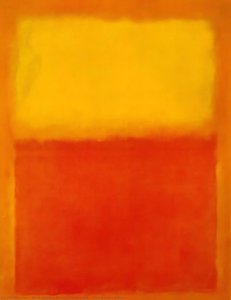 Pomarańczowy i żółty1956
Essays around Untitled
 The Soul of Color: Exploring the Emotional Depth and Existential Resonance of Mark Rothko's MasterpiecesImmerse yourself in the profound emotional landscapes of Mark Rothko. Explore how his revolutionary Color Field paintings use pure pigment …
 Color Fields of Calm: Transform Luxury Interiors with Minimalist Masterpiece ReproductionsElevate your luxury interiors with museum-quality Mark Rothko reproductions. Discover how hand-painted Color Field masterpieces bring profo…
 Mark Rothko: 25 Arcydzieł Koloru i Emocji | Reprodukcje Obrazów | OriginalUniqueArt.comOdkryj 25 arcydzieł Marka Rothko – mistrza abstrakcji i koloru. Poznaj historie, techniki i emocje kryjące się za jego płótnami. Reprodukcj…