

 Zobacz w skali 1:1
 Wyślij
 Udostępnij
 Szczegóły
 Przewodnik

 Pobierz plik obrazu
 Podobne obiekty
 RTG
RTG Pokaz slajdów
 Statystyki
Śniadanie


 Czytaj więcej
Ręcznie malowana reprodukcja olejowa
Ręcznie malowany obraz olejny na płótnie, wykonany na zamówienie przez naszych artystów w wybranym przez Ciebie wymiarze i oprawie. ( Przełącz na wersję drukowaną Przełącz na wersję cyfrową)




P118B zł10

P118H zł10

P118W zł10

P438Z zł10

P508JH zł12

P508YH zł12

P805H zł10

P805Z zł10

P919BZ zł10

P919G zł10

P919XJ zł10

P959ZH zł10

P968JZ zł12

W106C zł8

W218G zł10

W218JH zł8

W218Y zł10

W307PJ zł10

W316G zł10

W316PJ zł8

W316Y zł10

W398PJ zł8

W4111J zł10

W500HY zł15

W500JH zł15

W692G zł12

W849H zł8

W940BG zł15

W953PJ zł8




Wybierz spośród naszych standardowych rozmiarów, które zachowują oryginalne proporcje dzieła sztuki.

Wpisz wymaganą szerokość i wysokość, aby obraz pasował do Twojej ramy lub ściany. Ponieważ jest to dzieło malowane ręcznie, w przypadku rozmiaru o innym proporcji artysta może domalować nieco więcej wokół obrazu lub przyciąć fragmenty — wybór należy do Ciebie. Przed rozpoczęciem pracy prześlemy Ci cyfrową wizualizację do zatwierdzenia. Obraz widoczny na tej stronie nie przedstawia rzeczywistego efektu — jedynie wizualizacja oddaje realny rezultat.
Po złożeniu zamówienia zespół OriginalUniqueArt.com skontaktuje się z klientem drogą mailową w celu uzyskania instrukcji i prześle wizualizację projektu
Dostawa na całym świecie () w ciągu 3–4 tygodni zamiast standardowych 5 tygodni. (22 Październik). Bez kompromisów w kwestii jakości.

Bezpłatna ekspresowa wysyłka na cały świat

Wysokiej jakości płótno lniane

Pełne ubezpieczenie transportowe

Gwarancja zwrotu należności celnych i podatków importowych

Gwarancja idealnego odwzorowania barw

100-dniowy okres na zwrot dzieła w przypadku wykrycia wad produkcyjnych

Gwarancja 100% zwrotu pieniędzy

Oferta przy zakupie wielu sztuk
 Opcja ze szkłem jest dostępna wyłącznie w rozmiarach poniżej 110 cm

Śniadanie
Technika wykonania
Rozmiar reprodukcji
-


Suma do zapłaty
zł 1151
Exploring the Subject and Composition
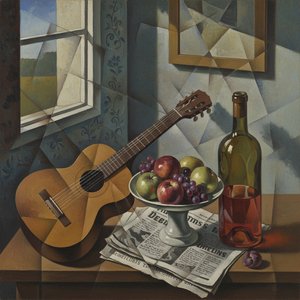
Juan Gris’s “Śniadanie” (Breakfast), painted in 1915, is far more than a simple depiction of a morning meal; it's a meticulously constructed invitation to reconsider our perception of reality. The artwork presents a dynamic still life, a quintessential example of Synthetic Cubism, where everyday objects – a newspaper bearing the cryptic “JOURNAL,” a bottle, and various household items – are fragmented into a dazzling array of geometric facets. These aren’t merely arranged; they're actively disassembled and then painstakingly reassembled, creating a layered mosaic that challenges traditional notions of representation. Instead of offering a realistic portrayal, Gris compels us to *see* the scene from multiple perspectives simultaneously, as if peering through a fractured lens. The interplay between these objects – their overlapping planes, sharp angles, and varied viewpoints – generates an energetic tension, inviting prolonged contemplation. It’s a deliberate disruption of familiar forms, designed to stimulate our visual intelligence and encourage a deeper engagement with the seemingly mundane aspects of daily life.Innovative Style and Technique
“Śniadanie” firmly establishes itself within the Synthetic Cubist movement, a period marked by bold experimentation and a shift away from the more chaotic explorations of early Cubism. Gris masterfully employs techniques that were revolutionary for his time. The artwork is dominated by flat color areas – vibrant greens, blues, oranges, and reds – applied with precision and confidence. Crucially, he incorporates elements reminiscent of collage, utilizing printed papers and fragments of other materials to build up the surface texture. This isn’t simply painting; it's a tactile experience, inviting us to almost *feel* the roughness of the paper or the smoothness of the painted surfaces. The sharp lines defining each component, combined with the overlapping planes, create an illusion of depth that is both intriguing and slightly unsettling. Notice how the artist skillfully manipulates perspective, presenting elements from different angles within a single composition – a technique that underscores the core principles of Cubism.Historical Context and Artistic Significance
Created during a pivotal moment in artistic history, “Śniadanie” reflects the revolutionary spirit ignited by artists like Picasso and Braque. Juan Gris, a key figure in this movement, sought to synthesize the fragmented perspectives of Cubism with a more refined and harmonious approach. Unlike some of his contemporaries who embraced a purely chaotic aesthetic, Gris demonstrated a remarkable control over his materials and composition. His work often incorporates symbolic elements – as evidenced by the “JOURNAL” – and a meticulous attention to detail that elevates it beyond mere abstraction. “Śniadanie” represents a significant transition within Cubism; it moves away from the initial experimentation of early Cubist works towards a more structured, polished style, marking a crucial step in the evolution of modern art. It’s a testament to Gris's ability to distill complex ideas into a visually compelling and intellectually stimulating composition.Symbolism and Conceptual Depth
Beyond its immediate visual complexity, “Śniadanie” invites us to interpret layers of symbolic meaning. The inclusion of the "JOURNAL" is particularly noteworthy, hinting at themes of communication, information, and the passage of time – suggesting a world saturated with news and fleeting moments. The geometric reconfiguration of everyday objects can be interpreted as a representation of the fractured perception of reality in the modern age, reflecting how we experience and interpret our environment through a multitude of viewpoints. The vibrant color palette isn’t merely decorative; it evokes emotional responses ranging from curiosity and contemplation to perhaps even a subtle sense of unease or disorientation. Ultimately, “Śniadanie” encourages viewers to actively engage with the artwork, seeking their own interpretations within its intricate layers.Emotional Impact and Interior Inspiration
“Śniadanie” exudes an undeniable vitality and intellectual engagement, making it an ideal focal point for contemporary interiors. Its energetic composition and bold colors can invigorate a space, inspiring creativity and stimulating conversation. Whether displayed in a private collection, a gallery setting, or within the sophisticated environment of a modern office, this artwork offers a timeless connection to the innovative spirit of Cubism. The intricate layers and vibrant hues not only provide a visual delight but also serve as a source of inspiration for art lovers, collectors, and interior designers seeking to elevate their surroundings with a piece that embodies modernist brilliance and artistic mastery. It’s a work that demands attention, inviting us to pause, reflect, and reconsider our relationship with the world around us.Pytania i odpowiedzi
Czy mogę zamówić olejną reprodukcję "Śniadanie"?
Ręcznie malowane kopie dzieła „Śniadanie” autorstwa Juan Gris można nabyć na stronie ta strona: ręcznie malowana reprodukcja olejowa na płótnie lnianym, zamawiając je bezpośrednio przez zakładkę Ręcznie malowana reprodukcja.
Jaki rozmiasto wydruku "Śniadanie" będzie odpowiedni do mojego pokoju?
W przypadku Salon lub strefa dzienna zalecany rozmiatr wydruku dzieła „Śniadanie” autorstwa Juan Gris to Duży format.
W jaki sposób kontrast i harmonia łączą się w "Śniadanie"?
Kompozycja kolorystyczna „Śniadanie” autorstwa Juan Gris łączy w sobie Oświadczenie kontrast z Dysonansowa paleta barw harmonią.
Biografia artysty
A Spanish Visionary of Cubism: The Life and Art of Juan Gris
José Victoriano González-Pérez, born in Madrid in 1887, embarked on a remarkable artistic journey that would cement his place as one of the most significant figures of early 20th-century art. Initially pursuing an engineering degree at the School of Arts and Sciences, a keen analytical mind hinted at a future far removed from blueprints and calculations. Even during these formative years, a creative spark ignited – contributions to local periodicals showcased a burgeoning talent for visual observation. It was in 1905 that he adopted the evocative pseudonym Juan Gris, a name resonating with newfound identity and purpose as he began his formal studies in painting under José Moreno Carbonero. This pivotal shift marked the beginning of his artistic transformation, setting him on a course toward groundbreaking innovation.Parisian Awakening and the Embrace of Cubism
The year 1906 witnessed a transformative relocation to Paris, a city then brimming with unparalleled artistic energy. Gris immersed himself completely in this vibrant milieu, forging enduring friendships with luminaries such as Henri Matisse, Georges Braque, and Fernand Léger. Initially engaged in satirical illustration for publications like *L'Assiette au Beurre*, he honed his observational skills and developed a sharp wit – a foundation that would later inform his artistic approach. However, the profound influence of Pablo Picasso proved particularly compelling. Around 1910, Gris began to dedicate himself wholeheartedly to painting, deliberately distancing himself from caricature and embracing the burgeoning language of Cubism. This wasn’t mere imitation; it was a deliberate quest to distill the essence of form and space, seeking a new visual order – a radical departure from traditional representation. His early explorations were characterized by a conscious rejection of conventional perspective, embracing abstraction as a means of capturing reality's underlying structure.The Geometry of Perception: Style and Key Works
Juan Gris’s artistic output is distinguished by an exceptional clarity and intellectual rigor. He didn’t simply deconstruct objects; he meticulously reconstructed them, emphasizing geometric forms and a carefully considered palette. This approach led to what became known as his “crystal period,” exemplified in masterpieces such as *Still Life Before an Open Window* (1912) and *Place Ravignan* (1915). These works showcase a remarkable interplay of planes and angles, creating a sense of depth and solidity while simultaneously challenging conventional notions of perspective. The fragmented forms, rendered with precise lines and vibrant colors, invite the viewer to actively participate in reconstructing the image. Following this period, Gris moved towards Synthetic Cubism, pioneering the innovative use of *papier collé* – collage – incorporating real-world materials like newspaper clippings and textured papers into his compositions. This technique added a layer of complexity and tactile richness to his work, blurring the boundaries between painting and sculpture. Notable examples include *Guitar in front of the sea* (1925), a testament to his simplified forms and adherence to cubist principles, and *Homage à Pablo Picasso* (1912), which signaled his growing recognition within the avant-garde art world.Influences and Development
Gris’s artistic development was profoundly shaped by a confluence of influences. The early impact of Pablo Picasso, with his exploration of fractured forms and multiple perspectives, is undeniable. However, he also drew inspiration from Henri Matisse's use of color and Georges Braque's analytical approach to deconstructing objects. Crucially, Gris developed a unique style that transcended mere imitation, incorporating elements of Spanish tradition – particularly the vibrant colors and geometric patterns found in Moorish architecture – into his compositions. His move to Paris provided access to a diverse range of artistic ideas and movements, including Futurism and Constructivism, which further broadened his creative horizons. The intellectual rigor evident in his work reflects his engineering background, demonstrating a systematic approach to visual representation.Legacy and Lasting Influence
Juan Gris’s contribution to Cubism extends far beyond mere stylistic innovation; he brought a unique intellectual depth and structural clarity to the movement. He moved past the analytical phase, towards a more organized and synthetic approach, emphasizing order and precision. His work profoundly influenced the Purist style championed by Amédée Ozenfant and Charles Edouard Jeanneret (Le Corbusier), advocating for a return to classical principles of form and composition. Gris’s emphasis on geometric forms, harmonious color palettes, and the integration of everyday objects into his art established him as a pivotal figure in 20th-century art. His legacy continues to inspire artists today, demonstrating the enduring power of Cubism and the visionary genius of Juan Gris – a Spanish master who reshaped our understanding of perception and representation.
Juan Gris
1887 - 1927 , Hiszpania
Najważniejsze informacje
- Artistic Movement Or Style: Kubizm, Kubizm syntetyczny
- Artists Or Movements Influenced By This Artist:
- Purizm
- Amédée Ozenfant
- Artists Who Influenced This Artist:
- Pablo Picasso
- Henri Matisse
- Date Of Birth: 23 marca 1887
- Date Of Death: 11 maja 1927
- Full Name: José Victoriano González-Pérez
- Nationality: Hiszpański
- Notable Artworks:
- Hommage à Pablo Picasso
- Śniadanie
- Guitar na morzu
- Place Of Birth: Madryt, Hiszpania
Zobacz także powiązane artykuły
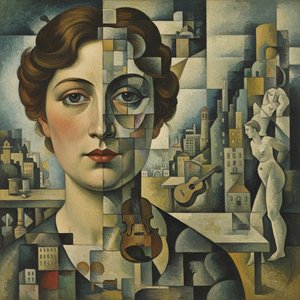
Dekonstrukcja Rzeczywistości: Rewolucyjny Wpływ Kubizmu na Sztukę XX Wieku
Odkryj rewolucyjny wpływ kubizmu na sztukę XX wieku! Analiza dzieł Picassa i Braque’a, historia nurtu, techniki oraz dziedzictwo. Ekspercka wiedza dla kolekcjonerów i miłośników sztuki.
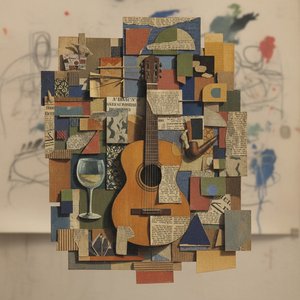
Dekonstrukcja Rzeczywistości: Kompleksowa Eksploracja Ewolucji i Wpływu Syntetycznego Kubizmu
Odkryj fascynujący świat kubizmu! Kompleksowa analiza ewolucji stylu – od kubizmu analitycznego po syntetyczny, z uwzględnieniem papier collé. Poznaj twórczość Picassa, Braque'a i Grisa. Ekspercka wiedza dla miłośników sztuki.
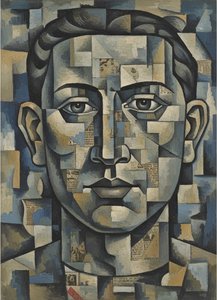
Dekonstrukcja Tożsamości: Kompleksowe Badanie Portretu Kubistycznego
Odkryj fascynujący świat portretu kubistycznego! Kompleksowa analiza dzieł Picassa i Braque, psychologiczne aspekty dekonstrukcji formy oraz wpływ kubizmu na współczesną sztukę. Poradnik dla kolekcjonerów.
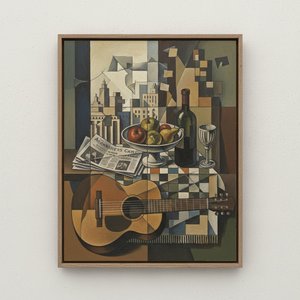
Juan Gris: Cubist Deconstruction & Synthesis – A Comprehensive Exploration
Explore the revolutionary art of Juan Gris – a master of Cubism. Discover his unique approach to deconstruction, vibrant Synthetic Cubist works, and lasting influence on modern art. Expert analysis for collectors.
Dekonstrukcja Rzeczywistości: Kompleksowa Eksploracja Martwej Natury w Kubizmie
Odkryj fascynujący świat kubizmu! Kompleksowa analiza martwej natury w twórczości Picassa i Braque’a. Historia, techniki, wpływ na sztukę współczesną – wszystko, co musisz wiedzieć.


