Neoclassical Portraiture
Admirał Howe (John Singleton Copley)
John Singleton Copley (1738–1815) stworzył Admirał Howe. Należy do nurtu Neoclassical Portraiture. Wykonano w technice Obraz olejny na płótnie.
- Obraz olejny na płótnie

 Podgląd w skali 1:1

 Ręcznie malowany obraz olejny
 Wyślij jako kartkę
 Udostępnij
 Karta informacyjna


 Pobierz obraz
 Podobne obiekty
 RTG
 Pokaz slajdów
 Pytania i odpowiedzi

 Statystyki
Admirał Howe w skrócie
- Tytuł
- Admirał Howe
- Artysta
- John Singleton Copley (1738–1815)
- Miejsce urodzenia artysty
- Boston, Stany Zjednoczone
- Technika wykonania
- Obraz olejny na płótnie
- Temat
- british navy, admiral howe, portrait painting, 18th century art, royal family, military dignity
Co przedstawia Admirał Howe?
John Singleton Copley’s Portrait of Admiral Howe: A Window into Georgian Dignity
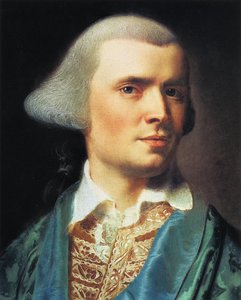
The painting “Admiral of the Fleet Howe” by John Singleton Copley stands as a testament to the artistic sensibilities of 18th-century England and America—a captivating blend of realism, formality, and subtle psychological insight. Executed around 1769, this circular portrait captures Richard Earl Howe, First Lord Howe, not merely as an individual but as a symbol of naval power and aristocratic prestige within his era. Copley’s masterful technique elevates the image beyond mere likeness, transforming it into a carefully constructed visual narrative that speaks volumes about its subject and the cultural values of the time.Composition and Technique: Mastering Light and Texture
Copley's compositional choices are deliberate and impactful. The central placement of Howe dominates the frame, emphasizing his authority and commanding presence—a stylistic convention prevalent in portraiture during the Georgian period. Minimal background detail serves to heighten the focus on the figure itself, creating an intimate connection between the viewer and the subject. Copley’s meticulous attention to texture is evident throughout; he skillfully renders the fabric of Howe's uniform with remarkable accuracy, capturing the subtle sheen and folds that convey both comfort and status. Furthermore, the use of oil paints allows for layering and blending—a technique crucial in achieving the luminous quality characteristic of Copley’s work and conveying a sense of depth and dimensionality. The careful positioning of light – originating from above and slightly to the left – sculpts Howe's face and torso, casting shadows that accentuate his features and adding considerable visual interest.Historical Context: Naval Power and Georgian Aristocracy
The portrait emerges from a pivotal moment in British history—the Seven Years’ War (1756-1763), during which Howe commanded the Royal Navy with distinction. His leadership was instrumental in securing victory against France, bolstering Britain's maritime dominance and shaping its geopolitical landscape. Beyond military achievement, Howe represented the epitome of Georgian aristocracy: educated, wealthy, and deeply invested in upholding social decorum. The inclusion of a white wig—a fashionable accessory of the time—underscores this formality and reinforces Howe’s position within the upper echelons of society. Copley's decision to depict Howe in such a dignified pose reflects the broader cultural preoccupation with portraying individuals as embodiments of virtue and intellect.Symbolism: Uniformity, Light, and Dignified Expression
The admiral’s uniform itself is laden with symbolic significance—a visual shorthand for his rank, responsibility, and adherence to established traditions. The gold buttons and trim adorning the garment symbolize wealth and nobility, highlighting Howe's social standing. Equally important is Howe’s expression: stern yet contemplative, conveying an aura of seriousness and experience. Copley captures not just physical appearance but also psychological character—a feat that elevates the portrait beyond a simple likeness into a profound meditation on human dignity and composure. The dark background serves as a counterpoint to Howe's pale skin tones and white wig, creating visual contrast that emphasizes his presence and reinforcing the solemn atmosphere of the piece.Emotional Impact: A Reflection of Georgian Idealism
“Admiral of the Fleet Howe” transcends mere representation; it embodies the ideals of Georgian society—confidence, intellect, and unwavering commitment to duty. The painting’s subdued palette contributes to its emotional resonance, conveying a sense of gravitas and understated grandeur. It invites contemplation on leadership, honor, and the enduring legacy of historical figures. As an artwork reproduction, this piece offers collectors and interior designers alike a glimpse into a bygone era—a beautifully crafted image that speaks to timeless values of dignity and accomplishment.Zdjęcia w wysokiej rozdzielczości dzieła Admirał Howe
Domena publiczna: artysta zmarł w 1815.
John Singleton Copley, Admirał Howe. Domena publiczna
Kolory dopasowane do oryginału przez cyfrowego eksperta, plik poddany precyzyjnej retuszy, wierny pociągnięciom pędzla artysty.
Kup plik w wysokiej rozdzielczościOdpowiedzi na pytania dotyczące Admirał Howe
W jakiej technice wykonano „Admirał Howe” – John Singleton Copley?
John Singleton Copley wykorzystał/a technikę Obraz olejny na płótnie w pracy „Admirał Howe”. Technika ta definiuje materię oryginalnego dzieła.
Co przedstawia „Admirał Howe” – John Singleton Copley?
Tematyka dzieła "Admirał Howe" to british navy, admiral howe, portrait painting, 18th century art, royal family, military dignity, formal composition.
Czy obraz „Admirał Howe” – John Singleton Copley można swobodnie reprodukować?
„Admirał Howe” – John Singleton Copley znajduje się w domenie publicznej (należy do domeny publicznej – autorskie prawa majątkowe wygasły). Status ten określa zasady reprodukcji obrazu tego dzieła.
Kto jest autorem dzieła "Admirał Howe"?
Autorem dzieła „Admirał Howe” jest John Singleton Copley. Praca ta figuruje w katalogu pod nazwiskiem John Singleton Copley.
Do jakiego nurtu w sztuce należy „Admirał Howe” – John Singleton Copley?
„Admirał Howe” to dzieło należące do nurtu Neoclassical Portraiture. Nurt ten określa tradycję artystyczną, w której osadzone jest dzieło.
Do którego etapu twórczości John Singleton Copley należy dzieło „Admirał Howe”?
W dorobku artystycznym John Singleton Copley dzieło „Admirał Howe” przypada na Mature Artistic Phase. Ten etap pozwala zestawić je z innymi pracami twórcy.
Z czego wynika obecny status praw autorskich dzieła "Admirał Howe"?
Dzieło "Admirał Howe" autorstwa John Singleton Copley znajduje się w należy do domeny publicznej – autorskie prawa majątkowe wygasły. Okres ochrony praw autorskich liczony jest od daty śmierci artysty, a John Singleton Copley zmarł(a) w 1815.
Jakie miejsce w dorobku twórczym John Singleton Copley zajmuje dzieło "Admirał Howe"?
"Admirał Howe" dzieli z innymi dziełami John Singleton Copley styl właściwy dla Neoclassical Portraiture oraz powracające motywy: royal patronage & prestige, classical idealization style, military authority symbol, british naval power image, artist’s reputation building.
Czy "Admirał Howe" wpisuje się w typową tematykę twórczości John Singleton Copley?
Powracające motywy w twórczości John Singleton Copley obejmują royal patronage & prestige, classical idealization style, military authority symbol, british naval power image, artist’s reputation building; „Admirał Howe” koncentruje się na british navy, admiral howe, portrait painting, 18th century art, royal family, military dignity, formal composition.
O artyście: John Singleton Copley
1738–1815, Stany Zjednoczone
John Singleton Copley
Wczesne lata, rodzina i kształcenie John Singleton Copley wyłonił się z tętniącego życiem, komercyjnego świata kolonialnego Bostonu, gdzie przyszedł na świat w 1738 roku. Jego dzieciństwo było nierozerwalnie związane z morskim handlem panującym na Long Wharf, gdzie jego matka, Mary Singleton Copley, prowadziła sklep. Ojciec, Richard Copley, był kupcem tytoniowym. To środowisko stanowiło dla niego coś więcej niż tylko tło społeczne; oferowało ono bezpośredni wgląd w materialne tekstury i hierarchie społeczne, które w przyszłości miały zdefiniować jego język wizualny.
O John Singleton Copley Najważniejsze dzieła John Singleton Copley
Inne prace John Singleton Copley
 Watson i Czarny Żbik1778
 Brook Watson and the Shark1778
 Paul Revere1768
 The Colapse of the Earl of Chatham in the House of Lords (also known as The Death of the Earl of Chatham)1779
Eseje o Admirał Howe
 18th century American paintersMasterpieces by Copley and Stuart define 18th century American art. Explore the full collection online at OriginalUniqueArt.com.
 Threads of Command: Decoding the History and Symbolism of Military Uniforms in Fine ArtExplore the deep symbolism and history of military uniforms in fine art through expert analysis. Discover the visual language of power now.
 Mastering the Grand Style: The Top 25 Artworks by Joshua ReynoldsExplore the iconic Grand Style of Joshua Reynolds through 25 masterpieces. Discover the full collection online at OriginalUniqueArt.com.