Expressionism
The Assassination (James Ensor)
The Assassination is a work by James Ensor (1860–1949). It belongs to the Expressionism movement. It is made in Acrylic On Canvas.
- Acrylic On Canvas

 Podgląd w skali 1:1

 Ręcznie malowany obraz olejny
 Wyślij jako kartkę
 Udostępnij
 Przewodnik


 Pobierz obraz
 Podobne obiekty
 RTG
 Pokaz slajdów
 Pytania i odpowiedzi

 Statystyki
The Assassination: the essentials
- Title
- The Assassination
- Artist
- James Ensor (1860–1949)
- Artist born in
- Ostenda, Belgia
- Medium
- Acrylic On Canvas
- Movement
- Expressionism
- Subject
- death, execution, spectacle, horror, theatre, mortality
Looking at The Assassination
A Stage of Macabre: Decoding James Ensor’s ‘The Assassination’
James Ensor's 'The Assassination' is a deeply unsettling and powerfully evocative work that plunges the viewer into a world of theatrical grotesquerie. This painting, characteristic of his mature style, isn’t simply a depiction of violence; it’s an exploration of societal anxieties, morbid fascination, and the performative nature of human experience.Subject & Composition: A Disturbing Spectacle
The artwork presents a chaotic scene centered around what appears to be a staged execution or, more accurately, the *presentation* of a corpse. Multiple figures are crammed into a shallow space, actively involved in preparing and displaying the body for public viewing. The composition is deliberately crowded and unsettling, with overlapping forms and intense interaction between subjects. This isn’t a moment captured; it's a performance unfolding before an unseen audience. The ambiguity of the setting – resembling a stage more than a realistic location – reinforces this sense of theatricality.Style & Technique: Expressionism at its Height
‘The Assassination’ is firmly rooted in the Expressionist tradition. Ensor employs distorted forms, exaggerated features, and a heightened emotional intensity to convey a feeling of unease and psychological turmoil. His brushwork is loose and gestural, contributing to the urgency and instability of the scene. The predominant use of organic and angular shapes further amplifies this unsettling effect. Oil on canvas is the medium, expertly handled with visible layering and texture that adds a raw quality to the work. The flat, diffused lighting – lacking strong shadows – emphasizes the flatness of the composition and contributes to its dreamlike, yet disturbing, atmosphere.Color & Emotional Impact: A Jarring Palette
The color palette is dominated by jarring combinations of reds, yellows, and browns. These aren’t harmonious hues; they clash and vibrate, creating a visceral reaction in the viewer. Red, often associated with violence and passion, dominates, while sickly yellows and earthy browns contribute to a sense of decay and morbidity. The overall effect isn't simply unpleasant; it's deliberately designed to provoke discomfort and force contemplation. The painting evokes feelings of morbid fascination, anxiety, and a profound sense of alienation.Historical Context & Symbolism: Ensor’s Worldview
James Ensor (1860-1949) was a Belgian painter who challenged artistic conventions throughout his career. Growing up in Ostend, a bustling port city, exposed him to diverse cultures and social realities that deeply influenced his art. He rejected academic traditions and embraced an intensely personal and often satirical style. ‘The Assassination’ reflects Ensor's critical view of society – its hypocrisy, its fascination with spectacle, and its indifference to suffering. The display of the corpse can be interpreted as a commentary on the sensationalism of public executions or, more broadly, the human tendency to turn tragedy into entertainment. His work often features masked figures, representing the hidden faces and deceptive appearances within society.Collecting & Interior Design: A Statement Piece
A high-quality reproduction of ‘The Assassination’ is a bold statement for any art collection or interior space. Its dramatic composition and unsettling imagery demand attention and spark conversation. While its dark subject matter might not suit every environment, it can be powerfully effective in spaces that embrace artistic risk and intellectual depth. Consider pairing it with minimalist furnishings to allow the artwork's intensity to take center stage, or juxtapose it with more serene pieces to create a compelling dialogue between contrasting styles.- Ideal for collectors of Expressionist art.
- A striking focal point in a modern living room or study.
- Adds depth and intrigue to a gallery wall.
The Assassination in high resolution
James Ensor, The Assassination. Public domain.
A digital expert checks the colors against the original painting and retouches the file, faithful to the artist's brushwork.
Buy the high-resolution imageQuestions about The Assassination
Co wyjaśnia sytuację prawną dotyczącą praw autorskich do „The Assassination” – James Ensor?
„The Assassination” – James Ensor jest należy do domeny publicznej – autorskie prawa majątkowe wygasły. Okres ochrony praw autorskich liczony jest od śmierci artysty, która nastąpiła w 1949.
Czy mogę zobaczyć obraz „The Assassination” – James Ensor w widoku rentgenowskim?
"The Assassination" można badać warstwa po warstwie na stronie Analiza rentgenowska, która oferuje interaktywny podgląd inspirowany stołem świetlnym konserwatora, prezentujący jedenaście optycznych odczytów obrazu.
Jaki kolor najbardziej dominuje w "The Assassination"?
Kolorem, który najbardziej wyróżnia się w "The Assassination", jest Driftwood (#b49667). Dominujący kolor ułatwia dopasowanie dzieła sztuki do wnętrza.
Gdzie mogę zobaczyć podgląd dzieła "The Assassination"?
Podgląd dzieła „The Assassination” – James Ensor można znaleźć na stronie Podgląd w pomieszczeniu.
Któremu artyście przypisuje się "The Assassination"?
Autorstwo dzieła "The Assassination" przypisuje się James Ensor.
Jak harmonijna jest kolorystyka dzieła „The Assassination” – James Ensor?
„The Assassination” – James Ensor prezentuje Strong Color Unity harmonię kolorystyczną.
Jaki format i orientacja druku są sugerowane dla „The Assassination” – James Ensor?
W przypadku "The Assassination" zalecanym formatem wydruku jest rozmiar Large w orientacji Landscape.
Jakie miejsce zajmuje „The Assassination” wśród powracających motywów w twórczości James Ensor?
„The Assassination” przedstawia death, execution, spectacle, horror, theatre, mortality, chaos, symbolism, podczas gdy powracające motywy u James Ensor to symbolic horror, goya's influence, social critique, victorian anxieties, memento mori, death's spectacle, theatrical macabre, public display. Porównanie tych dwóch elementów ukazuje, jak dzieło nawiązuje do typowej dla tego artysty tematyki.
Z jakich materiałów wykonano "The Assassination" i w jakim stylu?
W "The Assassination" technika Acrylic On Canvas łączy się z nurtem Expressionism.
About the artist, James Ensor

1860–1949, Belgia
James Ensor
Wczesne lata, rodzina i kształcenie artystyczne James Ensor urodził się 13 kwietnia 1860 roku w Ostendzie w Belgii. Jego tożsamość została ukształtowana przez specyficzne przecięcie kultur: jego ojciec, James Frederic Ensor, urodził się w Brukseli w rodzinie o angielskich korzeniach, natomiast matka, Maria Catherina Haegheman, była Belgijką. To podwójne dziedzictwo stało się fundamentem dla perspektywy, która często wykraczała poza wąskie ramy lokalnej tradycji. Dorastając, artysta mieszkał w murach sklepu z pamiątkami prowadzonego przez jego rodziców w Ostendzie.
Also by James Ensor
 Wej Chrystusa do Brukseli1888
 Portret z Maskami1899
 The Baths at Ostend
 Skeletons Warming Themselves1889
Essays around The Assassination
 The Geometry of Presence: Mastering Composition and Stance in Classical PortraitureMaster the secrets of classical portraiture through geometry and light. Explore the techniques of the Old Masters today.
 Poza Reprezentacją: Dekodowanie Emocji i Znaczeń w Sztuce Abstrakcyjnej XX WiekuOdkryj fascynujący świat sztuki abstrakcyjnej XX wieku! Analiza kluczowych nurtów, artystów i technik. Poradniki interpretacji oraz inspira…
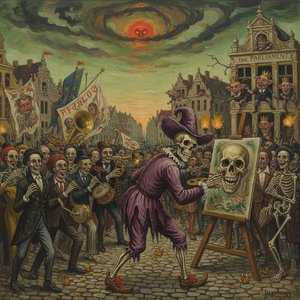 James Ensor's Grotesque Visions: Social Commentary & Artistic InnovationExplore the unsettling yet captivating world of James Ensor, a pioneer of Expressionism. Discover his satirical masterpieces, symbolic imag…