High Renaissance · 1518
Jacob's Dream (Rafael Santi, 1518)
Rafael Santi (1483–1520) stworzył Jacob's Dream. Dzieło pochodzi z 1518. Należy do nurtu High Renaissance. Wykonano w technice Fresco.
- 1518
- Fresco

 Ręcznie malowany obraz olejny
 Wyślij jako kartkę
 Udostępnij
 Karta informacyjna


 Pobierz obraz
 Podobne obiekty
 Pokaz slajdów
 Pytania i odpowiedzi

 Statystyki
Jacob's Dream w skrócie
- Tytuł
- Jacob's Dream
- Artysta
- Rafael Santi (1483–1520)
- Miejsce urodzenia artysty
- Urbino, Włochy
- Data powstania
- 1518
- Technika wykonania
- Fresco
- Ruch
- High Renaissance
- Epoka
- Renaissance
- Temat
- biblical narrative, dream imagery, religious symbolism, angel ascension, italian renaissance, jacob's vision
Co przedstawia Jacob's Dream?
A Vision of Divine Ascent: The Celestial Majesty of Raphael’s Jacob’s Dream
In the heart of the High Renaissance, amidst the intellectual fervor of Rome, Raphael Sanzio captured a moment of profound spiritual transcendence in his 1518 masterpiece, Jacob’s Dream. Originally conceived for the prestigious Loggia of the Palazzo Nuovo under the patronage of Pope Leo X, this fresco is far more than a mere biblical illustration; it is a breathtaking window into the divine. The scene breathes with the life of Genesis, depicting the patriarch Jacob as he rests upon a stone altar, caught in the liminal space between sleep and revelation. As he lies in contemplative repose, his eyes are drawn upward to witness a celestial procession: angels ascending and descending a heavenly ladder, bridging the gap between the earthly realm and the infinite heavens.
Raphael’s technical mastery is on full display through his sophisticated use of sfumato and linear perspective, techniques that lend the composition an almost palpable atmospheric depth. By subtly blurring edges and layering pigments with remarkable luminosity, he creates an illusionistic space that pulls the viewer into the dreamscape. The movement within the painting is masterfully orchestrated; the dynamic upward trajectory of the angels creates a sense of rhythmic energy, while the presence of birds circling above Jacob’s head serves as a poignant metaphor for divine messengers. Every brushstroke contributes to a sense of weightlessness and grace, making the ethereal quality of the dream feel strikingly real.
Symbolism and the Humanist Spirit
Beyond its visual splendor, Jacob’s Dream is a profound meditation on the human condition and our yearning for spiritual enlightenment. The stone altar upon which Jacob rests serves as a symbol of humility and groundedness, representing the physical world from which all spiritual aspiration begins. The ascending angels embody the movement of grace—the soul's upward climb toward God. This interplay between the heavy, terrestrial elements and the light, celestial figures reflects the core tenets of Renaissance humanism: the belief that through intellect, faith, and beauty, humanity can reach toward the divine. For the discerning collector or interior designer, this piece offers a sophisticated narrative of hope, aspiration, and the eternal search for meaning.
The emotional impact of the work lies in its ability to evoke both awe and tranquility. There is a quietude in Jacob’s slumber that invites introspection, yet the vibrant colors and intricate details of the heavenly figures stir the imagination. It is an artwork that commands presence in any space, offering a focal point of intellectual depth and aesthetic elegance. Whether viewed as a historical relic of the papal court or as a timeless symbol of spiritual journeying, Raphael’s vision remains an enduring testament to the power of art to capture the intangible essence of the soul.
Zdjęcia w wysokiej rozdzielczości dzieła Jacob's Dream

Domena publiczna: artysta zmarł w 1520.
Inne rozmiary, kadrowanie i cytowanie →Rafael Santi, Jacob's Dream (1518). Domena publiczna
Odpowiedzi na pytania dotyczące Jacob's Dream
W którym roku powstało dzieło "Jacob's Dream"?
"Jacob's Dream" powstało w 1518 roku. Data ta pozwala umiejscowić dzieło w kontekście twórczości Rafael Santi oraz epoki, w której powstało.
W jakiej technice wykonano „Jacob's Dream” – Rafael Santi?
Technika wykonania dzieła „Jacob's Dream” – Rafael Santi to Fresco. Reprodukcje mają na celu wierne oddanie wyglądu tej techniki.
Co przedstawia „Jacob's Dream” – Rafael Santi?
Tematyka obecna w „Jacob's Dream” – Rafael Santi obejmuje biblical narrative, dream imagery, religious symbolism, angel ascension, italian renaissance, jacob's vision, classical composition. Razem stanowią one podsumowanie tematyki dzieła.
Czy „Jacob's Dream” – Rafael Santi znajduje się w domenie publicznej?
Status praw autorskich dla „Jacob's Dream” – Rafael Santi: dzieło znajduje się w należy do domeny publicznej – autorskie prawa majątkowe wygasły. Określa to, czy reprodukcje obrazu mogą być sporządzane swobodnie.
Któremu artyście przypisuje się "Jacob's Dream"?
Autorstwo dzieła "Jacob's Dream" przypisuje się Rafael Santi.
Do jakiego nurtu należy "Jacob's Dream"?
Nurt związany z „Jacob's Dream” – Rafael Santi to High Renaissance. Ta klasyfikacja sytuuje dzieło wśród pokrewnych artystów i dzieł sztuki.
Do którego okresu twórczości Rafael Santi należy dzieło „Jacob's Dream”?
"Jacob's Dream" reprezentuje Mature Period twórczości Rafael Santi.
W jakim wieku Rafael Santi stworzył(a) "Jacob's Dream"?
Rafael Santi miał 35 lat w momencie powstania „Jacob's Dream” w 1518. Wiek ten obliczono na podstawie roku urodzenia artysty, 1483.
Co wyjaśnia sytuację prawną dotyczącą praw autorskich do „Jacob's Dream” – Rafael Santi?
Dzieło "Jacob's Dream" autorstwa Rafael Santi znajduje się w należy do domeny publicznej – autorskie prawa majątkowe wygasły. Okres ochrony praw autorskich liczony jest od daty śmierci artysty, a Rafael Santi zmarł(a) w 1520.
O artyście: Rafael Santi

1483–1520, Włochy
Rafael Santi
Życie i tożsamość Rafaela Rafael, znany historii pod wieloma imionami, w tym jako Raffaello Sanzio, Raffaello Santi oraz Raffaello Sanzio da Urbino, był centralną postacią włoskiego dojrzałego renesansu. Jego życie definiowała podwójna biegłość w malarstwie i architekturze – wszechstronność, która pozwalała mu płynnie poruszać się między intymną skalą portretu a monumentalnymi wymaganiami papieskich budowli. Urodził się 6 kwietnia 1483 roku w Urbino, we Włoszech, w świecie tętniącym intelektualną i artystyczną aktywnością. Jego kariera charakteryzowała się niewyobrażalną wręcz płodnością twórczą, która wymagała zarządzania rozległym warsztatem, aby sprostać potrzebom licznych mecenasów.
Inne prace Rafael Santi
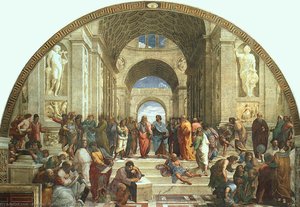 Szkoła Ateńska1511
 Madonna Sykstyńska1513
 Przemienienie1520
 Małżeństwo Maryjne1504
Eseje o Jacob's Dream
 Masterpieces of Perfection: The Top 25 Greatest Artworks by RaphaelImmerse yourself in the grace of the High Renaissance. Explore 25 iconic masterpieces by Raphael, from divine Madonnas to legendary frescoe…
 High Renaissance vs. Mannerism: Harmony and the Shift to TensionMaster the shift from Renaissance harmony to Mannerist tension with our expert art analysis. Discover the evolution of Italian masterpieces…
 25 Masterpieces by Duccio di Buoninsegna: The Dawn of Sienese ArtJourney through the divine beauty of Duccio di Buoninsegna’s greatest works. From the Sienese School to Byzantine elegance, explore 25 time…