Cubism · 1924
Three Characters (Fernand Léger, 1924)
Fernand Léger (1881–1955) stworzył Three Characters. Dzieło pochodzi z 1924. Należy do nurtu Cubism. Wykonano w technice Acrylic On Canvas.
- 1924
- Acrylic On Canvas

 Podgląd w skali 1:1

 Ręcznie malowany obraz olejny
 Wyślij jako kartkę
 Udostępnij
 Przewodnik


 Pobierz obraz
 Podobne obiekty
 RTG
 Pokaz slajdów
 Pytania i odpowiedzi

 Statystyki
Three Characters: najważniejsze informacje
- Tytuł
- Three Characters
- Artysta
- Fernand Léger (1881–1955)
- Miejsce urodzenia artysty
- Argentan, Francja
- Data powstania
- 1924
- Technika wykonania
- Acrylic On Canvas
- Ruch
- Cubism
- Epoka
- Modern
- Temat
- geometric figures, modern composition, cubist style art, human interaction, bold color palette, everyday objects
Co przedstawia Three Characters?
A Symphony of Form and Feeling: Exploring Fernand Léger’s “Three Characters”
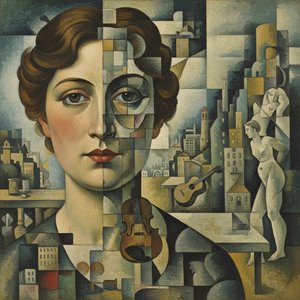
Fernand Léger's 1924 painting, *“Three Characters,”* is a pivotal work exemplifying his distinctive contribution to Cubism – a style he uniquely evolved into what became known as ‘Tubism.’ More than just an exercise in geometric abstraction, this piece offers a compelling glimpse into the artist’s vision of modern life and human connection amidst industrialization.Deconstructing the Composition: Style & Technique
Léger masterfully employs simplified, cylindrical forms to depict three figures positioned closely together. This isn't about realistic representation; it’s a deliberate fragmentation and reassembly of reality through a Cubist lens. The painting eschews traditional perspective, presenting multiple viewpoints simultaneously within a flattened picture plane. The technique is characterized by smooth brushstrokes and carefully blended colors, creating a polished surface despite the angularity of the forms. This creates a sense of solidity and monumentality, grounding the abstracted figures.A Palette of Modernity: Color & Symbolism
While rooted in Cubism’s analytical approach, *“Three Characters”* distinguishes itself through its vibrant color palette. Léger moves beyond the muted tones often associated with early Cubism, embracing bold hues that inject energy and warmth into the composition. The inclusion of symbolic objects – a baseball bat and a book – adds layers of meaning. These aren’t merely decorative elements; they represent facets of everyday life, leisure, and intellectual pursuit, hinting at Léger's interest in portraying the modern individual within their environment. The figures themselves are not portraits but archetypes, representing universal aspects of human experience.Historical Context: Cubism & Beyond
Created in the aftermath of World War I, *“Three Characters”* reflects a broader cultural shift towards embracing modernity and industrialization. Léger, alongside Picasso and Braque, was at the forefront of the Cubist revolution, challenging traditional artistic conventions. However, he diverged from his peers by incorporating elements of machine aesthetics and popular culture into his work. His style evolved toward “Crystal Cubism,” emphasizing large, overlapping geometric planes and a strong focus on surface activity. This painting stands as a testament to that evolution, bridging the gap between abstract experimentation and representational form.Emotional Resonance & Lasting Influence
*“Three Characters”* evokes a sense of quiet contemplation and interconnectedness. Despite their abstracted forms, the figures possess a palpable presence, suggesting a shared experience or unspoken dialogue. The painting’s enduring appeal lies in its ability to resonate with viewers on an emotional level, prompting reflection on themes of identity, community, and the human condition. Léger's work profoundly influenced subsequent art movements, including Futurism, Abstract Art, and Surrealism, solidifying his legacy as a visionary artist who redefined the possibilities of painting in the 20th century.Collecting & Interior Design Considerations
- Style Compatibility: This artwork complements modern, minimalist, or Art Deco interiors. Its geometric forms and bold colors create a striking focal point.
- Color Palette Integration: The painting’s color scheme can be echoed in accent furniture, textiles, or wall colors to create a cohesive design aesthetic.
- Placement Suggestions: Ideal for living rooms, dining areas, or home offices. Consider pairing it with contemporary sculptures or abstract artwork.
- Investment Potential: As a seminal work by a highly influential artist, a high-quality reproduction of *“Three Characters”* represents not only an aesthetic addition but also a potential investment in art history.
Three Characters w wysokiej rozdzielczości

Domena publiczna: artysta zmarł w 1955.
Więcej rozmiarów, kadrowania i cytowań →Fernand Léger, Three Characters (1924). Domena publiczna
Ekspert ds. cyfrowych weryfikuje kolory względem oryginału i retuszuje plik, zachowując wierność pociągnięciom pędzla artysty.
Kup obraz w wysokiej rozdzielczościPytania o Three Characters
Jaki jest zalecany rozmiar wydruku dla „Three Characters” – Fernand Léger?
Zalecany rozmiar wydruku dla „Three Characters” – Fernand Léger to Large.
Kiedy powstało i w jakim nurcie utrzymane jest dzieło „Three Characters” – Fernand Léger?
Dzieło "Three Characters" powstało w 1924 roku i reprezentuje nurt Cubism.
Czy kolory w "Three Characters" są intensywne czy stonowane?
Kolory w „Three Characters” – Fernand Léger charakteryzują się Monochromatic intensywnością.
Z czego wynika obecny status praw autorskich dzieła "Three Characters"?
„Three Characters” – Fernand Léger jest należy do domeny publicznej – autorskie prawa majątkowe wygasły. Okres ochrony praw autorskich liczony jest od śmierci artysty, która nastąpiła w 1955.
Jaki dominujący odcień przenika „Three Characters” – Fernand Léger?
„Three Characters” skłania się ku Ochre to Sepia tonacji.
Gdzie mogę pobrać „Three Characters” – Fernand Léger?
„Three Characters” – Fernand Léger można pobrać ze strony Pobierz plik cyfrowy dzieła jako wysokiej rozdzielczości cyfrowe zdjęcie do pobrania.
Jakie miejsce zajmuje „Three Characters” wśród powracających motywów w twórczości Fernand Léger?
Powracające motywy w twórczości Fernand Léger obejmują exploration of flat planes, expansion of color usage, cubism's geometric forms, early 20th-century modernism, urban life & modernity, human connection & interaction; „Three Characters” koncentruje się na geometric figures, modern composition, cubist style art, human interaction, bold color palette, everyday objects, abstract forms.
Czy mogę przyjrzeć się bliżej dziełu "Three Characters"?
Strona Analiza rentgenowska dzieła „Three Characters” – Fernand Léger to interaktywny podgląd, który pozwala na przeglądanie jedenastu warstw optycznych obrazu, w tym widoku w stylu rentgenowskim.
Jakie miejsce w historii sztuki zajmuje "Three Characters"?
Pod względem historycznym „Three Characters” to dzieło z nurtu Cubism, powstałe w szerszej epoce Modern.
O artyście: Fernand Léger

1881–1955, Francja
Fernand Léger
Życie Fernanda Légera Historia Fernanda Légera rozpoczyna się w wiosce Argentan, położonej w departamencie Orne w Dolnej Normandii. Na świat przyszedł 4 lutego 1881 roku jako jedyny syn. Jego wczesne lata zostały ukształtowane przez spokój francuskiej prowincji oraz obecność matki, Marie-Adèle Daunou. Jego ojciec, człowiek żyjący z handlu bydłem, odszedł, gdy Fernand był jeszcze małym chłopcem, pozostawiając dziecko pod opieką matki, w domu naznaczonym jej pobożnością i pewną skromnością.
Inne prace Fernand Léger
 Miasto1919
 Mechanik1920
 Trzy kobiety1921
 Nudy w Lesie1910

Eseje o Three Characters
 Fernand Léger: 25 Arcydzieł Kubizmu i Maszynerii - Kolekcja OriginalUniqueArtOdkryj 25 arcydzieł Fernanda Légera – pioniera kubizmu i malarstwa maszyn. Poznaj historię, technikę i inspiracje tych ikonicznych obrazów.…
 Dekonstrukcja Rzeczywistości: Rewolucyjny Wpływ Kubizmu na Sztukę XX WiekuOdkryj rewolucyjny wpływ kubizmu na sztukę XX wieku! Analiza dzieł Picassa i Braque’a, historia nurtu, techniki oraz dziedzictwo. Ekspercka…
 Przemysł w Sztuce: 10 Arcydzieł Oddających Klimat Fabryk i Maszyn | OriginalUniqueArtOdkryj 10 arcydzieł sztuki przemysłowej! Poznaj historie Hopper'a, Caillebotte'a i innych mistrzów. Reprodukcje obrazów w stylu industrialn…