Romanticism · 1800
Architecture with Figures (Hubert Robert, 1800)
Hubert Robert (1733–1808) stworzył Architecture with Figures. Dzieło pochodzi z 1800. Należy do nurtu Romanticism. Wykonano w technice Oil On Paper. Przechowywane jest w Statens Museum for Kunst w Kopenhaga, Dania. Wymiary to 86 × 106 cm.
- 1800
- Oil On Paper
- 86 × 106 cm
- Statens Museum for Kunst, Kopenhaga

 Podgląd w skali 1:1

 Ręcznie malowany obraz olejny
 Wyślij jako kartkę
 Udostępnij
 Karta informacyjna


 Pobierz obraz
 Podobne obiekty
 RTG
 Pokaz slajdów
 Pytania i odpowiedzi

 Statystyki
Architecture with Figures w skrócie
- Tytuł
- Architecture with Figures
- Artysta
- Hubert Robert (1733–1808)
- Miejsce urodzenia artysty
- Paryż, Francja
- Data powstania
- 1800
- Technika wykonania
- Oil On Paper
- Wymiary
- 86 × 106 cm
- Gdzie można je zobaczyć
- Statens Museum for Kunst, Kopenhaga, Dania
- Ruch
- Romanticism
- Epoka
- 19th Century
- Temat
- architecture, figures, columns, ruins, sky, stone
Co przedstawia Architecture with Figures?
Identification of Architecture with Figures
Architecture with Figures is a painting by the French artist Hubert Robert. This work dates to about 1800. The artist, who was a member of the school of Romanticism, produced this piece during a period of significant transition in French art. Robert's background in both sculpture and painting informs the structural presence of the subjects within this composition.
The artwork depicts a scene of monumental classical ruins. The subject matter focuses on three figures—a standing man, a seated woman, and an older seated figure—who interact near a stone basin or altar. These figures are positioned amidst large-scale architectural elements, including massive columns and an arched structure. The scene is set under a vast, cloudy sky, with an obelisk visible in the distance to establish depth.
The visual presentation of the work relies on a monochromatic palette. It utilizes various shades of grey, black, and white to define the forms. This approach emphasizes the interplay of light and shadow across the textures of weathered stone, smooth marble, and soft fabric. The composition uses strong vertical lines from the columns and the obelisk to contrast with the curved lines of the arches and the draped clothing of the figures.
The Composition and Visual Elements
The composition is organized around large-scale architectural elements that establish a sense of monumental scale. On the right side, massive columns rise vertically, while an arched structure on the left side of the frame creates a boundary for the central scene. These structural components frame a central group of three figures positioned near a stone basin or altar. This group consists of a standing man, a seated woman, and an older seated figure engaged in interaction. In the background, an obelisk is placed in the distance, contributing to the receding perspective and the depth of the scene.
The color palette is monochromatic, utilizing various shades of grey, black, and white. This lack of hue emphasizes the interplay of light and shadow across the various surfaces. Dramatic lighting originates from a directional source, casting deep shadows and creating bright highlights on the textures of the weathered stone, the smooth marble, and the soft fabric of the draped clothing. The arrangement of lines reinforces the structural order, using strong verticality through the columns and the obelisk, contrasted by the curved lines of the classical arches and the organic forms of the figures and scattered flowers.
Technique and Artistic Method
The medium of this work appears to be a monochrome painting, likely executed in oil or wash on paper. The artist employs fine brushwork to render the intricate details of the architectural elements and the folds of the drapery. These precise strokes define the textures of the weathered stone and the soft surfaces of the fabric worn by the figures.
Robert frequently utilized the alla prima technique in his practice. This method involves applying paint in a direct and spontaneous manner. Such an approach allows for a sense of immediacy in the execution of the composition. The application of pigment creates a clear distinction between the solid, geometric forms of the columns and the more organic, fluid shapes of the human figures and scattered flowers.
The Artistic Style of Hubert Robert
Hubert Robert is noted for his landscape paintings and his development of the capriccio. These works consist of semi-fictitious, picturesque depictions of ruins located in Italy and France. His approach to these subjects involves a specific method of blending careful observation with a heightened imagination. This combination allows for the construction of theatrical atmospheres within the landscape. He often uses atmospheric perspective to soften distant horizons, which creates a sense of depth and space.
The artist's technique is characterized by a versatility that moves between the precision of a draftsman and the fluid touch of a painter. He frequently employed the alla prima technique, applying paint in a direct and spontaneous manner. This method contributes to the immediacy of his compositions. His work often utilizes light and shadow to manipulate the perception of space, using these elements to suggest a sense of history within the architectural forms.
W którym muzeum znajduje się Architecture with Figures?
Statens Museum for Kunst
Kopenhaga, Dania
Historia i korzenie Statens Museum for Kunst Statens Museum for Kunst wywodzi się z prywatnych kolekcji sztuki gromadzonych przez duńskich monarchów. To właśnie te królewskie zasoby stały się fundamentem dla instytucji, która stała się największym muzeum sztuki w Danii. Choć korzenie instytucji są nierozerwalnie związane z tymi suwerennymi zbiorami, jej formalne powstanie wyznaczają dwie istotne daty: rok 1824, kiedy to muzeum zostało założone, oraz rok 1896, kiedy to nabrało swojej obecnej tożsamości.


Zdjęcia w wysokiej rozdzielczości dzieła Architecture with Figures

Domena publiczna: artysta zmarł w 1808.
Inne rozmiary, kadrowanie i cytowanie →Hubert Robert, Architecture with Figures (1800), Statens Museum for Kunst. Domena publiczna
Odpowiedzi na pytania dotyczące Architecture with Figures
Gdzie można zobaczyć oryginał „Architecture with Figures” – Hubert Robert?
Oryginał dzieła „Architecture with Figures” można zobaczyć w Statens Museum for Kunst, Kopenhaga, Dania.
W którym roku powstało „Architecture with Figures” – Hubert Robert?
„Architecture with Figures” – Hubert Robert powstało w 1800.
W jakiej technice wykonano „Architecture with Figures” – Hubert Robert?
Technika wykonania dzieła „Architecture with Figures” – Hubert Robert to Oil On Paper. Reprodukcje mają na celu wierne oddanie wyglądu tej techniki.
Jakie są rzeczywiste wymiary dzieła „Architecture with Figures” – Hubert Robert?
Wymiary dzieła „Architecture with Figures” – Hubert Robert to 86.0 x 106.0cm. Reprodukcje można zamówić w innych rozmiarach, zachowując te same proporcje.
Co przedstawia "Architecture with Figures"?
„Architecture with Figures” – Hubert Robert przedstawia: architecture, figures, columns, ruins, sky, stone, drapery.
Czy obraz „Architecture with Figures” – Hubert Robert można swobodnie reprodukować?
„Architecture with Figures” – Hubert Robert znajduje się w domenie publicznej (należy do domeny publicznej – autorskie prawa majątkowe wygasły). Status ten określa zasady reprodukcji obrazu tego dzieła.
Kto stworzył "Architecture with Figures"?
Autorstwo dzieła "Architecture with Figures" przypisuje się Hubert Robert.
Do jakiego nurtu artystycznego należy „Architecture with Figures” – Hubert Robert?
„Architecture with Figures” to dzieło należące do nurtu Romanticism. Nurt ten określa tradycję artystyczną, w której osadzone jest dzieło.
Do którego etapu twórczości Hubert Robert należy dzieło „Architecture with Figures”?
"Architecture with Figures" reprezentuje Late Period twórczości Hubert Robert.
O artyście: Hubert Robert
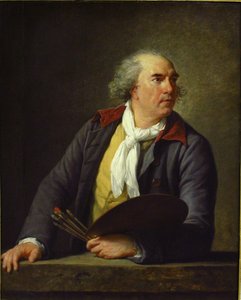
1733–1808, Francja
Hubert Robert
Wczesne lata, rodzina i kształcenie artystyczne Urodzony w Paryżu w 1733 roku, Hubert Robert wkroczył w świat, w którym status społeczny jego rodziny był nierozerwalnie związany ze służbą innym. Jego ojciec, Nicolas Robert, zajmował stanowisko w domu wpływowej postaci, co ostatecznie ułatwiło młodemu człowiekowi poruszanie się po najwyższych szczeblach francuskiego społeczeństwa. Ta wczesna stabilizacja położyła fundament pod formalne wykształcenie, które zdobywał w uporządkowanych murach Collège de Navarre. Do 1751 roku ukończył studia pod okiem jezuitów, zyskując zdyscyplinowane zaplecze intelektualne, zanim skierował swoją uwagę ku sztukom wizualnym.
Inne prace Hubert Robert
 The Pont du Gard1787
 The Finding of the Laocoön1773
 Le port de Ripetta
 PROJET D'AMENAGEMENT DE LA GRANDE GALERIE DU LOUVRE

Eseje o Architecture with Figures
 Hubert Robert: Picturing Ruins, Preserving Memory – A Study of Romantic Antiquarianism & Artistic InnovationExplore the captivating world of Hubert Robert, master of Romantic landscape painting & 'capriccio' ruins. Discover his historical context,…
 Vedute and Capriccio: Distinguishing Topographical Views from Architectural FantasyMaster the difference between veduta and capriccio through expert art history analysis. Explore the masters of Italian landscape art today.
 French artworks of the 1880sFrench Impressionist masterpieces by Claude Monet, Pierre-Auguste Renoir, and Georges Seurat. Find museum-quality reproductions on Original…