Menu

() ·

A painting made for you, by hand

Poppy Field

Ręcznie malowana reprodukcja olejowa

Ręcznie malowany obraz olejny na płótnie, wykonany na zamówienie przez naszych artystów w wybranym przez Ciebie wymiarze i oprawie. ( Przełącz na wydania drukowane Przejdź do wersji cyfrowej)

Opis obiektu

Biografia artysty

Guy Orlando Rose (1867-1925) – amerykański impresjonista i Kalifornijczyk, który zyskał uznanie narodowe pod koniec XIX i na początku XX wieku. Jego dzieła przedstawiają zapierające dech w piersiach krajobrazy Kalifornii oraz pejzaże Giverny, głęboko zainspirowane twórczością Moneta i techniką pracy na świeżym powietrzu. Doświadcz jego jasnego dziedzictwa!

from ·

Chapter 1

How large should it be?

Slide to change the size; the picture on the left shows the frame at its real width. The proportions of the original are kept.

Standardowy format
personalizowane
CM
INCH

Wybierz spośród naszych standardowych rozmiarów, które zachowują oryginalne proporcje dzieła sztuki.

szerokość
wysokość

Wpisz wymaganą szerokość i wysokość, aby obraz pasował do Twojej ramy lub ściany. Ponieważ jest to dzieło malowane ręcznie, w przypadku rozmiaru o innych proporcjach artysta może domalować nieco więcej wokół obrazu lub przyciąć jego fragmenty — wybór należy do Ciebie. Przed rozpoczęciem pracy prześlemy Ci cyfrową wizualizację do zatwierdzenia. Obraz widoczny na tej stronie nie przedstawia rzeczywistego efektu — jedynie wizualizacja oddaje realny rezultat.

Chapter 2

How should it arrive?

Choose the edges of the stretched canvas

Choose your frame

Corner sample of the WhiteWrap canvas edge finish, stretched on lite drewno bars
White zł1
Corner sample of the BlurSideWrap canvas edge finish, stretched on lite drewno bars
Blurside zł1
Corner sample of the ExtendedWrap canvas edge finish, stretched on lite drewno bars
Extended zł1
Corner sample of the P118B picture frame: polistyren formowany, 5 cm wide and 3 cm thick
P118B zł10
Corner sample of the P118H picture frame: polistyren formowany, 5 cm wide and 3 cm thick
P118H zł10
Corner sample of the P118W picture frame: polistyren formowany, 5 cm wide and 3 cm thick
P118W zł10
Corner sample of the P438Z picture frame: polistyren formowany, 5.5 cm wide and 3.5 cm thick
P438Z zł10
Corner sample of the P508JH picture frame: polistyren formowany, 7 cm wide and 3.5 cm thick
P508JH zł12
Corner sample of the P508YH picture frame: polistyren formowany, 7 cm wide and 3.5 cm thick
P508YH zł12
Corner sample of the P805H picture frame: polistyren formowany, 5 cm wide and 3.5 cm thick
P805H zł10
Corner sample of the P805Z picture frame: polistyren formowany, 5 cm wide and 3.5 cm thick
P805Z zł10
Corner sample of the P919BZ picture frame: polistyren formowany, 7 cm wide and 3.5 cm thick
P919BZ zł10
Corner sample of the P919G picture frame: polistyren formowany, 7 cm wide and 3.5 cm thick
P919G zł10
Corner sample of the P919XJ picture frame: polistyren formowany, 7 cm wide and 3.5 cm thick
P919XJ zł10
Corner sample of the P959ZH picture frame: polistyren formowany, 5 cm wide and 3 cm thick
P959ZH zł10
Corner sample of the P968JZ picture frame: polistyren formowany, 6 cm wide and 4 cm thick
P968JZ zł12
Corner sample of the W106C picture frame: lite drewno, 5 cm wide and 3 cm thick
W106C zł8
Corner sample of the W218G picture frame: lite drewno, 5 cm wide and 3 cm thick
W218G zł10
Corner sample of the W218JH picture frame: lite drewno, 5 cm wide and 3 cm thick
W218JH zł8
Corner sample of the W218Y picture frame: lite drewno, 5 cm wide and 3 cm thick
W218Y zł10
Corner sample of the W307PJ picture frame: lite drewno, 6 cm wide and 3 cm thick
W307PJ zł10
Corner sample of the W316G picture frame: lite drewno, 6 cm wide and 3 cm thick
W316G zł10
Corner sample of the W316PJ picture frame: lite drewno, 6 cm wide and 3 cm thick
W316PJ zł8
Corner sample of the W316Y picture frame: lite drewno, 6 cm wide and 3 cm thick
W316Y zł10
Corner sample of the W398PJ picture frame: lite drewno, 5 cm wide and 3 cm thick
W398PJ zł8
Corner sample of the W4111J picture frame: lite drewno, 6.5 cm wide and 3.5 cm thick
W4111J zł10
Corner sample of the W500HY picture frame: lite drewno, 7 cm wide and 5 cm thick
W500HY zł15
Corner sample of the W500JH picture frame: lite drewno, 7 cm wide and 5 cm thick
W500JH zł15
Corner sample of the W692G picture frame: lite drewno, 8 cm wide and 4 cm thick
W692G zł12
Corner sample of the W849H picture frame: lite drewno, 5 cm wide and 3 cm thick
W849H zł8
Corner sample of the W940BG picture frame: lite drewno, 7.5 cm wide and 4.5 cm thick
W940BG zł15
Corner sample of the W953PJ picture frame: lite drewno, 6 cm wide and 3.5 cm thick
W953PJ zł8
Corner sample of the H24-GOLD picture frame: rzeźbione drewno pokryte gipsem, 10 cm wide and 6 cm thick
H24-GOLD zł30
Corner sample of the H24-SILVER picture frame: rzeźbione drewno pokryte gipsem, 10 cm wide and 6 cm thick
H24-SILVER zł30
Corner sample of the H36-GOLD picture frame: rzeźbione drewno pokryte gipsem, 15 cm wide and 6.5 cm thick
H36-GOLD zł45
Corner sample of the H36-SILVER picture frame: rzeźbione drewno pokryte gipsem, 15 cm wide and 6.5 cm thick
H36-SILVER zł45

Moulding: . Overall size with the frame: .

Chapter 3

Who paints it, and should anything change?

Examples of what can be changed: Replace face with customer photo; Add pet (e.g., replace cat with dog); Include hidden message in background; Change background landscape or elements.
After order, OriginalUniqueArt.com team will email client for instructions and provide a mockup preview

Dostawa na całym świecie () w ciągu 3–4 tygodni zamiast standardowych 5 tygodni. (30 Październik). Bez kompromisów w kwestii jakości.

Chapter 4

The finishing touches

A nameplate, as in a museum?

Szczegóły grawerowanej brązowej tabliczki

This elegant plaque features the artist's name and the title of the artwork, finely engraved for a timeless presentation.

It is made from bronze with a refined, elegant finish. The text is precisely laser-engraved for a sharp and permanent result. Measuring 9x2 cm, the plaque is compact yet easy to read. It's built to be durable and scratch-resistant, offering a professional, museum-quality look. Mounting is simple thanks to the included adhesive backing.

Szczegóły przezroczystej tabliczki akrylowej

The plaque includes essential engraved details such as the artist's name, the title of the artwork, the date it was created, the type of media used-like oil on canvas or watercolor-a brief description of the piece, and a QR code that links to the complete artwork information.

It is crafted from clear acrylic, offering a sleek, modern appearance. The text is UV-engraved in black to ensure strong visual contrast. With a size of 10x15 cm, it ensures optimal readability. It comes equipped with two metal hooks for secure wall mounting. The plaque is designed to be weather-resistant, making it suitable for various environments, and it includes interactive features that work seamlessly with smartphone scanning.

Szczegóły czarnej tabliczki akrylowej

This elegant plaque includes engraved information such as the artist's name, the title of the artwork, the date it was created, the type of media used (like oil on canvas or watercolor), a short description of the artwork, and a QR code for quick access to more information.

The plaque itself is made from refined black acrylic with a premium finish. The text is laser-engraved in white for high contrast and readability. Its size is 10x15 cm, designed to be easy to read. It comes with two metal hooks for professional mounting. The design is sleek and fits any interior style. It is also weather-resistant and durable, with built-in digital integration for mobile compatibility.

A protective varnish?

When do you need it?

Chapter 5

Your painting, as you ordered it

Poppy Field

Technika reprodukcji

Wymiary reprodukcji

-

Wybitny mistrz artystyczny

Większa szczegółowość, finezja i dodatkowy czas na realizację

-

Opcje oprawy reprodukcji

-

-

W przypadku dzieł sztuki lub reprodukcji, których którykolwiek z boków przekracza 105 cm (około 41 cali), rama zostanie wysłana w formie zestawu do samodzielnego montażu. Metoda ta zapewnia bezpieczną dostawę i zapobiega uszkodzeniom podczas transportu.

Wymagany profesjonalny montaż – nie jest to produkt typu DIY.
Zestaw musi zostać złożony, a płótno naciągnięte przez doświadczonego profesjonalnego ramiarza, przy użyciu kleju do drewna (brak w zestawie), kleszczy do naciągania płótna oraz ścisków, które utrzymają krosna w równej pozycji podczas schnięcia kleju. Nieprawidłowy montaż lub nierównomierne napięcie płótna może trwale uszkodzić dzieło sztuki i nie podlega naszej gwarancji.

  • W zestawie znajdują się wszystkie listwy z litego drewna, precyzyjnie docięte do wymiarów.

  • Montaż odbywa się przy użyciu dołączonych wkrętów oraz kleju do drewna do łączenia narożników, którego zestaw nie zawiera i który musi zostać dostarczony przez ramiarza.

  • Wymagane są profesjonalne narzędzia, których nie ma w zestawie: kleszcze do naciągania płótna (napinacz) oraz zaciski, które pozwolą utrzymać listwy w równej pozycji podczas schnięcia kleju.

Ważne:
Do połączenia narożników niezbędny jest klej do drewna, listwy należy unieruchomić za pomocą ścisków do momentu całkowitego wyschnięcia kleju, a naciągnięcie płótna na złożoną ramę wymaga użycia kleszczy do naciągania płótna. Żaden z tych elementów nie jest dołączony do zestawu. Przed zamówieniem tego rozmiaru zalecamy konsultację z doświadczonym ramiarzem.

Etykieta obiektu

-

-

Lakier ochronny

Lakier z połyskiem (pogłębia kolory, chroni przed światłem i wilgocią)

-

Personalizacja dzieła

Przykłady możliwości personalizacji: zastąp twarz zdjęciem klienta; dodaj zwierzę domowe (np. zamień kota na psa); umieść ukrytą wiadomość w tle; zmień krajobraz lub elementy tła.

-

Ekspresowa

Dostawa na cały świat () w ciągu 3–4 tygodni zamiast standardowych 5 tygodni. (30 Październik). Bez kompromisów w kwestii jakości.

-

Przesyłka ekspresowa

Dostawa na cały świat () w ciągu 5 tygodni. (6 Listopad).

W cenie

Cena całkowita

zł 1165

Suma całkowita zł 1165

Opcja ze szkłem jest dostępna wyłącznie w rozmiarach poniżej 110 cm

Included with every order

  • Bezpłatna ekspresowa wysyłka na cały świat
  • Wysokiej jakości płótno lniane
  • Pełne ubezpieczenie przesyłki
  • Gwarancja zwrotu należności celnych i podatków importowych
  • Gwarancja wiernego odwzorowania kolorów
  • 100-dniowa polityka zwrotów (tylko w przypadku wad)
  • Gwarancja 100% zwrotu pieniędzy
  • Zniżka przy zakupie wielu sztuk
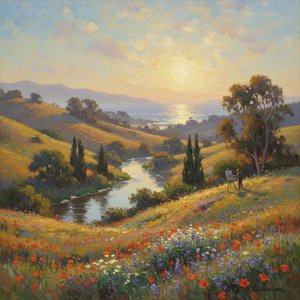
The Poppy Field painting, created by the talented artist Guy Orlando Rose in 1910, is a stunning representation of a field filled with vibrant red poppies. This beautiful oil on canvas work showcases the artist's mastery in capturing the essence of nature. The painting is characterized by its striking contrast between the bright colors of the flowers and the serene blue sky in the background.

Artistic Style and Technique

Guy Orlando Rose's style is reminiscent of the Impressionist movement, which emphasized the capture of light and color. The use of bold brushstrokes and vivid colors in Poppy Field creates a sense of movement and energy, drawing the viewer's eye into the scene. This technique is similar to that used by other famous Impressionist artists, such as Pierre-Auguste Renoir, who created beautiful works like Vase of Anemones.
The presence of a figure in the painting adds an interesting element to the otherwise serene scene. This inclusion of human presence is a common theme in many Impressionist works, such as Claude Monet's Vetheuil, which showcases the artist's ability to capture the beauty of rural life.

Importance of the Painting

The Poppy Field painting is not only a beautiful work of art but also an important part of the Impressionist movement. It highlights the artist's ability to capture the essence of nature and the human experience. For those interested in learning more about the Impressionist movement and its notable artists, a visit to the Musée d'Ixelles in Brussels, Belgium, is highly recommended. This museum houses an impressive collection of over 10,000 works of art from the 16th to the 21st century, with a particular focus on Belgian art from the 19th, 20th, and 21st centuries, as seen in their exhibition.
  • The painting is a beautiful representation of a field filled with red poppies.
  • The use of bold brushstrokes and vivid colors creates a sense of movement and energy.
  • The presence of a figure in the painting adds an interesting element to the scene.
Handmade oil paintings reproductions of Poppy Field are available at https://OriginalUniqueArt.com, allowing art lovers to own a piece of this beautiful work.

Pytania i odpowiedzi

Ile lat miał Guy Orlando Rose, gdy powstało dzieło „Poppy Field”?

Guy Orlando Rose stworzył/a "Poppy Field" w wieku 43 lat. Artysta urodził/a się w 1867, a datowanie dzieła to 1910.

Gdzie mogę pobrać „Poppy Field” – Guy Orlando Rose?

„Poppy Field” – Guy Orlando Rose można pobrać ze strony Pobierz plik cyfrowy dzieła jako wysokiej rozdzielczości cyfrowe zdjęcie do pobrania.

Jaki kolor dominuje w dziele "Poppy Field"?

Dominującym odcieniem dzieła „Poppy Field” – Guy Orlando Rose jest Warm Sunset Tones. Odcień ten stanowi bazową tonację palety barw.

More about this painting

Podgląd w skali 1:1 Podgląd AR Przełącz na wydania drukowane Przejdź do wersji cyfrowej Wyślij jako kartkę
Szczegóły dzieła Przewodnik Dodaj do ulubionych Pobierz obraz Podobne obiekty RTG Pokaz slajdów Q&A Statystyki

In numbers

  • 1910the year it was painted
  • 29frames to choose from
  • standard sizes, in its own proportions
  • 5weeks to paint and deliver it
Guy Orlando Rose

Guy Orlando Rose

1867 - 1925, Stany Zjednoczone

Quick facts about Guy Orlando Rose

  • Artistic Movement Or Style: Impressionizm Kalifornijski
  • Artists Or Movements Influenced By This Artist: ['Kalifornijski Impresjonizm']
  • Artists Who Influenced This Artist: ['Monet']
  • Date Of Birth: 1867
  • Date Of Death: 1925
  • Full Name: Guy Orlando Rose
  • Nationality: Amerykański
  • Notable Artworks:
    • Poppy Field
    • Notre Dame de Grace
    • The Sycamores, Pasadena
  • Place Of Birth: San Gabriel, USA

Biografia artysty

Guy Orlando Rose - First Southern Californian to Achieve ...

Guy Orlando Rose (1867-1925) – zapomniana malarka i muzyk, której prace odradzają się! Portrety, muzyka i fascynująca historia w czasach rewolucji. Sztuka Neoklasycyzm.

Guy Orlando Rose, a name synonymous with the blossoming California Impressionist movement, emerged from the sun-drenched landscapes of Southern California in 1867. His story is one of artistic dedication, shaped by both the rugged beauty of his native state and the refined techniques he absorbed during formative years spent amidst the artistic fervor of France. Rose wasn’t merely a painter; he was a translator of light, capturing the fleeting moments of atmospheric brilliance that defined the Californian experience at the turn of the 20th century.

Born in San Gabriel, to a family steeped in California history – his father served as a state senator – Rose's early life offered both privilege and a dramatic turning point. A childhood hunting accident left him with a facial injury that confined him indoors during recovery, an unexpected catalyst for his artistic journey. Sketching and painting became a means of solace and self-expression, quickly revealing a natural talent. He formally honed his skills at the California School of Design in San Francisco, laying a foundation in traditional techniques before embarking on a transformative period abroad.

The Parisian Influence and the Embrace of Impressionism

In 1888, Rose journeyed to Paris, immersing himself in the heart of the European art world. He enrolled at Académie Julian, studying under esteemed artists like Benjamin-Constant and Lefebvre. However, it was a sojourn to Giverny – Claude Monet’s idyllic haven – that proved pivotal. Witnessing Monet's masterful manipulation of light and color, his dedication to plein air painting, profoundly impacted Rose’s artistic vision. He absorbed the principles of Impressionism not as academic doctrine but as a lived experience, observing firsthand how fleeting atmospheric conditions could transform a landscape before one’s eyes.

This influence wasn't simply imitation; Rose synthesized Monet’s techniques with his own sensibilities. While he shared the French master’s fascination with light, he applied it to distinctly Californian subjects – rolling hills dotted with poppies, sun-dappled oak groves, and tranquil waterways reflecting the expansive sky. He also explored still lifes, depicting fruit and everyday objects with the same attention to light and color that defined his landscapes.

A Distinctly Californian Palette

Rose’s artistic style is characterized by a vibrant color palette and loose brushwork. Unlike some of his contemporaries who favored muted tones, Rose embraced bold, saturated hues, mirroring the intensity of the California sunlight. His canvases shimmer with warmth, capturing the golden glow that bathes the state's landscapes. The visible brushstrokes aren’t haphazard; they are deliberate marks that create texture and convey a sense of movement, imbuing his paintings with life and energy.

A Life Dedicated to Art

Born seventh of eight children to Leonard John Rose and Amanda Jones Rose, Guy Rose grew up on the wealthy family’s ranch and vineyard “Sunny Slope” in Rosemead (the community was named for the Rose family). The young Rose, however, seemed more interested in books than agriculture. In 1876, after having suffered an accidental gunshot wound to the face during a hunting trip with his brothers, nine-year-old Guy took up sketching and painting while recuperating. He graduated from Los Angeles High School in 1884 and, with his father’s support, went to study at the San Francisco Art Association’s California School of Design. There, he began earning recognition for his talent.

In 1897, Rose lost his father to suicide, who had been financially ruined by bad investments. However, Guy continued to pursue his artistic ambitions. He married illustrator/writer Ethel Boardman in 1898 and moved to New York City where he taught at Pratt Institute and did illustrations for “Harper’s,” “Scribners,” and “Century.”

Notable Achievements and Legacy

Rose achieved international acclaim as a California Impressionist painter. He was the first artist from California to receive honorable mention at the Paris Salon in 1898, marking a pivotal moment in American art history. His paintings of coastal and inland Carmel and Laguna Beach solidified his reputation as one of California’s most celebrated landscape artists.

Throughout his career, Rose remained committed to capturing the beauty of the Californian environment through an Impressionistic lens. He established himself as a respected educator and served on the Board of Governors for the Los Angeles Museum of History, Science and Art (present-day Natural History Museum of Los Angeles County). His work continues to inspire admiration for its luminous palette and expressive brushwork.

Guy Orlando Rose passed away in 1925, leaving behind a body of paintings that exemplify the spirit of California Impressionism. He is remembered as a pioneer who championed a distinctive artistic vision—one rooted in observation, emotion, and an unwavering devotion to capturing the fleeting magic of light.