Symbolism · 1911
Unity (Ferdinand Hodler, 1911)
Ferdinand Hodler (1853–1918) stworzył Unity. Dzieło pochodzi z 1911. Należy do nurtu Symbolism. Wykonano w technice Painting. Wymiary to 1 × 475 cm.
- 1911
- Painting
- 1 × 475 cm

 Podgląd w skali 1:1

 Ręcznie malowany obraz olejny
 Wyślij jako kartkę
 Udostępnij
 Karta informacyjna


 Pobierz obraz
 Podobne obiekty
 RTG
 Pokaz slajdów
 Pytania i odpowiedzi

 Statystyki
Unity w skrócie
- Tytuł
- Unity
- Artysta
- Ferdinand Hodler (1853–1918)
- Miejsce urodzenia artysty
- Berno, Szwajcaria
- Data powstania
- 1911
- Technika wykonania
- Painting
- Wymiary
- 1 × 475 cm
- Ruch
- Symbolism
- Epoka
- Modern
- Temat
- symbolism, mural, unity, people, group portrait, swiss art
Co przedstawia Unity?
A Symphony of Human Connection
In the monumental mural Unity, created in 1911, Ferdinand Hodler presents a profound meditation on the collective human spirit. This expansive work, stretching across an impressive scale, transcends mere portraiture to become a rhythmic tapestry of existence. The composition is masterfully arranged in rows of figures that seem to pulse with a shared vitality; some individuals press toward the foreground with palpable presence, while others recede into the background, creating a sense of depth that draws the viewer into their communal orbit. Each figure, meticulously rendered with distinct features and emotive expressions, contributes to a larger, singular heartbeat. As eyes wander across the canvas, one notices the subtle details—the gentle grip on a bowl, the quiet posture of a cup held in hand—elements that ground this grand symbolic vision in the intimate realities of daily life.
The technique employed by Hodler is a testament to his pioneering concept of parallelism, a stylistic hallmark where repetitive forms and rhythmic arrangements create a sense of structural harmony. In Unity, this is achieved through the deliberate placement of bodies and limbs that echo one another, weaving a visual cadence that guides the viewer's gaze through the crowd. The artist’s brushwork, though detailed enough to capture the unique character of each face, serves a higher purpose: to unify the disparate individuals into a cohesive whole. This balance between individual identity and collective rhythm is what makes the mural so captivating for the modern observer, offering a visual language that speaks of both the singular soul and the strength found in togetherness.
Symbolism and the Weight of History
To understand Unity, one must look into the soul of Ferdinand Hodler himself. Born in Bern, Switzerland, his early life was marked by the profound tragedy of losing his father and two brothers, a series of losses that deeply embedded themes of mortality and the interconnectedness of life within his psyche. In this mural, the concept of unity is not merely a social ideal but a spiritual necessity. The figures do not stand in isolation; they are bound by an invisible thread of shared destiny. The painting serves as a powerful symbol of how individual lives, despite their unique struggles and varied roles, contribute to the enduring fabric of humanity. For collectors and enthusiasts, this piece offers more than aesthetic beauty; it provides a philosophical anchor, reflecting the eternal search for harmony in an often fragmented world.
For interior designers and curators of fine art, a high-quality reproduction of Unity serves as a commanding focal point that breathes life into any space. Its large-scale presence and rich, symbolic narrative make it an ideal choice for grand halls, libraries, or sophisticated living environments where conversation and contemplation are encouraged. The mural’s ability to evoke a sense of peace and structural order makes it a versatile masterpiece, capable of anchoring a room with its historical weight while providing a window into the profound beauty of human solidarity.
Zdjęcia w wysokiej rozdzielczości dzieła Unity

Domena publiczna: artysta zmarł w 1918.
Inne rozmiary, kadrowanie i cytowanie →Ferdinand Hodler, Unity (1911). Domena publiczna
Odpowiedzi na pytania dotyczące Unity
W którym roku powstało „Unity” – Ferdinand Hodler?
„Unity” – Ferdinand Hodler powstało w 1911.
W jakiej technice wykonano „Unity” – Ferdinand Hodler?
„Unity” wykonano w technice Painting.
Jakie są wymiary oryginalnego dzieła „Unity” – Ferdinand Hodler?
Oryginalny utwór „Unity” – Ferdinand Hodler ma wymiary 475 x 1 cm.
Co przedstawia "Unity"?
„Unity” – Ferdinand Hodler przedstawia: symbolism, mural, unity, people, group portrait, swiss art.
Czy „Unity” – Ferdinand Hodler znajduje się w domenie publicznej?
„Unity” – Ferdinand Hodler znajduje się w domenie publicznej (należy do domeny publicznej – autorskie prawa majątkowe wygasły). Status ten określa zasady reprodukcji obrazu tego dzieła.
Kto stworzył "Unity"?
Autorstwo dzieła "Unity" przypisuje się Ferdinand Hodler.
Do jakiego nurtu w sztuce należy „Unity” – Ferdinand Hodler?
„Unity” – Ferdinand Hodler należy do nurtu Symbolism. Nurt ten stanowi stylistyczny kontekst dzieła.
Do którego okresu twórczości Ferdinand Hodler należy dzieło "Unity"?
W dorobku artystycznym Ferdinand Hodler dzieło „Unity” przypada na Mature Period. Ten etap pozwala zestawić je z innymi pracami twórcy.
Ile lat miał(a) Ferdinand Hodler, tworząc "Unity" w 1911 roku?
Gdy w 1911 roku powstało dzieło „Unity”, Ferdinand Hodler – urodzony/a w 1853 – miał/a 58 lat.
O artyście: Ferdinand Hodler
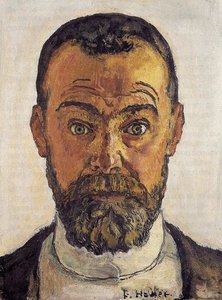
1853–1918, Szwajcaria
Ferdinand Hodler
Architektura śmiertelności Urodzony w 1853 roku w Bernie, w Szwajcarii, Ferdinand Hodler spędził wczesne lata w cieniu cichej, nieustającej żałoby. Zanim osiągnął wiek dojrzewania, gruźlica, która zabrała jego ojca i dwóch młodszych braci, pozostawiła pustkę w jego domu. To wczesne spotkanie ze stratą stało się powracającym motywem w jego twórczości, cieniem, który towarzyszył mu od skromnych początków praktyki rzemieślniczej aż po szczyty kariery zawodowej. Rozpoczął naukę jako malarz dekorator, pomagając ojczymowi w pracach przy komercyjnych szyldach, co dało mu praktyczne wykształcenie i wykształciło w nim precyzyjną kontrolę nad linią i formą.
Inne prace Ferdinand Hodler
 Eiger, Monch and Jungfrau in Moonlight1908
 Woman in Ecstasy1911
 Sunset on Lake Geneva1915
 Study of two figures1897

Eseje o Unity
 Beyond the Void: Powerful Artworks That Capture the Raw Emotion of GriefExplore the profound power of art in capturing grief. From Expressionist masterpieces to custom hand-painted memorials, discover how iconic…
 Mastering Realism: The Top 25 Iconic Artworks by Hans Holbein the YoungerStep into the Northern Renaissance with our curated guide to the top 25 Hans Holbein the Younger masterpieces. Explore breathtaking realism…
 Mastering Parallelism: The 25 Most Iconic Artworks by Ferdinand HodlerImmerse yourself in the rhythmic beauty of Ferdinand Hodler. Explore 25 iconic masterpieces of Swiss Symbolism and Parallelism. From evocat…