German Expressionism · 1907
Tree in the cornfield (August Macke, 1907)
August Macke (1887–1914) stworzył Tree in the cornfield. Dzieło pochodzi z 1907. Należy do nurtu German Expressionism. Wykonano w technice Oil On Canvas. Przechowywane jest w Museum Ostwall w Dortmund, Germany. Wymiary to 15 × 30 cm.
- 1907
- Oil On Canvas
- 15 × 30 cm
- Museum Ostwall, Dortmund

 Podgląd w skali 1:1

 Ręcznie malowany obraz olejny
 Wyślij jako kartkę
 Udostępnij
 Karta informacyjna


 Pobierz obraz
 Podobne obiekty
 RTG
 Pokaz slajdów
 Pytania i odpowiedzi

 Statystyki
Tree in the cornfield w skrócie
- Tytuł
- Tree in the cornfield
- Artysta
- August Macke (1887–1914)
- Miejsce urodzenia artysty
- Meschede, Niemcy
- Data powstania
- 1907
- Technika wykonania
- Oil On Canvas
- Wymiary
- 15 × 30 cm
- Gdzie można je zobaczyć
- Museum Ostwall, Dortmund, Germany
- Temat
- cornfield scene, figures outdoors, umbrellas, rural life, summer day, tree painting
Co przedstawia Tree in the cornfield?
A Sunlit Interlude in the Cornfield
August Macke’s Tree in the cornfield, painted in 1907, transports the viewer into a moment suspended between pastoral tranquility and burgeoning modern life. This canvas is not merely a depiction of an agricultural scene; it is a vibrant meditation on human connection set against the rhythmic geometry of nature. The composition immediately draws the eye into the lush expanse of the cornfield, dominated by the stately presence of a central tree whose trunk anchors the entire scene. Macke captures the light with an almost palpable energy, suggesting a warm, late afternoon glow filtering through the stalks and illuminating the figures gathered within.
The Echoes of Impressionism in German Expressionism
To understand this work is to appreciate its pivotal moment in art history. While Macke’s early training placed him within the orbit of academic tradition, his style blossomed into a brilliant embrace of Post-Impressionist color and the burgeoning spirit of German Expressionism. Yet, unlike some of his more emotionally charged contemporaries, here, the energy feels buoyant, almost joyous. The technique is characterized by visible, confident brushstrokes that build up the texture of the foliage and the earth. Macke uses color not just to mimic reality, but to amplify feeling—the greens are rich, the skin tones luminous, suggesting an optimistic view of modern existence.
Narrative Details and Symbolic Touches
The human element adds a layer of intimate storytelling. We observe a man bending low, perhaps gathering something precious from the ground, while a woman stands nearby, lending a sense of watchful grace to the scene. The inclusion of details—the two umbrellas suggesting preparedness for changing weather, the handbag resting near the woman’s feet—grounds the ethereal quality of the light in tangible reality. These small props invite speculation: What are they gathering? Are they pausing from a journey? Macke masterfully weaves these anecdotal elements into the broader tapestry of the field, turning a simple outing into a portrait of shared experience.
Bringing the Light Home
For the collector or designer seeking to infuse a space with artistic vitality, this reproduction offers more than just decoration; it offers an atmosphere. The scale of 30 x 15 cm makes it perfectly suited for mantelpieces, gallery walls, or console tables where a burst of color and narrative depth is desired without overwhelming the room. Owning Tree in the cornfield is to possess a piece of early 20th-century optimism—a reminder that even amidst the structured beauty of nature, moments of human grace and connection can bloom vibrantly.
W którym muzeum znajduje się Tree in the cornfield?
Museum Ostwall
Dortmund, Germany
The History and Origins of Museum Ostwall Museum Ostwall serves as a museum of modern and contemporary art in Dortmund, Germany. The institution was founded in the late 1940s, emerging during a period of significant reconstruction. Its first exhibition, held in 1949 under the name Museum am Ostwall, established it as one of Germany's first post-war museums dedicated to 20th-century art.


Zdjęcia w wysokiej rozdzielczości dzieła Tree in the cornfield

Domena publiczna: artysta zmarł w 1914.
Inne rozmiary, kadrowanie i cytowanie →August Macke, Tree in the cornfield (1907), Museum Ostwall. Domena publiczna
Odpowiedzi na pytania dotyczące Tree in the cornfield
Gdzie można obecnie zobaczyć dzieło „Tree in the cornfield” – August Macke?
Oryginał dzieła „Tree in the cornfield” można zobaczyć w Museum Ostwall, Dortmund, Germany.
W którym roku powstało „Tree in the cornfield” – August Macke?
„Tree in the cornfield” – August Macke powstało w 1907.
Z jakiej techniki wykorzystano "Tree in the cornfield"?
Technika wykonania dzieła „Tree in the cornfield” – August Macke to Oil On Canvas. Reprodukcje mają na celu wierne oddanie wyglądu tej techniki.
Jakie są wymiary oryginału "Tree in the cornfield"?
Oryginalne wymiary dzieła „Tree in the cornfield” to 30 x 15 cm. Znajomość pierwotnej skali może być pomocna przy wyborze odpowiedniego rozmiaru reprodukcji.
Co przedstawia „Tree in the cornfield” – August Macke?
„Tree in the cornfield” – August Macke przedstawia: cornfield scene, figures outdoors, umbrellas, rural life, summer day, tree painting.
Czy „Tree in the cornfield” – August Macke znajduje się w domenie publicznej?
Status praw autorskich dla „Tree in the cornfield” – August Macke: dzieło znajduje się w należy do domeny publicznej – autorskie prawa majątkowe wygasły. Określa to, czy reprodukcje obrazu mogą być sporządzane swobodnie.
Kto stworzył "Tree in the cornfield"?
„Tree in the cornfield” zostało stworzone przez August Macke. Informacje na tej stronie dotyczą oryginalnego dzieła autorstwa August Macke.
Do jakiego nurtu należy "Tree in the cornfield"?
„Tree in the cornfield” – August Macke należy do nurtu German Expressionism. Nurt ten stanowi stylistyczny kontekst dzieła.
Do którego okresu twórczości August Macke należy dzieło "Tree in the cornfield"?
„Tree in the cornfield” pochodzi z okresu Formative years w twórczości August Macke. Klasyfikacja ta wiąże dzieło z rozwojem artysty.
O artyście: August Macke
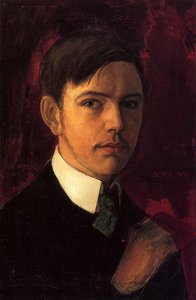
1887–1914, Niemcy
August Macke
Wczesne lata, rodzina i edukacja Historia, którą napisał August Macke, bierze swój początek w niemieckim miasteczku Meschede, gdzie 3 stycznia 1887 roku przyszedł na świat pierwszy i jedyny syn Augusta Friedricha Hermanna Macke, budowniczego i artysty amatora, oraz Marii Florentine. Dzieciństwo artysty kształtowały zmienne losy firmy jego ojca, które rzucały rodzinę raz do Kolonii, a raz do Bonn. Już jako mały chłopiec, August wykazywał nieodparty pociąg do ekspresji wizualnej; spędzał wczesne lata na szkicowaniu i projektowaniu scenografii do szkolnych przedstawień, znajdując sposób na przenoszenie otaczającego go świata na papier na długo przed tym, zanim przekroczył progi formalnej akademii. Jego właściwa edukacja artystyczna rozpoczęła się z pełną mocą, gdy trafił do Akademii w Düsseldorfie, gdzie kształcił się w latach 1904–1906.
Inne prace August Macke
 Kobieta w zielonej kurtce1913
 Bathing girls z miastem w tle1913
 "Hat Shop" -> "Sklep z kapeluszami"1913
 Portrait of the Artist's Wife with Hat1909

Eseje o Tree in the cornfield
 Capturing Grace: The Timeless Beauty and Emotional Depth of Impressionist Female PortraitsDiscover the ethereal beauty of Impressionist female portraits. Explore Renoir's mastery of light, color, and emotion through our curated c…
 Mastering Light: The 25 Most Iconic Landscapes by Jean-Baptiste-Camille CorotImmerse yourself in the serene landscapes of Jean-Baptiste-Camille Corot. Explore 25 iconic masterpieces of the Barbizon school, from misty…
 August Macke: Expressionist Visions of Harmony & Modern LifeExplore the vibrant Expressionist paintings of August Macke (1887-1914). Discover his key role in Der Blaue Reiter, Fauvist influences, and…