Questions & answers
the guide answersShowing 25 of 25
The story of the painting
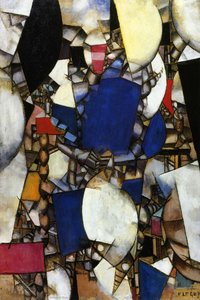
Explore Fernand Léger’s ‘Study Nuts,’ a striking monochrome cubist study of a walnut. Detailed hatching & cross-hatching create depth. A unique, vintage art piece – perfect for collectors!
The Anatomy of Nature: A Botanical Revelation
In the quiet, focused realm of Fernand Léger’s 1931 masterpiece, Study Nuts, the boundaries between the organic world and scientific inquiry dissolve into a singular, breathtaking vision. At first glance, one might expect a traditional botanical illustration—a celebratory tribute to the bounty of nature. Instead, Léger presents us with a profound, cross-sectional exploration of a walnut half, stripped of its shell and laid bare before our eyes. The composition is intensely intimate, utilizing a tight crop that forces the viewer into an almost voyeuristic encounter with the nut's internal architecture. There is no surrounding landscape to provide context, only the labyrinthine network of fibers, cavities, and shadows that constitute the heart of the subject. This focused approach transforms a simple piece of fruit into a complex, topographical map of life itself.
The technique employed in this work is nothing short of a masterclass in monochrome precision. Eschewing the vibrant, primary colors often associated with his later "Tubism" style, Léger turns to the disciplined medium of black ink to achieve a sense of structural depth. Through an exquisite application of hatching and cross-hatching, he builds layers of darkness and light that simulate the rugged, intricate textures of the walnut's interior. Each stroke of the pen serves a dual purpose: to define the physical boundaries of the organic matter and to create a rhythmic, almost mechanical texture that vibrates with energy. The result is an image that feels both ancient, reminiscent of 18th-century anatomical sketches, and strikingly modern in its graphic intensity.
A Convergence of Biology and the Machine Age
To understand Study Nuts, one must look toward the historical pulse of the early 20th century. Created during a period of immense industrial transformation, Léger’s work reflects a fascination with the underlying geometry found within all things. While he is celebrated for capturing the metallic rhythm of factories and urban landscapes, this study reveals his ability to find that same structural logic within the natural world. There is a subtle, brilliant tension here between the biological subject and the mechanical execution; the way the fibers are rendered suggests the precision of an engineered component, bridging the gap between the pastoral roots of his youth in Normandy and the high-voltage hum of the modern era.
For the discerning collector or interior designer, this piece offers a unique emotional resonance. It does not demand attention through loud colors or dramatic narratives; rather, it commands respect through its quiet, intellectual rigor. The artwork possesses an understated elegance that makes it a versatile cornerstone for sophisticated spaces. Whether placed in a minimalist gallery setting or used to add a layer of textured depth to a contemporary study, Study Nuts provides a sense of groundedness and contemplative stillness. It is an ode to form and function, inviting the viewer to pause and appreciate the magnificent, hidden complexities that exist within even the most humble fragments of our world.
The painting 5
Z jakiego okresu pochodzi „Study nuts” – Fernand Léger?
"Study nuts" pochodzi z epoki Modern.
Jaki układ ma „Study nuts” – Fernand Léger?
Dzieło „Study nuts” – Fernand Léger ma format Landscape. Format ten określa proporcje kompozycji.
Któremu artyście przypisuje się "Study nuts"?
Autorstwo dzieła "Study nuts" przypisuje się Fernand Léger.
Jakie miejsce w historii sztuki zajmuje „Study nuts” – Fernand Léger?
Dzieło „Study nuts” – Fernand Léger klasyfikuje się jako Cubism, pochodzące z okresu Modern.
Kto jest autorem i z jakiego roku pochodzi "Study nuts"?
"Study nuts" – autorstwa Fernand Léger, rok powstania: 1931.
The painter 4
W jakim wieku Fernand Léger stworzył(a) "Study nuts"?
Fernand Léger miał 50 lat w momencie powstania „Study nuts” w 1931. Wiek ten obliczono na podstawie roku urodzenia artysty, 1881.
Do jakiego nurtu i epoki zalicza się „Study nuts” – Fernand Léger?
„Study nuts” – Fernand Léger reprezentuje nurt Cubism, powstały w epoce Modernizm swojego twórcy.
Jakie miejsce w dorobku twórczym Fernand Léger zajmuje dzieło "Study nuts"?
"Study nuts" wpisuje się w nurt Cubism w twórczości Fernand Léger, której charakterystyczne motywy obejmują early cubist exploration, detailed monochrome style, focus on form & texture, anatomical illustration, scientific drawings, 18th-century prints, cubist abstraction, botanical observation.
Jakie miejsce zajmuje „Study nuts” wśród powracających motywów w twórczości Fernand Léger?
Powracające motywy w twórczości Fernand Léger obejmują early cubist exploration, detailed monochrome style, focus on form & texture, anatomical illustration, scientific drawings, 18th-century prints, cubist abstraction, botanical observation; „Study nuts” koncentruje się na botanical study, walnut illustration, monochrome drawing, cubist composition, hatching technique, vintage art print, scientific study.
Colours 7
Jaki poziom luminancji ma „Study nuts” – Fernand Léger?
„Study nuts” – Fernand Léger ma luminancję na poziomie Bright Balance. Luminancja określa, jak dużą ilość światła zdają się odbijać kolory.
Czy "Study nuts" charakteryzuje się silnym kontrastem światłocienia?
Kontrast jasności w dziele "Study nuts" wynosi Statement. Kontrast określa stopień zróżnicowania między obszarami jasnymi a ciemnymi.
Jak harmonijna jest kolorystyka dzieła „Study nuts” – Fernand Léger?
„Study nuts” – Fernand Léger prezentuje Strong Color Unity harmonię kolorystyczną.
Czy kolory dzieła "Study nuts" są intensywne czy stonowane?
Dzieło „Study nuts” – Fernand Léger charakteryzuje się nasyceniem na poziomie Muted oraz intensywnością Balanced.
Jak zbudowana jest kompozycja kolorystyczna „Study nuts” – Fernand Léger?
W "Study nuts" Statement kontrast łączy się z Strong Color Unity harmonią.
Jak opisuje się paletę kolorystyczną dzieła „Study nuts” – Fernand Léger?
Kolory dzieła "Study nuts" tworzą Neutrals paletę barw. Klasyfikacja ta opisuje dominujące rodziny kolorystyczne.
Jakie emocje wywołują kolory w „Study nuts” – Fernand Léger?
„Study nuts” – Fernand Léger łączy w sobie Neutrals paletę barw z Reflective tonem.
Museum & rights 1
Z czego wynika obecny status praw autorskich dzieła "Study nuts"?
Status praw autorskich do dzieła „Study nuts” – należy do domeny publicznej – autorskie prawa majątkowe wygasły – wynika z faktu, że artysta zmarł w 1955.
At home & gifts 4
Do jakiego wnętrza polecane jest dzieło „Study nuts” – Fernand Léger?
Reprodukcja "Study nuts" doskonale pasuje do Living Room.
Gdzie i w jakim celu zaleca się użycie "Study nuts"?
Zalecane zastosowanie (Accent) oraz przestrzeń (Living Room) to dwie rekomendacje dla dzieła „Study nuts” – Fernand Léger.
Jaki nastrój oddaje „Study nuts” – Fernand Léger w ramach nurtu Cubism?
W nurcie Cubism dzieło „Study nuts” zostało ujęte w Reflective tonie.
Jakie emocje budzi „Study nuts” – Fernand Léger?
„Study nuts” – Fernand Léger emanuje Reflective emocjami, wpisując się w ogólnie Elegant nastrój.
On this site 4
Gdzie mogę zobaczyć podgląd dzieła "Study nuts"?
Podgląd dzieła „Study nuts” – Fernand Léger można znaleźć na stronie Podgląd w pomieszczeniu.
Czy dostępny jest plik do pobrania w wysokiej rozdzielczości dla "Study nuts"?
Aby otrzymać plik cyfrowy dzieła „Study nuts” – Fernand Léger, zamów wysokiej rozdzielczości cyfrowe zdjęcie do pobrania na stronie Cyfrowy obraz.
Gdzie mogę znaleźć przewodnik do "Study nuts"?
Przewodnik po "Study nuts" to strona Karta informacyjna dla uczniów dzieła sztuki – nadrukowalna karta informacyjna zawierająca opis utworu, informacje o autorstwie oraz tabelę danych (artysta, daty, technika, wymiary oryginału, kolekcja).
Gdzie mogę kupić wydruk „Study nuts” – Fernand Léger?
Aby zamówić wydruk dzieła „Study nuts” – Fernand Léger, wystarczy przejść na jego stronę Wydruk artystyczny premium: szlachetna odbitka na płótnie bawełnianym lub archiwalnym papierze o strukturze płótna.
No written answer matches. Ask the Concierge just below.