Portret Theophrastos Triantafyllidis

Obrazy: 33 najsłynniejszych dzieł artysty Theophrastos Triantafyllidis – spojrzenie galerii

Aktualizacja: Październik 2026 · ranking według naszego wskaźnika popularności (liczba wyszukiwań, wizyt i zamówień dla każdego dzieła) · 33 dzieł Theophrastos Triantafyllidis w naszym katalogu

W skrócie

Według galerii najsłynniejszym obrazem Theophrastos Triantafyllidis jest Nannies in the National Garden (1940). Bathers on the boat (1930) i Boats in calm water dopełniają trio, które zna każde oko. Z 33 dzieł Theophrastos Triantafyllidis w naszym katalogu, galeria prezentuje poniżej 33 najsłynniejszych prac – każda z nich jest oryginałem z podaniem roku powstania, muzeum oraz cech wyróżniających ją na tle innych.

1881 – 1955, İzmir Impressionism

10 najlepszych obrazów artysty Theophrastos Triantafyllidis w galerii

1
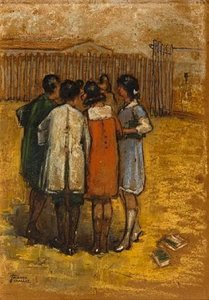
Nannies in the National Garden (1940) autorstwa Theophrastos Triantafyllidis

Nannies in the National Garden

1940 · Oil

The National Garden of Athens becomes a stage for quiet human interaction in this 1940 oil painting. A group of nannies occupies the space, each caught in a private moment of stillness or subtle movement. One figure rests upon a bench, her gaze directed toward something beyond the viewer's sight, while another stands nearby, guiding a child through the greenery. A third nanny stands in contemplation, her eyes cast toward…

Obrazy artysty Theophrastos Triantafyllidis, uszeregowane od 11 do 33 miejsca

Tematy, które przyciągnęły wzrok Theophrastos Triantafyllidis

Cztery motywy najczęściej powracające w tych oryginałach, z których każdy doczekał się swojego najdoskonalszego przykładu.

Theophrastos Triantafyllidis, jedno kultowe dzieło na dekadę

Dzieła według dekad

Wybierz dekadę, aby zobaczyć dzieło, które ją definiuje.

Obrazy artysty Theophrastos Triantafyllidis: odpowiedzi galerii

Który obraz Theophrastos Triantafyllidis jest najsłynniejszy ze wszystkich?Odkryj odpowiedź

Nannies in the National Garden (1940). Następne są Bathers on the boat (1930) oraz Boats in calm water.

Ile lat miał Theophrastos Triantafyllidis, gdy ukończył Nannies in the National Garden?Odkryj odpowiedź

59 lat: Nannies in the National Garden pochodzi z 1940, a Theophrastos Triantafyllidis urodził(a) się w 1881.

Które to 10 najlepszych obrazów Theophrastos Triantafyllidis?Odkryj odpowiedź

Nannies in the National Garden, Bathers on the boat, Boats in calm water, Masks, Photographer, Two Children on the Beach, Harvesting, Vase with flowers, Flea Market i Self-Portrait. Powyższy ranking zawiera rok powstania oraz muzeum dla każdego z nich.

Ile dzieł stworzył/a Theophrastos Triantafyllidis?Odkryj odpowiedź

Nasz katalog zawiera 33 dzieł artysty Theophrastos Triantafyllidis, datowanych od 1919 do 1952.

Kiedy Theophrastos Triantafyllidis stworzył swoje najsłynniejsze obrazy?Odkryj odpowiedź

W 1930s: 3 z 33 dzieł na tej stronie powstało w tym czasie, w tym Bathers on the boat.

Które z najsłynniejszych dzieł Theophrastos Triantafyllidis należą do jego najwcześniejszych i najpóźniejszych prac?Odkryj odpowiedź

Na tej stronie najwcześniejszy to Two Children on the Beach (1919), a najpóźniejszy Self-Portrait (1952).

Do jakich tematów Theophrastos Triantafyllidis powracał najczęściej?Odkryj odpowiedź

Gardens and parks (3), Earth tones (2) i Reflection (2), w ramach 33 dzieł na tej stronie.

Z jakim nurtem związany jest Theophrastos Triantafyllidis?Odkryj odpowiedź

Impressionism i Post-impressionism, sądząc po oryginałach na tej stronie.

Theophrastos Triantafyllidis: artysta

Theophrastos Triantafyllidis: A Pioneer of Greek Impressionism

Theophrastos Triantafyllidis (1881-1955) stands as a pivotal figure in the history of Greek art, particularly recognized for his contribution to Impressionism and Post-Impressionism. Born in Izmir, Ottoman Greece – now Turkey – Triantafyllidis’s artistic journey began amidst the burgeoning cultural landscape of the early 20th century, shaping him into an artist deeply attuned to both European avant-garde trends and the unique spirit of his homeland.

His formative years were spent studying at Athens School of Fine Arts, where he absorbed the teachings of prominent instructors who championed classical ideals alongside modern experimentation. This dual influence proved crucial in establishing Triantafyllidis’s distinctive artistic style – one characterized by a masterful blend of Impressionistic luminosity and expressive distortions reminiscent of Post-Impressionists like Cézanne and Gauguin.

Early works demonstrate a clear affinity with Impressionist principles, prioritizing fleeting moments of light and color to capture the essence of everyday life. Subjects such as landscapes—particularly scenes from Mykonos—and portraits are rendered with delicate brushstrokes and vibrant hues, reflecting Triantafyllidis’s fascination with capturing atmospheric conditions and conveying emotion through visual representation.

However, Triantafyllidis swiftly moved beyond mere imitation of established masters. As he matured as an artist, his style evolved towards a more personal expressionism, incorporating bolder colors and fractured forms to convey psychological depth and emotional intensity. This stylistic shift cemented his reputation as a visionary innovator who pushed the boundaries of artistic convention.

Notable achievements include numerous exhibitions showcasing his paintings across Greece and internationally, establishing him as one of the foremost proponents of Greek Impressionism. His oeuvre continues to inspire admiration for its lyrical beauty and profound exploration of human experience—a testament to Triantafyllidis’s enduring legacy as a transformative force in the artistic panorama of his era.

Major Paintings

Influences and Artistic Style

Triantafyllidis’s artistic vision was profoundly shaped by the Impressionist movement, spearheaded by artists like Monet and Renoir. He embraced their emphasis on capturing fleeting impressions of light and color—a technique he skillfully applied to landscapes and portraits alike.

However, Triantafyllidis transcended mere stylistic imitation, forging his own distinctive path toward expressionism. His canvases pulsate with emotional intensity, achieved through bold brushstrokes and distorted forms that convey psychological states rather than literal representations of reality. This approach aligns him with artists like Edvard Munch and Vincent van Gogh—figures who championed subjective experience as paramount to artistic endeavor.

Legacy

Theophrastos Triantafyllidis’s contribution to Greek art remains significant, securing his place among the foremost proponents of Impressionism and Post-Impressionism. His enduring influence can be observed in subsequent generations of artists who embraced similar stylistic innovations—a testament to his pioneering spirit and unwavering commitment to artistic experimentation.