


1


Aktualizacja: Październik 2026 · ranking według naszego wskaźnika popularności (liczba wyszukiwań, wizyt i zamówień dla każdego dzieła) · 48 dzieł Othon Friesz w naszym katalogu
W skrócie
Scene in a Parisian Brasserie (1906) to obraz autorstwa Othon Friesz, który przyciąga najwięcej spojrzeń; oryginał znajduje się w Museum Barberini, Potsdam. Następnie wzrok kieruje się na The Bathers of Andelys (1908) i Interior (1914). Spośród 48 dzieł Othon Friesz w naszym katalogu, tych 48 jest najbardziej znanych – każde z nich to unikatowy oryginał, przedstawiony wraz z rokiem powstania, muzeum oraz powodem, dla którego przetrwało próbę czasu.


The oil on canvas titled Temptation (Adam and Eve) was painted by Othon Friesz in 1910. This work measures 73 x 60 cm. It captures a moment of profound weight through the figures of Adam and Eve. The scene is held within the permanent collection of the Hermitage Museum.


 Nude Reclining
12
 The CreekMuseum of Art
13
 The Harbour in Honfleur1907 · National Museum of Art, Architecture and Design
14
 Flowers (Tulips and Daisies)1910 · Ermitaż
15
 Vue du château Fallet1907 · Musée d'Unterlinden
16
 The Sunken Road in Winter1913 · Statens Museum for Kunst
17
 The Arbour in the Pine Wood1914 · Statens Museum for Kunst
18
 Still Life with Brioches1916 · Statens Museum for Kunst
19
 Still Life with Apples1915 · Statens Museum for Kunst
20
 Terrace with Palms1914 · Statens Museum for Kunst
21
 The Cliff at Sainte Marguerite1914 · Statens Museum for Kunst
22
 The Peaches1914 · Statens Museum for Kunst
23
 Spring1913 · Statens Museum for Kunst
24
 The Harbour of Le Havre1921 · Królewskie Muzeum Sztuk Pięknych Antwerpia
25
 Under the Fig1922 · Statens Museum for Kunst
26
 The Mountain Coudon Seen from Cap BrunKrólewskie Muzeum Sztuk Pięknych Antwerpia
27
 The ramparts of Saint-MaloMusée Toulouse-Lautrec
28
 Port
29
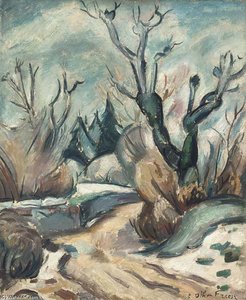 The Jura
30
 Landscape
31
 Port Of Toulon
32
 Baigneuses
33
 Flowers
34
 Construction Of Sheds At Istres
35
 Window On The Port Of Toulon
36
 Bateau Et Coquillages
37
 Seated Woman
38
 Nature Morte
39
 Landscape At Home
40
 A Village Street
41
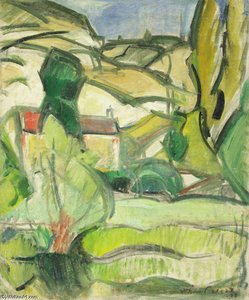 Landscape -
42
 A Still Life With Flowers In A Vase
43
 Drawings for ceramic platesMuseu do Caramulo
44
 Landscape of La Ciotat1907 · Centre Pompidou
45
 The Port of Anvers1906 · La Boverie
46
 Autumn Work1908 · National Museum of Art, Architecture and Design
47
 Roofs and Cathedral in Rouen1908 · Ermitaż
48
 Le Havre, Bassin du Roy1906
Cztery motywy najczęściej powracające w tych oryginałach, z których każdy doczekał się swojego najdoskonalszego przykładu.
8 muzeów, w których znajduje się najwięcej obrazów z tej strony.
| Muzea | Miasto | Dzieła artysty Othon Friesz | Obrazy z tej listy |
|---|---|---|---|
 Statens Museum for Kunst |
Kopenhaga | 13 | Interior, Mother's Love, The Lady on the Terrace |
 Ermitaż |
Sankt Petersburg | 3 | Temptation (Adam and Eve), Flowers (Tulips and Daisies), Roofs and Cathedral in Rouen |
 National Museum of Art, Architecture and Design |
Oslo | 2 | The Harbour in Honfleur, Autumn Work |
 Królewskie Muzeum Sztuk Pięknych Antwerpia |
Antwerpia | 2 | The Harbour of Le Havre, The Mountain Coudon Seen from Cap Brun |
 Museum Barberini |
Potsdam | 1 | Scene in a Parisian Brasserie |
 Musee du Petit Palais |
Geneva | 1 | The Bathers of Andelys |
 Muzeum Izraela |
Jerozolima | 1 | The Decorated Cruiser, Antwerp |
 Museum of Art |
San Diego | 1 | The Creek |
Wybierz dekadę, aby zobaczyć dzieło, które ją definiuje.
Scene in a Parisian Brasserie (1906), Museum Barberini, Potsdam. Następne są The Bathers of Andelys (1908) oraz Interior (1914).
27 lat: Scene in a Parisian Brasserie pochodzi z 1906, a Othon Friesz urodził(a) się w 1879.
Scene in a Parisian Brasserie, The Bathers of Andelys, Interior, Mother's Love, The Lady on the Terrace, Female Nude, Temptation (Adam and Eve), The Decorated Cruiser, Antwerp, Le Havre Port i Nude Lying in a Landscape. Powyższy ranking zawiera rok powstania oraz muzeum dla każdego z nich.
Nasz katalog zawiera 48 dzieł artysty Othon Friesz, datowanych od 1903 do 1923.
W większości znajdują się w Statens Museum for Kunst (Kopenhaga), Ermitaż (Sankt Petersburg) i National Museum of Art, Architecture and Design (Oslo). Powyższa tabela muzeów zawiera ich pełną listę.
W 1910s: 13 z 48 dzieł na tej stronie powstało w tym czasie, w tym Interior.
Na tej stronie najwcześniejszy to Le Havre Port (1903), a najpóźniejszy Female Nude (1923).
Flowers (2) i Landscape (2), w ramach 48 dzieł na tej stronie.
Interior, Mother's Love i The Lady on the Terrace: Statens Museum for Kunst, Kopenhaga posiada 13 dzieł widocznych na tej stronie.