Portret Johann Georg Platzer

62 najsłynniejszych obrazów artysty Johann Georg Platzer – wybór z galerii

Aktualizacja: Listopad 2026 · ranking według naszego wskaźnika popularności (liczba wyszukiwań, wizyt i zamówień dla każdego dzieła) · 62 dzieł Johann Georg Platzer w naszym katalogu

W skrócie

Spośród wszystkich dzieł oryginalnych, które pozostawił Johann Georg Platzer, najsłynniejszym jest The Assumption of Mary (1735), znajdujący się w kolekcji Staatliche Kunsthalle Karlsruhe w Karlsruhe. Tuż za nimi znajdują się Bacchic Revels (1740) oraz Nymphs and Satyrs Drinking (1740). Nasz katalog zawiera 62 dzieł autorstwa Johann Georg Platzer; galeria zachowała 62 najbardziej podziwianych na świecie prac, z których każda została przedstawiona wraz z datą powstania, informacją o muzeum oraz jej historią.

1704 – 1761, Eppan an der Weinstraße Baroque Najwięcej dzieł: Minneapolis Institute of Art

10 najlepszych obrazów artysty Johann Georg Platzer: wybór galerii

1
The Assumption of Mary (1735) autorstwa Johann Georg Platzer

The Assumption of Mary

1735 · Oil On Canvas · Staatliche Kunsthalle Karlsruhe, Karlsruhe

A vertical composition directs the gaze from the terrestrial realm toward the divine heavens. At the base, apostles gather around an open tomb, their faces marked by awe and devotion. Above them, the Virgin Mary ascends amidst a host of angels, her form enveloped in a blue mantle. The movement is upward and fluid, driven by swirling cloud formations and the sweeping gestures of the figures. Light emanates from the…

2
Bacchic Revels (1740) autorstwa Johann Georg Platzer

Bacchic Revels

1740 · Oil · Art Institute of Chicago, Chicago

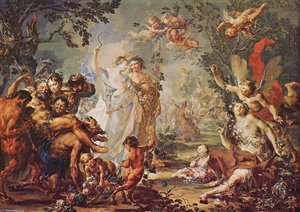
The air feels thick with the scent of damp earth and the echoes of distant music. In this monochrome world, a celebration unfolds amidst a lush, wooded landscape where the boundaries between the human and the divine blur. Figures move with a fluid, swirling energy, their bodies entwined in a rhythmic chaos that defies stillness. Drapery flows like water around muscular limbs, catching a soft light that descends from the…

3
Nymphs and Satyrs Drinking (1740) autorstwa Johann Georg Platzer

Nymphs and Satyrs Drinking

1740 · Oil On Copper · Art Institute of Chicago, Chicago

In this mythological painting, titled Nymphs and Satyrs Drinking, we encounter a scene of classical indulgence. The work was executed by the Austrian artist Johann Georg Platzer, who lived from 1704 to 1761. It is a composition that captures a moment of revelry, focusing on the figures of nymphs and satyrs as they gather together. The piece dates to about 1740, a period when the artist was refining his approach…

4
Artist's atelier with Hungarian patrons (1720) autorstwa Johann Georg Platzer

Artist's atelier with Hungarian patrons

1720 · Oil · Muzeum Narodowe w Warszawie, Warszawa

The studio is a cavern of amber and deep shadow. A central golden urn anchors the composition, its metallic sheen catching a light that seems to emerge from a hidden window. Around this pillar of light, the space is crowded with the tools of creation and the weight of history. Marble busts stare from the gloom, their cold surfaces contrasting with the heavy, tactile folds of velvet drapery. The air…

5
Social Scene (1732) autorstwa Johann Georg Platzer

Social Scene

In "Social Scene" by Johann Georg Platzer, a monochrome reproduction of an 18th-century work, the eye meets a crowded, theatrical arrangement. The space is shallow, packed with multiple groups of figures gathered in a formal garden. To the left, the scene is anchored by the heavy, geometric stability of classical architecture, featuring an arched doorway and a pedestal supporting a sculptural figure. On the right, the rigid lines of stone…

6
Card Player (Ace is Trump) (1730) autorstwa Johann Georg Platzer

Card Player (Ace is Trump)

1730 · Oil

The scene unfolds in Card Player (Ace is Trump), a work that captures a fleeting moment of social tension. Johann Georg Platzer, the hand behind this composition, invites us into a crowded, intimate interior where the stakes of a game hang in the air. This painting, dating to about 1730, finds its creator in the midst of a flourishing career. Born in 1704 in Eppan an der Weinstraße, the artist…

7
Making avances after the meal (1725) autorstwa Johann Georg Platzer

Making avances after the meal

1725 · Oil On Canvas

In this 1725 oil on canvas, four figures are positioned around a table in a tightly grouped composition. The scene depicts a moment of leisure following a meal, characterized by the presence of musical instruments and refreshments. A figure holds a wine glass, while others are situated near a violin, a tambourine, and sheet music. The lighting is directional, casting soft shadows across the faces of the subjects and highlighting…

8
The Bath of Diana (1730) autorstwa Johann Georg Platzer

The Bath of Diana

1730 · Oil · Minneapolis Institute of Art, Minneapolis

The Bath of Diana is a Rococo-style mythological scene from 1730 that depicts a group of nymphs bathing within a forest setting. The composition is dense and dynamic, utilizing a pyramidal arrangement of figures that leads the eye across a landscape of rocky outcrops and verdant foliage. The subject matter portrays Diana and her nymphs in a moment of leisure, evoking themes of purity, nature, and classical mythology.

9
Latona Turning the Lycian Peasants into Frogs (1730) autorstwa Johann Georg Platzer

Latona Turning the Lycian Peasants into Frogs

1730 · Minneapolis Institute of Art, Minneapolis

This Rococo-style oil painting depicts a dynamic mythological scene where Latona transforms Lycian peasants into frogs. The composition is complex and asymmetrical, utilizing a swirling arrangement of figures that directs the eye from the left foreground toward a luminous central figure on the right. The subject matter is evidenced by the transition of human limbs into amphibian forms and the presence of actual frogs in the foreground water.

Kontynuacja zestawienia Johann Georg Platzer, od 11 do 62

11David Meeting Abigail (1727) autorstwa Johann Georg PlatzerDavid Meeting Abigail1727 · National Gallery Prague 12Garden-party (1729) autorstwa Johann Georg PlatzerGarden-party1729 13Rebecca at the Fountain (1735) autorstwa Johann Georg PlatzerRebecca at the Fountain1735 14Samson's Revenge (1735) autorstwa Johann Georg PlatzerSamson's Revenge1735 15The Rape of the Sabine women (1744) autorstwa Johann Georg PlatzerThe Rape of the Sabine women1744 · Moravian Gallery in Brno 16The Marriage Feast at Cana (1743) autorstwa Johann Georg PlatzerThe Marriage Feast at Cana1743 17Ill-matched couple. (1737) autorstwa Johann Georg PlatzerIll-matched couple.1737 · Muzeum Narodowe w Warszawie 18Merry company in the park. (1740) autorstwa Johann Georg PlatzerMerry company in the park.1740 · Muzeum Narodowe w Warszawie 19Merry Company on a Patio (1735) autorstwa Johann Georg PlatzerMerry Company on a Patio1735 · Gemäldegalerie 20The abduction of Helena (1750) autorstwa Johann Georg PlatzerThe abduction of Helena1750 · Moravian Gallery in Brno 21sketch for allegoric plafond-picture (1750) autorstwa Johann Georg Platzersketch for allegoric plafond-picture1750 22Antony And Cleopatra At The Battle Of Actium autorstwa Johann Georg PlatzerAntony And Cleopatra At The Battle Of Actium 23The Death Of Cleopatra autorstwa Johann Georg PlatzerThe Death Of Cleopatra 24Das Atelier Des Malers autorstwa Johann Georg PlatzerDas Atelier Des MalersCleveland Museum of Art 25Allegorie Der Vier Jahreszeiten autorstwa Johann Georg PlatzerAllegorie Der Vier Jahreszeiten 26Dancing Scene With Palace Interior autorstwa Johann Georg PlatzerDancing Scene With Palace Interior 27Rescue of Alexander the Great autorstwa Johann Georg PlatzerRescue of Alexander the GreatStaatliche Kunsthalle Karlsruhe 28Alexander the Great Cuts the Gordian Knot autorstwa Johann Georg PlatzerAlexander the Great Cuts the Gordian KnotStaatliche Kunsthalle Karlsruhe 29Musical Company in the Salon autorstwa Johann Georg PlatzerMusical Company in the SalonNational Gallery Prague 30Concerto autorstwa Johann Georg PlatzerConcerto 31Sommer autorstwa Johann Georg PlatzerSommerMinneapolis Institute of Art 32Winter autorstwa Johann Georg PlatzerWinter 33Autumn autorstwa Johann Georg PlatzerAutumn 34Abraham and the Three Angels autorstwa Johann Georg PlatzerAbraham and the Three AngelsSzépművészeti Múzeum 35the miraculous draught of fishes autorstwa Johann Georg Platzerthe miraculous draught of fishes 36Orientalisches Fest autorstwa Johann Georg PlatzerOrientalisches Fest 37An Allegory Of Misrule autorstwa Johann Georg PlatzerAn Allegory Of MisruleBirmingham Museum and Art Gallery 38Allegory Of Five Senses autorstwa Johann Georg PlatzerAllegory Of Five Senses 39The Judgement Of Paris autorstwa Johann Georg PlatzerThe Judgement Of Paris 40Salome Dancing Before Herod autorstwa Johann Georg PlatzerSalome Dancing Before Herod 41The Concert autorstwa Johann Georg PlatzerThe Concert 42Winter autorstwa Johann Georg PlatzerWinterMinneapolis Institute of Art 43The Abduction Of Helen autorstwa Johann Georg PlatzerThe Abduction Of HelenWallace Collection 44Kinder Beim Unterricht Im Freien autorstwa Johann Georg PlatzerKinder Beim Unterricht Im Freien 45Das Gastmal Der Kleopatra autorstwa Johann Georg PlatzerDas Gastmal Der Kleopatra 46The Concert autorstwa Johann Georg PlatzerThe ConcertMuzeum Narodowe w Warszawie 47Saint John The Baptist Preaching In The Wilderness autorstwa Johann Georg PlatzerSaint John The Baptist Preaching In The Wilderness 48Alexander And The Queen Of The Amazons, Thalestris autorstwa Johann Georg PlatzerAlexander And The Queen Of The Amazons, Thalestris 49Frühling autorstwa Johann Georg PlatzerFrühlingMinneapolis Institute of Art 50Orientalisches Fest autorstwa Johann Georg PlatzerOrientalisches Fest 51Alexander And The Family Of Darius autorstwa Johann Georg PlatzerAlexander And The Family Of Darius 52Kinder Beim Unterricht Im Freien autorstwa Johann Georg PlatzerKinder Beim Unterricht Im Freien 53Herbst autorstwa Johann Georg PlatzerHerbstMinneapolis Institute of Art 54Die Hochzeit Zu Kana autorstwa Johann Georg PlatzerDie Hochzeit Zu Kana 55St. Michael In Eppan With Croesus And Solon autorstwa Johann Georg PlatzerSt. Michael In Eppan With Croesus And Solon 56Fountain Scene In Front Of A Palace autorstwa Johann Georg PlatzerFountain Scene In Front Of A Palace 57Marriage Of Aphrodite And Hephaestus autorstwa Johann Georg PlatzerMarriage Of Aphrodite And Hephaestus 58Das Gastmal Der Kleopatra autorstwa Johann Georg PlatzerDas Gastmal Der Kleopatra 59Das Gastmal Der Kleopatra autorstwa Johann Georg PlatzerDas Gastmal Der Kleopatra 60Summer autorstwa Johann Georg PlatzerSummer 61Spring autorstwa Johann Georg PlatzerSpring 62Miraculous Catch of Fish autorstwa Johann Georg PlatzerMiraculous Catch of FishResidenzgalerie

Słynne obrazy Johann Georg Platzer epoka po epoce

Tematy, które przyciągnęły wzrok Johann Georg Platzer

Cztery motywy najczęściej powracające w tych oryginałach, z których każdy doczekał się swojego najdoskonalszego przykładu.

Muzea przechowujące oryginały Johann Georg Platzer

8 muzeów, w których znajduje się najwięcej obrazów z tej strony.

Muzea Miasto Dzieła artysty Johann Georg Platzer Obrazy z tej listy
Minneapolis Institute of Art, MinneapolisMinneapolis Institute of Art Minneapolis 6 The Bath of Diana, Latona Turning the Lycian Peasants into Frogs, Sommer
Muzeum Narodowe w Warszawie, WarszawaMuzeum Narodowe w Warszawie Warszawa 4 Artist's atelier with Hungarian patrons, Ill-matched couple., Merry company in the park.
Staatliche Kunsthalle Karlsruhe, KarlsruheStaatliche Kunsthalle Karlsruhe Karlsruhe 3 The Assumption of Mary, Rescue of Alexander the Great, Alexander the Great Cuts the Gordian Knot
Art Institute of Chicago, ChicagoArt Institute of Chicago Chicago 2 Bacchic Revels, Nymphs and Satyrs Drinking
National Gallery Prague, PragaNational Gallery Prague Praga 2 David Meeting Abigail, Musical Company in the Salon
Moravian Gallery in Brno, BrnoMoravian Gallery in Brno Brno 2 The Rape of the Sabine women, The abduction of Helena
Bawarskie Państwowe Zbiory Malarstwa, MonachiumBawarskie Państwowe Zbiory Malarstwa Monachium 1 Social Scene
Art Gallery of New South Wales, SydneyArt Gallery of New South Wales Sydney 1 The Sculptor's Studio

Johann Georg Platzer dekada po dekadzie: oryginały definiujące każdy okres

Dzieła według dekad

Wybierz dekadę, aby zobaczyć dzieło, które ją definiuje.

Pytania kolekcjonerów o obrazy Johann Georg Platzer

Z jakiego dzieła najbardziej znany jest Johann Georg Platzer?Odkryj odpowiedź

The Assumption of Mary (1735), Staatliche Kunsthalle Karlsruhe, Karlsruhe. Następne są Bacchic Revels (1740) oraz Nymphs and Satyrs Drinking (1740).

W jakim wieku był Johann Georg Platzer, gdy powstało The Assumption of Mary?Odkryj odpowiedź

31 lat: The Assumption of Mary pochodzi z 1735, a Johann Georg Platzer urodził(a) się w 1704.

Jakie są dziesięć najsłynniejszych obrazów, których autorem jest Johann Georg Platzer?Odkryj odpowiedź

The Assumption of Mary, Bacchic Revels, Nymphs and Satyrs Drinking, Artist's atelier with Hungarian patrons, Social Scene, Card Player (Ace is Trump), Making avances after the meal, The Bath of Diana, Latona Turning the Lycian Peasants into Frogs i The Sculptor's Studio. Powyższy ranking zawiera rok powstania oraz muzeum dla każdego z nich.

Ile obrazów pozostawił po sobie Johann Georg Platzer?Odkryj odpowiedź

Nasz katalog zawiera 62 dzieł artysty Johann Georg Platzer, datowanych od 1720 do 1750.

W których muzeach znajdują się arcydzieła Johann Georg Platzer?Odkryj odpowiedź

W większości znajdują się w Minneapolis Institute of Art (Minneapolis), Muzeum Narodowe w Warszawie (Warszawa) i Staatliche Kunsthalle Karlsruhe (Karlsruhe). Powyższa tabela muzeów zawiera ich pełną listę.

W których latach Johann Georg Platzer namalował swoje najsłynniejsze dzieła?Odkryj odpowiedź

W 1730s: 10 z 62 dzieł na tej stronie powstało w tym czasie, w tym The Assumption of Mary.

Jakie są pierwsze i ostatnie słynne oryginały Johann Georg Platzer?Odkryj odpowiedź

Na tej stronie najwcześniejszy to Artist's atelier with Hungarian patrons (1720), a najpóźniejszy The abduction of Helena (1750).

Jakie tematy Johann Georg Platzer wybierał najczęściej?Odkryj odpowiedź

People (16), Drapery (12) i Figures (10), w ramach 62 dzieł na tej stronie.

Której techniki Johann Georg Platzer używał najczęściej?Odkryj odpowiedź

Oil, dla 14 z 62 dzieł na tej stronie.

Do jakiego nurtu artystycznego należy Johann Georg Platzer?Odkryj odpowiedź

Baroque i Rococo, sądząc po oryginałach na tej stronie.

Które dzieła Johann Georg Platzer znajdują się w Minneapolis Institute of Art?Odkryj odpowiedź

The Bath of Diana, Latona Turning the Lycian Peasants into Frogs i Sommer: Minneapolis Institute of Art, Minneapolis posiada 6 dzieł widocznych na tej stronie.

Johann Georg Platzer: życie i twórczość

Życie zanurzone w rokokowym przepychu

Johann Georg Platzer, urodzony w 1704 roku w sielankowej tyrolskiej wiosce Eppan, wyłonił się jako kluczowa postać austriackiego malarstwa rokoko. Jego życie rozwijało się na tle ewoluujących gustów artystycznych i mecenatu arystokratycznego, co ukształtowało go jako mistrza potrafiącego uchwycić zarówno przepych, jak i intymne chwile osiemnastowiecznego społeczeństwa. Wywodząc się z rodziny głęboko zakorzenionej w tradycji artystycznej – jego wuj, Jakob Christoff Platzer, pełnił funkcję malarza dworskiego – młody Johann Georg był zanurzony w świecie, w którym pociągnięcia pędzla i pigmenty nie były jedynie narzędziami, lecz drogami do piękna i statusu. Jego wstępne szkolenie w rodzinnym warsztacie zapewniło mu solidne fundamenty, które później rozszerzał poprzez doświadczenie i studia, ostatecznie definiując swój unikalny głos artystyczny. Choć konkretne wpływy pozostają nieuchwytne, dzieła Platzer dowodzą zrozumienia weneckich palet barwnych i technik kompozycyjnych, połączonych ze stylami dominującymi w południowych Niemczech w okresie rokoka. Nie był on jedynie naśladowcą stylów; on syntetyzował je w coś wyraźnie własnego – żywą ekspresję austriackiej wrażliwości.

Od dworskich zleceń do mitologicznych narracji

Artystyczna podróż Platzera rozpoczęła się od praktyki pod okiem wuja w Passau, co było formacyjnym doświadczeniem wystawiającym go na wymagania i oczekiwania mecenatu dworskiego. Ta wczesna ekspozycja głęboko wpłynęła zarówno na tematykę, jak i styl jego twórczości. Szybko zyskał uznanie dzięki zdolności przedstawiania scen przepełnionych detalami, elegancją i wyczuwalnym duchem arystokratycznego życia. Jednak talent Platzera nie ograniczał się jedynie do portretowania losów szlachty. Doskonale radził sobie również z ożywianiem na płótnie klasycznej mitologii oraz wydarzeń historycznych. Dzieła takie jak Das Gastmal Der Kleopatra (Uczta Kleopatry) demonstrują jego dar do dramatycznego opowiadania historii, podczas gdy przedstawienia narracji mitologicznych – jak choćby Małżeństwo Afrodyty i Hefajstosa – ujawniają mistrzostwo w alegorycznej reprezentacji. Częste eksplorowanie tematów takich jak Cztery Pory Roku dodatkowo ukazuje jego wszechstronność i głębię intelektualną. Poza wielkimi scenami historycznymi czy mitycznymi, Platzer stał się znany również z tzw. „scen towarzyskich” (conversation pieces) – żywych przedstawień arystokratycznych zgromadzeń i interakcji społecznych, które oferowały intymny wgląd w codzienne życie elit.

Mistrz detalu i świetlistego koloru

Cechy charakterystyczne stylu Platzera są natychmiast rozpoznawalne: skrupulatna kompozycja, żywa paleta barw, dynamiczne postacie i silny nacisk na narrację. Posiadał on niezwykłą zdolność kreowania scen o niezwykle złożonych detalach, szczególnie w kontekście scenerii architektonicznych i projektów kostiumów. Każdy element jego obrazów – od fałd tkanin po ornamentykę budynków – został oddany z mozolną precyzją. Ta dbałość o szczegół nie jest jedynie dekoracyjna; służy ona zanurzeniu widza w tworzonym przez niego świecie, sprawiając, że każda scena wydaje się niezwykle realna i namacalna. Równie istotne jest mistrzowskie operowanie kolorem. Artysta stosował bogatą i świetlistą paletę typową dla estetyki rokoka, faworyzując pastele, delikatne rozświetlenia i subtelne przejścia tonalne, które budują atmosferę elegancji i wyrafinowania. Jego postacie rzadko są statyczne; przedstawiane są w pełnych gracji pozach, przekazując ruch, emocje i poczucie witalności. Ta dynamiczna jakość dodatkowo wzmacnia siłę narracyjną jego dzieł, wciągając widza w rozgrywający się dramat lub intymny moment.

Dziedzictwo i trwały wpływ

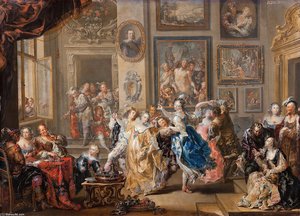
Przez całą swoją karierę Platzer stworzył imponujący dorobek, który do dziś zachwyca odbiorców. Obrazy takie jak Fountain Scene in front of a Palace oraz Dancing Scene with Palace Interior stanowią przykład jego zdolności do uchwycenia przepychu i wdzięku życia arystokratycznego, podczas gdy Allegory of the Four Seasons demonstruje jego biegłość w przedstawianiu alegorii. Muzeum Joanneum Alte Galerie w Graz, w Austrii, posiada największą pojedynczą kolekcję malarstwa Platzera, stanowiąc nieocenione źródło zarówno dla uczonych, jak i pasjonatów sztuki. Johann Georg Platzer reprezentuje istotną postać w historii austriackiego malarstwa rokokowego. Jego twórczość dostarcza cennej wiedzy na temat gustów artystycznych i obyczajowości arystokratycznego społeczeństwa XVIII wieku. Choć być może nie cieszył się tak międzynarodową sławą jak niektórzy jego współcześni, wkład Platzera w regionalną historię sztuki jest znaczący. Pomógł on ustanowić odrębną tożsamość stylistyczną w malarstwie austriackim tego okresu, łącząc wpływy włoskie z lokalnymi tradycjami. Pracował w Eppan aż do śmierci w 1761 roku, pozostawiając po sobie dziedzictwo żywych i pieczołowicie wykonanych obrazów, które mimo upływu wieków wciąż rezonują z widzami – będąc świadectwem nieprzemijającej potęgi rokokowego przepychu.