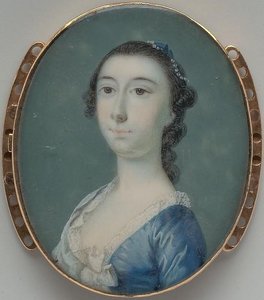
Portret Jeremiaś Theus

Obrazy: 28 najsłynniejszych dzieł artysty Jeremiaś Theus – spojrzenie galerii

Aktualizacja: Listopad 2026 · ranking według naszego wskaźnika popularności (liczba wyszukiwań, wizyt i zamówień dla każdego dzieła) · 29 dzieł Jeremiaś Theus w naszym katalogu

W skrócie

Według opinii kuratorów galerii, najsłynniejszym obrazem Jeremiaś Theus jest Captain William Richardson (1743-1786) (1757), którego oryginał znajduje się w Yale University Art Gallery w Nowe Havane. William Wragg (1750) i Portrait of Amarinthia Elliott (1748) dopełniają trio, które zna każde oko. Z 29 dzieł Jeremiaś Theus w naszym katalogu, galeria prezentuje poniżej 28 najsłynniejszych prac – każda z nich jest oryginałem z podaniem roku powstania, muzeum oraz cech wyróżniających ją na tle innych.

1716 – 1774, Chur Rococo Najwięcej dzieł: Metropolitan Museum of Art

10 najlepszych obrazów artysty Jeremiaś Theus w galerii

1
Captain William Richardson (1743-1786) (1757) autorstwa Jeremiaś Theus

Captain William Richardson (1743-1786)

1757 · Oil On Canvas · Yale University Art Gallery, Nowe Havane

A formal 18th-century portrait of a young man, presented within an oval vignette against a dark, monochromatic background. Captain William Richardson is depicted from the waist up, positioned at a slight angle while looking toward the viewer. The composition relies on a restrained color palette, dominated by the creamy white of his waistcoat and jacket, which contrasts sharply against a deep blue trim. This trim features intricate silver or gold…

2
William Wragg (1750) autorstwa Jeremiaś Theus

William Wragg

1750 · Watercolor · Detroit Institute of Arts, Detroit

In this intimate portrait of William Wragg, the sitter meets our gaze from a time long passed. Painted around 1750, the work captures a man of status through a refined, oval-shaped bust-length composition. He sits slightly off-center, his body turned toward the right while his eyes remain fixed forward, creating a sense of quiet presence. The subject wears a cool lavender-grey frock coat that contrasts against the warm, shimmering gold…

3
Portrait of Amarinthia Elliott (1748) autorstwa Jeremiaś Theus

Portrait of Amarinthia Elliott

1748 · Painting · Detroit Institute of Arts, Detroit

Portrait of Amarinthia Elliott, painted by Jeremiah Theus in 1748, captures a young woman in a formal, medium close-up composition. The subject is positioned slightly off-center, holding a small sprig of blue flowers against a muted, atmospheric background. This work originates from the mid-18th century, a period when Theus was establishing his presence within the colonial social hierarchy.

4
Mrs. Thomas Lynch (Elizabeh Allston Lynch) (1755) autorstwa Jeremiaś Theus

Mrs. Thomas Lynch (Elizabeh Allston Lynch)

1755 · Oil On Canvas

In this oil on canvas portrait, we encounter Mrs. Thomas Lynch (Elizabeth Allston Lynch), a figure captured by the Swiss-American painter Jeremiah Theus. Created in 1755, the work offers a direct look at a woman of the colonial era. Theus, who established himself in Charleston, South Carolina, brought a refined sensibility to his depictions of the local elite. This specific piece reflects the quiet dignity of his portraiture from that…

5
Mrs. Peter Manigault (1757) autorstwa Jeremiaś Theus

Mrs. Peter Manigault

1757 · Oil On Canvas

In this 1757 portrait, we encounter Elizabeth Wragg Manigault, a woman whose presence defines the social hierarchy of colonial South Carolina. She is captured in a full-length vertical composition, her figure positioned with a poised, slight offset that suggests both grace and a quiet, commanding authority. The light, descending from the upper left, catches the luminous sheen of her white and silver satin gown, creating a play of light and…

6
Portrait of John Faucheraud Grimké (1762) autorstwa Jeremiaś Theus

Portrait of John Faucheraud Grimké

The mid-18th century in Charleston was a time of burgeoning commercial and social complexity. Theus arrived in the colony from Switzerland, contributing to a growing artistic community that sought to mirror European sophistication. His work provides a visual record of the individuals who shaped the social fabric of South Carolina. This portrait remains a specific window into the life of a man who navigated the legal and political intricacies of…

7
Portrait of Mrs. John Champneys (Anne Livingston, born 1746) (1763) autorstwa Jeremiaś Theus

Portrait of Mrs. John Champneys (Anne Livingston, born 1746)

1763 · Oil On Canvas · Museum of Fine Arts, Houston

In this 1763 oil portrait, we encounter Mrs. John Champneys, known to history as Anne Livingston, captured in a moment of quiet contemplation. She is presented in a three-quarter view, her form emerging from a deep, atmospheric brown background that lends a sense of weight and presence to her figure. The lighting, descending softly from the upper left, traces the contours of her face and neck, creating a gentle play…

8
Mrs. Lionel Chalmers (Martha Logan) (1756) autorstwa Jeremiaś Theus

Mrs. Lionel Chalmers (Martha Logan)

1756 · Oil On Canvas · Museum of Fine Arts, Boston

Jeremiah Theus presents Mrs. Lionel Chalmers (Martha Logan) within a formal oval composition. The arrangement focuses on the subject's head and upper torso, utilizing a straight-on, medium close-up perspective to establish a sense of intimacy. The single female figure is captured with a calm, dignified expression, projecting an air of poise and social standing. This portrait, executed about 1756, centers the viewer's attention on the sitter's steady gaze and composed…

9
Dr. Lionel Chalmers (1756) autorstwa Jeremiaś Theus

Dr. Lionel Chalmers

1756 · Oil On Canvas · Museum of Fine Arts, Boston

The gaze of Dr. Lionel Chalmers meets the viewer from across the centuries, preserved within this 1756 oil portrait. Jeremiah Theus, a Swiss-born American painter, captures the man in a moment of quiet, professional dignity. The subject sits with a composed presence, his features rendered with a clarity that suggests a life of intellect and social standing. Every line of his expression seems to hold a silent story of the…

10
Mrs. Samuel Carne (1740-1805) (1765) autorstwa Jeremiaś Theus

Mrs. Samuel Carne (1740-1805)

1765 · Oil On Canvas · New York Historical Society, Nowy Jork

The sitter gazes out from an oval frame, her presence steady and quiet against a dark, muted background. She is a woman of the mid-eighteenth century, captured in a moment of formal repose. Her attire speaks of a specific social standing, defined by the delicate translucency of a lace collar that rests against her neck. A dark choker encircles her throat, drawing the eye upward toward the soft features of…

Obrazy artysty Jeremiaś Theus, uszeregowane od 11 do 28 miejsca

Tematy, które przyciągnęły wzrok Jeremiaś Theus

Cztery motywy najczęściej powracające w tych oryginałach, z których każdy doczekał się swojego najdoskonalszego przykładu.

Muzea przechowujące oryginały Jeremiaś Theus

8 muzeów, w których znajduje się najwięcej obrazów z tej strony.

Muzea Miasto Dzieła artysty Jeremiaś Theus Obrazy z tej listy
Metropolitan Museum of Art, Nowy JorkMetropolitan Museum of Art Nowy Jork 4 Mrs. Jacob Motte (Rebecca Brewton), Mrs. John Dart, Gabriel Manigault
National Gallery of Art, WaszyngtonNational Gallery of Art Waszyngton 3 James Cuthbert (?), Mr. Motte, Mrs. Cuthbert
Gibbes Museum of Art, CharlestonGibbes Museum of Art Charleston 3 Benjamin Smith, Kolonel Barnard Elliott Jr., Mrs. Barnard Elliott, Jr. (Mary Elizabeth Bellinger Elliott)
Detroit Institute of Arts, DetroitDetroit Institute of Arts Detroit 2 William Wragg, Portrait of Amarinthia Elliott
Museum of Fine Arts, BostonMuseum of Fine Arts Boston 2 Mrs. Lionel Chalmers (Martha Logan), Dr. Lionel Chalmers
New York Historical Society, Nowy JorkNew York Historical Society Nowy Jork 2 Mrs. Samuel Carne (1740-1805), Samuel Carne, MD (1725-1780)
Yale University Art Gallery, Nowe HavaneYale University Art Gallery Nowe Havane 1 Captain William Richardson (1743-1786)
Muzeum Sztuki Johna i Mable Ringlingów, SarasotaMuzeum Sztuki Johna i Mable Ringlingów Sarasota 1 Portrait of John Faucheraud Grimké

Jeremiaś Theus, jedno kultowe dzieło na dekadę

Dzieła według dekad

Wybierz dekadę, aby zobaczyć dzieło, które ją definiuje.

Obrazy artysty Jeremiaś Theus: odpowiedzi galerii

Który obraz Jeremiaś Theus jest najsłynniejszy ze wszystkich?Odkryj odpowiedź

Captain William Richardson (1743-1786) (1757), Yale University Art Gallery, Nowe Havane. Następne są William Wragg (1750) oraz Portrait of Amarinthia Elliott (1748).

Ile lat miał Jeremiaś Theus, gdy ukończył Captain William Richardson (1743-1786)?Odkryj odpowiedź

41 lat: Captain William Richardson (1743-1786) pochodzi z 1757, a Jeremiaś Theus urodził(a) się w 1716.

Które to 10 najlepszych obrazów Jeremiaś Theus?Odkryj odpowiedź

Captain William Richardson (1743-1786), William Wragg, Portrait of Amarinthia Elliott, Mrs. Thomas Lynch (Elizabeh Allston Lynch), Mrs. Peter Manigault, Portrait of John Faucheraud Grimké, Portrait of Mrs. John Champneys (Anne Livingston, born 1746), Mrs. Lionel Chalmers (Martha Logan), Dr. Lionel Chalmers i Mrs. Samuel Carne (1740-1805). Powyższy ranking zawiera rok powstania oraz muzeum dla każdego z nich.

Ile dzieł stworzył/a Jeremiaś Theus?Odkryj odpowiedź

Nasz katalog zawiera 29 dzieł artysty Jeremiaś Theus, datowanych od 1748 do 1772.

Gdzie można znaleźć najsłynniejsze oryginały autorstwa Jeremiaś Theus?Odkryj odpowiedź

W większości znajdują się w Metropolitan Museum of Art (Nowy Jork), National Gallery of Art (Waszyngton) i Gibbes Museum of Art (Charleston). Powyższa tabela muzeów zawiera ich pełną listę.

Kiedy Jeremiaś Theus stworzył swoje najsłynniejsze obrazy?Odkryj odpowiedź

W 1760s: 13 z 28 dzieł na tej stronie powstało w tym czasie, w tym Portrait of John Faucheraud Grimké.

Które z najsłynniejszych dzieł Jeremiaś Theus należą do jego najwcześniejszych i najpóźniejszych prac?Odkryj odpowiedź

Na tej stronie najwcześniejszy to Portrait of Amarinthia Elliott (1748), a najpóźniejszy Mrs. John Dart (1772).

Do jakich tematów Jeremiaś Theus powracał najczęściej?Odkryj odpowiedź

Woman (8), Man (7) i 18th century (4), w ramach 28 dzieł na tej stronie.

W jakiej technice najczęściej tworzył Jeremiaś Theus?Odkryj odpowiedź

Oil On Canvas, dla 16 z 28 dzieł na tej stronie.

Z jakim nurtem związany jest Jeremiaś Theus?Odkryj odpowiedź

Rococo, sądząc po oryginałach na tej stronie.

Które oryginały artysty Jeremiaś Theus znajdują się w zbiorach Metropolitan Museum of Art?Odkryj odpowiedź

Mrs. Jacob Motte (Rebecca Brewton), Mrs. John Dart i Gabriel Manigault: Metropolitan Museum of Art, Nowy Jork posiada 4 dzieł widocznych na tej stronie.

Jeremiaś Theus: artysta

Jeremiah Theus: Charleston’s Quintessential Portraitist

Jeremiah Theus (1716 – 1774) stands as a singular figure in the artistic landscape of colonial South Carolina, recognized primarily for his masterful portraits that captured the essence of aristocratic society during the Enlightenment. Born in Chur, Switzerland—the eldest child of Simeon and Anna Walser Theüs—his early life remains shrouded in relative obscurity, yet his emigration to Charleston in 1735 marked a pivotal moment shaping his career and legacy. Driven by religious fervor and propelled by land grants offered by the South Carolina General Assembly, Theus established himself as Charleston’s foremost limner (portrait painter), dominating the artistic scene for nearly four decades. ### Early Life and Artistic Training Details regarding Theus' formal artistic training are scarce—a reflection of the limited opportunities available to aspiring artists in Charleston at the time. However, circumstantial evidence suggests he honed his skills during his formative years in Switzerland, absorbing influences from Rococo art prevalent on the continent. This stylistic sensibility would subsequently permeate his oeuvre, characterized by elegant compositions and meticulous attention to detail. His penchant for capturing idealized beauty—particularly evident in depictions of women—demonstrates a deep understanding of prevailing aesthetic conventions. ### Charleston and Artistic Practice By 1740, Theus had firmly rooted himself in Charleston’s burgeoning commercial hub, advertising his services prominently in the *South Carolina Gazette*. Recognizing the importance of establishing credibility within the community, he diligently cultivated relationships with prominent families—the Elliots, Grimball, Heyward, Izard, Manigault, Mazyck and Ravenel—resulting in a prolific output of portraits reflecting Charleston’s social hierarchy. Notably, Theus skillfully adapted English mezzotint prints—a technique favored by artists like John Singleton Copley—incorporating elements of English style into his own compositions. This stylistic fusion underscores the interconnectedness of artistic traditions during the period and reflects Theus' commitment to upholding standards of excellence. ### Notable Commissions and Influences Among Theus’s most ambitious undertakings were the portraits of Colonel Barnard Elliott Jr. and his wife—considered among Charleston’s finest artworks—and Mrs. Peter Manigault, commissioned by Charleston’s wealthiest family. These works exemplify Theus' meticulous approach to portraiture, meticulously studying English prints for inspiration and incorporating stylistic cues that mirrored contemporary artistic trends. His collaborations with fellow artists like John Wollaston further broadened his artistic horizons and fostered intellectual exchange within the Charleston art community. ### Legacy and Significance Jeremiah Theus’s enduring influence extends beyond his individual artworks—he established an evening drawing school, fostering artistic talent among aspiring painters in Charleston. His meticulous documentation of Charleston society—through a vast collection of portraits—provides invaluable insight into the social dynamics and cultural values of colonial America. Furthermore, recent scholarship has illuminated the significance of Theus’s work as a symbol of aristocratic privilege and as a testament to the enduring power of artistic patronage. Today, his paintings reside in museums across North America and Europe, ensuring that Jeremiah Theus' contribution to American art history continues to inspire admiration and scholarly inquiry.