


1


Aktualizacja: Październik 2026 · ranking według naszego wskaźnika popularności (liczba wyszukiwań, wizyt i zamówień dla każdego dzieła) · 29 dzieł István Farkas w naszym katalogu
W skrócie
Z wszystkich oryginałów pozostawionych przez István Farkas, najsłynniejszym jest Figure With Trees. Tuż za nimi znajdują się Self-portrait oraz Night Scene. Nasz katalog zawiera 29 dzieł autorstwa István Farkas; galeria zachowała 29 najbardziej podziwianych na świecie prac, z których każda została przedstawiona wraz z datą powstania, informacją o muzeum oraz jej historią.


 A Walk near the Water Tower1934 · Galeria Narodowa w Budapeszcie
12
 A Group Of Three Works
13
 Gitározó Fiú
14
 Standing In The Sun
15
 Black Women
16
 Landscape At Dusk
17
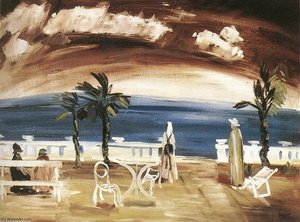 On The Beach Under Purple Sky
18
 Company
19
 French Poet And His Mother
20
 On The Hillside
21
 Night On The Outskirts Of Town
22
 Portrait Of Countess G. Z.
23
 The Aged Sailor And The Old Woman
24
 Landscape At Nightfall (evening)
25
 After The Storm
26
 Man And Woman In The Window
27
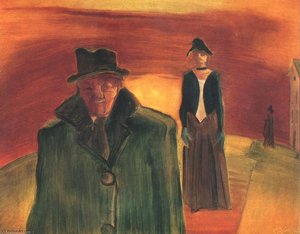 Separated
28
 The Lunatic At Syracuse
29
 Has Anything Happened
Cztery motywy najczęściej powracające w tych oryginałach, z których każdy doczekał się swojego najdoskonalszego przykładu.
Muzeum, w którym znajduje się najwięcej obrazów prezentowanych na tej stronie.
| Muzea | Miasto | Dzieła artysty István Farkas | Obrazy z tej listy |
|---|---|---|---|
 Galeria Narodowa w Budapeszcie |
Budapeszt | 3 | Crowd in the Garden Restaurant, On the Hillside, A Walk near the Water Tower |
Zaledwie dekada, od 1926 do 1934, dostarczyła światu każdy datowany oryginał István Farkas w tym zestawieniu: oto one, rok po roku.
Wybierz rok, aby zobaczyć oryginały.

Figure With Trees. Następne są Self-portrait oraz Night Scene.
Figure With Trees, Self-portrait, Night Scene, Green And Black French Landsxape, Model With Big Hands, Still-life With Coffee-maker, Dawn On The Outskirts Of Town (morning), Fate (walking At The Water Tower), Crowd in the Garden Restaurant i On the Hillside. Powyższy ranking zawiera rok powstania oraz muzeum dla każdego z nich.
Nasz katalog zawiera 29 dzieł artysty István Farkas, datowanych od 1926 do 1934.
W większości znajdują się w Galeria Narodowa w Budapeszcie (Budapeszt). Powyższa tabela muzeów zawiera ich pełną listę.
Na tej stronie najwcześniejszy to Crowd in the Garden Restaurant (1926), a najpóźniejszy A Walk near the Water Tower (1934).
Melancholy mood (2), Loose brushwork (2) i Landscape (2), w ramach 29 dzieł na tej stronie.
Cubism i Impressionism, sądząc po oryginałach na tej stronie.
Crowd in the Garden Restaurant, On the Hillside i A Walk near the Water Tower: Galeria Narodowa w Budapeszcie, Budapeszt posiada 3 dzieł widocznych na tej stronie.
István Farkas, a name largely absent from mainstream art history for decades, represents a poignant and compelling story of artistic talent tragically cut short by the horrors of the Holocaust. Born in Budapest in 1887 into a family deeply rooted in publishing—his father, József Wolfner, was the founder of Singer and Wolfner – Farkas’s early life was marked by both privilege and profound loss. The untimely death of his mother at just four years old shaped his perspective, leading him to adopt the name “Farkas,” a wolf, reflecting a sense of resilience and perhaps even solitude that would permeate much of his work. This transformation—from Wolfner to Farkas – speaks volumes about his personal journey and desire for a new identity.
Farkas’s artistic education began under the guidance of László Mednyánszky in Budapest, an early exposure to the burgeoning Hungarian art scene. He then sought further refinement in Paris, enrolling at the Académie de la Palette – a hub for avant-garde artists during that era. It was here, in 1912, amidst the vibrant Cubist circles of André Salmon, that Farkas truly began to forge his own distinctive style. Salmon’s influence is undeniable; he became a close friend and collaborator, even writing a monograph dedicated to Farkas's work, a testament to the artist’s growing recognition within Parisian artistic circles.
World War I dramatically altered Farkas’s trajectory. He enlisted as a lieutenant in the Austro-Hungarian army, experiencing the brutal realities of war and enduring capture before being held as a prisoner of war in Italy. This period undoubtedly shaped his worldview, contributing to the melancholic undertones often found in his paintings. Following the war, he returned to Budapest, inheriting the family publishing house after his father’s death in 1932 – a responsibility that simultaneously provided stability and demanded significant time commitment. Despite this added burden, he steadfastly maintained his studio in Paris, a crucial space for creative expression and connection with the international art community.
Farkas’s artistic development during his time in Paris is particularly fascinating. He became a significant figure within the École de Paris, an umbrella term encompassing artists from across Europe who flocked to the city seeking inspiration and recognition. His work demonstrates a unique blend of influences – Cubism's fragmented forms, elements of Fauvism’s bold color palettes, and a distinctly Hungarian sensibility. He wasn’t simply replicating established styles; he was synthesizing them into something entirely his own.
His paintings often depict urban landscapes—particularly the bustling streets of Paris—with an almost dreamlike quality. He masterfully captured fleeting moments, conveying a sense of nostalgia and quiet observation. The use of muted colors – predominantly blues, greens, and browns – creates a somber atmosphere, while carefully placed details hint at deeper emotional currents. His compositions frequently feature solitary figures, lost in thought or simply observing the world around them, reflecting a common theme within his oeuvre.
The influence of André Salmon is particularly evident in Farkas’s later work. Salmon encouraged him to explore themes of memory and loss, concepts that resonated deeply with the artist's personal experiences. Farkas’s ability to evoke atmosphere and emotion through subtle brushstrokes and carefully chosen color palettes is a hallmark of his style – a testament to his artistic skill and sensitivity.
In 1925, István Farkas married Ida Kohner, the daughter of Baron Adolf Kohner, a prominent figure in Hungarian Jewish society. This union brought stability and companionship to his life, and they raised three children together. Their shared artistic interests fostered a creative environment within their home, further fueling Farkas’s passion for painting.
However, this period of relative happiness was abruptly shattered by the rise of anti-Semitic legislation in Hungary during the 1930s. As a Jew, Farkas faced increasing persecution and discrimination. The Hungarian Horthy regime intensified its policies targeting Jewish citizens, creating an atmosphere of fear and uncertainty. Despite these challenges, he continued to exhibit his work, showcasing his talent to a wider audience.
The outbreak of World War II brought unimaginable horrors to Hungary, culminating in the systematic deportation of Jews to Auschwitz. In March 1944, as the Nazi occupation intensified, Farkas, along with his family, was arrested and sent to the Kistarcsa deportation camp. After weeks of confinement, he and others were transported to Auschwitz, where they were murdered upon arrival. His wife, Ida Kohner, met a similar fate, tragically killed by Hungarian fascists shortly before her own deportation.
Farkas’s work remained largely forgotten for decades after the war, overshadowed by the immense tragedy of the Holocaust. However, beginning in the mid-1980s, a renewed interest in his art emerged, fueled by research and rediscovery. Today, István Farkas is recognized as a significant, albeit tragically overlooked, figure within the École de Paris – an artist whose evocative landscapes and poignant portraits offer a powerful glimpse into a lost world and a testament to the enduring power of human creativity even in the face of unimaginable adversity. His paintings now stand as a haunting reminder of his talent and a solemn tribute to a life cut short.


