Portret Giovanni Battista Gaulli

57 najsłynniejszych obrazów artysty Giovanni Battista Gaulli, każdy niepowtarzalny

Aktualizacja: Listopad 2026 · ranking według naszego wskaźnika popularności (liczba wyszukiwań, wizyt i zamówień dla każdego dzieła) · 63 dzieł Giovanni Battista Gaulli w naszym katalogu

W skrócie

Cardinal Leopoldo de' Medici (1667) to obraz autorstwa Giovanni Battista Gaulli, który przyciąga najwięcej spojrzeń; oryginał znajduje się w Galleria degli Uffizi, Florencja. Następnie wzrok kieruje się na Gian Lorenzo Bernini (1673) i The Preaching of St John the Baptist (1690). Spośród 63 dzieł Giovanni Battista Gaulli w naszym katalogu, tych 57 jest najbardziej znanych – każde z nich to unikatowy oryginał, przedstawiony wraz z rokiem powstania, muzeum oraz powodem, dla którego przetrwało próbę czasu.

1639 – 1709, Genua Baroque Najwięcej dzieł: Courtauld Gallery

10 najlepszych obrazów autorstwa Giovanni Battista Gaulli według oka galerii

1
Cardinal Leopoldo de' Medici (1667) autorstwa Giovanni Battista Gaulli

Cardinal Leopoldo de' Medici

1667 · Oil On Canvas · Galleria degli Uffizi, Florencja

To gaze upon Giovanni Battista Gaulli's depiction of Cardinal Leopoldo de' Medici is to step directly into the opulent, dramatic heart of 17th-century Rome. This portrait is not merely a likeness; it is a carefully constructed statement of power, piety, and intellectual weight. The subject, clad in the unmistakable crimson robes and pristine white collar of a high-ranking cleric, commands attention with an inherent dignity. Gaulli, known by his evocative…

2
Gian Lorenzo Bernini (1673) autorstwa Giovanni Battista Gaulli

Gian Lorenzo Bernini

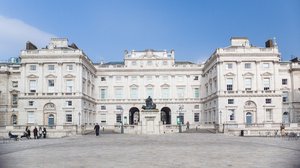
1673 · Obraz olejny na płótnie · Courtauld Gallery, Londyn

Gian Lorenzo Bernini: A Titan of Baroque Illusion Giovanni Battista Gaulli, affectionately known as detto baciccio – “the little painter” – stands as a towering figure in the Baroque artistic landscape. Born around 1639, his formative years were steeped in the intellectual ferment of the Renaissance and early Baroque, shaping him into an artist profoundly influenced by the monumental achievements of Gian Lorenzo Bernini. While biographical details remain somewhat elusive,…

3
The Preaching of St John the Baptist (1690) autorstwa Giovanni Battista Gaulli

The Preaching of St John the Baptist

1690 · Oil On Canvas

The painting is titled The Preaching of St John the Baptist, and it is also known as The Sermon of St. John the Baptist. This work of religious art was created by the artist Giovanni Battista Gaulli, who was also known by the name Baciccio. The composition focuses on the figure of John the Baptist as he addresses a gathered crowd.

4
Pope Clement X (1590–1676) (1670) autorstwa Giovanni Battista Gaulli

Pope Clement X (1590–1676)

1670 · Oil On Canvas · Metropolitan Museum of Art, Nowy Jork

In this bust-length portrait, we encounter Pope Clement X, depicted in the winter garb of his office. He wears a fur-lined camauro and a sumptuous mozzetta, the textures of which are rendered with a tactile precision that invites close inspection. The deep reds of the velvet fabric provide a heavy, grounding weight to the composition, contrasted sharply by the stark white of the ermine trim. There is a quiet gravity…

5
St. Ignatius in ecstasy (1600) autorstwa Giovanni Battista Gaulli

St. Ignatius in ecstasy

1600 · Oil On Canvas · Pinacoteca Stuard, Parma

In St. Ignatius in ecstasy by Giovanni Battista Gaulli, the viewer gazes into an oval frame where a profound spiritual encounter unfolds. The central figure of St. Ignatius reaches upward, his arms outstretched toward the heavens in a gesture of total surrender. He does not stand alone in this celestial moment; instead, several angels surround him, drifting at varying distances to create a sense of deep, layered space. This arrangement…

6
Portrait of a clergyman (1660) autorstwa Giovanni Battista Gaulli

Portrait of a clergyman

1660 · Oil On Canvas · Muzeum Narodowe w Warszawie, Warszawa

The work titled Portrait of a clergyman is a painting by Giovanni Battista Gaulli. This portrait, also identified as Giovanni Battista Spinola junior in ecclesiastical garb, captures a figure of quiet authority. The artist, known by the nicknames Baciccio or Baciccia, rendered this image during the second half of the seventeenth century. It remains a significant example of the Italian Baroque period.

7
Joseph recognized by his brothers (1650) autorstwa Giovanni Battista Gaulli

Joseph recognized by his brothers

1650 · Oil · Musée Fesch, Aix-en-Provence

In Joseph recognized by his brothers, Giovanni Battista Gaulli orchestrates a scene of intense movement and crowded energy. The composition pulls the viewer into a theatrical arrangement of figures in the foreground, where bodies lean and arms reach in a flurry of sudden emotion. A strong use of chiaroscuro carves out the muscular forms of the men, lending them a heavy, sculptural presence. Light pours from an upper left source,…

8
Portrait of cardinal Marco Galli (1650) autorstwa Giovanni Battista Gaulli

Portrait of cardinal Marco Galli

1650 · Oil On Canvas · Narodowe Muzeum Sztuki w Rumunii, Bukareszt

The Portrait of cardinal Marco Galli presents us with a formal encounter with authority and religious dignity. Painted by the Italian artist Giovanni Battista Gaulli, this work captures a moment of quiet, seated power. The subject, a high-ranking cleric, gazes out from a setting that feels both intimate and grand, draped in the heavy textures of ecclesiastical life. We see him as a man of intellect and duty, a figure…

9
The Pietà (Mary Lamenting the Dead Christ) (1667) autorstwa Giovanni Battista Gaulli

The Pietà (Mary Lamenting the Dead Christ)

The canvas holds a heavy, silent grief. Mary cradles the limp body of her son, her arms forming a vessel for the dead Christ. The pale skin of the deceased contrasts against the shadows that press in from the edges. Two figures flank the central mourning, their presence anchoring the scene in a shared, quiet agony. Near the center and the bottom of the frame, the presence of three small…

10
Portrait of Cardinal Paluzzo Paluzzi degli Albertoni (1666) autorstwa Giovanni Battista Gaulli

Portrait of Cardinal Paluzzo Paluzzi degli Albertoni

1666 · Oil On Canvas · Staatliche Kunsthalle Karlsruhe, Karlsruhe

The Portrait of Cardinal Paluzzo Paluzzi degli Albertoni is a work by the Italian Baroque painter Giovanni Battista Gaulli. Created about 1666, the oil on canvas captures the presence of Paluzzo Paluzzi Altieri degli Albertoni. The artist, often known by the name Baciccio, brings a sense of weight to the sitter through the careful application of pigment and light.

Słynne obrazy artysty Giovanni Battista Gaulli, od 11 do 57

11Self-portrait (1667) autorstwa Giovanni Battista GaulliSelf-portrait1667 · Vasari Corridor 12Portrait of Pope Clement IX Rospigliosi blessing (1668) autorstwa Giovanni Battista GaulliPortrait of Pope Clement IX Rospigliosi blessing1668 · Galleria Nazionale d'Arte Antica 13Portrait of Clement IX blessing (1667) autorstwa Giovanni Battista GaulliPortrait of Clement IX blessing1667 · Palazzo Chigi of Ariccia 14Emmanuel-Théodose de la Tour d'Auvergne, Cardinal de Bouillon (1643-1715) (1669) autorstwa Giovanni Battista GaulliEmmanuel-Théodose de la Tour d'Auvergne, Cardinal de Bouillon (1643-1715)1669 · Opera w Wersalu 15Portrait of Gian Lorenzo Bernini (1665) autorstwa Giovanni Battista GaulliPortrait of Gian Lorenzo Bernini1665 · Galleria Nazionale d'Arte Antica 16Portrait of Gian Lorenzo Bernini (1665) autorstwa Giovanni Battista GaulliPortrait of Gian Lorenzo Bernini1665 17Sketch for "The Four Prophets of Israel" (for Il Gesù, Rome) (1676) autorstwa Giovanni Battista GaulliSketch for "The Four Prophets of Israel" (for Il Gesù, Rome)1676 · Cleveland Museum of Art 18The Sacrifice of Noah (1684) autorstwa Giovanni Battista GaulliThe Sacrifice of Noah1684 · National Museum of Art, Architecture and Design 19The Adoration of the Lamb (Modello from the apse fresco in Il Gesu, Rome) (1680) autorstwa Giovanni Battista GaulliThe Adoration of the Lamb (Modello from the apse fresco in Il Gesu, Rome)1680 · Fine Arts Museums of San Francisco 20St. Joseph and the Infant Christ (1677) autorstwa Giovanni Battista GaulliSt. Joseph and the Infant Christ1677 · Norton Simon Museum 21Gianlorenzo Bernin (1675) autorstwa Giovanni Battista GaulliGianlorenzo Bernin1675 · Scottish National Gallery 22Apotheosis of St Ignatius (1685) autorstwa Giovanni Battista GaulliApotheosis of St Ignatius1685 23Madonna with Child piercing the Head of the Serpent ('Madonna della Serpe') (1697) autorstwa Giovanni Battista GaulliMadonna with Child piercing the Head of the Serpent ('Madonna della Serpe')1697 · Birmingham Museum and Art Gallery 24Diana the Huntress (1690) autorstwa Giovanni Battista GaulliDiana the Huntress1690 · Minneapolis Institute of Art 25St Agnes in Glory (1690) autorstwa Giovanni Battista GaulliSt Agnes in Glory1690 · Statens Museum for Kunst 26Cardinal Taddeo Luigi dal Verme (1700) autorstwa Giovanni Battista GaulliCardinal Taddeo Luigi dal Verme1700 · Rhode Island School of Design Museum of Art 27Portrait of a Man (1700) autorstwa Giovanni Battista GaulliPortrait of a Man1700 · Walters Art Museum 28Chrystus Dający Hostię Świętej Abbessie (1690) autorstwa Giovanni Battista GaulliChrystus Dający Hostię Świętej Abbessie1690 · Luwr 29The Three Marys at the Sepulchre (1685) autorstwa Giovanni Battista GaulliThe Three Marys at the Sepulchre1685 · Fitzwilliam College 30Portrait of a Woman (1670) autorstwa Giovanni Battista GaulliPortrait of a Woman1670 · Metropolitan Museum of Art 31Portrait of a Lady (1674) autorstwa Giovanni Battista GaulliPortrait of a Lady1674 32Gian Lorenzo Bernini (1673) autorstwa Giovanni Battista GaulliGian Lorenzo Bernini1673 · Courtauld Gallery 33The Triumph of the Name of Jesus (1677) autorstwa Giovanni Battista GaulliThe Triumph of the Name of Jesus1677 34Gianlorenzo Bernini (1598–1680) (1675) autorstwa Giovanni Battista GaulliGianlorenzo Bernini (1598–1680)1675 · Scottish National Gallery 35Holy Family with the Young St John the Baptist and St Elizabeth (1687) autorstwa Giovanni Battista GaulliHoly Family with the Young St John the Baptist and St Elizabeth1687 36The Vision of St Francis Xavier (1675) autorstwa Giovanni Battista GaulliThe Vision of St Francis Xavier1675 · Pinakoteca Watykańska 37The Three Maries at the Empty Sepulchre (1684) autorstwa Giovanni Battista GaulliThe Three Maries at the Empty Sepulchre1684 38Study for a Young Man Dancing (1682) autorstwa Giovanni Battista GaulliStudy for a Young Man Dancing1682 · Kunstpalast 39Bacchanal (1675) autorstwa Giovanni Battista GaulliBacchanal1675 · The Ema Klabin House Museum 40Death of Saint Francis Xavier in Shangchuan (1676) autorstwa Giovanni Battista GaulliDeath of Saint Francis Xavier in Shangchuan1676 · Museu de São Roque 41The Virgin and Child Piercing the Head of the Serpent (1695) autorstwa Giovanni Battista GaulliThe Virgin and Child Piercing the Head of the Serpent1695 42Nave vault (1707) autorstwa Giovanni Battista GaulliNave vault1707 43Apotheosis of the Franciscan Order (1707) autorstwa Giovanni Battista GaulliApotheosis of the Franciscan Order1707 44The Rest on the Flight into Egypt (1700) autorstwa Giovanni Battista GaulliThe Rest on the Flight into Egypt1700 45St. Agnes is Received into Heaven (1689) autorstwa Giovanni Battista GaulliSt. Agnes is Received into Heaven1689 · Kunstpalast 46Rest on the Flight into Egypt autorstwa Giovanni Battista GaulliRest on the Flight into EgyptAccademia di San Luca 47Portrait of Pope Alexander VII autorstwa Giovanni Battista GaulliPortrait of Pope Alexander VIINational Portrait Gallery of Sweden 48Landscape with Tobias and the Angel autorstwa Giovanni Battista GaulliLandscape with Tobias and the AngelBode Museum 49Saint John the Baptist autorstwa Giovanni Battista GaulliSaint John the Baptist 50La Conversion de saint Paul autorstwa Giovanni Battista GaulliLa Conversion de saint PaulMusée des Augustins 51Christ in Glory with the Angels autorstwa Giovanni Battista GaulliChrist in Glory with the Angels 52Cupola decoration (1676) autorstwa Giovanni Battista GaulliCupola decoration1676 53St John the Baptist (1676) autorstwa Giovanni Battista GaulliSt John the Baptist1676 · Manchester Art Gallery 54The Continence of Scipio (1687) autorstwa Giovanni Battista GaulliThe Continence of Scipio1687 55Abraham autorstwa Giovanni Battista GaulliAbrahamHigh Museum of Art 56Adoration of the Name of Jesus (1676) autorstwa Giovanni Battista GaulliAdoration of the Name of Jesus1676 57Portrait of Cardinal Marco Gallo (1681) autorstwa Giovanni Battista GaulliPortrait of Cardinal Marco Gallo1681 · National Gallery

Słynne obrazy Giovanni Battista Gaulli epoka po epoce

Tematy, które przyciągnęły wzrok Giovanni Battista Gaulli

Cztery motywy najczęściej powracające w tych oryginałach, z których każdy doczekał się swojego najdoskonalszego przykładu.

Muzea przechowujące oryginały Giovanni Battista Gaulli

8 muzeów, w których znajduje się najwięcej obrazów z tej strony.

Muzea Miasto Dzieła artysty Giovanni Battista Gaulli Obrazy z tej listy
Courtauld Gallery, LondynCourtauld Gallery Londyn 2 Gian Lorenzo Bernini, Gian Lorenzo Bernini
Metropolitan Museum of Art, Nowy JorkMetropolitan Museum of Art Nowy Jork 2 Pope Clement X (1590–1676), Portrait of a Woman
Galleria Nazionale d'Arte Antica, RzymGalleria Nazionale d'Arte Antica Rzym 2 The Pietà (Mary Lamenting the Dead Christ), Portrait of Gian Lorenzo Bernini
Scottish National Gallery, EdynburgScottish National Gallery Edynburg 2 Gianlorenzo Bernin, Gianlorenzo Bernini (1598–1680)
Kunstpalast, DüsseldorfKunstpalast Düsseldorf 2 Study for a Young Man Dancing, St. Agnes is Received into Heaven
Galleria degli Uffizi, FlorencjaGalleria degli Uffizi Florencja 1 Cardinal Leopoldo de' Medici
Pinacoteca Stuard, ParmaPinacoteca Stuard Parma 1 St. Ignatius in ecstasy
Muzeum Narodowe w Warszawie, WarszawaMuzeum Narodowe w Warszawie Warszawa 1 Portrait of a clergyman

Giovanni Battista Gaulli na przestrzeni dekad: jeden unikatowy oryginał dla każdego

Dzieła według dekad

Wybierz dekadę, aby zobaczyć dzieło, które ją definiuje.

Obrazy artysty Giovanni Battista Gaulli: pytania do galerii

Jakie jest najsłynniejsze dzieło artysty Giovanni Battista Gaulli?Odkryj odpowiedź

Cardinal Leopoldo de' Medici (1667), Galleria degli Uffizi, Florencja. Następne są Gian Lorenzo Bernini (1673) oraz The Preaching of St John the Baptist (1690).

W jakim wieku Giovanni Battista Gaulli stworzył/a Cardinal Leopoldo de' Medici?Odkryj odpowiedź

28 lat: Cardinal Leopoldo de' Medici pochodzi z 1667, a Giovanni Battista Gaulli urodził(a) się w 1639.

Które dziesięć obrazów Giovanni Battista Gaulli jest najbardziej znanych?Odkryj odpowiedź

Cardinal Leopoldo de' Medici, Gian Lorenzo Bernini, The Preaching of St John the Baptist, Pope Clement X (1590–1676), St. Ignatius in ecstasy, Portrait of a clergyman, Joseph recognized by his brothers, Portrait of cardinal Marco Galli, The Pietà (Mary Lamenting the Dead Christ) i Portrait of Cardinal Paluzzo Paluzzi degli Albertoni. Powyższy ranking zawiera rok powstania oraz muzeum dla każdego z nich.

Ile znanych dzieł stworzył Giovanni Battista Gaulli?Odkryj odpowiedź

Nasz katalog zawiera 63 dzieł artysty Giovanni Battista Gaulli, datowanych od 1650 do 1707.

Gdzie można zobaczyć najsłynniejsze oryginały Giovanni Battista Gaulli?Odkryj odpowiedź

W większości znajdują się w Courtauld Gallery (Londyn), Metropolitan Museum of Art (Nowy Jork) i Galleria Nazionale d'Arte Antica (Rzym). Powyższa tabela muzeów zawiera ich pełną listę.

W jakim okresie Giovanni Battista Gaulli stworzył/a swoje najsłynniejsze obrazy?Odkryj odpowiedź

W 1670s: 16 z 57 dzieł na tej stronie powstało w tym czasie, w tym Gian Lorenzo Bernini.

Który z najsłynniejszych obrazów artysty Giovanni Battista Gaulli powstał najwcześniej, a który najpóźniej?Odkryj odpowiedź

Na tej stronie najwcześniejszy to Joseph recognized by his brothers (1650), a najpóźniejszy Nave vault (1707).

Jakie tematy preferował Giovanni Battista Gaulli?Odkryj odpowiedź

Man (20), Angels (10) i Woman (10), w ramach 57 dzieł na tej stronie.

Jakich materiałów Giovanni Battista Gaulli używał najczęściej?Odkryj odpowiedź

Oil On Canvas, dla 23 z 57 dzieł na tej stronie.

Do jakiego nurtu należy twórczość Giovanni Battista Gaulli?Odkryj odpowiedź

Baroque, sądząc po oryginałach na tej stronie.

Jakie oryginały Giovanni Battista Gaulli można zobaczyć w Courtauld Gallery?Odkryj odpowiedź

Gian Lorenzo Bernini i Gian Lorenzo Bernini: Courtauld Gallery, Londyn posiada 2 dzieł widocznych na tej stronie.

Giovanni Battista Gaulli: portret artysty

Architekt Iluzji: Życie i Dziedzictwo Giovanniego Battisty Gaulliego

W wielkim, teatralnym spektaklu rzymskiego baroku niewiele nazwisk budzi tak wielki podziw jak Giovanni Battista Gaulli. Znany swoim współczesnym i historii pod czułym mianem Baciccio — genueńskim zdrobnieniem oznaczającym „małego malarza” — Gaulli nie tylko malował powierzchnie; on je rozpuszzał. Urodzony w Genui 8 maja 1639 roku, kształtował swój wczesny talent pod wpływem tętniących życiem prądów artystycznych północnych Włoch, jednak to przeprowadzka do Rzymu w 1657 roku na zawsze zmieniła trajektorię sztuki zachodniej. Ten ruch postawił go w samym sercu wizualnej propagandy kontrreformacji, gdzie celem sztuki było oszołomienie zmysłów i przeniesienie duszy ku boskości.

Fundamenty geniuszu Gaulliego zostały położone w orbicie legendarnego Gian Lorenzo Bernini. Zanurzając się w atelier Berniniego, Gaulli chłonął zasady rzeźbiarskiego przepychu i teatralnego iluzjonizmu, które definiowały dojrzały barok. Nauczył się postrzegać płótno nie jako płaską płaszczyznę, lecz jako okno do nieskończonej, niebiańskiej przestrzeni. Ten głęboki wpływ jest widoczny w jego mistrzostwie chiaroscuro, gdzie dramatyczna gra między głębokim cieniem a przenikliwym światłem służy do rzeźbienia postaci o ciężarze i obecności dorównującej marmurowi. Łącząc malarską bogactwo mistrzów takich jak Rubens i Van Dyck ze strukturalnym dramatyzmem Berniniego, Gaulli wypracował styl, który przedkładał rezonans emocjonalny i duchową ekstazę nad czystą precyzję anatomiczną.

Mistrz Niebiańskiego Spektaklu

Najtrwalsze osiągnięcia Gaulliego odnajdujemy w jego monumentalnych freskach, dziełach, które przekształciły sufity Rzymu w portale do niebios. Jego zdolność do wykonywania quadratura — techniki malowania perspektyw architektonicznych, które zdają się rozszerzać rzeczywistą przestrzeń budynku — osiągnęła swój zenit w wielkich kościołach miasta. Być może najbardziej zapierające dech w piersiach jest jego dzieło w kościele Il Gesù, a konkretnie Adoracja Imienia Jezusa. W tym arcydziele Gaulli osiągnął oszałamiające poczucie ruchu; chmury zdają się przelewać przez krawędzie ramy, a święci i aniołowie zdają się wirować w samym powietrzu nawy, skąpani w świętym, promiennym świetle, które zaciera granicę między tym, co ziemskie, a tym, co wieczne.

Poza tymi ogromnymi kompozycjami sufitowymi, talent Gaulliego sięgał po bardziej intymne, lecz równie potężne dzieła dewocyjne. Jego Święty Jan Chrzciciel, stworzony około 1676 roku, demonstruje zdolność artysty do uchwycenia intensywnych ludzkich emocji przez realistyczny pryzmat, wykorzystując żywe kolory i dynamiczne pozy, aby zaangażować empatię widza. Niezależnie od tego, czy pracował na wielką skalę dla papieskich zleceń, czy tworzył poruszające ołtarze, jego ręka była zawsze rozpoznawalna dzięki swojej energii, świetlistej palecie i niemal niespokojnemu poczuciu ruchu.

Znaczenie Historyczne i Artystyczny Triumf

Kariera Baciccia reprezentuje szczyt ery dojrzałego baroku, pełniąc rolę mostu między ciężkim, umięśnionym dramatem połowy XVII wieku a lżejszymi, bardziej dekoracyjnymi ozdobnikami wczesnego rokoka. Jego zdolność do manipulowania światłem i przestrzenią pozostawiła niezatarty ślad w rzymskiej szkole malarstwa, wpływając na pokolenia artystów poszukujących uchwycenia wzniosłości. W miarę jak przechodził przez późny XVII wiek, jego prace stawały się coraz bardziej złożone, przesuwając granice tego, co można było osiągnąć za pomocą pigmentu i tynku.

Kiedy Gaulli zmarł w Rzymie 2 kwietnia 1709 roku, pozostawił po sobie dziedzictwo, które wciąż nawiedza korytarze najświętszych bazylik Włoch. Studiowanie jego dzieł to świadectwo triumfu iluzji; pozostaje on artystą, który rozumiał, że prawdziwym celem sztuki nie jest tylko pokazanie świata takim, jakim jest, ale objawienie wspaniałej, niewidzialnej chwały boskości.