Portret Gaspare Diziani

27 najsłynniejszych obrazów artysty Gaspare Diziani – wybór z galerii

Aktualizacja: Październik 2026 · ranking według naszego wskaźnika popularności (liczba wyszukiwań, wizyt i zamówień dla każdego dzieła) · 27 dzieł Gaspare Diziani w naszym katalogu

W skrócie

Spośród wszystkich dzieł oryginalnych, które pozostawił Gaspare Diziani, najsłynniejszym jest Dawn (1738), znajdujący się w kolekcji Metropolitan Museum of Art w Nowy Jork. Tuż za nimi znajdują się Laying Venus (1714) oraz The Family of Darius before Alexander the Great (1728). Nasz katalog zawiera 27 dzieł autorstwa Gaspare Diziani; galeria zachowała 27 najbardziej podziwianych na świecie prac, z których każda została przedstawiona wraz z datą powstania, informacją o muzeum oraz jej historią.

1689 – 1767, Belluno Najwięcej dzieł: Bawarskie Państwowe Zbiory Malarstwa

10 najlepszych obrazów artysty Gaspare Diziani: wybór galerii

1
Dawn (1738) autorstwa Gaspare Diziani

Dawn

1738 · Oil On Canvas · Metropolitan Museum of Art, Nowy Jork

Gaspare Diziani’s Dawn is an oil on canvas ceiling decoration created in 1738. The work functions as an allegorical representation of the morning, designed to crown the interior of a room. In this composition, the central figure of Dawn is surrounded by several cherubic putti. To the left, three putti engage in playful activities, including the carrying of a basket overflowing with flowers and foliage. On the right, a single…

The Gaspare Diziani selection continues, 11 to 27

Tematy, które przyciągnęły wzrok Gaspare Diziani

Cztery motywy najczęściej powracające w tych oryginałach, z których każdy doczekał się swojego najdoskonalszego przykładu.

Muzea przechowujące oryginały Gaspare Diziani

8 muzeów, w których znajduje się najwięcej obrazów z tej strony.

Muzea Miasto Dzieła artysty Gaspare Diziani Obrazy z tej listy
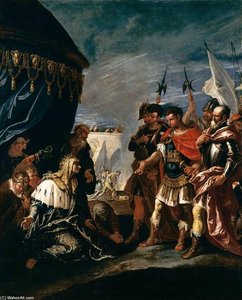
Bawarskie Państwowe Zbiory Malarstwa, MonachiumBawarskie Państwowe Zbiory Malarstwa Monachium 3 The Family of Darius before Alexander the Great, Joseph Is Sold by His Brothers, Joseph Interprets the Dreams of Pharaoh
Statens Museum for Kunst, KopenhagaStatens Museum for Kunst Kopenhaga 2 Monk, Praying Monk
Nationalmuseum, StockholmNationalmuseum Stockholm 2 The Family of Darius Pleading to Alexander, The Adoration of the Lamb. Study
Szépművészeti Múzeum, BudapesztSzépművészeti Múzeum Budapeszt 2 Adoration of the Magi, Adoration of the Magi
Metropolitan Museum of Art, Nowy JorkMetropolitan Museum of Art Nowy Jork 1 Dawn
Muzeum Narodowe w Warszawie, WarszawaMuzeum Narodowe w Warszawie Warszawa 1 Moses trampling on the Pharaoh’s crown
Gemäldegalerie, BerlinGemäldegalerie Berlin 1 Christ before Pilate
Los Angeles County Museum of Art, Los AngelesLos Angeles County Museum of Art Los Angeles 1 The Assumption of the Virgin

Gaspare Diziani dekada po dekadzie: oryginały definiujące każdy okres

Dzieła według dekad

Wybierz dekadę, aby zobaczyć dzieło, które ją definiuje.

Pytania kolekcjonerów o obrazy Gaspare Diziani

Z jakiego dzieła najbardziej znany jest Gaspare Diziani?Odkryj odpowiedź

Dawn (1738), Metropolitan Museum of Art, Nowy Jork. Następne są Laying Venus (1714) oraz The Family of Darius before Alexander the Great (1728).

W jakim wieku był Gaspare Diziani, gdy powstało Dawn?Odkryj odpowiedź

49 lat: Dawn pochodzi z 1738, a Gaspare Diziani urodził(a) się w 1689.

Jakie są dziesięć najsłynniejszych obrazów, których autorem jest Gaspare Diziani?Odkryj odpowiedź

Dawn, Laying Venus, The Family of Darius before Alexander the Great, Monk, Praying Monk, Moses trampling on the Pharaoh’s crown, Joseph Is Sold by His Brothers, Joseph Interprets the Dreams of Pharaoh, The Family of Darius Pleading to Alexander i sketch for a plafond - painting. Powyższy ranking zawiera rok powstania oraz muzeum dla każdego z nich.

Ile obrazów pozostawił po sobie Gaspare Diziani?Odkryj odpowiedź

Nasz katalog zawiera 27 dzieł artysty Gaspare Diziani, datowanych od 1714 do 1757.

W których muzeach znajdują się arcydzieła Gaspare Diziani?Odkryj odpowiedź

W większości znajdują się w Bawarskie Państwowe Zbiory Malarstwa (Monachium), Statens Museum for Kunst (Kopenhaga) i Nationalmuseum (Stockholm). Powyższa tabela muzeów zawiera ich pełną listę.

W których latach Gaspare Diziani namalował swoje najsłynniejsze dzieła?Odkryj odpowiedź

W 1750s: 7 z 27 dzieł na tej stronie powstało w tym czasie, w tym Joseph Is Sold by His Brothers.

Jakie są pierwsze i ostatnie słynne oryginały Gaspare Diziani?Odkryj odpowiedź

Na tej stronie najwcześniejszy to Laying Venus (1714), a najpóźniejszy Christ before Pilate (1757).

Jakie tematy Gaspare Diziani wybierał najczęściej?Odkryj odpowiedź

Religious (4), Woman (2) i Clouds (2), w ramach 27 dzieł na tej stronie.

Której techniki Gaspare Diziani używał najczęściej?Odkryj odpowiedź

Oil, dla 2 z 27 dzieł na tej stronie.

Które dzieła Gaspare Diziani znajdują się w Bawarskie Państwowe Zbiory Malarstwa?Odkryj odpowiedź

The Family of Darius before Alexander the Great, Joseph Is Sold by His Brothers i Joseph Interprets the Dreams of Pharaoh: Bawarskie Państwowe Zbiory Malarstwa, Monachium posiada 3 dzieł widocznych na tej stronie.

Gaspare Diziani: życie i twórczość

The Radiant Legacy of Gaspare Diziani

In the luminous era of the late Baroque and the burgeoning Rococo, Gaspare Diziani emerged as a painter of profound technical assurance and dramatic flair. Born in the serene town of Belluno, Italy, his artistic journey began under the guidance of Antonio Lazzarini, a foundation that would eventually lead him to the heart of the Venetian art world. As he moved toward Venice, Diziani immersed himself in the prestigious studios of Gregorio Lazzarini and the influential Sebastiano Ricci. These early mentors provided him with the tools to master the sweeping movements and emotional depth characteristic of his era, allowing him to develop a style that resonated with both religious fervor and aristocratic elegance.

Diziani’s career was marked by a remarkable ability to navigate the shifting tides of 18th-century aesthetics. While his work shared the stage with contemporaries like Giambattista Tiepolo, Diziani carved out a unique space through his versatility and command over both canvas and fresco. His early period, spanning roughly between 1710 and 1720, saw him contributing significant works to sacred spaces, such as the Mary Magdalene for the church of Santo Stefano in Belluno and the Entry into Jerusalem for San Teodoro in Venice. These religious commissions allowed him to explore the interplay of light and shadow, a hallmark of the late Baroque that would later soften into the more delicate, ornamental textures of the Rococo.

A Master of Light and Grandeur

The breadth of Diziani’s influence extended far beyond the borders of the Republic of Venice. His reputation for excellence carried him to the courts of Dresden and Munich, demonstrating a reach that transcended local boundaries and touched the great cultural centers of Europe. This international presence is perhaps best exemplified by the sheer scale of his ambition; one of his most monumental achievements remains the largest painting housed within the Hermitage Museum in St. Petersburg, a testament to his ability to command vast, immersive spaces.

Beyond his grand canvases, Diziani’s artistry was deeply rooted in the decorative traditions of his time. His skill in fresco painting is evident in his work on the Life of Saint Helena at the Scuola del Vin, where he transformed architectural surfaces into narrative windows of spiritual intensity. Whether working on a small-scale preparatory sketch or a massive ceiling piece, his hand was characterized by a certain celerity and technical confidence that captured the very essence of the Rococo spirit—a blend of grace, movement, and light.

The enduring significance of Gaspare Diziani lies in his role as a bridge between eras. He successfully synthesized the dramatic tension of the Baroque with the airy, ornamental beauty of the Rococo, leaving behind a body of work that continues to fascinate scholars and art lovers alike. Through his mastery of color and composition, he helped define the visual language of an age of splendor.