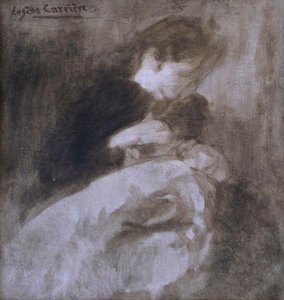
Portret Eugène Carrière

100 najsłynniejszych obrazów artysty Eugène Carrière, każdy niepowtarzalny

Aktualizacja: Październik 2026 · ranking według naszego wskaźnika popularności (liczba wyszukiwań, wizyt i zamówień dla każdego dzieła) · 249 dzieł Eugène Carrière w naszym katalogu

W skrócie

Portrait of Pablo Casals (1903) to obraz autorstwa Eugène Carrière, który przyciąga najwięcej spojrzeń; oryginał znajduje się w Willa Casals-Muzeum Pawła Kasala, Vellbell. Następnie wzrok kieruje się na Nelly Carrière (1903) i Le Docteur Léon Gorodiche et sa famille Portrait de famille (titre ancien). Spośród 249 dzieł Eugène Carrière w naszym katalogu, tych 100 jest najbardziej znanych – każde z nich to unikatowy oryginał, przedstawiony wraz z rokiem powstania, muzeum oraz powodem, dla którego przetrwało próbę czasu.

1849 – 1906, Gournay-sur-Marne Symbolism Najwięcej dzieł: Petit Palais

10 najlepszych obrazów autorstwa Eugène Carrière według oka galerii

1
Portrait of Pablo Casals (1903) autorstwa Eugène Carrière

Portrait of Pablo Casals

1903 · Oil On Canvas · Willa Casals-Muzeum Pawła Kasala, Vellbell

Eugène Anatole Carrière’s “Portrait of Pablo Casals,” painted in 1903, is more than just a likeness; it's an intensely felt meditation on contemplation and the weight of artistic experience. This oil on canvas work, currently residing within the Vil·la Casals-Museu Pau Casals in El Vendrell, Spain, offers a rare glimpse into the mind of a man lost in thought – Pablo Casals himself, the renowned cellist – through Carrière’s masterful…

2
Nelly Carrière (1903) autorstwa Eugène Carrière

Nelly Carrière

1903 · Oil On Canvas

The air in the room feels heavy and still, thick with the scent of oil paint and the soft, diffused light of a late afternoon. Nelly Carrière sits before us, her presence a gentle weight in the center of the frame. She does not demand attention through movement or bright color; instead, she draws the eye inward through a profound, quiet stillness. Her head tilts slightly, a subtle asymmetry that…

3
Le Docteur Léon Gorodiche et sa famille Portrait de famille (titre ancien) autorstwa Eugène Carrière

Le Docteur Léon Gorodiche et sa famille Portrait de famille (titre ancien)

Oil

The canvas presents Le Docteur Léon Gorodiche et sa famille Portrait de famille (titre ancien), a work that brings the presence of Léon Gorodiche into the immediate view. This portrait captures a family moment, pulling the viewer into a quiet, domestic scene. The artist, Eugène Carrière, breathes life into the subjects, rendering them with a sense of profound intimacy. One can almost feel the stillness of the room as the…

4
Portrait of Madame Aline Ménard-Dorian (1905) autorstwa Eugène Carrière

Portrait of Madame Aline Ménard-Dorian

1905 · Oil On Canvas · Petit Palais, Paryż

The Portrait of Madame Aline Ménard-Dorian is a somber and ethereal portrait of a woman, characterized by a dreamlike, atmospheric quality and a monochromatic, low-key tonal range. The composition features a single female figure, positioned slightly off-center, appearing to emerge from a dark, nebulous background. The color palette is highly restricted, consisting almost entirely of sepia, umber, cream, and deep browns, creating a sense of antiquity and melancholy.

5
Arsène Carriere (1900) autorstwa Eugène Carrière

Arsène Carriere

1900 · Oil On Canvas · National Gallery of Art, Waszyngton

Every brushstroke seeks to reach past the skin and into the essence of human experience. The way the light catches the white fabric of the dress against the darker, murky background creates a focal point that is both intimate and profound. This is not a mere depiction of a child, but an exploration of the raw, unvarnished emotions that exist in the earliest stages of life. The work carries a…

6
Femme nue couchée autorstwa Eugène Carrière

Femme nue couchée

Oil On Canvas

The composition is centered around the woman's body, which lies diagonally across the canvas in a horizontal format. Her pose is relaxed; one arm is raised above her head while the other rests near her side. A draped fabric partially covers her lower body, creating organic, flowing shapes that follow the curves of her form. To the right of the figure, a small table holds a glass of wine and…

7
Portrait du Dr. Léon Gorodiche Portrait du Dr. X autorstwa Eugène Carrière

Portrait du Dr. Léon Gorodiche Portrait du Dr. X

Oil On Canvas

Portrait du Dr. Léon Gorodiche Portrait du Dr. X is a work by the French artist Eugène Carrière. The subject is a man, identified as either Dr. Léon Gorodiche or an individual referred to as Dr. X. Carrière focuses on capturing the sitter's likeness and his psychological state through a muted and somewhat melancholic style.

8
Portrait of a Lady with a Dog (1885) autorstwa Eugène Carrière

Portrait of a Lady with a Dog

1885 · Oil On Canvas · Art Institute of Chicago, Chicago

A Study in Shadow and Stillness Portrait of a Lady with a Dog emerges from a dark, indistinct background like a memory surfacing through fog. The composition holds a seated woman, positioned slightly off-center, her form anchored by the small weight of a dog resting in her lap. A soft light source strikes her face, neck, and shoulder, pulling these features from the surrounding gloom. The palette is strictly grayscale,…

10
Self-Portrait (1893) autorstwa Eugène Carrière

Self-Portrait

1893 · Oil On Canvas

A man stares directly from the canvas, his gaze fixed and unyielding. Through a veil of hazy brushwork, his features emerge from a dense, monochromatic atmosphere of umber and grey. This 1893 oil on canvas presents a face defined by more than mere anatomy; it is a study of presence through absence. The subject, wearing glasses that catch a faint, spectral light, possesses a mustache and a beard that seem…

Słynne obrazy artysty Eugène Carrière, od 11 do 100

11The Sleep (1890) autorstwa Eugène CarrièreThe Sleep1890 · Städel Museum 12Self-Portrait (1893) autorstwa Eugène CarrièreSelf-Portrait1893 · Metropolitan Museum of Art 13Tête de bébé (1878) autorstwa Eugène CarrièreTête de bébé1878 · The Hunterian Museum and Art Gallery 14Portrait of Edmond de Goncourt (1822-1896), writer (1880) autorstwa Eugène CarrièrePortrait of Edmond de Goncourt (1822-1896), writer1880 · Musée Carnavalet 15Portrait of Auguste Blanqui (1805-1881), Politician (1880) autorstwa Eugène CarrièrePortrait of Auguste Blanqui (1805-1881), Politician1880 · Musée Carnavalet 16Portrait of a Man (1879) autorstwa Eugène CarrièrePortrait of a Man1879 · Museum of Fine Arts 17Little d'Artagnan (1882) autorstwa Eugène CarrièreLittle d'Artagnan1882 18Sketch for the Salon of Sciences of the Hôtel de Ville de Paris: Physics - Chemistry (1890) autorstwa Eugène CarrièreSketch for the Salon of Sciences of the Hôtel de Ville de Paris: Physics - Chemistry1890 · Petit Palais 19Sketch for the Salon of Sciences of the Hôtel de Ville de Paris: Magnetism - Mechanics (1890) autorstwa Eugène CarrièreSketch for the Salon of Sciences of the Hôtel de Ville de Paris: Magnetism - Mechanics1890 · Petit Palais 20Sketch for the Salon of Sciences of the Hôtel de Ville de Paris: Mathematics - Mineralogy (1890) autorstwa Eugène CarrièreSketch for the Salon of Sciences of the Hôtel de Ville de Paris: Mathematics - Mineralogy1890 · Petit Palais 21Woman Sewing (1892) autorstwa Eugène CarrièreWoman Sewing1892 · Rhode Island School of Design Museum of Art 22Armand Berton (1891) autorstwa Eugène CarrièreArmand Berton1891 · Cleveland Museum of Art 23Portrait of Paul Gauguin (1891) autorstwa Eugène CarrièrePortrait of Paul Gauguin1891 · Yale University Art Gallery 24Self-portrait, Eugène Carrière (1887) autorstwa Eugène CarrièreSelf-portrait, Eugène Carrière1887 · Museum of Fine Arts Ghent (MSK) 25Paul Verlaine (1891) autorstwa Eugène CarrièrePaul Verlaine1891 · Museum of Fine Arts 26Maternity (1892) autorstwa Eugène CarrièreMaternity1892 27Portrait of Gustave Geffroy (1891) autorstwa Eugène CarrièrePortrait of Gustave Geffroy1891 · Musée Toulouse-Lautrec 28Maternity (1888) autorstwa Eugène CarrièreMaternity1888 · National Museum Cardiff 29The Tin Mug (1888) autorstwa Eugène CarrièreThe Tin Mug1888 · National Museum Cardiff 30Meditation (1893) autorstwa Eugène CarrièreMeditation1893 · Ohara Museum of Art 31The Ages of Life: Young Mothers (1898) autorstwa Eugène CarrièreThe Ages of Life: Young Mothers1898 · Petit Palais 32Sketch for the Mairie du 12ème: Youth (1897) autorstwa Eugène CarrièreSketch for the Mairie du 12ème: Youth1897 · Petit Palais 33Sketch for the Mairie du 12ème: The Old Men (1897) autorstwa Eugène CarrièreSketch for the Mairie du 12ème: The Old Men1897 · Petit Palais 34Reading. (1894) autorstwa Eugène CarrièreReading.1894 · The National Museum in Poznań 35Portrait of a Lady (1894) autorstwa Eugène CarrièrePortrait of a Lady1894 · National Museum of Fine Arts of Cuba 36A Family (1893) autorstwa Eugène CarrièreA Family1893 · National Museum of Art, Architecture and Design 37Two Women (1895) autorstwa Eugène CarrièreTwo Women1895 · Minneapolis Institute of Art 38Portrait of a Woman (Madame Keyser (?)) (1897) autorstwa Eugène CarrièrePortrait of a Woman (Madame Keyser (?))1897 · Los Angeles County Museum of Art 39Gabriel Séailles et sa fille (1893) autorstwa Eugène CarrièreGabriel Séailles et sa fille1893 · Musée d'Art Moderne et Contemporain de Strasbourg 40Maternity (Suffering) (1897) autorstwa Eugène CarrièreMaternity (Suffering)1897 · National Museum Cardiff 41Abandoned Fantine (1903) autorstwa Eugène CarrièreAbandoned Fantine1903 · Musée Victor Hugo 42Portrait of Anatole France (1844-1924), writer (1900) autorstwa Eugène CarrièrePortrait of Anatole France (1844-1924), writer1900 · Musée Carnavalet 43The Contemplator (1901) autorstwa Eugène CarrièreThe Contemplator1901 · Cleveland Museum of Art 44Madame Case (1900) autorstwa Eugène CarrièreMadame Case1900 · Cleveland Museum of Art 45Portrait of Elsa Koeberlé (1903) autorstwa Eugène CarrièrePortrait of Elsa Koeberlé1903 · Musée d'Art Moderne et Contemporain de Strasbourg 46Bust of a Young Girl (1903) autorstwa Eugène CarrièreBust of a Young Girl1903 · Harvard Art Museums 47Méditation (1900) autorstwa Eugène CarrièreMéditation1900 · Musée d'Art Moderne et Contemporain de Strasbourg 48Woman Leaning on a Table (1890) autorstwa Eugène CarrièreWoman Leaning on a Table1890 · Ermitaż 49L'enfant à la soupière autorstwa Eugène CarrièreL'enfant à la soupière 50Maternity (1880) autorstwa Eugène CarrièreMaternity1880 · Hill-Stead Museum 51The Pianist (1900) autorstwa Eugène CarrièreThe Pianist1900 · Bristol Museum - Art Gallery 52Portrait of Pauline Ménard-Dorian (1890) autorstwa Eugène CarrièrePortrait of Pauline Ménard-Dorian1890 · Petit Palais 53Roger Marx autorstwa Eugène CarrièreRoger Marx 54The First Communion (1896) autorstwa Eugène CarrièreThe First Communion1896 · Metropolitan Museum of Art 55Still Life (1875) autorstwa Eugène CarrièreStill Life1875 · Art Institute of Chicago 56Sketch for the Salon des Sciences of the Hôtel de Ville de Paris: Nude Woman from Behind, Spandrel Figure (1890) autorstwa Eugène CarrièreSketch for the Salon des Sciences of the Hôtel de Ville de Paris: Nude Woman from Behind, Spandrel Figure1890 · Petit Palais 57Sketch for the Salon of Sciences of the Hôtel de Ville de Paris: Geography - Geology (1890) autorstwa Eugène CarrièreSketch for the Salon of Sciences of the Hôtel de Ville de Paris: Geography - Geology1890 · Petit Palais 58Sketch for the Salon of Sciences of the Hôtel de Ville de Paris: Mathematics and Mineralogy (1890) autorstwa Eugène CarrièreSketch for the Salon of Sciences of the Hôtel de Ville de Paris: Mathematics and Mineralogy1890 · Petit Palais 59Sketch for the Salon of Sciences of the Hôtel de Ville de Paris: Botany - Medicine (1889) autorstwa Eugène CarrièreSketch for the Salon of Sciences of the Hôtel de Ville de Paris: Botany - Medicine1889 · Petit Palais 60Head of a Child (1891) autorstwa Eugène CarrièreHead of a Child1891 · National Gallery 61Winding Wool (Les Dévideuses) (1887) autorstwa Eugène CarrièreWinding Wool (Les Dévideuses)1887 · National Gallery 62Female figure (1901) autorstwa Eugène CarrièreFemale figure1901 · Willa Casals-Muzeum Pawła Kasala 63The Footbath (1890) autorstwa Eugène CarrièreThe Footbath1890 · National Museum Cardiff 64Mother and Child (1890) autorstwa Eugène CarrièreMother and Child1890 · National Museum Cardiff 65Landscape in the Orne (1901) autorstwa Eugène CarrièreLandscape in the Orne1901 · Rhode Island School of Design Museum of Art 66Head of a Woman (1900) autorstwa Eugène CarrièreHead of a Woman1900 · York Art Gallery 67Interior with a Vase (1896) autorstwa Eugène CarrièreInterior with a Vase1896 · Städel Museum 68Woman looking autorstwa Eugène CarrièreWoman lookingNational Museum of Fine Arts 69Artist at His Easel (L'Artiste à son Chevalet) autorstwa Eugène CarrièreArtist at His Easel (L'Artiste à son Chevalet)Indianapolis Museum of Art 70Portrait of a Lady. Study autorstwa Eugène CarrièrePortrait of a Lady. StudyNationalmuseum 71Porträt der Mme Arthur Fontaine autorstwa Eugène CarrièrePorträt der Mme Arthur FontaineMusée Toulouse-Lautrec 72violin-player autorstwa Eugène Carrièreviolin-player 73Head of a Young Girl autorstwa Eugène CarrièreHead of a Young Girl 74Portrait d'Henri Rochefort autorstwa Eugène CarrièrePortrait d'Henri Rochefort 75Portrait of a Man autorstwa Eugène CarrièrePortrait of a Man 76Portrait de femme (Lisbeth) (titre factice) autorstwa Eugène CarrièrePortrait de femme (Lisbeth) (titre factice) 77Marguerite Carrière autorstwa Eugène CarrièreMarguerite Carrière 78Maternité autorstwa Eugène CarrièreMaternité 79Child With A Doll autorstwa Eugène CarrièreChild With A Doll 80Femme coupant un tissu autorstwa Eugène CarrièreFemme coupant un tissu 81Sealmaiden autorstwa Eugène CarrièreSealmaiden 82Le Reveil, Le Baiser A La Mere autorstwa Eugène CarrièreLe Reveil, Le Baiser A La Mere 83Maternité (femme et enfant) autorstwa Eugène CarrièreMaternité (femme et enfant) 84Souvenir de Lourdes autorstwa Eugène CarrièreSouvenir de LourdesAshmolean Museum 85Portrait d'enfant autorstwa Eugène CarrièrePortrait d'enfant 86Portrait de Melle Lucienne Bréval autorstwa Eugène CarrièrePortrait de Melle Lucienne Bréval 87L'homme et sa destinée autorstwa Eugène CarrièreL'homme et sa destinée 88La chemise enlevée autorstwa Eugène CarrièreLa chemise enlevée 89Le baiser du soir autorstwa Eugène CarrièreLe baiser du soir 90Le fondeur autorstwa Eugène CarrièreLe fondeurMusée des Beaux-Arts de Nancy 91Famille Chausson en grisaille autorstwa Eugène CarrièreFamille Chausson en grisaille 92Intimité La grande soeur (autre titre) autorstwa Eugène CarrièreIntimité La grande soeur (autre titre)Bawarskie Państwowe Zbiory Malarstwa 93Scène d'enterrement médiéval autorstwa Eugène CarrièreScène d'enterrement médiéval 94Madame Eugène Carrière en méditation autorstwa Eugène CarrièreMadame Eugène Carrière en méditation 95Portrait de René Carrière dessinant autorstwa Eugène CarrièrePortrait de René Carrière dessinant 96La famille du peintre autorstwa Eugène CarrièreLa famille du peintre 97Sortie d'Eglise autorstwa Eugène CarrièreSortie d'Eglise 98Pas pressé de faire connaissance autorstwa Eugène CarrièrePas pressé de faire connaissance 99Femme dans un intérieur autorstwa Eugène CarrièreFemme dans un intérieur 100Femme assise en buste, les mains croisées autorstwa Eugène CarrièreFemme assise en buste, les mains croisées

Słynne obrazy Eugène Carrière epoka po epoce

Tematy, które przyciągnęły wzrok Eugène Carrière

Cztery motywy najczęściej powracające w tych oryginałach, z których każdy doczekał się swojego najdoskonalszego przykładu.

Muzea przechowujące oryginały Eugène Carrière

8 muzeów, w których znajduje się najwięcej obrazów z tej strony.

Muzea Miasto Dzieła artysty Eugène Carrière Obrazy z tej listy
Petit Palais, ParyżPetit Palais Paryż 12 Portrait of Madame Aline Ménard-Dorian, Sketch for the Salon of Sciences of the Hôtel de Ville de Paris: Physics - Chemistry, Sketch for the Salon of Sciences of the Hôtel de Ville de Paris: Magnetism - Mechanics
National Museum Cardiff, CardiffNational Museum Cardiff Cardiff 6 Maternity, The Tin Mug, Maternity (Suffering)
Musée d'Art Moderne et Contemporain de Strasbourg, StrasbourgMusée d'Art Moderne et Contemporain de Strasbourg Strasbourg 6 Gabriel Séailles et sa fille, Portrait of Elsa Koeberlé, Méditation
Musée Carnavalet, ParyżMusée Carnavalet Paryż 3 Portrait of Edmond de Goncourt (1822-1896), writer, Portrait of Auguste Blanqui (1805-1881), Politician, Portrait of Anatole France (1844-1924), writer
Cleveland Museum of Art, ClevelandCleveland Museum of Art Cleveland 3 Armand Berton, The Contemplator, Madame Case
Art Institute of Chicago, ChicagoArt Institute of Chicago Chicago 3 Portrait of a Lady with a Dog, Still Life
Metropolitan Museum of Art, Nowy JorkMetropolitan Museum of Art Nowy Jork 3 Self-Portrait, The First Communion
National Gallery, LondynNational Gallery Londyn 3 Head of a Child, Winding Wool (Les Dévideuses)

Eugène Carrière na przestrzeni dekad: jeden unikatowy oryginał dla każdego

Dzieła według dekad

Wybierz dekadę, aby zobaczyć dzieło, które ją definiuje.

Obrazy artysty Eugène Carrière: pytania do galerii

Jakie jest najsłynniejsze dzieło artysty Eugène Carrière?Odkryj odpowiedź

Portrait of Pablo Casals (1903), Willa Casals-Muzeum Pawła Kasala, Vellbell. Następne są Nelly Carrière (1903) oraz Le Docteur Léon Gorodiche et sa famille Portrait de famille (titre ancien).

W jakim wieku Eugène Carrière stworzył/a Portrait of Pablo Casals?Odkryj odpowiedź

54 lat: Portrait of Pablo Casals pochodzi z 1903, a Eugène Carrière urodził(a) się w 1849.

Które dziesięć obrazów Eugène Carrière jest najbardziej znanych?Odkryj odpowiedź

Portrait of Pablo Casals, Nelly Carrière, Le Docteur Léon Gorodiche et sa famille Portrait de famille (titre ancien), Portrait of Madame Aline Ménard-Dorian, Arsène Carriere, Femme nue couchée, Portrait du Dr. Léon Gorodiche Portrait du Dr. X, Portrait of a Lady with a Dog, The Artist with his Wife and their Son Jean-René i Self-Portrait. Powyższy ranking zawiera rok powstania oraz muzeum dla każdego z nich.

Ile znanych dzieł stworzył Eugène Carrière?Odkryj odpowiedź

Nasz katalog zawiera 249 dzieł artysty Eugène Carrière, datowanych od 1875 do 1905.

Gdzie można zobaczyć najsłynniejsze oryginały Eugène Carrière?Odkryj odpowiedź

W większości znajdują się w Petit Palais (Paryż), National Museum Cardiff (Cardiff) i Musée d'Art Moderne et Contemporain de Strasbourg (Strasbourg). Powyższa tabela muzeów zawiera ich pełną listę.

W jakim okresie Eugène Carrière stworzył/a swoje najsłynniejsze obrazy?Odkryj odpowiedź

W 1890s: 34 z 100 dzieł na tej stronie powstało w tym czasie, w tym The Artist with his Wife and their Son Jean-René.

Który z najsłynniejszych obrazów artysty Eugène Carrière powstał najwcześniej, a który najpóźniej?Odkryj odpowiedź

Na tej stronie najwcześniejszy to Still Life (1875), a najpóźniejszy Portrait of Madame Aline Ménard-Dorian (1905).

Jakie tematy preferował Eugène Carrière?Odkryj odpowiedź

Woman (10), Portrait (9) i Domestic scene (8), w ramach 100 dzieł na tej stronie.

Jakich materiałów Eugène Carrière używał najczęściej?Odkryj odpowiedź

Oil On Canvas, dla 19 z 100 dzieł na tej stronie.

Do jakiego nurtu należy twórczość Eugène Carrière?Odkryj odpowiedź

Symbolism, sądząc po oryginałach na tej stronie.

Jakie oryginały Eugène Carrière można zobaczyć w Petit Palais?Odkryj odpowiedź

Portrait of Madame Aline Ménard-Dorian, Sketch for the Salon of Sciences of the Hôtel de Ville de Paris: Physics - Chemistry i Sketch for the Salon of Sciences of the Hôtel de Ville de Paris: Magnetism - Mechanics: Petit Palais, Paryż posiada 12 dzieł widocznych na tej stronie.

Eugène Carrière: portret artysty

Wczesne lata, rodzina i edukacja

Eugène Carrière przyszedł na świat 16 stycznia 1849 roku w Gournay-sur-Marne, w departamencie Seine-Saint-Denis. Był ósmym z dziewięciorga dzieci sprzedawcy ubezpieczeń. Jego dzieciństwo i wczesne lata upłynęły w Strasburgu, gdzie kładziony był fundament pod jego przyszłe umiejętności techniczne. Pierwsze kroki w świecie sztuki stawiał w Ecole Municipale de Dessin, przechodząc przez etap praktyki w rzemiośle litografii komercyjnej.

Przełom nastąpił w 1868 roku. Choć przez krótki czas pracował jako litograf, wizyta w Paryżu zmieniła wszystko. Atmosfera miasta oraz tętniąca życiem sztuka wezwały go na zupełnie inną drogę. Podjął niezłomną decyzję, by zostać artystą. Ta decyzja zaprowadziła go do École des Beaux-Arts w Paryżu. To właśnie tam, pod okiem mistrza Cabanela, szlifował swój warsztat, odchodząc od komercyjnej precyzji litografii w stronę nieuchwytnych i złożonych światów sztuki pięknej.

Technika i styl artystyczny

Płótno Eugène Carrière często zanurzone jest w gęstej, mglistej, brązowej atmosferze. Artysta odchodzi od ulotnego światła swoich współczesnych, wybierając zamiast tego stonowaną paletę barw, która przedkłada głębię psychologiczną nad czystą sensację wizualną. Jego twórczość operuje w obrębie monochromatycznego światłocienia, gdzie w kompozycji dominują odcienie brązu i szarości. Takie podejście ma na celu odarcie świata z jego zewnętrznej powłoki, by dotrzeć do duchowych rezonansów i stanów wewnętrznych ukrytych pod powierzchnią przedstawionego tematu.

Sposób nakładania farby przez artystę jest namacalny i pełen namysłu. Stosuje on technikę malarską, często wykorzystując metodę grattage – zdrapywanie pigmentu trzonkiem pędzla, aby stworzyć teksturę i wydobyć światło. Ta fizyczna manipulacja medium przyczynia się do eterycznej, onirycznej jakości jego obrazów. Powstałe w ten sposób powierzchnie nie tylko przedstawiają scenę; one próbują przywołać samą esencję ludzkiego doświadczenia poprzez grę światła i cienia.

Kluczowe dzieła i wybitne obrazy

W twórczości artysty punkt ciężkości przesuwa się ku sferze domowej i duchowej, co najlepiej oddają jego najbardziej rozpoznawalne tematy. W 1885 roku, w Paryżu, stworzył Chore dziecko – dzieło, które obecnie znajduje się w zbiorach Musée d’Orsay. Do 1890 roku jego fascynacja motywami macierzyńskimi osiągnęła apogeum w obrazie Macierzyństwo, przedstawiającym kobietę tulącą niemowlę w miękkim, eterycznym świetle. Ten okres przyniósł również powstanie ukończonego w 1891 roku portretu Paula Verlaine'a w Luksemburgu, będącego kontynuacją wcześniejszej wersji namalowanej w Paryżu w 1890 roku. Wszystkie te prace kładą nacisk na psychologiczną głębię podmiotów, budowaną poprzez wyciszoną, monochromatyczną atmosferę.

Wraz z rozwojem kariery, umiejętność oddawania kontemplacji poprzez formę stawała się coraz bardziej wyrazista. W 1896 roku ukończył Pierwszą Komunię, dzieło będące kwintesencją jego zdolności do przedstawiania cichych, duchowych chwil. Później, w 1903 roku, zwrócił swoją uwagę na słynnego wiolonczelistę w Portrecie Pabla Casalsa. Obraz ten funkcjonuje jako medytacja nad ciężarem doświadczenia artystycznego, wykorzystując głęboką, monochromatyczną paletę brązów, by stworzyć poczucie powagi i uroczystości.

Krąg, stowarzyszenia i uczniowie

Eugène Carrière płynął wraz z intelektualnymi prądami paryskiego fin de siècle'u, zakotwiczony w głębokich przyjaźniach z najważniejszymi twórcami epoki. Utrzymywał bliską więź z rzeźbiarzem, którym był Auguste Rodin, co sytuowało go w samym sercu zmieniającego się krajobrazu artystycznego. Jego wpływ wykraczał jednak daleko poza rzeźbę, przenikając do sfery literatury, gdzie pozostawał w stałych kontaktach z wybitnymi pisarzami, takimi jak Paul Verlaine, Stéphane Mallarmé czy Charles Morice. Te relacje budowały mosty między słowem pisanym a obrazem, osadzając jego twórczość w szerokim nurcie symbolizmu.

Jego obecność w instytucjach artystycznych była równie znacząca i budząca respekt. Jako współzałożyciel Société Nationale des Beaux-Arts, aktywnie współtworzył struktury francuskiego świata sztuki. Swoje wpływy umacniał również poprzez zaangażowanie w Salon d’Automne, pełniąc w końcu funkcję jego honorowego przewodniczącego. Role te stawiały go w centrum najważniejszych wystaw i organizacyjnych przemian w sztuce francuskiej. Poza salonami, Eugène Carrière kształtował kolejne pokolenia malarzy poprzez nauczanie w Académie de La Palette, a jego pedagogiczne dziedzictwo przetrwało dzięki takim uczniom jak Charles Edmond Kayser.

Dziedzictwo i wpływ na sztukę nowoczesną

Cień monochromatycznej estetyki Eugène Carrière wykracza daleko poza ramy jego własnej epoki, przenikając w same fundamenty przełomowych przemian sztuki XX wieku. Jego zamiłowanie do stonowanej, brązowej palety barw oraz mglistej, onirycznej atmosfery pozostawiło wyraźny ślad na ewolucji modernizmu. Co szczególnie istotne, ślady jego unikalnego stylu odnaleźć można w twórczości Pabla Picassa, zwłaszcza w czasie jego słynnego okresu błękitnego. Ta artystyczna więź sugeruje, że poszukiwania Carrière’a w zakresie głębi psychologicznej, osiągane poprzez deprywację koloru, pomogły utorować drogę dla emocjonalnej intensywności, która stała się znakiem rozpoznawczym późniejszych nurtów.

Koniec jego życia nadszedł w atmosferze cichej, osobistej intensywności. Zmarł na raka gardła 27 marca 1906 roku. Jego ostatnie chwile zostały uwiecznione w krótkim, przejmującym poleceniu, które przekazali mu dzieci: „Aimez-vous avec frénésie”. To pożegnalne przesłanie, „Kochajcie się z pasją”, pozostaje ostatnim akordem kariery w całości poświęconej „malowaniu duszy”.