Portret Constantin Meunier

Obrazy: 51 najsłynniejszych dzieł artysty Constantin Meunier – spojrzenie galerii

Aktualizacja: Październik 2026 · ranking według naszego wskaźnika popularności (liczba wyszukiwań, wizyt i zamówień dla każdego dzieła) · 51 dzieł Constantin Meunier w naszym katalogu

W skrócie

Według opinii kuratorów galerii, najsłynniejszym obrazem Constantin Meunier jest Holy-Water Font (1854), którego oryginał znajduje się w Królewskie Muzeum Sztuk Pięknych Antwerpia w Antwerpia. Women Working in a Glass Factory (1878) i Return of the Miners (1850) dopełniają trio, które zna każde oko. Z 51 dzieł Constantin Meunier w naszym katalogu, galeria prezentuje poniżej 51 najsłynniejszych prac – każda z nich jest oryginałem z podaniem roku powstania, muzeum oraz cech wyróżniających ją na tle innych.

1831 – 1905, Etterbeek Social realism Najwięcej dzieł: Królewskie Muzeum Sztuk Pięknych Antwerpia

10 najlepszych obrazów artysty Constantin Meunier w galerii

1
Holy-Water Font (1854) autorstwa Constantin Meunier

Holy-Water Font

1854 · Oil On Canvas · Królewskie Muzeum Sztuk Pięknych Antwerpia, Antwerpia

A solitary woman stands within a dim, quiet interior, her presence defined by the soft light catching the edge of a blue shawl. She is positioned beside a weathered stone holy water font, her hand resting upon its cold surface. The room is a study in shadow, where deep blues and earthy browns recede into a heavy, somber darkness. A checkered floor provides a geometric anchor to the scene, its…

Obrazy artysty Constantin Meunier, uszeregowane od 11 do 51 miejsca

11The Flood of Leuven in 1891 (1896) autorstwa Constantin MeunierThe Flood of Leuven in 18911896 12Whaler (1902) autorstwa Constantin MeunierWhaler1902 · Finnish National Gallery 13Portrait of the Artist Gustave Poirier (1900) autorstwa Constantin MeunierPortrait of the Artist Gustave Poirier1900 · Museum of Fine Arts Ghent (MSK) 14De buildrager, (1898) autorstwa Constantin MeunierDe buildrager, (1898) 15Steel Foundry (1850) autorstwa Constantin MeunierSteel Foundry1850 · Królewskie Muzeum Sztuk Pięknych Antwerpia 16Unloading a Sailing Ship (1878) autorstwa Constantin MeunierUnloading a Sailing Ship1878 · Królewskie Muzeum Sztuk Pięknych Antwerpia 17The removal of the cracked melting pot (1885) autorstwa Constantin MeunierThe removal of the cracked melting pot1885 · Królewskie Muzea Sztuk Pięknych w Belgii 18Cigar Makers in Sevilla (1882) autorstwa Constantin MeunierCigar Makers in Sevilla1882 · Królewskie Muzeum Sztuk Pięknych Antwerpia 19Mining Area (1882) autorstwa Constantin MeunierMining Area1882 · Królewskie Muzeum Sztuk Pięknych Antwerpia 20In the Black Country (1893) autorstwa Constantin MeunierIn the Black Country1893 · Musée d'Orsay 21Calvary (1900) autorstwa Constantin MeunierCalvary1900 · Museum of Fine Arts Ghent (MSK) 22Collier with Safety Lamp autorstwa Constantin MeunierCollier with Safety LampKrólewskie Muzeum Sztuk Pięknych Antwerpia 23Man at the Press autorstwa Constantin MeunierMan at the PressKrólewskie Muzea Sztuk Pięknych w Belgii 24The bust of a docker autorstwa Constantin MeunierThe bust of a dockerOldenburg State Museum for Art and Cultural History 25Buste d'emmanuel chabrier autorstwa Constantin MeunierBuste d'emmanuel chabrier 26Noszący (1887) autorstwa Constantin MeunierNoszący1887 · Staatliche Kunsthalle Karlsruhe 27In a Salt Refinery at Rupelmonde autorstwa Constantin MeunierIn a Salt Refinery at RupelmondeKrólewskie Muzea Sztuk Pięknych w Belgii 28Rupelmonde autorstwa Constantin MeunierRupelmondeKrólewskie Muzeum Sztuk Pięknych Antwerpia 29Pupil in the Snow autorstwa Constantin MeunierPupil in the SnowKrólewskie Muzeum Sztuk Pięknych Antwerpia 30An Old Bridge autorstwa Constantin MeunierAn Old BridgeKrólewskie Muzeum Sztuk Pięknych Antwerpia 31The Blue Tavern autorstwa Constantin MeunierThe Blue TavernKrólewskie Muzeum Sztuk Pięknych Antwerpia 32Abandoned shaft autorstwa Constantin MeunierAbandoned shaftKrólewskie Muzea Sztuk Pięknych w Belgii 33Black Country – Borinage autorstwa Constantin MeunierBlack Country – BorinageKrólewskie Muzea Sztuk Pięknych w Belgii 34Le faucheur autorstwa Constantin MeunierLe faucheur 35The sower, (1890) autorstwa Constantin MeunierThe sower, (1890) 36Monument Au Travail (Bruxelles) autorstwa Constantin MeunierMonument Au Travail (Bruxelles) 37Monument Au Travail (Detail) (2) autorstwa Constantin MeunierMonument Au Travail (Detail) (2) 38Monument Au Travail (Detail) (7) autorstwa Constantin MeunierMonument Au Travail (Detail) (7) 39Monument Au Travail (Detail) autorstwa Constantin MeunierMonument Au Travail (Detail) 40Monument Au Travail (Detail) (5) autorstwa Constantin MeunierMonument Au Travail (Detail) (5) 41Monument Au Travail (Detail) (3) autorstwa Constantin MeunierMonument Au Travail (Detail) (3) 42Monument Au Travail (Detail) (4) autorstwa Constantin MeunierMonument Au Travail (Detail) (4) 43Der huttenarbeiter, (1890) autorstwa Constantin MeunierDer huttenarbeiter, (1890) 44Der hafenarbeiter (2) autorstwa Constantin MeunierDer hafenarbeiter (2) 45Der hafenarbeiter autorstwa Constantin MeunierDer hafenarbeiter 46Cheval a L'abreuvoir, (1899) autorstwa Constantin MeunierCheval a L'abreuvoir, (1899) 47The sower, (2) (1890) autorstwa Constantin MeunierThe sower, (2) (1890) 48Monument Au Travail (Detail) (6) autorstwa Constantin MeunierMonument Au Travail (Detail) (6) 49Triptych of the Mine (1902) autorstwa Constantin MeunierTriptych of the Mine1902 · Królewskie Muzea Sztuk Pięknych w Belgii 50The hiercheuse (1887) autorstwa Constantin MeunierThe hiercheuse1887 · Królewskie Muzea Sztuk Pięknych w Belgii 51Removal of a Broken Crucible (1884) autorstwa Constantin MeunierRemoval of a Broken Crucible1884 · Królewskie Muzea Sztuk Pięknych w Belgii

Tematy, które przyciągnęły wzrok Constantin Meunier

Cztery motywy najczęściej powracające w tych oryginałach, z których każdy doczekał się swojego najdoskonalszego przykładu.

Muzea przechowujące oryginały Constantin Meunier

7 muzeów, w których znajduje się najwięcej obrazów z tej strony.

Muzea Miasto Dzieła artysty Constantin Meunier Obrazy z tej listy
Królewskie Muzeum Sztuk Pięknych Antwerpia, AntwerpiaKrólewskie Muzeum Sztuk Pięknych Antwerpia Antwerpia 14 Holy-Water Font, Return of the Miners, The Pithead
Królewskie Muzea Sztuk Pięknych w Belgii, BrukselaKrólewskie Muzea Sztuk Pięknych w Belgii Bruksela 10 Women Working in a Glass Factory, Tobacco Factory, Seville, The removal of the cracked melting pot
Museum of Fine Arts Ghent (MSK), GandawaMuseum of Fine Arts Ghent (MSK) Gandawa 4 Saint Stephen as a Martyr, Episode from the Peasants' Revolt. The Fire of Turnhout (1798-1799), Portrait of the Artist Gustave Poirier
Finnish National Gallery, HelsinkiFinnish National Gallery Helsinki 1 Whaler
Musée d'Orsay, ParyżMusée d'Orsay Paryż 1 In the Black Country
Oldenburg State Museum for Art and Cultural History, OldenburgOldenburg State Museum for Art and Cultural History Oldenburg 1 The bust of a docker
Staatliche Kunsthalle Karlsruhe, KarlsruheStaatliche Kunsthalle Karlsruhe Karlsruhe 1 Noszący

Constantin Meunier, jedno kultowe dzieło na dekadę

Dzieła według dekad

Wybierz dekadę, aby zobaczyć dzieło, które ją definiuje.

Obrazy artysty Constantin Meunier: odpowiedzi galerii

Który obraz Constantin Meunier jest najsłynniejszy ze wszystkich?Odkryj odpowiedź

Holy-Water Font (1854), Królewskie Muzeum Sztuk Pięknych Antwerpia, Antwerpia. Następne są Women Working in a Glass Factory (1878) oraz Return of the Miners (1850).

Ile lat miał Constantin Meunier, gdy ukończył Holy-Water Font?Odkryj odpowiedź

23 lat: Holy-Water Font pochodzi z 1854, a Constantin Meunier urodził(a) się w 1831.

Które to 10 najlepszych obrazów Constantin Meunier?Odkryj odpowiedź

Holy-Water Font, Women Working in a Glass Factory, Return of the Miners, The Pithead, Saint Stephen as a Martyr, Saint Stephen, Episode from the Peasants' Revolt. The Fire of Turnhout (1798-1799), Organ Grinder, Two women at the Tobacco Factory in Seville i Tobacco Factory, Seville. Powyższy ranking zawiera rok powstania oraz muzeum dla każdego z nich.

Ile dzieł stworzył/a Constantin Meunier?Odkryj odpowiedź

Nasz katalog zawiera 51 dzieł artysty Constantin Meunier, datowanych od 1850 do 1902.

Gdzie można znaleźć najsłynniejsze oryginały autorstwa Constantin Meunier?Odkryj odpowiedź

W większości znajdują się w Królewskie Muzeum Sztuk Pięknych Antwerpia (Antwerpia), Królewskie Muzea Sztuk Pięknych w Belgii (Bruksela) i Museum of Fine Arts Ghent (MSK) (Gandawa). Powyższa tabela muzeów zawiera ich pełną listę.

Kiedy Constantin Meunier stworzył swoje najsłynniejsze obrazy?Odkryj odpowiedź

W 1880s: 8 z 51 dzieł na tej stronie powstało w tym czasie, w tym Two women at the Tobacco Factory in Seville.

Które z najsłynniejszych dzieł Constantin Meunier należą do jego najwcześniejszych i najpóźniejszych prac?Odkryj odpowiedź

Na tej stronie najwcześniejszy to Return of the Miners (1850), a najpóźniejszy Whaler (1902).

Do jakich tematów Constantin Meunier powracał najczęściej?Odkryj odpowiedź

Shadows (3) i Earthy tones (2), w ramach 51 dzieł na tej stronie.

W jakiej technice najczęściej tworzył Constantin Meunier?Odkryj odpowiedź

Oil On Canvas, dla 4 z 51 dzieł na tej stronie.

Z jakim nurtem związany jest Constantin Meunier?Odkryj odpowiedź

Social realism, sądząc po oryginałach na tej stronie.

Które oryginały artysty Constantin Meunier znajdują się w zbiorach Królewskie Muzeum Sztuk Pięknych Antwerpia?Odkryj odpowiedź

Holy-Water Font, Return of the Miners i The Pithead: Królewskie Muzeum Sztuk Pięknych Antwerpia, Antwerpia posiada 14 dzieł widocznych na tej stronie.

Constantin Meunier: artysta

A Life Forged in Industry: The World of Constantin Meunier

Constantin Meunier, born in the Brussels suburb of Etterbeek in 1831, was an artist profoundly shaped by the burgeoning industrial revolution and its impact on the human spirit. His life story is one interwoven with hardship and a deep-seated empathy for the working class—a narrative that would become the defining characteristic of his artistic output. The shadow of personal tragedy fell early; his father’s suicide cast a long pall over his childhood, instilling in him perhaps a heightened sensitivity to suffering and vulnerability. This formative experience, coupled with growing up amidst the factories and laborers of Brussels, fueled a lifelong commitment to portraying the dignity and struggle inherent in manual labor. Initially drawn to sculpture, studying at the Academy of Fine Arts in Brussels under Louis Jehotte and Charles-Auguste Fraikin, Meunier’s artistic path took an unexpected turn after encountering Gustave Courbet's groundbreaking realism. The raw honesty of “The Stone Breakers” resonated deeply, leading him to believe that painting offered a more potent medium for addressing the pressing social issues of his time. For nearly three decades, from 1857 to 1884, he dedicated himself primarily to this art form, meticulously documenting the lives unfolding around him.

Early Influences and Artistic Beginnings

Constantin Meunier’s early artistic development was marked by a profound engagement with the social realities of his time. Born into a family grappling with financial hardship following his father's suicide, he experienced firsthand the struggles faced by many working-class families in Brussels. This personal connection fueled a desire to depict the lives of ordinary people, particularly those engaged in labor. Initially trained as a sculptor at the Academy of Fine Arts, Meunier’s artistic trajectory shifted dramatically after encountering Gustave Courbet’s “The Stone Breakers” (1849). The painting's unflinching portrayal of poverty and hardship deeply affected him, prompting a reevaluation of his chosen medium. He began to believe that painting possessed a greater capacity for conveying the social injustices he witnessed—a conviction that would shape his artistic focus for decades to come. His early works, such as “The Salle St Roch” (1857) and “A Trappist Funeral” (1860), demonstrate an emerging ability to capture the atmosphere of everyday life in Brussels, but it was his immersion into the world of industry that truly ignited his artistic vision.

From Social Realism to Monumental Visions

Meunier’s early paintings reveal a keen observational eye and an emerging concern for everyday life. Works like “The Salle St Roch” (1857) and “A Trappist Funeral” (1860) demonstrate his ability to capture the atmosphere of ordinary moments, but it was his immersion into the world of industry that truly ignited his artistic vision. He became a chronicler of the working class—the miners descending into the earth’s depths, the dockworkers straining under heavy loads, the steelworkers battling the fiery furnace. Paintings such as “Melting Steel at the Factory at Seraing” (1882) and “Returning from the Pit” (1884) are not merely depictions of labor; they are powerful statements about human endurance, resilience, and the often-brutal realities of industrial life. A period in Spain, commissioned by the Belgian government in 1882, offered a temporary shift towards religious themes—paintings like “The Café Concert,” “Procession on Good Friday,” and “The Tobacco Factory at Seville” showcasing his versatility. However, this detour proved fleeting. Around 1885, Meunier felt an irresistible pull back to sculpture, recognizing its unique capacity to convey the physicality and monumental presence of labor. This return marked a new phase in his career, one characterized by powerfully emotive works like “The Puddler” (1886), “Firedamp” (1889), and “Le Débardeur,” each capturing the raw energy and inherent dignity of working men.

The Monument to Labour: A Lasting Legacy

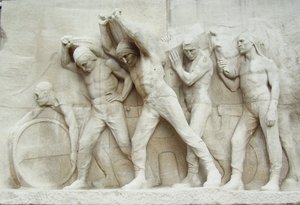
Perhaps Meunier’s most ambitious undertaking was the "Monument to Labour," a sprawling, multi-faceted work acquired by the Belgian state. This monumental project wasn't simply a sculpture; it was an entire artistic ecosystem designed to celebrate the contributions of the working class. It comprised four stone bas-reliefs representing industry, mining, harvest, and the harbor—each panel teeming with figures engaged in their respective trades. Complementing these were four bronze statues: the sower, the smith, the miner, and the ancestor—archetypal representations of labor through the ages. At the heart of it all stood a poignant bronze group titled “Maternity,” acknowledging the vital role of women and family within this world. The "Monument to Labour" wasn’t just about depicting work; it was about elevating it, imbuing it with a sense of nobility and recognizing its fundamental importance to society. The project, completed after Meunier's death in 1905, stands as a testament to his commitment to social realism and his belief in the dignity of labor.

Influence and Historical Significance

Constantin Meunier’s artistic journey was shaped by several key influences. Gustave Courbet’s social realism served as an initial catalyst, encouraging him to confront the realities of his time with unflinching honesty. The changing industrial landscape of Belgium itself provided a constant source of inspiration, offering a wealth of subject matter and a compelling narrative for his art. However, Meunier wasn't merely a documentarian; he possessed a unique ability to imbue his subjects with a sense of dignity and pathos. He didn’t shy away from depicting the harshness of labor, but he always emphasized the inherent worth and resilience of those who performed it. His work became increasingly important during the late 19th century as industrialization transformed Belgium and Europe, providing a visual record of this period of profound social change. Meunier's commitment to portraying the working class with empathy and respect resonated deeply with audiences, contributing to the growing awareness of labor rights and social justice issues. His legacy endures not only through his powerful paintings and sculptures but also as a symbol of artistic engagement with contemporary social concerns—a reminder that art can be a potent force for change. His work stands as a testament to the power of art to bear witness, to challenge conventions, and to champion the cause of the marginalized.