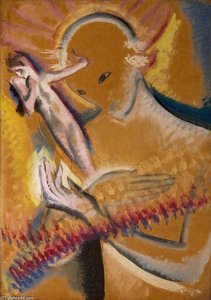
Portret Charles Henry Sims

67 najsłynniejszych obrazów artysty Charles Henry Sims – wybór z galerii

Aktualizacja: Październik 2026 · ranking według naszego wskaźnika popularności (liczba wyszukiwań, wizyt i zamówień dla każdego dzieła) · 67 dzieł Charles Henry Sims w naszym katalogu

W skrócie

Spośród wszystkich oryginałów pozostawionych przez Charles Henry Sims, najsłynniejszym jest The little faun (1905), znajdujący się w kolekcji Fitzwilliam Museum. Tuż za nimi znajdują się Bacchanalia (1900) oraz Sacrifice (1918). Nasz katalog zawiera 67 dzieł autorstwa Charles Henry Sims; galeria zachowała 67 najbardziej podziwianych na świecie prac, z których każda została przedstawiona wraz z datą powstania, informacją o muzeum oraz jej historią.

1873 – 1928, Islington Impressionism Najwięcej dzieł: Fitzwilliam Museum

10 najlepszych obrazów artysty Charles Henry Sims: wybór galerii

The Charles Henry Sims selection continues, 11 to 67

Tematy, które przyciągnęły wzrok Charles Henry Sims

Cztery motywy najczęściej powracające w tych oryginałach, z których każdy doczekał się swojego najdoskonalszego przykładu.

Muzea przechowujące oryginały Charles Henry Sims

5 muzeów, w których znajduje się najwięcej obrazów z tej strony.

Muzea Miasto Dzieła artysty Charles Henry Sims Obrazy z tej listy
Fitzwilliam MuseumFitzwilliam Museum 2 The little faun, Study Of A Dead Rail
Ermitaż, Sankt PetersburgErmitaż Sankt Petersburg 1 Bacchanalia
Canadian War Museum, OttawaCanadian War Museum Ottawa 1 Sacrifice
Chartwell, WesterhamChartwell Westerham 1 Two Girls Seated - Diana, And Sarah Churchill
Scottish National Portrait Gallery, EdynburgScottish National Portrait Gallery Edynburg 1 George V

Charles Henry Sims rok po roku: oryginały, które definiują każdy z nich

Od 1900 do 1918, Charles Henry Sims tworzył przez 19 lat: zestawienie to ukazuje tę długą karierę rok po roku, poprzez jej najwspanialsze oryginały.

Dzieła według lat

Wybierz rok, aby zobaczyć oryginały.

Pytania kolekcjonerów o obrazy Charles Henry Sims

Z jakiego dzieła najbardziej znany jest Charles Henry Sims?Odkryj odpowiedź

The little faun (1905), Fitzwilliam Museum. Następne są Bacchanalia (1900) oraz Sacrifice (1918).

W jakim wieku był Charles Henry Sims, gdy powstało The little faun?Odkryj odpowiedź

32 lat: The little faun pochodzi z 1905, a Charles Henry Sims urodził(a) się w 1873.

Jakie są dziesięć najsłynniejszych obrazów, których autorem jest Charles Henry Sims?Odkryj odpowiedź

The little faun, Bacchanalia, Sacrifice, Two Girls Seated - Diana, And Sarah Churchill, My Pain Beneath Thy Sheltering Hand, A Spiritual Idea, Guardian Hands, The Fountain, Saints And Sinners i Aspiration. Powyższy ranking zawiera rok powstania oraz muzeum dla każdego z nich.

Ile obrazów pozostawił po sobie Charles Henry Sims?Odkryj odpowiedź

Nasz katalog zawiera 67 dzieł artysty Charles Henry Sims, datowanych od 1900 do 1918.

W których muzeach znajdują się arcydzieła Charles Henry Sims?Odkryj odpowiedź

W większości znajdują się w Fitzwilliam Museum, Ermitaż (Sankt Petersburg) i Canadian War Museum (Ottawa). Powyższa tabela muzeów zawiera ich pełną listę.

Jakie są pierwsze i ostatnie słynne oryginały Charles Henry Sims?Odkryj odpowiedź

Na tej stronie najwcześniejszy to Bacchanalia (1900), a najpóźniejszy Sacrifice (1918).

Jakie tematy Charles Henry Sims wybierał najczęściej?Odkryj odpowiedź

Women (7), Children (5) i Landscape (3), w ramach 67 dzieł na tej stronie.

Do jakiego nurtu artystycznego należy Charles Henry Sims?Odkryj odpowiedź

Impressionism i Expressionism, sądząc po oryginałach na tej stronie.

Które dzieła Charles Henry Sims znajdują się w Fitzwilliam Museum?Odkryj odpowiedź

The little faun i Study Of A Dead Rail: Fitzwilliam Museum posiada 2 dzieł widocznych na tej stronie.

Charles Henry Sims: życie i twórczość

A Life Shrouded in Light and Shadow: The Enigmatic World of Charles Henry Sims

Charles Henry Sims, born in Islington, London, in 1873, remains a compelling figure in British art—a painter whose journey traversed the elegance of Edwardian society to the unsettling depths of personal turmoil and ultimately, outsider artistry. His life was marked by both conventional success and profound tragedy, factors that indelibly shaped his artistic vision. Initially destined for a commercial career within his family’s drapery business, Sims defied expectations, pursuing formal training at South Kensington College of Art before honing his skills in Paris at the prestigious Académie Julian. This early exposure to European artistic currents laid the foundation for his initial acclaim as a portraitist and landscape painter, establishing him within the established art world. However, beneath this veneer of conventional achievement lay a sensibility that would increasingly diverge from accepted norms, particularly after experiencing immense personal loss during World War I.

Early Influences and Artistic Training

Sims’ formative years were shaped by his upbringing in a family involved in textiles—a profession that instilled in him an appreciation for meticulous craftsmanship and attention to detail. Recognizing his artistic talent early on, he embarked upon a rigorous academic curriculum at South Kensington College of Art, immersing himself in the study of anatomy, perspective, and classical art history. This grounding in traditional techniques proved invaluable as he subsequently enrolled at the Académie Julian in Paris—a bastion of Impressionism and plein air painting—where he honed his skills under luminaries like Benjamin Constant and Jules Lefebre. The influence of Orchardson and Bastien-Lepage, whose works championed realism and psychological depth, initially guided Sims’ artistic explorations. He quickly mastered the art of capturing fleeting moments of light and color, developing a distinctive style characterized by delicate brushwork and harmonious palettes—a hallmark that would persist throughout his career.

Edwardian Portraiture: Refinement and Psychological Insight

Sims swiftly gained recognition as a portraitist among London’s upper echelon, securing commissions from prominent families and establishing himself as a leading figure in Edwardian society. His portraits were distinguished not merely by their technical precision but also by their profound psychological insight—a rare accomplishment for his time. Sims possessed an uncanny ability to convey the inner lives of his subjects, capturing subtle nuances of emotion and personality with remarkable sensitivity. He skillfully employed chiaroscuro—the dramatic interplay of light and shadow—to sculpt form and imbue his canvases with atmosphere, creating images that transcended mere likeness and resonated with emotional truth. Notable works include *King John Confronted by His Barons*, commissioned for St Stephen’s Hall, Westminster, which exemplifies his mastery of composition and theatrical staging.

The Trauma of War and a Shift Towards Surrealism

The First World War profoundly impacted Sims' life—the devastating loss of his eldest son during the conflict triggering an irreversible transformation in his artistic trajectory. This traumatic experience fueled a deep introspection and propelled him toward increasingly surreal and emotionally charged themes. He abandoned the idealized landscapes of his early years, embracing instead visions of apocalyptic grandeur and unsettling symbolism—a stylistic departure that alienated many critics and fellow artists. Sims’ exploration of religious subjects gained prominence during this period, reflecting his spiritual quest amidst the horrors of war. His paintings from 1918 are imbued with a palpable sense of anxiety and despair, mirroring the psychological landscape of a generation grappling with unprecedented loss and upheaval.

Later Years: Isolation, Controversy, and Legacy

Sims’ artistic endeavors continued to evolve in subsequent decades—marked by a growing preoccupation with mystical imagery and an uncompromising rejection of conventional aesthetic standards. His resignation from the Royal Academy Schools in 1926 underscored his estrangement from the art establishment and symbolized his disillusionment with societal expectations. He retreated into seclusion, dedicating himself entirely to painting—a pursuit that culminated in the creation of his final series of works: “Spiritual Ideas.” These paintings—characterized by fragmented forms, luminous colors, and symbolic representations—were met with vehement opposition from critics who deemed them incomprehensible and aesthetically unacceptable. Despite this controversy, Sims’ legacy endures as a pioneer of Outsider Art—an artist whose uncompromising vision challenged the conventions of his era and continues to fascinate viewers today. His contribution to “The Building of Britain” series—a monumental fresco commissioned for St Stephen's Hall—stands as a testament to his bold artistic ambition. Charles Henry Sims’ story serves as a poignant reminder of the complex relationship between art, life, and the enduring power of individual expression—an artist who dared to venture beyond the boundaries of convention, leaving behind a body of work that continues to provoke thought and inspire admiration.