Portrett av William Simpson

William Simpsons malerier: De 100 mest kjente, sett gjennom et galleris øyne

Oppdatert November 2026 · rangert etter vår popularitetsscore (søk, besøk og bestillinger for hvert verk) · 195 verk av William Simpson i vår katalog

Kort fortalt

Etter galleriets vurdering er William Simpsons mest kjente maleri Lama in a monastery working the prayer wheels (1861), hvis original henger i Victoria and Albert Museum, London. The Bull Nandi in the courtyard of the Golden Temple, Benares (1864) og View of the Kaiser Bagh in Lucknow (1864) fullfører trioen som alle kjenner igjen. Av de 195 verkene til William Simpson i vår katalog, presenterer galleriet de 100 mest kjente nedenfor; hvert originalverk med årstall, museum og hva som gjør det unikt.

1823 – 1899, Glasgow Romanticism Flest verk: Victoria and Albert Museum

Galleriets 10 beste malerier av William Simpson

1
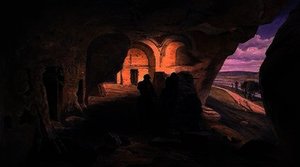
Lama in a monastery working the prayer wheels (1861) av William Simpson

Lama in a monastery working the prayer wheels

1861 · Watercolor · Victoria and Albert Museum, London

A solitary monk sits within the quietude of a monastery, likely located in the Ladakh region. He is engaged in the rhythmic, spiritual practice of spinning prayer wheels, a central act of Buddhist devotion. The composition centers on a large, ornate cylindrical wheel that dominates the mid-ground, its form contrasting with the organic silhouette of the seated figure. Light enters through arched openings to the left, casting a soft glow…

2
The Bull Nandi in the courtyard of the Golden Temple, Benares (1864) av William Simpson

The Bull Nandi in the courtyard of the Golden Temple, Benares

1864 · Watercolor · Victoria and Albert Museum, London

In "The Bull Nandi in the courtyard of the Golden Temple, Benares" by William Simpson, a profound sense of quietude settles over a sacred space. The scene unfolds within a serene courtyard in Benares, where the eye is immediately drawn to the center of the composition. There, a massive, white Nandi bull statue rests, its pale form anchoring the mid-ground of the view. This religious and cultural subject occupies the…

3
View of the Kaiser Bagh in Lucknow (1864) av William Simpson

View of the Kaiser Bagh in Lucknow

1864 · Watercolor · Victoria and Albert Museum, London

The scene unfolds in the watercolor painting titled View of the Kaiser Bagh in Lucknow. This work, rendered by the artist William Simpson, captures a moment of intense struggle amidst the grand architecture of the city. The artist, William Simpson, brings a sense of immediacy to the canvas, documenting the unfolding chaos of the Siege of Lucknow through his delicate yet precise application of pigment.

4
The Temple of Poseidon, Sunium av William Simpson

The Temple of Poseidon, Sunium

Watercolor

The Temple of Poseidon, Sunium by William Simpson captures a quiet moment at the edge of the Attica peninsula. The ancient Greek temple of Poseidon sits under a sky heavy with clouds, catching the fading light of a sunset. This celestial display casts a dramatic glow over the stone architecture, turning the scene into a study of light and shadow. The atmosphere feels still, as if the world is holding…

5
Circassia. Teherkess Of The Soubash av William Simpson

Circassia. Teherkess Of The Soubash

Oil

The oil painting titled Circassia. Teherkess Of The Soubash is a work by the artist William Simpson. He was born in Glasgow, United Kingdom, in 1823. His brush captured a specific moment in the mid-19th century, documenting a world of dirt roads and traditional robes. He remained an observer of distant lands until his death in 1899.

6
The Gate Of Huldah The Prophetess, Jerusalem av William Simpson

The Gate Of Huldah The Prophetess, Jerusalem

The painting titled The Gate Of Huldah The Prophetess, Jerusalem is a work by the artist William Simpson. The subject of the piece is the gate of Huldah the prophetess located in Jerusalem. This architectural feature serves as the central focus of the composition.

7
Pheel Khana, Or Elephants Quarters av William Simpson

Pheel Khana, Or Elephants Quarters

Watercolor

In Pheel Khana, Or Elephants Quarters, William Simpson captures a specific moment of repose and labor within an Indian encampment. The composition centers on several large elephants gathered around a cluster of tents. These massive animals form the structural weight of the scene, their heavy bodies anchored near the canvas fabric. Some individuals are perched high upon the backs of the elephants, looking out over the camp, while others move…

8
Kailasanatha temple, Ellora (1862) av William Simpson

Kailasanatha temple, Ellora

1862 · Watercolor · Victoria and Albert Museum, London

This artwork is titled Kailasanatha temple, Ellora, and was executed by the artist William Simpson. The work focuses on the Kailasanatha temple located in Ellora, Maharashtra, India. The subject is a monolithic rock temple, a structure carved directly from the living stone. The painting captures the architectural scale of this free-standing rock temple situated within a rock pit.

9
Worship of the Devi at Kothi, near Chini (1860) av William Simpson

Worship of the Devi at Kothi, near Chini

1860 · Watercolor · Victoria and Albert Museum, London

The scene unfolds in the Worship of the Devi at Kothi, near Chini, a work that captures a moment of intense devotion. Painted by William Simpson around 1860, the image brings us into the heart of a religious gathering. We find ourselves amidst a crowd of devotees, their presence felt through the collective energy of the assembly. Musicians move through the throng, their long horns and drums providing a rhythmic…

10
The Sanchi tope, Tanjore (1861) av William Simpson

The Sanchi tope, Tanjore

1861 · Watercolor · Victoria and Albert Museum, London

In this landscape watercolor, William Simpson presents "The Sanchi tope, Tanjore," a work dating from about 1861. The composition adopts a wide view, looking across a rugged, debris-strewn foreground toward the monument. From this slightly low angle, the large, hemispherical dome of the stupa occupies the center of the frame, positioned slightly to the right. The structure is surrounded by the organic shapes of foliage and the weathered textures of…

William Simpson sine malerier, rangert fra 11 til 100

11Buddhist stupa at Sarnath, Benaras (1864) av William SimpsonBuddhist stupa at Sarnath, Benaras1864 · Victoria and Albert Museum 12Gateway of the Buddhist Top at Sanchi (1865) av William SimpsonGateway of the Buddhist Top at Sanchi1865 · Victoria and Albert Museum 13Akalis at the Holy Tank, Umritsar av William SimpsonAkalis at the Holy Tank, Umritsar 14Temple Of Minerva Sunium av William SimpsonTemple Of Minerva Sunium 15Portrait Of Mary Seacole av William SimpsonPortrait Of Mary Seacole 16The Oxford ^ Cambridge Boat Race av William SimpsonThe Oxford ^ Cambridge Boat Race 17Sevastopol av William SimpsonSevastopol 18Prinsep's Ghat, Calcutta av William SimpsonPrinsep's Ghat, Calcutta 19Circassians At The Fort Of Waia av William SimpsonCircassians At The Fort Of Waia 20Graves At The Head Of The Harbour Of Balaklava av William SimpsonGraves At The Head Of The Harbour Of Balaklava 21Attack On The Malakoff av William SimpsonAttack On The Malakoff 22The Field of Inkermann av William SimpsonThe Field of Inkermann 23Elephant Battery av William SimpsonElephant Battery 24Camp of the Fourth Division av William SimpsonCamp of the Fourth Division 25Bastion du Mat from the Central Bastion av William SimpsonBastion du Mat from the Central Bastion 26Yosemite Falls av William SimpsonYosemite Falls 27The Camp of the First Division av William SimpsonThe Camp of the First Division 28Ditch of the Bastion du Mat av William SimpsonDitch of the Bastion du Mat 29Mine In The Bastion Du Mat - av William SimpsonMine In The Bastion Du Mat - 30Second Charge of the Guards at Inkerman av William SimpsonSecond Charge of the Guards at Inkerman 31Shalimar Gardens. Cashmere. av William SimpsonShalimar Gardens. Cashmere. 32The plains, landour church, mussoorie av William SimpsonThe plains, landour church, mussoorie 33Mongolia. Group Near The Great Wall Of China. av William SimpsonMongolia. Group Near The Great Wall Of China. 34Quarantine Cemetery and Church av William SimpsonQuarantine Cemetery and Church 35The graves on cathcart's hill of the officers of the fourth division who fell at inkerman av William SimpsonThe graves on cathcart's hill of the officers of the fourth division who fell at inkerman 36The Maristan Or Mosque-hospital Of Kalaun, Cairo av William SimpsonThe Maristan Or Mosque-hospital Of Kalaun, Cairo 37The river chenab, punjab av William SimpsonThe river chenab, punjab 38Pheel Khan, Or Elephants' Quarters, Holcar's Camp av William SimpsonPheel Khan, Or Elephants' Quarters, Holcar's Camp 39The wellesley monument, bombay av William SimpsonThe wellesley monument, bombay 40Excavated Church in the Caverns of Inkerman av William SimpsonExcavated Church in the Caverns of Inkerman 41Interior Of Fort Nicholas, Sebastopol av William SimpsonInterior Of Fort Nicholas, Sebastopol 42Interior of Lord Raglan's Head Quarters av William SimpsonInterior of Lord Raglan's Head Quarters 43Lintel Of Barclay's Doorway av William SimpsonLintel Of Barclay's Doorway 44Mine of the Bastion du Mat av William SimpsonMine of the Bastion du Mat 45Wilson's arch, jerusalem, av William SimpsonWilson's arch, jerusalem, 46Fallen Voussoirs of Robinson's Arch, Jerusalem av William SimpsonFallen Voussoirs of Robinson's Arch, Jerusalem 47The Church Of Ecce Homo, Convent Of The Soeurs De Sion, Jerusalem av William SimpsonThe Church Of Ecce Homo, Convent Of The Soeurs De Sion, Jerusalem 48Glen Massen av William SimpsonGlen Massen 49Dahad Ziaret av William SimpsonDahad Ziaret 50Kyleakin, Skye av William SimpsonKyleakin, Skye 51The Siege Of Rome av William SimpsonThe Siege Of Rome 52The Shah Nujeef av William SimpsonThe Shah Nujeef 53Ghelenjik av William SimpsonGhelenjik 54A Hot Day in the Batteries av William SimpsonA Hot Day in the Batteries 55An Album Of Sketches Of India av William SimpsonAn Album Of Sketches Of India 56Sentinel of the Zouaves av William SimpsonSentinel of the Zouaves 57Kertch from the north av William SimpsonKertch from the north 58Buddhist Rock Cut Temple, Ajanta av William SimpsonBuddhist Rock Cut Temple, Ajanta 59Cavalry camp av William SimpsonCavalry camp 60The Pir Panjal Pass Into Kashmir av William SimpsonThe Pir Panjal Pass Into Kashmir 61The admiralty, sebastopol av William SimpsonThe admiralty, sebastopol 62The Chitpore Road av William SimpsonThe Chitpore Road 63Fortress of Yenikale av William SimpsonFortress of Yenikale 64Ditch of the Malakoff av William SimpsonDitch of the Malakoff 65Camp of the 3rd Division av William SimpsonCamp of the 3rd Division 66Hospital and cemetry at Scutari av William SimpsonHospital and cemetry at Scutari 67Balaklava Harbour Scene av William SimpsonBalaklava Harbour Scene 68The Old Tower At Cannes av William SimpsonThe Old Tower At Cannes 69A Tibetan Weaver av William SimpsonA Tibetan Weaver 70A Scene From Rob Roy, Theatre Royal, Edinburgh av William SimpsonA Scene From Rob Roy, Theatre Royal, Edinburgh 71Battle of the Tchernaya av William SimpsonBattle of the Tchernaya 72Church Of St. Peter And St. Paul av William SimpsonChurch Of St. Peter And St. Paul 73Camp of the Naval Brigade av William SimpsonCamp of the Naval Brigade 74The Village Welll av William SimpsonThe Village Welll 75Leh, The Capital Of Tibet av William SimpsonLeh, The Capital Of Tibet 76One of the wards of the hospital at Scutari av William SimpsonOne of the wards of the hospital at Scutari 77Bastion du Mat av William SimpsonBastion du Mat 78Valley of the Tchernaya av William SimpsonValley of the Tchernaya 79The Ruins of Inkerman av William SimpsonThe Ruins of Inkerman 80Docks At Sebastopol With Ruins Of Fort St Paul av William SimpsonDocks At Sebastopol With Ruins Of Fort St Paul 81Disembarkation Of The Expedition To Kertch At Kamish av William SimpsonDisembarkation Of The Expedition To Kertch At Kamish 82The Cow's Mouth Glacier, India av William SimpsonThe Cow's Mouth Glacier, India 83The Camp of the Second Division av William SimpsonThe Camp of the Second Division 84Highland brigade camp av William SimpsonHighland brigade camp 85Head of the harbour, Sebastopol av William SimpsonHead of the harbour, Sebastopol 86Interior Of The Malakoff av William SimpsonInterior Of The Malakoff 87The Cavalry Affair of the Heights of Bulganak av William SimpsonThe Cavalry Affair of the Heights of Bulganak 88Interior of the Mamelon Vert av William SimpsonInterior of the Mamelon Vert 89Huts and war clothing for the army av William SimpsonHuts and war clothing for the army 90The Blessing Of The Suez Canal av William SimpsonThe Blessing Of The Suez Canal 91Lord Raglan's Head Quarters At Khutor-karagatch - av William SimpsonLord Raglan's Head Quarters At Khutor-karagatch - 92The Sun Temple Of Martand, Kashmir av William SimpsonThe Sun Temple Of Martand, Kashmir 93The Landing At Calimita Bay av William SimpsonThe Landing At Calimita Bay 94A Hot Night In The Batteries av William SimpsonA Hot Night In The Batteries 95Sketch in the interior of the Mamelon Vert av William SimpsonSketch in the interior of the Mamelon Vert 96Russian Rifle Pit av William SimpsonRussian Rifle Pit 97A Christmas Dinner On The Heights Before Sebastopol av William SimpsonA Christmas Dinner On The Heights Before Sebastopol 98Town batteries av William SimpsonTown batteries 99Sebastopol From The Sea av William SimpsonSebastopol From The Sea 100A Quiet Night In The Batteries av William SimpsonA Quiet Night In The Batteries

Motivene som fanget William Simpsons blikk

De fire motivene som går igjen hyppigst i disse originalverkene, hver med sitt fremste eksempel.

Museene som har William Simpsons originalverk

Museet som har flest av maleriene på denne siden.

Museum By Verker av William Simpson Malerier fra denne listen
Victoria and Albert Museum, LondonVictoria and Albert Museum London 8 Lama in a monastery working the prayer wheels, The Bull Nandi in the courtyard of the Golden Temple, Benares, View of the Kaiser Bagh in Lucknow

William Simpson, årets signaturmalerier

6 år, fra 1860 til 1865, finner du hele William Simpson sin tidslinje på denne siden: en kort oversikt, presentert år for år gjennom de mest kjente originalverkene.

Verk etter år

Velg et år for å se originalverkene.

William Simpsons malerier: galleriets svar

Hvilket maleri av William Simpson er det mest kjente av alle?Avslør svaret

Lama in a monastery working the prayer wheels (1861), Victoria and Albert Museum, London. Deretter følger The Bull Nandi in the courtyard of the Golden Temple, Benares (1864) og View of the Kaiser Bagh in Lucknow (1864).

Hvor gammel var William Simpson da Lama in a monastery working the prayer wheels ble ferdigstilt?Avslør svaret

38 år gammel: Lama in a monastery working the prayer wheels er fra 1861, og William Simpson ble født i 1823.

Hvilke er de 10 beste maleriene til William Simpson?Avslør svaret

Lama in a monastery working the prayer wheels, The Bull Nandi in the courtyard of the Golden Temple, Benares, View of the Kaiser Bagh in Lucknow, The Temple of Poseidon, Sunium, Circassia. Teherkess Of The Soubash, The Gate Of Huldah The Prophetess, Jerusalem, Pheel Khana, Or Elephants Quarters, Kailasanatha temple, Ellora, Worship of the Devi at Kothi, near Chini og The Sanchi tope, Tanjore. Rangeringen ovenfor viser årstall og museum for hvert verk.

Hvor mange verk skapte William Simpson?Avslør svaret

Vår katalog inneholder 195 verk av William Simpson, datert fra 1860 til 1865.

Hvor henger de mest kjente originalverkene til William Simpson?Avslør svaret

Hovedsakelig i Victoria and Albert Museum (London). Museumslisten ovenfor viser alle.

Når malte William Simpson sine mest kjente malerier?Avslør svaret

I 1864: 3 av de 100 verkene på denne siden ble laget da, The Bull Nandi in the courtyard of the Golden Temple, Benares av dem.

Hvilke er William Simpsons tidligste og nyeste berømte verk?Avslør svaret

På denne siden er det eldste Worship of the Devi at Kothi, near Chini (1860) og det nyeste Gateway of the Buddhist Top at Sanchi (1865).

Hvilke motiver vendte William Simpson oftest tilbake til?Avslør svaret

Sky (7), Landscape (7) og Crimean war (6), fordelt på 100 verk på denne siden.

Hvilket medium arbeidet William Simpson mest med?Avslør svaret

Watercolor, for 10 av de 100 verkene på denne siden.

Hvilken kunstretning er William Simpson tilknyttet?Avslør svaret

Romanticism, basert på originalene på denne siden.

Hvilke originalverk av William Simpson har Victoria and Albert Museum i sin samling?Avslør svaret

Lama in a monastery working the prayer wheels, The Bull Nandi in the courtyard of the Golden Temple, Benares og View of the Kaiser Bagh in Lucknow: Victoria and Albert Museum, London har 8 av verkene på denne siden.

William Simpson: kunstneren

William Simpson: En Livsstukket i Konflikt og Kultur

William Simpson, et navn for alltid knyttet til de harde realitetene ved den krysirøde krigen – ofte hvisket som “Kryssirøde Simpson” – var langt mer enn bare en krigsartist. Han var en visuell skildrer, en eventyrer og observatør som dokumenterte en 19. århundres verden i rask endring. Født inn i fattigdommen i Glasgow i 1823, står hans reise fra vanskeligheter til anerkjennelse som et bevis på både iboende talent og urokkelig utholdenhet. Hans tidlige liv var preget av en vanskelig familiebakgrunn; en misbruker og alkoholisert far førte ham til å søke ly hos sin bestemor i Perth i tenårsalderen – en flytting som, selv om den ga stabilitet, begrenset formell utdanning men tente en livslang dedikasjon til selvstudium. Dette studiet fortsatte gjennom lærlinger i Glasgow-litograffirmaet Macfarlane, som han senere beskrev som avgjørende, og kveldsstudier ved Andersonian University og Mechanics' Institute. Disse formative årene la grunnlaget for en karriere som sømløst ville kombinere kunstnerisk dyktighet med en rastløs nysgjerrighet på verden utenfor Storbritannias grenser.

Vitne til Krigen: Den Kryssirøde Revolusjonen

Utbruddet av den krysirøde krigen (1853-1856) endret Simpons vei for alltid. I utgangspunktet ble han bestilt til å lage en litografi basert på andrehåndsrapporter om slaget ved Alma, men hans talent fanget raskt oppmerksomheten til Colnaghi & Son, som sendte ham direkte til Kryssirøde i november 1854. Dette var ikke bare å illustrere slag; det var å *oppleve* dem og oversette den erfaringen til papiret med nøyaktig detalj. Simpson nølte ikke med å skildre krigens grusomme realiteter – gjørmen, lidelsen, den utmattede uttrykket i soldatenes ansikter. Hans vannfarger var ikke romantiserte visjoner, men nådeløse opptak av en brutal konflikt. Disse bildene ble deretter transformert til litografier for publikasjoner som The Illustrated London News, og braket krigens grusomheter og heltemot direkte inn i britiske hjem. Han ble kjent som “Kryssirøde Simpson” ikke bare for sin tilstedeværelse der, men for autentisiteten og umiddelbarheten han brakte til sine skildringer. Hans arbeid ga en viktig visuell fortelling under en krig som ellers var fjernt og abstrakt for mange hjemme. *The Seat of War in the East*, hans sentrale serie litografier basert på disse skissene, er et monumentalt kunstverk – et bevis på hans mot og kunstneriske dyktighet i flammen.

Utenfor Kryssirøde: India, Utforskning og Kunstnerisk Ambisjon

Simpons suksess i Kryssirøde åpnet dører for videre oppdrag som spesialartist og korrespondent for The Illustrated London News. På slutten av 1850-tallet seilte han på et omfattende reise til India, der han dokumenterte ettervirkningene av Sepoy-opprøret i 1857. Denne ekspedisjonen var ikke bare å registrere militære hendelser; det var en dypdykk inn i indiske landskap, kultur og dagligliv. Han fanget travle markeder, fredelige templer, majestetiske palasser og portretter av lokale mennesker med bemerkelsesverdig følsomhet. Hans vannfarger fra India avslører en nyansert forståelse av det subkontinentet – langt unna de ofte forenklede skildringene som var vanlige på den tiden. Simpson hadde en ambisiøs plan om å publisere en illustrert bok om India, et prosjekt som dessverre mislyktes på grunn av økonomiske vanskeligheter Colnaghi & Son, den tilsiktede forhandleren, opplevde. Til tross for denne skuffelsen er hans indiske vannfarger verdifulle opptak av en avgjørende øyeblikk i britisk kolonialhistorie – som viser ikke bare det overdådige ved subkontinentet, men også kompleksiteten og spenningene som lå innebygd i imperiet. Han fortsatte å reise ut til Russland, Kina og hinsides, alltid med detaljerte observasjoner som ble formidlet med bemerkelsesverdig dyktighet.

Arv og Varig Innflytelse

William Simpsons arv strekker seg langt utover hans fantastiske visuelle dokumentasjon av 19. århundres hendelser. Han etablerte rollen til “spesialartist” – en innebygd observatør som leverte førstehåndsvisuell rapportering fra konfliktssoner og fjerne land. Hans arbeid var ikke bare kunst; det var journalistikk, historie og kulturell observasjon alle i ett. Simpson vant anerkjennelse fra dronning Victoria selv, et bevis på at hans kunst var høyt verdsatt. Han ble valgt til assosiert medlem av The Institute of Painters in Water Colours i 1874 og fullt medlem fem år senere. Hans detaljerte vannfarger og litografier studeres fortsatt av historikere og kunstentusiaster, og gir verdifulle innsikter i fortiden. **Han var, som noen kalte ham, en “Prins av Billedkorrespondenter”,** hvis arbeid fortsetter å informere og inspirere publikum i dag.

Tunge Verk

  • The Seat of War in the East: En sentral serie litografier basert på hans Kryssirøde skisser, som gir en detaljert visuell registrering av konflikten.
  • Retreat of the Russians from Sebastopol: Et kraftfullt vannfargebilde som fanger et avgjørende øyeblikk i fallene av Sevastopol, og viser Simpons dyktighet med å skildre dramatiske scener.
  • Mongolia. Gruppe nær den store veggen i Kina.: Demonstrerer hans evne til å fange kulturell utveksling og landskap med realisme og romantikk.
  • Akalis ved det hellige basseng, Umritsar: Et livlig bilde av Sikh-dyktighet, rikt på historiske og kulturelle detaljer.
  • Leirplass for den fjerde divisjonen: Et suggestivt maleri som skildrer en militær leir i 1800-tallet.