


1


Oppdatert October 2026 · rangert etter vår popularitetsscore (søk, besøk og bestillinger for hvert verk) · 88 verk av Theodor Kern i vår katalog
Kort fortalt
I galleriets øyne er Theodor Kerns mest kjente maleri Street Scene, Sicily (1930). Beach Scene, Italy (1930) og Portrait of a Young Man (1937) fullfører trioen som alle kjenner igjen. Av de 88 verkene til Theodor Kern i vår katalog, presenterer galleriet de 87 mest kjente nedenfor; hvert originalverk med årstall, museum og hva som gjør det unikt.


 Italian Girl1928
12
 Mentone, France1929
13
 Cubist Study1931
14
 Self Portrait1930 · Bolton Museum And Art Gallery
15
 Portrait of a Young Woman in a Blue Dress1931
16
 French Café1932
17
 Sicilian Harbour1931
18
 Positano, Italy1929
19
 Continental Landscape1932 · Bolton Museum And Art Gallery
20
 Catania, Sicily1930
21
 Picnic1934
22
 Village Street, France1934
23
 Italian Landscape1936
24
 Florentine Landscape1936
25
 Village Scene, Switzerland1938
26
 Standing Female Nude1939
27
 Still Life, Roses1943
28
 Portrait of a Belgian Girl1941
29
 Still Life, Dahlias1940
30
 Still Life, Flowers Arranged in a Blue Striped Vase1941
31
 Self Portrait1950 · Bolton Museum And Art Gallery
32
 Landscape1960 · Bolton Museum And Art Gallery
33
 Portrait of a Girl with Dark Hair in Semi Profile
34
 Female Portrait
35
 Still Life with Fruit, a Jug and a Loaf
36
 Abstract
37
 Self Portrait
38
 Portrait of the Wife of the Artist
39
 Self Portrait
40
 Seated Female Nude, Salzburg, Austria
41
 Vase of Flowers
42
 Still Life, Tulips and Irises
43
 Building with a Wooded Hill Beyond and a Tree Lined Path in frontStockwood Discovery Centre
44
 Polish Bride
45
 Girl and Fruit, a Cubist Study
46
 Nativity
47
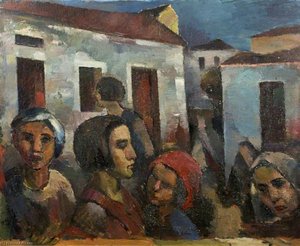 Italian Group
48
 Portrait of a Child in a Green V Neck Sweater
49
 Portrait of a Child with a Rabbit
50
 Flowers Including Roses in a Tall Vase
51
 Portrait of a Woman in a Green Blouse (possibly the artist's wife)
52
 Standing Nude Holding a Bouquet
53
 Abstract Yellow, Red and Blue
54
 Portrait of a Youth with a Yellow CoatStockwood Discovery Centre
55
 Reclining Nude
56
 Abstract
57
 Rural Scene
58
 Figures on Steps in front of a House
59
 Portrait of a Woman with a Green Shawl (possibly the artist's wife)
60
 View of Florence, Italy
61
 Street Scene, Sicily
62
 Flower Garden with a Large House beyond
63
 Nude with Golden Hair Holding a Letter
64
 Tree with Reflection, an Impressionist Study
65
 Portrait of a Young Woman with a Green Dress and a Brown Collar
66
 Portrait of a Woman with a Purple Shawl and a Red Dress
67
 Still Life with a Pineapple
68
 Portrait of a Woman with a Red Silk Scarf and a Green Dress
69
 Beach Scene with a Sunshade
70
 Head and Shoulders Portrait of a Woman in a Blue and Purple Dress
71
 Portrait of a Girl in a Gold Dress with Blue Spots
72
 A Mass of Flowers with a House and a Mountain Beyond
73
 View across a Bay with a Mountain Beyond
74
 Hill Scene, Group of Houses and a Church
75
 House with Boats (probably Venice, Italy)
76
 Head and Shoulders Portrait in Profile of of a Young Woman in a Broad Brimmed Hat
77
 Houses on a Hillside
78
 Elevated View of a Beach and a Village
79
 Landscape, Village in a Valley
80
 Still Life with a Fruit Bowl and a Jug with Flowers
81
 Still Life, Yellow and Red Flowers Arranged in a Vase
82
 Head and Shoulders Portrait of a Woman in a Green Hat
83
 Abstract Oil
84
 Flowers in a Vase with a Brown Background
85
 Hillside and Houses Framed by Trees, an Impressionist Study
86
 Wood, Hungary1936
87
 Draped Nude1932 · Bolton Museum And Art Gallery
De fire motivene som går igjen hyppigst i disse originalverkene, hver med sitt fremste eksempel.
De 2 museene som innehar flest av maleriene på denne siden.
| Museum | By | Verker av Theodor Kern | Malerier fra denne listen |
|---|---|---|---|
 Bolton Museum And Art Gallery |
Bolton | 5 | Self Portrait, Continental Landscape, Self Portrait |
 Stockwood Discovery Centre |
Luton | 2 | Building with a Wooded Hill Beyond and a Tree Lined Path in front, Portrait of a Youth with a Yellow Coat |
Velg et tiår for å se originalverket som definerer det.


Street Scene, Sicily (1930). Deretter følger Beach Scene, Italy (1930) og Portrait of a Young Man (1937).
30 år gammel: Street Scene, Sicily er fra 1930, og Theodor Kern ble født i 1900.
Street Scene, Sicily, Beach Scene, Italy, Portrait of a Young Man, Miss Maureen Bently, Landscape with a Tree by a River and Hills in the Distance, Christ in the House of Martha and Mary, Floral Study, Untitled, Female Portrait og Street Scene (possibly Italy). Rangeringen ovenfor viser årstall og museum for hvert verk.
Vår katalog inneholder 88 verk av Theodor Kern, datert fra 1928 til 1960.
Hovedsakelig i Bolton Museum And Art Gallery (Bolton) og Stockwood Discovery Centre (Luton). Museumslisten ovenfor viser alle.
I 1930s: 18 av de 87 verkene på denne siden ble laget da, Street Scene, Sicily av dem.
På denne siden er det eldste Italian Girl (1928) og det nyeste Landscape (1960).
Portrait (5), Reflection (3) og Architectural art (2), fordelt på 87 verk på denne siden.
Post-impressionism, basert på originalene på denne siden.
Self Portrait, Continental Landscape og Self Portrait: Bolton Museum And Art Gallery, Bolton har 5 av verkene på denne siden.
