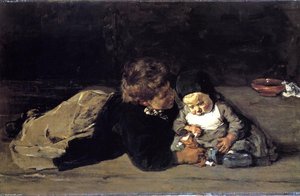
Portrait of Max Liebermann

The 100 Most Famous Max Liebermann Paintings, a Gallery Selection

Updated October 2026 · ranked by our popularity score (searches, visits and orders for each work) · 280 works by Max Liebermann in our catalogue

In short

Of all the originals Max Liebermann left, the most famous is Fri time på Amsterdam barnehjem (1876). Close behind it come Self Portrait with Kitchen Still LIfe (1873) and Corner of a Dutch Village with Washing Hung up to Dry (1890). Our catalog holds 280 works by Max Liebermann; the gallery has kept the 100 the world admires most, each shown with its date, its museum and its story.

1847 – 1935, Berlin Impressionist painting Most works: Alte Nationalgalerie

Max Liebermann's top 10 paintings: the gallery's choice

1
Fri time på Amsterdam barnehjem (1876) by Max Liebermann

Fri time på Amsterdam barnehjem

1876 · Olje på lerret

Max Liebermanns "Free Hour at Amsterdam Orphanage" fra 1876 er et verk som fanger essensen av hverdagslivet i det viktorianske Amsterdam. Det er ikke en krønike, men snarere et øyeblikksbilde – et stille øyeblikk der kvinner og barn samles i en utendørs gårdsplass, omgitt av en atmosfære rik på sosial interaksjon og kulturell arv. Bildet inviterer oss inn i en verden av enkelhet og fellesskap, et bilde som forteller en…

2
Self Portrait with Kitchen Still LIfe (1873) by Max Liebermann

Self Portrait with Kitchen Still LIfe

1873 · Oil On Canvas · Stadtisches Museum, Gelsenkirchen

To stand before Max Liebermann’s Self Portrait with Kitchen Still Life is not merely to observe a painting; it is to step directly into the vibrant, sun-drenched moments of late nineteenth-century Berlin. Created in 1873, this oil on canvas captures more than just a likeness; it encapsulates the artist's profound belief that true beauty resides within the quotidian—the humble objects and simple acts of daily life. Liebermann, a master whose…

3
Corner of a Dutch Village with Washing Hung up to Dry (1890) by Max Liebermann

Corner of a Dutch Village with Washing Hung up to Dry

1890 · Oil On Panel · Harvard Art Museums, Cambridge

The air feels heavy with the scent of damp fabric and the salt of a nearby coast. In this corner of a Dutch village, time seems to pause, caught in the soft, overcast light of 1890. A white building dominates the immediate view, its red door and blue shutters providing the only sharp interruptions to the muted, earthy tones of the village. Above the doorway, laundry hangs from a line,…

4
Portrait of Richard Strauss (1918) by Max Liebermann

Portrait of Richard Strauss

1918 · Oil · Alte Nationalgalerie, Berlin

This 1918 impressionist painting by Max Liebermann presents a black and white portrait of Richard Strauss. The subject is depicted sitting in a chair with his hands clasped together, wearing a suit and tie. He is shown with a mustache and appears to be looking directly at the viewer. To provide depth to the scene, the background features a curtain behind the seated man.

5
Restaurant De oude Vink (1905) by Max Liebermann

Restaurant De oude Vink

1905 · Oil

There is a certain quietude found in the middle of a crowd, a feeling captured here in 1905. In Restaurant De oude Vink, we find ourselves seated among patrons enjoying a meal under the dappled shade of trees. The scene is one of casual, unhurried leisure. Green chairs are scattered around tables, some occupied by figures lost in conversation, others left empty as if the guests have only just stepped…

6
Self-portrait (1916) by Max Liebermann

Self-portrait

1916 · Oil On Canvas · Kunsthalle Bremen, Bremen

An older man sits in a moment of quiet creation, his presence filling the space with a heavy, contemplative dignity. He faces the viewer directly, his gaze steady and unblinking, even as his hands remain occupied with the tools of his trade. In his right hand, he holds a palette, while his left hand brings a brush toward an easel, capturing a fragment of life in real-time. The light enters…

7
The Preserve Makers (1879) by Max Liebermann

The Preserve Makers

1879 · Oil On Canvas · Museum der bildenden Künste, Leipzig

The Preserve Makers is a somber and intimate realist painting that captures a group of women gathered within a dimly lit, rustic interior. The composition is dense and crowded, utilizing a shallow depth of field that brings the figures into the immediate foreground to create a sense of enclosure and shared labor. These women are engaged in the communal task of preparing vegetables, their presence evoking a sense of quiet…

The Max Liebermann selection continues, 11 to 100

11The farrier (1874) by Max LiebermannThe farrier1874 · Staatliche Kunsthalle Karlsruhe 12Young Boys Bathing at Zandvoort (1896) by Max LiebermannYoung Boys Bathing at Zandvoort1896 13Albert Einstein (1879–1955) (1922) by Max LiebermannAlbert Einstein (1879–1955)1922 · The Royal Society 14Portrait Study of Emil Rathenau (1908) by Max LiebermannPortrait Study of Emil Rathenau1908 · Alte Nationalgalerie 15Portrait Dr. Wilhelm Bode (1909) by Max LiebermannPortrait Dr. Wilhelm Bode1909 · Alte Nationalgalerie 16The Siblings (1876) by Max LiebermannThe Siblings1876 · Staatliche Kunstsammlungen 17Swimmers (1875) by Max LiebermannSwimmers1875 · Dallas Museum of Art 18The Basketweavers (Die Korbflechter) (1872) by Max LiebermannThe Basketweavers (Die Korbflechter)1872 · Staatliche Kunsthalle Karlsruhe 19Infant school in Amsterdam (1880) by Max LiebermannInfant school in Amsterdam1880 · Alte Nationalgalerie 20Road in Dutch Village (1885) by Max LiebermannRoad in Dutch Village1885 21Girl from Laren Peeling Potatoes with Sleeping Child in a Basket (1887) by Max LiebermannGirl from Laren Peeling Potatoes with Sleeping Child in a Basket1887 · Museum Kunst der Westküste 22The Net Menders (1888) by Max LiebermannThe Net Menders1888 · Hamburger Kunsthalle 23Dr. Max Linde (1897) by Max LiebermannDr. Max Linde1897 · National Gallery Prague 24Going to School in Laren - Composition Study (1898) by Max LiebermannGoing to School in Laren - Composition Study1898 25Rider by the Sea Facing Left (1900) by Max LiebermannRider by the Sea Facing Left1900 26Samson and Delilah (1902) by Max LiebermannSamson and Delilah1902 · Städel Museum 27Painting of the artist's mother (1900) by Max LiebermannPainting of the artist's mother1900 · Slovak National Gallery 28Two Riders on the Beach to the left (1901) by Max LiebermannTwo Riders on the Beach to the left1901 29Copy of the Bohémienne after Frans Hals (Young woman) (1870) by Max LiebermannCopy of the Bohémienne after Frans Hals (Young woman)1870 · Staatliche Kunsthalle Karlsruhe 30The Terrace at the Hotel Louis C. Jacob in Nienstedten on the Elbe (1902) by Max LiebermannThe Terrace at the Hotel Louis C. Jacob in Nienstedten on the Elbe1902 · Hamburger Kunsthalle 31Two riders on the beach (1903) by Max LiebermannTwo riders on the beach1903 · Wallraf-Richartz-Museum 32Man with parrots (1900) by Max LiebermannMan with parrots1900 33Dutch Farmhouse with Woman (1882) by Max LiebermannDutch Farmhouse with Woman1882 · Frye Art Museum 34Rider on the Beach (1904) by Max LiebermannRider on the Beach1904 35On the Alster in Hamburg (1910) by Max LiebermannOn the Alster in Hamburg1910 · Staatliche Kunstsammlungen Dresden 36The Lifeguard's cart (1908) by Max LiebermannThe Lifeguard's cart1908 37Self-portrait (1908) by Max LiebermannSelf-portrait1908 · Wallraf-Richartz-Museum 38Self-Portrait with Panama Hat (1911) by Max LiebermannSelf-Portrait with Panama Hat1911 39Self-Portrait with Straw Hat (1914) by Max LiebermannSelf-Portrait with Straw Hat1914 · Dordrechts Museum 40Self-portrait, standing in three-quarter figure, both hands in trouser pockets (Selbstbildnis, stehend in Dreiviertelfigur, beide Hände in den Hosentaschen) (1915) by Max LiebermannSelf-portrait, standing in three-quarter figure, both hands in trouser pockets (Selbstbildnis, stehend in Dreiviertelfigur, beide Hände in den Hosentaschen)1915 · Alte Nationalgalerie 41Self-Portrait with Palette to the Left (1912) by Max LiebermannSelf-Portrait with Palette to the Left1912 · Berlinische Galerie 42Käthe Liebermann – The Artist's Daughter (1916) by Max LiebermannKäthe Liebermann – The Artist's Daughter1916 43The artist's daughter riding (1913) by Max LiebermannThe artist's daughter riding1913 · Wallraf-Richartz-Museum 44Study: Bust of a Man / Bust of a Woman – Two-sided Painting (1875) by Max LiebermannStudy: Bust of a Man / Bust of a Woman – Two-sided Painting1875 · Nasjonalmuseet i Kraków 45Ulrich von Wilamowitz Moellendorff (1915) by Max LiebermannUlrich von Wilamowitz Moellendorff1915 46Sketches of Jozef Israëls (1912) by Max LiebermannSketches of Jozef Israëls1912 · Ben Uri Gallery and Museum 47Portrait of the Berlin Garden Director Albert Brodersen (1920) by Max LiebermannPortrait of the Berlin Garden Director Albert Brodersen1920 48Self portrait in painting smock (Selbstbildnis im Malkittel) (1922) by Max LiebermannSelf portrait in painting smock (Selbstbildnis im Malkittel)1922 · Bavarian State Painting Collections 49Portrait of Jeanette Cornelia A. Onnes van Nijenrode-Cockuijt (1883-1936) (1918) by Max LiebermannPortrait of Jeanette Cornelia A. Onnes van Nijenrode-Cockuijt (1883-1936)1918 · Centraal Museum 50Portrait August Batschari (1918) by Max LiebermannPortrait August Batschari1918 · Westfälisches Landesmuseum 51Self-Portrait (1922) by Max LiebermannSelf-Portrait1922 52The Liebermann Family (1926) by Max LiebermannThe Liebermann Family1926 · Stiftung Stadtmuseum 53Self-Portrait with sports cap at the easel (1925) by Max LiebermannSelf-Portrait with sports cap at the easel1925 · Alte Nationalgalerie 54The Fisherman (1926) by Max LiebermannThe Fisherman1926 55A Dutch lacemaker (1881) by Max LiebermannA Dutch lacemaker1881 · Hamburger Kunsthalle 56Gerhart Hauptmann (1912) by Max LiebermannGerhart Hauptmann1912 · Hamburger Kunsthalle 57The Surgeon Dr. Ferdinand Sauerbruch (1932) by Max LiebermannThe Surgeon Dr. Ferdinand Sauerbruch1932 · Hamburger Kunsthalle 58Digging for Potatoes in the Dunes at Zandvoort (1895) by Max LiebermannDigging for Potatoes in the Dunes at Zandvoort1895 · Germanisches Nationalmuseum 59Bust Selfportrait in Paiting Overall (1922) by Max LiebermannBust Selfportrait in Paiting Overall1922 · Stiftung Brandenburger Tor 60Study for Flax Barn in Laren (1886) by Max LiebermannStudy for Flax Barn in Laren1886 · Grohmann Museum 61On the Beach at Noordwijk (1908) by Max LiebermannOn the Beach at Noordwijk1908 62Children Bathing in the Sea (1899) by Max LiebermannChildren Bathing in the Sea1899 · Bavarian State Painting Collections 63Landschaft mit schafherde by Max LiebermannLandschaft mit schafherde 64Albert einstein by Max LiebermannAlbert einstein 65Arbeiterin im rübenfeld by Max LiebermannArbeiterin im rübenfeld 66Flower Terrace in the Wannsee Garden, Facing East (1924) by Max LiebermannFlower Terrace in the Wannsee Garden, Facing East1924 67Recess in the Amsterdam Orphanage - View of the Inner Courtyard, Study (1876) by Max LiebermannRecess in the Amsterdam Orphanage - View of the Inner Courtyard, Study1876 · Alte Nationalgalerie 68Terrace in the Garden near the Wannsee toward Southwest (1919) by Max LiebermannTerrace in the Garden near the Wannsee toward Southwest1919 69Flowers at the Gardener's House toward the Northwest (sketch) (1921) by Max LiebermannFlowers at the Gardener's House toward the Northwest (sketch)1921 70The Flower Terrace in the Wannsee Garden, Facing Northwest (1923) by Max LiebermannThe Flower Terrace in the Wannsee Garden, Facing Northwest1923 · Stadtisches Museum 71Old Men's Home in Amsterdam, Study (1880) by Max LiebermannOld Men's Home in Amsterdam, Study1880 72Study Head of a Man (also known as Sephardic Jew with a Prayer Shawl, Facing Left) (1878) by Max LiebermannStudy Head of a Man (also known as Sephardic Jew with a Prayer Shawl, Facing Left)1878 · Kunsthaus Zürich 73View of the Wannsee with sailing boats (1924) by Max LiebermannView of the Wannsee with sailing boats1924 · Alte Nationalgalerie 74View over the Tall Linden Hedge into the Cutting Garden toward the West (1929) by Max LiebermannView over the Tall Linden Hedge into the Cutting Garden toward the West1929 75The Terrace in the Wannsee Garden toward the Northwest (1926) by Max LiebermannThe Terrace in the Wannsee Garden toward the Northwest1926 76Parrot Avenue (1902) by Max LiebermannParrot Avenue1902 · Kunsthalle Bremen 77Table with Pieces of Meat (1877) by Max LiebermannTable with Pieces of Meat1877 · Neue Pinakothek 78Birch grow by Max LiebermannBirch grow 79A rider on the beach by Max LiebermannA rider on the beach 80Amsterdam Orphans in the Garden (1885) by Max LiebermannAmsterdam Orphans in the Garden1885 81The Surgeon, Ferdinand Sauerbruch (1932) by Max LiebermannThe Surgeon, Ferdinand Sauerbruch1932 82Outdoor Garden on the Havel, Nikolskoe (1916) by Max LiebermannOutdoor Garden on the Havel, Nikolskoe1916 83The Cutting Garden in Wannsee toward the West, with a Woman Gardener on the Path (1924) by Max LiebermannThe Cutting Garden in Wannsee toward the West, with a Woman Gardener on the Path1924 84Flowers at the Gardener's House (1927) by Max LiebermannFlowers at the Gardener's House1927 85Terrace in the Garden near the Wannsee toward Northwest (1916) by Max LiebermannTerrace in the Garden near the Wannsee toward Northwest1916 · Museum of Fine Arts, Houston 86The Circular Bed in the Hedge Garden with a Woman Watering Flowers (1925) by Max LiebermannThe Circular Bed in the Hedge Garden with a Woman Watering Flowers1925 87Portrait of Felix Liebermann (1865) by Max LiebermannPortrait of Felix Liebermann1865 88Jewish Street in Amsterdam (1908) by Max LiebermannJewish Street in Amsterdam1908 · Städel Museum 89Still life of meat (Fleischstillleben) (1878) by Max LiebermannStill life of meat (Fleischstillleben)1878 · Bavarian State Painting Collections 90Hand of an officer of the Haarlem Guard (1876) by Max LiebermannHand of an officer of the Haarlem Guard1876 91Grain Harvest (1874) by Max LiebermannGrain Harvest1874 · Westfälisches Landesmuseum 92Amsterdam Orphanage (1876) by Max LiebermannAmsterdam Orphanage1876 · Arp Museum Bahnhof Rolandseck 93Terrace in the Garden near the Wannsee towards Northwest (1916) by Max LiebermannTerrace in the Garden near the Wannsee towards Northwest1916 · Museum of Fine Arts, Houston 94Nets and Sails Spread over a Meadow: Study for the Net Menders (1884) by Max LiebermannNets and Sails Spread over a Meadow: Study for the Net Menders1884 · Israels Museum 95Shoemaker (1881) by Max LiebermannShoemaker1881 · Alte Nationalgalerie 96Girl Sewing with Cat - Dutch Interior (1884) by Max LiebermannGirl Sewing with Cat - Dutch Interior1884 97Village Pond in Etzenhauser - Village Idyll (1879) by Max LiebermannVillage Pond in Etzenhauser - Village Idyll1879 98Village Street in MIlitsh - Landscape with Pond (1883) by Max LiebermannVillage Street in MIlitsh - Landscape with Pond1883 99Children's playground in Tiergarten park in Berlin (1885) by Max LiebermannChildren's playground in Tiergarten park in Berlin1885 100Privy Councilor Benjamin Liebermann (1887) by Max LiebermannPrivy Councilor Benjamin Liebermann1887

Max Liebermann's famous paintings, period by period

The subjects that held Max Liebermann's eye

The four subjects that come back most often in these originals, each with its finest example.

The museums that keep Max Liebermann's originals

The 8 museums that hold the most of the paintings on this page.

Museum City Works by Max Liebermann Paintings from this list
Alte Nationalgalerie, BerlinAlte Nationalgalerie Berlin 17 Portrait of Richard Strauss, Portrait Study of Emil Rathenau, Portrait Dr. Wilhelm Bode
Hamburger Kunsthalle, HamburgHamburger Kunsthalle Hamburg 8 The Net Menders, The Terrace at the Hotel Louis C. Jacob in Nienstedten on the Elbe, A Dutch lacemaker
Bavarian State Painting Collections, MünchenBavarian State Painting Collections München 7 Self portrait in painting smock (Selbstbildnis im Malkittel), Children Bathing in the Sea, Still life of meat (Fleischstillleben)
Wallraf-Richartz-Museum, KölnWallraf-Richartz-Museum Köln 6 Two riders on the beach, Self-portrait, The artist's daughter riding
Staatliche Kunsthalle Karlsruhe, KarlsruheStaatliche Kunsthalle Karlsruhe Karlsruhe 5 The farrier, The Basketweavers (Die Korbflechter), Copy of the Bohémienne after Frans Hals (Young woman)
Stadtisches Museum, GelsenkirchenStadtisches Museum Gelsenkirchen 3 Self Portrait with Kitchen Still LIfe, The Flower Terrace in the Wannsee Garden, Facing Northwest
Kunsthalle Bremen, BremenKunsthalle Bremen Bremen 3 Self-portrait, Parrot Avenue
Staatliche Kunstsammlungen Dresden, DresdenStaatliche Kunstsammlungen Dresden Dresden 3 Alfred von Berger, On the Alster in Hamburg

Max Liebermann decade by decade: the original that defines each

Works per decade

Pick a decade to see the original that defines it.

Collectors' questions about Max Liebermann's paintings

Which work is Max Liebermann most famous for?Reveal the answer

Fri time på Amsterdam barnehjem (1876). Self Portrait with Kitchen Still LIfe (1873) and Corner of a Dutch Village with Washing Hung up to Dry (1890) come next.

What age was Max Liebermann when Fri time på Amsterdam barnehjem was made?Reveal the answer

29 years old: Fri time på Amsterdam barnehjem dates from 1876, and Max Liebermann was born in 1847.

What are the ten most famous Max Liebermann paintings?Reveal the answer

Fri time på Amsterdam barnehjem, Self Portrait with Kitchen Still LIfe, Corner of a Dutch Village with Washing Hung up to Dry, Portrait of Richard Strauss, Restaurant De oude Vink, Self-portrait, The Preserve Makers, Schreitender Bauer, KIRCHGANG IN Laren and Alfred von Berger. The ranking above gives each one's year and museum.

How many paintings did Max Liebermann leave?Reveal the answer

Our catalog holds 280 works by Max Liebermann, dated from 1865 to 1932.

In which museums do Max Liebermann's masterpieces hang?Reveal the answer

Mostly in Alte Nationalgalerie (Berlin), Hamburger Kunsthalle (Hamburg) and Bavarian State Painting Collections (München). The museum table above lists them all.

In which years did Max Liebermann paint the most famous works?Reveal the answer

In 1910s: 18 of the 100 works on this page were made then, Portrait of Richard Strauss among them.

What are the first and the last famous originals of Max Liebermann?Reveal the answer

On this page, the earliest is Portrait of Felix Liebermann (1865) and the latest The Surgeon Dr. Ferdinand Sauerbruch (1932).

Which subjects did Max Liebermann choose most often?Reveal the answer

Man (10), Portrait (6) and Garden scene (6), across the 100 works on this page.

Which technique did Max Liebermann use most?Reveal the answer

Oil On Canvas, for 29 of the 100 works on this page.

To which art movement does Max Liebermann belong?Reveal the answer

Impressionist painting, judging by the originals on this page.

Which Max Liebermann works hang at the Alte Nationalgalerie?Reveal the answer

Portrait of Richard Strauss, Portrait Study of Emil Rathenau and Portrait Dr. Wilhelm Bode: the Alte Nationalgalerie, Berlin holds 9 of the works on this page.

Can I commission a reproduction of a Max Liebermann painting?Reveal the answer

Yes, as a reproduction: the original stays in its museum, but any painting on this page can be painted by hand for you, made to order one at a time, from the painting's own page.

Max Liebermann: life and work

A Life Immersed in Light: The World of Max Liebermann

Max Liebermann, født i Berlin i 1847, var en kunstner hvis vei til å bli en av Tysklands fremste impresjonister ikke var forutbestemt. I utgangspunktet ble han veiledet mot de anseelige yrkene juss og filosofi ved Universitetet i Berlin, men hans sanne kall resonerte langt sterkere fra lerretet enn fra domstolen. Denne tidlige perioden av intellektuell utforskning formet imidlertid uunngåelig hans observante øye og gjennomtenkte tilnærming til å skildre verden rundt ham. Det var en bevisst endring – studier i Weimar, Paris og Nederland – som virkelig tente hans kunstneriske lidenskap, og eksponerte ham for mangfoldige stiler og la grunnlaget for en karriere definert av å fange flyktende øyeblikk med en utsøkt følsomhet for lys og farge. Han malte ikke bare det han så; han overførte selve opplevelsens essens til lerretet. Liebermanns tidlige verk skildret ofte hverdagslige scener, spesielt de av arbeiderklassen, gjengitt med en naturalisme som utfordret den rådende romantiserte æstetikken på den tiden. Disse maleriene var ikke ment som sosial kommentar, men snarere som ærlige fremstillinger av menneskelig eksistens, fylt med verdighet og respekt.

Embracing Impressionism in a German Context

Liebermanns kunstneriske utvikling ble dypt påvirket av hans eksponering for fransk realisme og, viktigst av alt, den blomstrende impresjonistbevegelsen. Ånden til Édouard Manet – hans mot, hans avvisning av akademisk konvensjon, hans fokus på samtidsliv – resonerte dypt med Liebermann. Men han kopierte ikke bare det han så i Paris; heller overførte han disse prinsippene til en tysk sanselighet, og skapte et impresjonisme unikt for ham selv. Hans palett ble lysere, penslene hans løsere og mer spontane, og hans motiver skiftet mot scener av borgerskapets fritid og den rolige skjønnheten i hagen hans nær Wannsee-sjøen. Denne hagen, spesielt, ble en gjentagende motiv gjennom hele hans karriere, og tilbød et fristed fra den raskt foranderlige verden utenfor og ga uendelig inspirasjon for hans utforskninger av lys og atmosfære. Han malte ikke bare blomster og blader; han fanget selve følelsen av sommeren, varmen i solen, den lette brisen som hvisket gjennom bladverket. Ut over landskap etablerte Liebermann seg som en høyt ansett portrettist, og fullførte over 200 bestilte arbeider, inkludert ikoniske fremstillinger av figurer som Albert Einstein og Paul von Hindenburg. Disse portrettene var ikke bare likheter; de var innsiktsfulle studier av karakter, som avslørte subjektets indre liv gjennom subtile gestikuleringer og uttrykk.

A Champion of Artistic Freedom

Liebermann var ikke fornøyd med å bare male; han kjempet aktivt for kunstnerisk innovasjon og uavhengighet. Gjenkjennende de kvalme begrensningene som ble pålagt av den tradisjonelle kunstinstitusjonen, ble han en drivkraft bak Berlin Secession i 1898, og ledet denne avantgarde-gruppen i over ti år. Secessionen utfordret konvensjonelle normer, og ga en plattform for kunstnere som arbeidet utenfor rammen av akademisk tradisjon. Denne forpliktelsen til kunstnerisk frihet strekte seg utover hans eget arbeid; Liebermann mente hjertelig at kunstnere skulle være frie til å utforske sin visjon uten innblanding fra politiske eller ideologiske presser. Hans valg til den Preussiske Kunstakademiet i 1909 og etterfølgende presidentskap i 1920 var vitnesbyrd om hans økende innflytelse innen det tyske kunstmiljøet, men disse stillingene førte ham også ansikt til ansikt med den stigende tidevann av antisemittisme og nasjonalisme som ville true hans livsverk.

Shadows of a Changing World: Legacy and Resilience

Den fremveksten av nazismen kastet en mørk skygge over Liebermanns senere år. Hans prinsipielle holdning mot diskriminering førte til sin avgang fra den Preussiske Kunstakademiet i 1933, en modig handling som signaliserte hans avslag på å kompromisse sine verdier. Til tross for økende forfølgelse fortsatte han å male, og fant tilflukt og formål i kunsten sin. Han døde i Berlin i 1935, og etterlot seg et rikt arv av malerier, trykk og en dyp forpliktelse til kunstnerisk frihet. Hans kone, Martha, tok tragisk sitt eget liv i 1943 for å unngå deportasjon, et hjerteskjærende vitnesbyrd om grusomhetene ved Holocaust. I mange år etter krigen ble Liebermanns arbeid noe oversett, men de siste tiårene har det vært en ny oppdagelse av hans bidrag til tysk impresjonisme og moderne kunsthistorie. I dag er han husket ikke bare som en fremragende maler, men også som en modig forkjemper for kunstnerisk uttrykk og et symbol på motstand mot tyranni. Hans malerier fanger fortsatt seerne med sin blendende skjønnhet, innsiktsfulle observasjoner og vedvarende menneskelighet.

Key Achievements & Lasting Influence

  • "The Twelve-Year-Old Jesus in the Temple": This early work sparked considerable debate due to its unconventional depiction of a Semitic-looking Jesus, challenging traditional religious iconography.
  • Leadership of the Berlin Secession: His pivotal role in leading this avant-garde movement challenged artistic norms and paved the way for modern art in Germany.
  • Presidency of the Prussian Academy of Arts: A significant recognition of his artistic merit, though ultimately compromised by the rise of Nazism.
  • Masterful Portraiture: His ability to capture the essence of his subjects in over 200 commissioned portraits cemented his reputation as a leading portrait painter.
  • Influence on German Impressionism: Liebermann successfully translated the principles of Impressionism into a uniquely German context, inspiring generations of artists.

All 280 works by Max Liebermann →