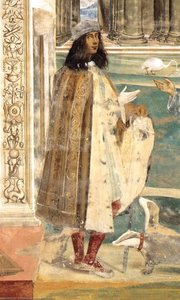
Portrett av Il Sodoma

De 67 mest kjente maleriene av Il Sodoma, et gallerivalg

Oppdatert November 2026 · rangert etter vår popularitetsscore (søk, besøk og bestillinger for hvert verk) · 71 verk av Il Sodoma i vår katalog

Kort fortalt

Av alle originalverkene Il Sodoma etterlot seg, er det mest kjente Raub av Sabinekvinner (1506), som er en del av samlingen til Galleria Nazionale d'Arte Antica i Roma. Like bak følger Head of Christ (1537) og The Holy Family with Saint Elizabeth and the Infant Saint John the Baptist (1527). Vår katalog inneholder 71 verk av Il Sodoma; galleriet har bevart de 67 verkene som verden beundrer mest, hver vist med sin dato, sitt museum og sin historie.

1477 – 1549, Vercelli Renessanse Flest verk: National Gallery

Il Sodomas topp 10 malerier: galleriets utvalg

1
Raub av Sabinekvinner (1506) av Il Sodoma

Raub av Sabinekvinner

1506 · Olje på panel · Galleria Nazionale d'Arte Antica, Roma

Il Sodoma og "Den røvnede Sabinekvinnen": Et møte mellom klassisk eleganse og psykologisk kompleksitet Denne ikoniske oliemaleri av Il Sodoma, skapt i 1506, er mer enn bare et historisk øyeblikk fanget på lerret; det er en dyptgående studie av menneskelig natur og konflikt som fortsatt fascinerer kunstnere og kunsthistorikere i dag. Verkets hjemsted er Galleria Nazionale d’Arte Antica i Roma, hvor dets dimensjoner – 76 x 170 cm – vitner…

2
Head of Christ (1537) av Il Sodoma

Head of Christ

1537 · Oil · National Gallery, London

In "Head of Christ" by Giovanni Gerolamo Savoldo, the viewer is met with a close-up portrait that focuses tightly on the face and upper shoulders. The subject is framed by long, dark, wavy hair and a full beard. A crown of thorns rests upon the brow, rendered through textured, dark lines that press against the skin. The eyes are cast downward, heavy with a sense of sadness or exhaustion. This…

3
The Holy Family with Saint Elizabeth and the Infant Saint John the Baptist (1527) av Il Sodoma

The Holy Family with Saint Elizabeth and the Infant Saint John the Baptist

1527 · Oil · Walters Art Museum, Baltimore

Within the circular confines of this tondo, a quiet intimacy unfolds. The air feels heavy with the warmth of a Mediterranean afternoon, filtered through a soft, directional light that carves the figures out of the surrounding landscape. We find ourselves watching a tender moment of familial connection, where the boundaries between the divine and the human seem to blur. The Holy Family gathers closely, their forms wrapped in heavy, tactile…

4
The Ecstasy of Saint Catherine of Siena (1532) av Il Sodoma

The Ecstasy of Saint Catherine of Siena

1532 · Oil · Yale University Art Gallery, New Haven

The spiritual intensity of The Ecstasy of Saint Catherine of Siena unfolds before us through the hand of Il Sodoma. This religious art piece captures a profound moment of divine connection, centering entirely on the figure of Catherine of Siena. The scene invites a sense of wonder as the saint experiences a celestial encounter, her presence anchoring the composition amidst a swirling, sacred atmosphere. Every brushstroke seeks to translate the…

5
The Holy Family and St. John (1477) av Il Sodoma

The Holy Family and St. John

1477 · Oil On Panel · Detroit Institute of Arts, Detroit

The Holy Family and St. John is a devotional work by the Italian artist Il Sodoma. This oil on wood panel depicts a sacred grouping of figures, centering on the intimate connection between Mary, Joseph, and the young Saint John the Baptist. The composition focuses on the quiet, tender interactions shared between the holy figures, presented in a manner that invites a sense of spiritual closeness.

6
The Madonna and Child with Saints and a Donor (1530) av Il Sodoma

The Madonna and Child with Saints and a Donor

1530 · Oil On Panel · National Gallery, London

Step closer to observe the way the light settles upon these figures. In this composition from around 1530, we find a sense of stability born from a pyramidal arrangement. At the apex sits the Virgin Mary, her presence anchoring the group. She holds the Christ Child with a natural, unforced tenderness that grounds the divine subject in something deeply human. The palette relies on deep ultramarine blue in her mantle…

7
Saint Jerome in Penitence (1540) av Il Sodoma

Saint Jerome in Penitence

1540 · Oil On Canvas · National Gallery, London

A muscular, semi-nude figure occupies the center of this 1540 oil painting, captured in a dynamic, crouching pose that cuts a diagonal path across the canvas. The subject, Saint Jerome, is immersed in a moment of intense religious devotion and physical hardship. Deep, earthy tones of brown and dark green dominate the composition, grounded by the heavy textures of a rugged, rocky landscape. A strong directional light source, characteristic of…

8
Death of Lucretia (1515) av Il Sodoma

Death of Lucretia

1515 · Oil On Panel · Galleria Sabauda, Torino

In this work, we find ourselves witnessing the final, harrowing moments of Lucretia, a woman whose life is being extinguished in a flash of steel and sorrow. The scene freezes a moment of profound tragedy, capturing the climactic end of a Roman noblewoman whose life was defined by virtue and ended by violence. The composition is thick with tension; the stillness of her form contrasts sharply with the looming presence…

9
Holy Family with St. John the Baptist as child (1525) av Il Sodoma

Holy Family with St. John the Baptist as child

1525 · Oil · Kunsthistorisches Museum, Wien

This oil painting, dated 1525, is presented within an arched lunette format. The scene focuses on a group of four figures: the Virgin Mary, the Christ Child, Saint Joseph, and a young Saint John the Baptist. Mary is positioned centrally, wearing a red tunic beneath a deep blue mantle. Her pale skin and the skin of the infants are illuminated by a soft, directional light that emerges from the side,…

10
The Madonna and Child (1525) av Il Sodoma

The Madonna and Child

1525 · Oil On Panel · National Gallery, London

The composition centers on the Virgin Mary and the infant Jesus, set against an atmospheric landscape of distant hills and trees. A soft, directional light illuminates the faces of the subjects and the child's body, while much of the background remains in shadow. This use of chiaroscuro creates a sense of three-dimensionality, sculpting the figures through subtle gradations of tone.

Utvalget av Il Sodoma fortsetter, fra 11 til 67

11charity (1504) av Il Sodomacharity1504 · Gemäldegalerie 12Benedict Presents the Olivetan Monks with His Rule (1505) av Il SodomaBenedict Presents the Olivetan Monks with His Rule1505 13Life of St Benedict, Scene 13: Benedict Frees a Monk (1505) av Il SodomaLife of St Benedict, Scene 13: Benedict Frees a Monk1505 14Life of St Benedict, Scene 12: Benedict Receives Maurus and Placidus (1505) av Il SodomaLife of St Benedict, Scene 12: Benedict Receives Maurus and Placidus1505 15Life of St Benedict, Scene 32: Benedict Appears in the Dreams of Two Monks (1505) av Il SodomaLife of St Benedict, Scene 32: Benedict Appears in the Dreams of Two Monks1505 16Holy Family with young Saint John (1525) av Il SodomaHoly Family with young Saint John1525 17Terrestrial Venus with Eros and Celestial Venus with Anteros and Two Cupids (1525) av Il SodomaTerrestrial Venus with Eros and Celestial Venus with Anteros and Two Cupids1525 18St Sebastian (1525) av Il SodomaSt Sebastian1525 · Palazzo Pitti 19Christ Carrying the Cross (1545) av Il SodomaChrist Carrying the Cross1545 · Gemäldegalerie 20The Crucifixion (1549) av Il SodomaThe Crucifixion1549 · Cleveland Museum of Art 21The Presentation of the Virgin in the Temple (1518) av Il SodomaThe Presentation of the Virgin in the Temple1518 · Oratory of San Bernardino 22The Holy Family (1511) av Il SodomaThe Holy Family1511 · Bavarian State Painting Collections 23The Death of Lucretia (1513) av Il SodomaThe Death of Lucretia1513 · Szépművészeti Múzeum 24The Mystic Marriage of St Catherine (1539) av Il SodomaThe Mystic Marriage of St Catherine1539 · Galleria Nazionale d'Arte Antica 25Pietà (1540) av Il SodomaPietà1540 · Galleria Borghese 26Holy Family with the Infant Saint John the Baptist (1530) av Il SodomaHoly Family with the Infant Saint John the Baptist1530 27Ecce Homo (1510) av Il SodomaEcce Homo1510 · Pinacoteca di Brera 28The Confirmation of the Olivetan Order by the Bishop of Arezzo (1503) av Il SodomaThe Confirmation of the Olivetan Order by the Bishop of Arezzo1503 29Man of Sorrow (1505) av Il SodomaMan of Sorrow1505 30Life of St Benedict, Scene 5: The Devil Destroys the Little Bell (1505) av Il SodomaLife of St Benedict, Scene 5: The Devil Destroys the Little Bell1505 31The Road to Calvary (1510) av Il SodomaThe Road to Calvary1510 · Szépművészeti Múzeum 32Life of St Benedict, Scene 6: A Priest Shares His Easter Meal with Benedict (1505) av Il SodomaLife of St Benedict, Scene 6: A Priest Shares His Easter Meal with Benedict1505 33Life of St Benedict, Scene 3: Benedict Repairs a Broken Colander through Prayer (detail) (1505) av Il SodomaLife of St Benedict, Scene 3: Benedict Repairs a Broken Colander through Prayer (detail)1505 34Deposition from the Cross (detail) (1510) av Il SodomaDeposition from the Cross (detail)1510 · Pinacoteca Nazionale 35Life of St Benedict, Scene 8: Benedict is Tempted (detail) (1505) av Il SodomaLife of St Benedict, Scene 8: Benedict is Tempted (detail)1505 36Life of St Benedict, Scene 19: Benedict Sends away the Harlots (1505) av Il SodomaLife of St Benedict, Scene 19: Benedict Sends away the Harlots1505 37Life of St Benedict, Scene 4: The Monk Romanus Dresses Benedict (detail) (1505) av Il SodomaLife of St Benedict, Scene 4: The Monk Romanus Dresses Benedict (detail)1505 38The Women of Darius's Family before Alexander the Great (1517) av Il SodomaThe Women of Darius's Family before Alexander the Great1517 · Villa Farnesina 39Life of St Benedict, Scene 19: Benedict Sends away the Harlots (detail) (1505) av Il SodomaLife of St Benedict, Scene 19: Benedict Sends away the Harlots (detail)1505 40Life of St Benedict, Scene 3: Benedict Repairs a Broken Colander through Prayer (1505) av Il SodomaLife of St Benedict, Scene 3: Benedict Repairs a Broken Colander through Prayer1505 41Life of St Benedict, Scene 15: Benedict Fishes the Pieces of a Broken Ax (detail) (1505) av Il SodomaLife of St Benedict, Scene 15: Benedict Fishes the Pieces of a Broken Ax (detail)1505 42Deposition from the Cross (1510) av Il SodomaDeposition from the Cross1510 · Pinacoteca Nazionale 43Life of St Benedict, Scene 1: Benedict Leaves His Parent's House (1505) av Il SodomaLife of St Benedict, Scene 1: Benedict Leaves His Parent's House1505 44Life of St Benedict, Scene 12: Benedict Receives Maurus and Placidus (detail) (1505) av Il SodomaLife of St Benedict, Scene 12: Benedict Receives Maurus and Placidus (detail)1505 45Life of St Benedict, Scene 11: Benedict Founds Twelve Monasteries (1505) av Il SodomaLife of St Benedict, Scene 11: Benedict Founds Twelve Monasteries1505 46Life of St Benedict, Scene 33: Benedict Gives Posthumous Absolution to Two Nuns (1505) av Il SodomaLife of St Benedict, Scene 33: Benedict Gives Posthumous Absolution to Two Nuns1505 47Life of St Benedict, Scene 31: Benedict Feeds the Monk (1505) av Il SodomaLife of St Benedict, Scene 31: Benedict Feeds the Monk1505 48Life of St Benedict, Scene 30: Benedict Foretells the Destruction of Montecassino (1505) av Il SodomaLife of St Benedict, Scene 30: Benedict Foretells the Destruction of Montecassino1505 49Life of St Benedict, Scene 30: Benedict Foretells the Destruction of Montecassino (detail) (1505) av Il SodomaLife of St Benedict, Scene 30: Benedict Foretells the Destruction of Montecassino (detail)1505 50Life of St Benedict, Scene 7: Benedict Instructs the Peasants (1505) av Il SodomaLife of St Benedict, Scene 7: Benedict Instructs the Peasants1505 51Saint George and the Dragon (1518) av Il SodomaSaint George and the Dragon1518 · National Gallery of Art 52The Beheading of Niccolò di Tuldo (1526) av Il SodomaThe Beheading of Niccolò di Tuldo1526 · San Domenico 53View of the Oratory (1520) av Il SodomaView of the Oratory1520 · Oratory of San Bernardino 54View of the Cappella di Santa Caterina (1526) av Il SodomaView of the Cappella di Santa Caterina1526 · San Domenico 55Wedding of Alexander and Roxane (detail) (1517) av Il SodomaWedding of Alexander and Roxane (detail)1517 · Villa Farnesina 56The Death of Lucretia (1535) av Il SodomaThe Death of Lucretia1535 · Szépművészeti Múzeum 57Cupid in a Landscape (1510) av Il SodomaCupid in a Landscape1510 · Eremitasjen 58Kristus Flagellering (1510) av Il SodomaKristus Flagellering1510 · Szépművészeti Múzeum 59Mary Magdalene av Il SodomaMary Magdalene 60Christ Carrying the Cross av Il SodomaChrist Carrying the CrossPalazzo d'Arco 61St George and the Dragon av Il SodomaSt George and the DragonNational Gallery of Art 62Allegory of Celestial Love av Il SodomaAllegory of Celestial LoveChigi Saracini Collection 63Christ Presented to the People (Ecce Homo) (1544) av Il SodomaChrist Presented to the People (Ecce Homo)1544 · Metropolitan Museum of Art 64Wedding of Alexander and Roxane (1517) av Il SodomaWedding of Alexander and Roxane1517 · Villa Farnesina 65Man of Sorrows (1500) av Il SodomaMan of Sorrows1500 66Holy Family with Saint John the Baptist and an Angel (1530) av Il SodomaHoly Family with Saint John the Baptist and an Angel1530 · Musée des Beaux-Arts de Strasbourg 67Pietà (1533) av Il SodomaPietà1533

Il Sodomas berømte malerier, periode for periode

Motivene som fanget Il Sodomas blikk

De fire motivene som går igjen hyppigst i disse originalverkene, hver med sitt fremste eksempel.

Museene som har Il Sodomas originalverk

De 8 museene som innehar flest av maleriene på denne siden.

Museum By Verker av Il Sodoma Malerier fra denne listen
National Gallery, LondonNational Gallery London 4 Head of Christ, The Madonna and Child with Saints and a Donor, Saint Jerome in Penitence
Szépművészeti Múzeum, BudapestSzépművészeti Múzeum Budapest 4 The Death of Lucretia, The Road to Calvary, The Death of Lucretia
Villa Farnesina, RomaVilla Farnesina Roma 3 The Women of Darius's Family before Alexander the Great, Wedding of Alexander and Roxane (detail), Wedding of Alexander and Roxane
Galleria Nazionale d'Arte Antica, RomaGalleria Nazionale d'Arte Antica Roma 2 Raub av Sabinekvinner, The Mystic Marriage of St Catherine
Gemäldegalerie, BerlinGemäldegalerie Berlin 2 charity, Christ Carrying the Cross
Oratory of San Bernardino, SienaOratory of San Bernardino Siena 2 The Presentation of the Virgin in the Temple, View of the Oratory
Pinacoteca Nazionale, SienaPinacoteca Nazionale Siena 2 Deposition from the Cross (detail), Deposition from the Cross
National Gallery of Art, WashingtonNational Gallery of Art Washington 2 Saint George and the Dragon, St George and the Dragon

Il Sodoma tiår for tiår: originalverket som definerer hvert av dem

Verk per tiår

Velg et tiår for å se originalverket som definerer det.

Samlere spør om maleriene til Il Sodoma

Hvilket verk er Il Sodoma mest kjent for?Avslør svaret

Raub av Sabinekvinner (1506), Galleria Nazionale d'Arte Antica, Roma. Deretter følger Head of Christ (1537) og The Holy Family with Saint Elizabeth and the Infant Saint John the Baptist (1527).

Hvor gammel var Il Sodoma da Raub av Sabinekvinner ble laget?Avslør svaret

29 år gammel: Raub av Sabinekvinner er fra 1506, og Il Sodoma ble født i 1477.

Hva er de ti mest kjente maleriene til Il Sodoma?Avslør svaret

Raub av Sabinekvinner, Head of Christ, The Holy Family with Saint Elizabeth and the Infant Saint John the Baptist, The Ecstasy of Saint Catherine of Siena, The Holy Family and St. John, The Madonna and Child with Saints and a Donor, Saint Jerome in Penitence, Death of Lucretia, Holy Family with St. John the Baptist as child og The Madonna and Child. Rangeringen ovenfor viser årstall og museum for hvert verk.

Hvor mange malerier etterlot Il Sodoma?Avslør svaret

Vår katalog inneholder 71 verk av Il Sodoma, datert fra 1500 til 1549.

I hvilke museer henger mesterverkene til Il Sodoma?Avslør svaret

Hovedsakelig i National Gallery (London), Szépművészeti Múzeum (Budapest) og Villa Farnesina (Roma). Museumslisten ovenfor viser alle.

I hvilke år malte Il Sodoma sine mest kjente verk?Avslør svaret

I 1500s: 26 av de 67 verkene på denne siden ble laget da, Raub av Sabinekvinner av dem.

Hva er de første og de siste kjente originalverkene til Il Sodoma?Avslør svaret

På denne siden er det eldste Man of Sorrows (1500) og det nyeste The Crucifixion (1549).

Hvilke motiver valgte Il Sodoma oftest?Avslør svaret

Man (21), People (21) og Woman (14), fordelt på 67 verk på denne siden.

Hvilken teknikk brukte Il Sodoma mest?Avslør svaret

Fresco, for 29 av de 67 verkene på denne siden.

Hvilken kunstretning tilhører Il Sodoma?Avslør svaret

Renessanse, basert på originalene på denne siden.

Hvilke verk av Il Sodoma stilles ut på National Gallery?Avslør svaret

Head of Christ, The Madonna and Child with Saints and a Donor og Saint Jerome in Penitence: National Gallery, London har 4 av verkene på denne siden.

Il Sodoma: liv og virke

Den gåtefulle sjelen i den sienesiske renessansen

I den italienske renessansens levende vev er det få skikkelser som besitter et navn så provoserende eller en arv så mangefasettert som Giovanni Antonio Bazzi, av historien kjent under det stemningsfulle kallenavnet Il Sodoma. Bazzi ble født i Vercelli rundt 1477, og han trådte frem ikke bare som en maler, men som en transformativ kraft som bygget bro mellom den lysende, balanserte idealismen i høgrenessansen og det emosjonelle, ofte urovekkende dramaet i manierismen. Hans kunstneriske reise var preget av en dyp syntese, der de disiplinerte tradisjonene fra den sienesiske skolen møtte de omfattende, atmosfæriske innovasjonene fra lombardisk stil og den subtile psykologiske dybden inspirert av Leonardo da Vinci.

De tidlige årene av Bazzis liv var preget av en streng læretid som la grunnlaget for hans tekniske mesterskap. Under veiledning av mestre som den "arkaiske" Martino Spanzotti og Giovenone, tilegnet han seg en grunnleggende forståelse for form og farge. Da han beveget seg inn i Sienas kulturelle episenter, begynte arbeidet hans å reflektere en unik stilistisk utvikling. Han besatt en sjelden evne til å legge den sofistikerte, klassiske elegansen fra det tidlige 1500-tallets Roma over de mer provinsielle, dekorative tradisjonene i Toscana. Denne fusjonen gjorde det mulig for ham å skape verk som føltes både forankret i lokal kulturarv og som en del av en langt større, pan-italiensk kunstnerisk revolusjon.

Mestring av lys, emosjon og form

Å betrakte et verk av Il Sodoma er å være vitne til en delikat dans mellom stillhet og spenning. Teknikken hans var karakterisert av en utsøkt kontroll over sfumato og en rik, emosjonende bruk av farger som kunne skifte fra den ømme varmen i en Madonnas kinn til de dramatiske skyggene i en mytologisk kamp. Denne allsidigheten er kanskje mest tydelig i hans mangfoldige motivverden, som spente over det hellige og det profane med like stor lidenskap.

Hans bidrag til freskotradisjonen er intet mindre enn monumentale. I Oratoriet til San Bernardino i Siena demonstrerte Bazzi sin evne til å beherske enorme arkitektoniske rom, ved å veve komplekse fortellinger gjennom balanserte komposisjoner som likevel pulserte av menneskelig emosjon. Hans religiøse verk, slik som Fremstillingen av jomfru Maria i tempelet, viser en dyp åndelig nåde, mens hans sekulære og mytologiske stykker, som den fortryllende Cupido i et landskap, avslører en fascinasjon for det sanselige og det idylliske. I disse landskapene finner man en fredfull italiensk utsikt som fungerer som en scene for det guddommelige eller mytologiske, gjengitt med en klarhet som inviterer betrakteren inn i en drømmeaktig tilstand.

Arven etter en overgangsmester

Den historiske betydningen av Il Sodoma ligger i hans rolle som en stilistisk formidler. Han fulgte ikke bare tidens trender; han var med på å forme overgangen fra den harmoniske stabiliteten i hørenessansen til det mer eksperimentelle, forvrengte og ekspressive språket i manierismen. Ved å introdusere overdrevne gester og forhøyet emosjonalitet i det etablerte sienesiske rammeverket, beredte han veien for neste generasjon kunstnere til å utforske menneskesinnets kompleksitet.

Selv om navnet hans bar med seg en viss notoritet, forble hans kunstneriske produksjon et vitnesbyrd om teknisk briljans og intellektuell dybde. Hans evne til å navigere prestisjetunge oppdrag fra både paver og mektige mæcener—inkludert forbindelser til den innflytelsesrike Agostino Chigi—sikret at hans innflytelse ville resonnere langt utenfor Sienas murer. I dag står Bazzi som en sentral skikkelse hvis verk fortsetter å fenge, og som minner oss om en periode der kunsten var en dyp utforskning av både jordisk skjønnhet og de åndelige mysteriene i menneskets tilstand.