Portrait of Anthonis van Dyck

The 100 Most Famous Anthonis van Dyck Paintings, a Gallery Selection

Updated October 2026 · ranked by our popularity score (searches, visits and orders for each work) · 1620 works by Anthonis van Dyck in our catalogue

In short

Of all the originals Anthonis van Dyck left, the most famous is Charles I i tre stillinger (1636), in the collection of the Royal Collection, London. Close behind it come Family Portrait (1621) and Portrait of Isabella Clara Eugenia as Widow (1628). Our catalog holds 1,620 works by Anthonis van Dyck; the gallery has kept the 100 the world admires most, each shown with its date, its museum and its story.

1599 – 1641, Antwerpen Baroque realism Most works: Bavarian State Painting Collections

Anthonis van Dyck's top 10 paintings: the gallery's choice

1
Charles I i tre stillinger (1636) by Anthonis van Dyck

Charles I i tre stillinger

1636 · Olje på lerret · Royal Collection, London

“Charles I i Tre Stillinger” er mer enn bare et bilde; det er et vitnesbyrd om en tid, en mann og en kunstner. Skapt mellom 1635 og 1636 av den flamske mesteren Sir Anthony van Dyck, representerer dette oljemaleri på lerretsverket en triumf av barokk portrettkunst. Det er et verk som ikke bare fanget Charles I’s majestet, men også definerte hvordan kongelige ble fremstilt i Europa i århundrer fremover. Van…

2
Family Portrait (1621) by Anthonis van Dyck

Family Portrait

1621 · Oil On Canvas · Eremitasjen, St. Petersburg

To gaze upon this magnificent family portrait is to step directly into the opulent drawing rooms of the early seventeenth century. It captures not merely three figures—a distinguished man, an elegant woman, and a cherished child—but an entire tableau of familial pride and societal standing. The composition itself speaks volumes; every fold of fabric, every carefully placed hand, contributes to a narrative of enduring connection. The rich, dramatic red background…

3
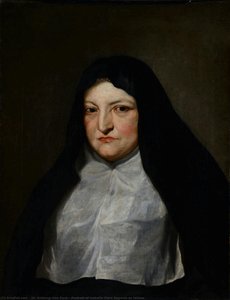
Portrait of Isabella Clara Eugenia as Widow (1628) by Anthonis van Dyck

Portrait of Isabella Clara Eugenia as Widow

1628 · Oil On Canvas · Museo de Arte de Ponce, Ponce

Sir Anthony van Dyck’s “Portrait of Isabella Clara Eugenia as Widow” is more than just a depiction of a noblewoman; it's a carefully constructed tableau of power, grief, and the enduring legacy of a formidable ruler. Painted in 1628, this oil-on-canvas work transports us to the heart of the Spanish Netherlands during a period of significant political and personal upheaval. Isabella Clara Eugenia, daughter of Philip II of Spain, served…

4
Jacqueline van Caestre (1622) by Anthonis van Dyck

Jacqueline van Caestre

1622 · Oil On Panel · Royal Łazienki Museum, Warszawa

The portrait of Jacqueline van Caestre, painted in 1622 by the masterful Sir Anthony van Dyck, is more than a mere likeness; it’s a carefully constructed tableau of wealth, status, and burgeoning domesticity. Within its richly layered composition lies a captivating story of a noblewoman navigating the complexities of marriage and courtly life in 17th-century Antwerp. Van Dyck, already establishing his signature style—characterized by an almost sensual realism and a…

5
Susanna and the Elders (1622) by Anthonis van Dyck

Susanna and the Elders

1622 · Olje på lerret · Alte Pinakothek, München

In the grand tapestry of the Flemish Baroque, few works capture the visceral intersection of vulnerability and voyeurism as profoundly as Sir Anthony van Dyck’s Susanna and the Elders. Painted around 1622, this monumental canvas is far more than a mere biblical illustration; it is a psychological drama frozen in time. The scene centers on Susanna, a figure of profound grace and purity, caught in a moment of harrowing intrusion.…

6
Genoese Noblewoman (1622) by Anthonis van Dyck

Genoese Noblewoman

1622 · Oil On Canvas · The Frick Collection, New York City

Anthony van Dyck's "Genoese Noblewoman," painted circa 1625-1627, isn’t merely a portrait; it’s a meticulously crafted window into the opulent world of early 17th-century Genoa. This captivating work, now residing within The Frick Collection in New York City, offers a rare glimpse into the refined tastes and social dynamics of a wealthy Italian city-state – a vibrant hub of commerce, art, and cultural exchange during a period of immense artistic…

7
Henrietta Maria (1635) by Anthonis van Dyck

Henrietta Maria

1635 · Oil On Canvas

The gaze of Henrietta Maria meets the viewer through this commanding portrait by Anthony van Dyck. Executed in 1636, the work captures Henrietta Maria of France in a moment of poised royal dignity. She exists here as the Queen of England, a position she holds through her marriage to King Charles I. The painting functions as a visual declaration of her status and her presence within the English court.

8
Portrait of Queen Henrietta-Maria (1638) by Anthonis van Dyck

Portrait of Queen Henrietta-Maria

1638 · Oil On Canvas · Eremitasjen, St. Petersburg

To stand before this portrait is to encounter the quiet gravity of the seventeenth-century English court. The Queen stands slightly off-center, her figure anchored by the heavy weight of crimson drapery and a draped table. There is a certain stillness here, a moment caught between the political tensions of 1638 and the personal dignity of the sitter. Van Dyck uses light to sculpt her form, pulling her face and chest…

9
The healing of the paralytic (1620) by Anthonis van Dyck

The healing of the paralytic

1620 · Oil On Canvas · Bavarian State Painting Collections, München

In this oil painting, titled The healing of the paralytic, Anthony van Dyck explores a moment of profound spiritual intervention. The work, which dates to about 1618-20, captures the immediate aftermath of a miracle. We find ourselves witnessing the precise instant of transition between infirmity and restoration. The subject matter is drawn from the New Testament, specifically the narratives found in Matthew 9:1-8 or John 5:1-15.

10
Portrait of Alexandre della Faille (1589-1653) (1632) by Anthonis van Dyck

Portrait of Alexandre della Faille (1589-1653)

1632 · Oil On Canvas · Royal Museums of Fine Arts of Belgium, Brussel

A dignified three-quarter length portrait, this work captures a middle-aged man positioned centrally against a dark, atmospheric background. The subject, Alexandre della Faille, is rendered with a sense of quiet authority and formal composure. A voluminous white ruff collar acts as the primary focal point, its crisp texture contrasting sharply against the heavy, dark fabric of his cloak. Light enters from the upper left, casting soft shadows across the right…

The Anthonis van Dyck selection continues, 11 to 100

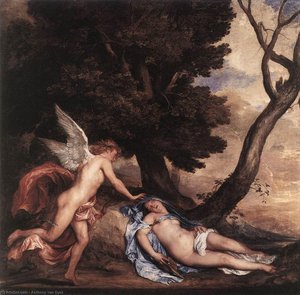
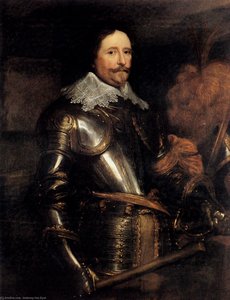
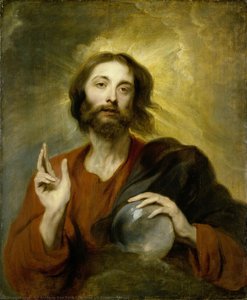
11Equestrian Portrait of Charles I of England (1620) by Anthonis van DyckEquestrian Portrait of Charles I of England1620 · Bavarian State Painting Collections 12The Pietà (1629) by Anthonis van DyckThe Pietà1629 · Museo del Prado 13Portrait of Charles Louis, Elector Palatine (1617-1680), in exile (1637) by Anthonis van DyckPortrait of Charles Louis, Elector Palatine (1617-1680), in exile1637 14Portrait of Charles, Marquis de Vieuville (1635) by Anthonis van DyckPortrait of Charles, Marquis de Vieuville1635 · Chrysler Museum of Art 15Portrait of Charles I, King of the Great Britain (1600-1649) (1638) by Anthonis van DyckPortrait of Charles I, King of the Great Britain (1600-1649)1638 · Eremitasjen 16The Lomellini Family (1627) by Anthonis van DyckThe Lomellini Family1627 17Queen Henrietta Maria (1640) by Anthonis van DyckQueen Henrietta Maria1640 · Wallace Collection 18Portrait of Henrietta Maria of France, Queen of England, Scotland and Ireland (1637) by Anthonis van DyckPortrait of Henrietta Maria of France, Queen of England, Scotland and Ireland1637 19Moses and the Brazen Serpent (1530) by Anthonis van DyckMoses and the Brazen Serpent1530 20Christ on the Cross (1625) by Anthonis van DyckChrist on the Cross1625 · Courtauld Gallery 21Portrait of Queen Henriëtta Maria (1632) by Anthonis van DyckPortrait of Queen Henriëtta Maria1632 22Portrait of a Family (1620) by Anthonis van DyckPortrait of a Family1620 23Thomas Hamilton, 2nd Earl of Haddington, 1600 - 1640 (1637) by Anthonis van DyckThomas Hamilton, 2nd Earl of Haddington, 1600 - 16401637 · Scottish National Portrait Gallery 24Samson and Delilah (1630) by Anthonis van DyckSamson and Delilah1630 · Kunsthistorisches Museum 25Portrait of a Lady with her Daughter (1632) by Anthonis van DyckPortrait of a Lady with her Daughter1632 26Charles I (1600-49) on Horseback (1635) by Anthonis van DyckCharles I (1600-49) on Horseback1635 · Hampton Court Palace 27Cupid and Psyche (1640) by Anthonis van DyckCupid and Psyche1640 · Royal Collection 28Queen Henrietta Maria of England (1620) by Anthonis van DyckQueen Henrietta Maria of England1620 · Bavarian State Painting Collections 29A Family Group (1634) by Anthonis van DyckA Family Group1634 · Detroit Institute of Arts 30Queen Henrietta Maria of England (1639) by Anthonis van DyckQueen Henrietta Maria of England1639 · Statens Museum for Kunst 31Saint Sebastian and the Angel (1631) by Anthonis van DyckSaint Sebastian and the Angel1631 · Galleria Sabauda 32Portrait of a painter (1640) by Anthonis van DyckPortrait of a painter1640 · Kunstmuseum Basel 33Queen Henrietta Maria (1635) by Anthonis van DyckQueen Henrietta Maria1635 · Staatliche KunstSammlungen Dresden 34Christ on the Cross with Saint Catherine of Siena, Saint Dominic and an Angel (1620) by Anthonis van DyckChrist on the Cross with Saint Catherine of Siena, Saint Dominic and an Angel1620 · Koninklijk Museum voor Schone Kunsten Antwerpen 35St Jerome (1620) by Anthonis van DyckSt Jerome1620 · Nationalmuseum 36Venetia, Lady Digby (1634) by Anthonis van DyckVenetia, Lady Digby1634 37Christ and the Penitent Magdalene (1620) by Anthonis van DyckChrist and the Penitent Magdalene1620 · Bavarian State Painting Collections 38Crucifixion (1622) by Anthonis van DyckCrucifixion1622 · San Zaccaria 39Portrait Of Frederik Hendrik (1632) by Anthonis van DyckPortrait Of Frederik Hendrik1632 · Baltimore Museum of Art 40Ottaviano Canevari (1627) by Anthonis van DyckOttaviano Canevari1627 · The Frick Collection 41Lamentation of Christ (1620) by Anthonis van DyckLamentation of Christ1620 · Bavarian State Painting Collections 42Portrait of an English Gentleman (1635) by Anthonis van DyckPortrait of an English Gentleman1635 · Palazzo Pitti 43Portrait of James Hay, 2nd Earl of Carlisle (c1612-1660) (1636) by Anthonis van DyckPortrait of James Hay, 2nd Earl of Carlisle (c1612-1660)1636 44Saint Sebastian (1620) by Anthonis van DyckSaint Sebastian1620 · Bavarian State Painting Collections 45The Martyrdom of Saint Sebastian (1616) by Anthonis van DyckThe Martyrdom of Saint Sebastian1616 · Bavarian State Painting Collections 46Sir Algernon Percy (1602–1668), 10th Earl of Northumberland, KG, His First Wife Lady Anne Cecil (d.1637), and Their Eldest Daughter, Lady Catherine Percy (1630–1638) (1635) by Anthonis van DyckSir Algernon Percy (1602–1668), 10th Earl of Northumberland, KG, His First Wife Lady Anne Cecil (d.1637), and Their Eldest Daughter, Lady Catherine Percy (1630–1638)1635 47Sir Kenelm Digby (1640) by Anthonis van DyckSir Kenelm Digby1640 · National Portrait Gallery 48Lord John Stuart and his Brother, Lord Bernard Stuart (1638) by Anthonis van DyckLord John Stuart and his Brother, Lord Bernard Stuart1638 49Portrait of an Old Man (1618) by Anthonis van DyckPortrait of an Old Man1618 · Liechtenstein Museum 50Portrait of a Man (1922) by Anthonis van DyckPortrait of a Man1922 · Bavarian State Painting Collections 51Charles I in Three Positions (1636) by Anthonis van DyckCharles I in Three Positions1636 · Royal Collection 52Portrait of Nicolaes van der Borght (1620) by Anthonis van DyckPortrait of Nicolaes van der Borght1620 53Portrait of a Genovese Gentleman (1621) by Anthonis van DyckPortrait of a Genovese Gentleman1621 · Gemäldegalerie 54James Stuart (1612–1655), 1st Duke of Richmond and 4th Duke of Lennox (1636) by Anthonis van DyckJames Stuart (1612–1655), 1st Duke of Richmond and 4th Duke of Lennox1636 · English Heritage 55Mountjoy Blount (1597–1665), 1st Earl of Newport George (1608–1657), Lord Goring, and a Page (1639) by Anthonis van DyckMountjoy Blount (1597–1665), 1st Earl of Newport George (1608–1657), Lord Goring, and a Page1639 · Petworth House 56The Martyrdom of Saint Sebastian (1620) by Anthonis van DyckThe Martyrdom of Saint Sebastian1620 · Bavarian State Painting Collections 57Rest on the Flight into Egypt (Madonna with Partridges) (1632) by Anthonis van DyckRest on the Flight into Egypt (Madonna with Partridges)1632 · Eremitasjen 58Portrait of a Man (1618) by Anthonis van DyckPortrait of a Man1618 · Liechtenstein Museum 59Marie de Raet (1631) by Anthonis van DyckMarie de Raet1631 · Wallace Collection 60Mozes and the brass snake (1620) by Anthonis van DyckMozes and the brass snake1620 61Portrait of Prince Charles Louis, Elector Palatine (1641) by Anthonis van DyckPortrait of Prince Charles Louis, Elector Palatine1641 62Charles Seton (1615–1672), 2nd Earl of Dunfermline, Lord Privy Seal (1640) by Anthonis van DyckCharles Seton (1615–1672), 2nd Earl of Dunfermline, Lord Privy Seal1640 63The Virgin and Child (1631) by Anthonis van DyckThe Virgin and Child1631 · Buckingham Palace 64Lord George Stuart (1638) by Anthonis van DyckLord George Stuart1638 · National Portrait Gallery 65Portrait of Wolfgang William of Palatine-Neuburg (1630) by Anthonis van DyckPortrait of Wolfgang William of Palatine-Neuburg1630 · Kunsthalle Bremen 66Queen Henrietta Maria (1760) by Anthonis van DyckQueen Henrietta Maria1760 · Birmingham Museum and Art Gallery 67Portrait of Emmanuel Philibert (1624) by Anthonis van DyckPortrait of Emmanuel Philibert1624 68Portrait of Charles V on Horseback (1620) by Anthonis van DyckPortrait of Charles V on Horseback1620 · Galleria degli Uffizi 69The Polish Rider (1620) by Anthonis van DyckThe Polish Rider1620 · Bavarian State Painting Collections 70Charles I and the Knights of the Garter in Procession (1638) by Anthonis van DyckCharles I and the Knights of the Garter in Procession1638 · The Ashmolean Museum 71Christus als Salvator Mundi (1620) by Anthonis van DyckChristus als Salvator Mundi1620 · Bildergalerie (Sanssouci) 72Charles I (1600–1649) (1639) by Anthonis van DyckCharles I (1600–1649)1639 · National Trust 73Dronning Henrietta Maria (1636) by Anthonis van DyckDronning Henrietta Maria1636 · Metropolitan Museum of Art 74Lady Dacre (1633) by Anthonis van DyckLady Dacre1633 · Denver Art Museum 75Francis Junius (1591–1677) (1640) by Anthonis van DyckFrancis Junius (1591–1677)1640 · Bodleianbibliotekene i Oxford 76Charles i - (16) by Anthonis van DyckCharles i - (16) 77Deux têtes d (1650) by Anthonis van DyckDeux têtes d1650 · Musée des Beaux-Arts de Lyon 78Princess Henrietta of Lorraine (1611–1660), Attended by a Page (1634) by Anthonis van DyckPrincess Henrietta of Lorraine (1611–1660), Attended by a Page1634 · English Heritage 79Portrait of Father Jean-Charles della Faille, S.J. (1629) by Anthonis van DyckPortrait of Father Jean-Charles della Faille, S.J.1629 80Equestrian Portrait of Charles I, King of England (1640) by Anthonis van DyckEquestrian Portrait of Charles I, King of England1640 81François Langlois (1589–1647) (1637) by Anthonis van DyckFrançois Langlois (1589–1647)1637 · The Barber Institute of Fine Arts 82Portrait of Charles I, King of England (1640) by Anthonis van DyckPortrait of Charles I, King of England1640 · USC Fisher Museum of Art 83Christ carrying the Cross by Anthonis van DyckChrist carrying the CrossMusei di Strada Nuova 84Portrait of the Painter Cornelis de Wae (1627) by Anthonis van DyckPortrait of the Painter Cornelis de Wae1627 · Koninklijk Museum voor Schone Kunsten 85Ecce Homo (1626) by Anthonis van DyckEcce Homo1626 · The Barber Institute of Fine Arts 86Margareta Snyders (1620) by Anthonis van DyckMargareta Snyders1620 87Margareta de Vos (1620) by Anthonis van DyckMargareta de Vos1620 · The Frick Collection 88Portrait of Anna Dalkeith, Countess of Morton, and Lady Anna Kirk (1631) by Anthonis van DyckPortrait of Anna Dalkeith, Countess of Morton, and Lady Anna Kirk1631 · Eremitasjen 89Portrait Of Philip, Lord Wharton (1630) by Anthonis van DyckPortrait Of Philip, Lord Wharton1630 90Portrait of a Man (1618) by Anthonis van DyckPortrait of a Man1618 · Liechtenstein Museum 91Portrait of Henrietta Maria (1609–1699), Queen of England by Anthonis van DyckPortrait of Henrietta Maria (1609–1699), Queen of EnglandNasjonalmuseet i Warszawa 92Portrait of James Hamilton (1630) by Anthonis van DyckPortrait of James Hamilton1630 · Liechtenstein Museum 93Charles I på hesteryd (1635) by Anthonis van DyckCharles I på hesteryd1635 · National Gallery 94Thomas Killigrew and (.) William, Lord Croft (1638) by Anthonis van DyckThomas Killigrew and (.) William, Lord Croft1638 · Royal Collection 95Alexander Henderson (c.1583–1646), Presbyterian Divine and Diplomatist (1641) by Anthonis van DyckAlexander Henderson (c.1583–1646), Presbyterian Divine and Diplomatist1641 · Scottish National Portrait Gallery 96The Lomellini Family (1626) by Anthonis van DyckThe Lomellini Family1626 · National Gallery of Scotland 97Samson og Dalila (1620) by Anthonis van DyckSamson og Dalila1620 98Abraham and Isaac (1617) by Anthonis van DyckAbraham and Isaac1617 · Nasjonalgalleri Praha 99Portrait of Anna van Craesbecke (1635) by Anthonis van DyckPortrait of Anna van Craesbecke1635 · Staatliche Museen Kassel 100A wooded ridge (1630) by Anthonis van DyckA wooded ridge1630 · Art Gallery of South Australia

Anthonis van Dyck's famous paintings, period by period

The subjects that held Anthonis van Dyck's eye

The four subjects that come back most often in these originals, each with its finest example.

The museums that keep Anthonis van Dyck's originals

The 8 museums that hold the most of the paintings on this page.

Museum City Works by Anthonis van Dyck Paintings from this list
Bavarian State Painting Collections, MünchenBavarian State Painting Collections München 57 The healing of the paralytic, Equestrian Portrait of Charles I of England, Queen Henrietta Maria of England
Eremitasjen, St. PetersburgEremitasjen St. Petersburg 25 Family Portrait, Portrait of Queen Henrietta-Maria, Portrait of Charles I, King of the Great Britain (1600-1649)
Royal Collection, LondonRoyal Collection London 29 Charles I i tre stillinger, Cupid and Psyche, Charles I in Three Positions
Liechtenstein Museum, WienLiechtenstein Museum Wien 23 Portrait of an Old Man, Portrait of a Man, Portrait of a Man
The Frick Collection, New York CityThe Frick Collection New York City 8 Genoese Noblewoman, Ottaviano Canevari, Margareta de Vos
Wallace Collection, LondonWallace Collection London 9 Queen Henrietta Maria, Marie de Raet
National Portrait Gallery, LondonNational Portrait Gallery London 6 Sir Kenelm Digby, Lord George Stuart
Scottish National Portrait Gallery, EdinburghScottish National Portrait Gallery Edinburgh 5 Thomas Hamilton, 2nd Earl of Haddington, 1600 - 1640, Alexander Henderson (c.1583–1646), Presbyterian Divine and Diplomatist

Anthonis van Dyck decade by decade: the original that defines each

Works per decade

Pick a decade to see the original that defines it.

Collectors' questions about Anthonis van Dyck's paintings

Which work is Anthonis van Dyck most famous for?Reveal the answer

Charles I i tre stillinger (1636), Royal Collection, London. Family Portrait (1621) and Portrait of Isabella Clara Eugenia as Widow (1628) come next.

What age was Anthonis van Dyck when Charles I i tre stillinger was made?Reveal the answer

37 years old: Charles I i tre stillinger dates from 1636, and Anthonis van Dyck was born in 1599.

What are the ten most famous Anthonis van Dyck paintings?Reveal the answer

Charles I i tre stillinger, Family Portrait, Portrait of Isabella Clara Eugenia as Widow, Jacqueline van Caestre, Susanna and the Elders, Genoese Noblewoman, Henrietta Maria, Portrait of Queen Henrietta-Maria, The healing of the paralytic and Portrait of Alexandre della Faille (1589-1653). The ranking above gives each one's year and museum.

How many paintings did Anthonis van Dyck leave?Reveal the answer

Our catalog holds 1,620 works by Anthonis van Dyck, dated from 1616 to 1641.

In which museums do Anthonis van Dyck's masterpieces hang?Reveal the answer

Mostly in Bavarian State Painting Collections (München), Eremitasjen (St. Petersburg) and Royal Collection (London). The museum table above lists them all.

In which years did Anthonis van Dyck paint the most famous works?Reveal the answer

In 1630s: 44 of the 100 works on this page were made then, Charles I i tre stillinger among them.

What are the first and the last famous originals of Anthonis van Dyck?Reveal the answer

On this page, the earliest is The Martyrdom of Saint Sebastian (1616) and the latest Portrait of Prince Charles Louis, Elector Palatine (1641).

Which subjects did Anthonis van Dyck choose most often?Reveal the answer

Man (22), Portraiture (20) and Portrait (17), across the 100 works on this page.

Which technique did Anthonis van Dyck use most?Reveal the answer

Oil On Canvas, for 75 of the 100 works on this page.

To which art movement does Anthonis van Dyck belong?Reveal the answer

Baroque realism, judging by the originals on this page.

Which Anthonis van Dyck works hang at the Bavarian State Painting Collections?Reveal the answer

The healing of the paralytic, Equestrian Portrait of Charles I of England and Queen Henrietta Maria of England: the Bavarian State Painting Collections, München holds 10 of the works on this page.

Can I commission a reproduction of a Anthonis van Dyck painting?Reveal the answer

Yes, as a reproduction: the original stays in its museum, but any painting on this page can be painted by hand for you, made to order one at a time, from the painting's own page.

Anthonis van Dyck: life and work

Tidlig liv, familie og opplæring

Da Sir Anthony Van Dyck ble født i Antwerpen den 22. mars 1599, trådte han inn i en verden preget av handel og håndverk. Han var det syvende av tolv barn født av Maria Cupers og silkehandleren Francoïs "Frans" van Dijck. Denne oppveksten i et velstående hushold ga et stabilt fundament for et barn som utviste en tidlig og eksepsjonell begavelse for de visuelle kunstartene. Allerede i tiårsalderen begynte hans formelle utdannelse innen malerkunsten under veiledning av Hendrick van Balen den eldre.

Hans utvikling var preget av en lynrask ferd gjennom de tradisjonelle strukturene i den flamske kunstverdenen. Han ble ikke lenge værende i rollen som en enkel elev; hans tekniske dyktighet gjorde at han beveget seg mot selvstendighet med en bemerkelsesverdig hastighet. Innen 18. oktober 1617 hadde han nådd den betydelige milepælen det er å bli tatt opp i Antwerpen sitt Sankt Lukas-laug som mester. Denne tidlige profesjonelle anerkjennelsen varslet ankomsten av et talent som snart ville bevege seg langt utenfor grensene til sin fødeby.

  • Selvportrett (datert 1613–14)

Innflytelsen fra Peter Paul Rubens

Banen til Sir Anthony Van Dyck sin karriere ble fundamentalt formet av tiden han tilbrakte i atelieret til Peter Paul Rubens. Dette var ingen ordinær læretid; den unge kunstneren steg i gradene til å bli mesterens fremste assistent, en posisjon som krevde både teknisk presisjon og en sjelden evne til å absorbere et komplekst visuelt språk. Rubens selv anerkjente sitt proteges eksepsjonelle talent og beskrev den unge mannen som sin fremste elev. Dette mentorskapet ga Sir Anthony Van Dyck en direkte forbindelse til de ledende kunstneriske strømningene i det syttende århundre, og ga ham muligheten til å observere på nært hold skapelsen av storslåtte komposisjoner og ledelsen av et ekstremt produktivt verksted.

Rubens’ innflytelse over den unge kunstneren manifesterte seg gjennom et felles fokus på ekspresjon, gestikk og form. Selv om Sir Anthony Van Dyck etter hvert ville utvikle en mer raffinert og behersket stil, ble hans tidlige år brukt på å etterligne sin mentors energi og skarpe observasjonsevne. Han lærte å oversette livets vitalitet til olje og pigment, en ferdighet som senere ville tillate ham å bevege seg forbi den robuste energien i Rubens’ stil mot noe langt mer subtilt. Det tekniske fundamentet som ble lagt i dette atelieret, ga ham de nødvendige verktøyene for hans påfølgende storhet ved Europas kongelige hoff.

Kunstneriske reiser i Italia og Genova

I slutten av tenårene hadde Sir Anthony Van Dyck allerede oppnådd suksess som en uavhengig maler, en bragd som ga ham det nødvendige momentumet for å forlate Nederlandene. Mellom 1621 og slutten av 1627 reiste han gjennom Italia, en periode som skulle foredle hans evne til å navigere i det europeiske aristokratiets komplekse sosiale hierarkier. Denne reiseperioden var mindre en tilfeldig vandring og mer en strategisk fordypning i det visuelle språket til middelhavseliten.

Tiden hans i Genova viste seg å være av særlig stor betydning. Her fant han en trofast kundekrets blant de genovesiske patrisierne, hvis aristokratiske sanser harmonerte perfekt med hans fremvoksende stil. Hans fremstillinger av disse lokale familiene ble mottatt med stor begeistring i byen, og etablerte ham som en maler med en unik evne til å fange den spesifikke verdigheten som det øvre samfunnslag krevde. I disse portrettene beveget han seg forbi det rent fysiske likhetstrekk og berørte i stedet sitternes sosiale status og dypere karakter.

Tjeneste ved det engelske hoffet

Sir Anthony Van Dyck sin forbindelse til den engelske kronen begynte lenge før hans permanente bosetning i London. Allerede i 1620 trådte han inn i tjenesten til kong Jakob I, et kortvarig oppdrag som varslet om de omfattende reisene gjennom Italia og de spanske Nederlandene som fulgte. Disse årene med konstant bevegelse og varierte oppdrag forberedte ham på en langt mer betydningsfull ankomst. Innen 1632 hadde han vendt tilbake til England og bosatt seg ved hoffet, der hans rykte som en fremragende portrettmaler virkelig skulle festes. Det samme året ble han utnevnt til 'principalle Paynter in Ordinary to their Majesties', en posisjon som plasserte ham i selve hjertet av det kongelige liv.

Hans tilstedeværelse i London transformerte monarkiets visuelle språk fundamentalt. Han brøt med fortidens stive og formelle portrettkunst, og valgte i stedet å fremstille kongen og aristokratiet med en følelse av uanstrengt eleganse og autoritet. Hans unike evne til å fange sjelen og karakteren til sine modeller gjorde ham til Englands ledende hoffmaler. Han nøt seg ikke bare med å avbilde ansikter; han konstruerte et bilde av makt som skulle prege det engelske hoffet i generasjoner. Hans kunstneriske virke i denne perioden tilførte en verdighet og en verdig fremtreden som kom til å definere hele epokens estetikk.

Teknikk og kunstnerisk stil

Sir Anthony Van Dyck besatt en teknisk allsidighet som gjorde det mulig for ham å bevege seg sømløst mellom oljemalingens tykke, rike lag og etsingens presise og skarpe linjer. Som en dyktig tegner forsto han den strukturelle nødvendigheten av et solid fundament før fargene ble påført. Hans komposisjoner hvilte ofte på en mesterlig arrangement av form, der han utnyttet et dramatisk samspill mellom lys og skygge for å definere motivets konturer. Denne bruken av chiaroscuro skapte en følelse av dybde og volum, særlig i hans religiøse og mytologiske scener, hvor lyset virket å tre frem fra mørket for å fremheve en spesifikk gest eller et ansiktsuttrykk.

Fargepaletten hans var preget av dype, mettede toner og en nesten overjordisk oppmerksomhet på teksturenes minste detaljer. Enten han gjengav silkens glans eller hudens subtile tekstur, opprettholdt han en eleganse som unngikk den tunge håndteringen man ser hos enkelte av hans samtidige. Denne presisjonen var ikke forbeholdt hans formelle oppdrag; hans evne til å fange bevegelse og karakter gjorde at han utmerket seg i en rekke sjangre, fra de storslåtte mytologiske fortellingene til den intime, psykologiske dybden i hans portretter. Han hadde et særskilt talent for å bruke lyset til å antyde en sitters sosiale status eller indre temperament, ofte ved å benytte sveipende bevegelser og nøye utvalgte bakgrunner for å ramme inn individet.

Arv og varig innflytelse

Døden til Sir Anthony Van Dyck i London den 9. desember 1641 markerte slutten på en karriere som allerede hadde omformet det visuelle språket ved de europeiske hoffene. I fotsporene til Peter Paul Rubens trådte han frem som det syvende århundrets mest betydningsfulle flamske maler. Hans nærvær ved det engelske hoffet etablerte en standard for portrettkunst som skulle prege kunstens retning i de neste 150 årene. Han besatt en helt særegen evne til å definere sine subjekters sosiale status og karakter gjennom en raffinert teknikk som ble en målestokk for påfølgende generasjoner av kunstnere.

Hans innflytelse strakte seg langt utover Englands grenser. Gjennom hele perioden utøvde hans verker en dyp påvirkning på kunsten som ble skapt over hele Europa. Denne rekkevidden ble næret av hans allsidighet, der han beveget seg sømløst mellom de religiøse fortellingenes krav og aristokratiets sofistikerte behov. Han nøt seg ikke bare med å avbilde ansikter; han konstruerte et bilde av autoritet og eleganse som ble den foretrukne estetikken for dem som ønsket å projisere makt og status.

  • Charles I in Three Positions (1636)
  • The Balbi Children
  • Self-Portrait (1622)

All 1620 works by Anthonis van Dyck →