Portrett av Sylvanus Redgate

Sylvanus Redgates malerier: De 11 mest kjente, sett gjennom et galleris øyne

Oppdatert November 2026 · rangert etter vår popularitetsscore (søk, besøk og bestillinger for hvert verk) · 11 verk av Sylvanus Redgate i vår katalog

Kort fortalt

Etter galleriets vurdering er Sylvanus Redgates mest kjente maleri William Felkin (1795–1874) (1850), hvis original henger i Nottingham Industrial Museum, Nottingham. Alderman William George Ward (1878) og Major Jonathan White (b.1804), RHR (The Old Adjutant) (1883) fullfører trioen som alle kjenner igjen. Av de 11 verkene til Sylvanus Redgate i vår katalog, presenterer galleriet de 11 mest kjente nedenfor; hvert originalverk med årstall, museum og hva som gjør det unikt.

1827 – 1907 Flest verk: Nottingham Castle Museum And Art Gallery

Galleriets 10 beste malerier av Sylvanus Redgate

1
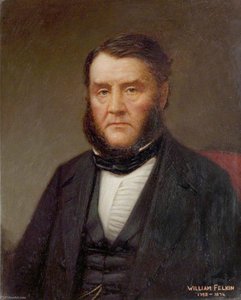
William Felkin (1795–1874) (1850) av Sylvanus Redgate

William Felkin (1795–1874)

1850 · Oil On Canvas · Nottingham Industrial Museum, Nottingham

The oil on canvas depicts William Felkin, a man who lived from 1795 to 1874. He is presented in a frontal view, seated against a plain, neutral wall that offers no distraction from his presence. He wears a dark suit paired with a white shirt and a black bow tie. His facial features are rendered with precision, specifically the texture of his mustache and beard. A serious expression is fixed…

2
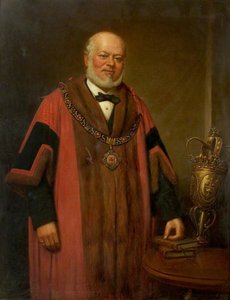
Alderman William George Ward (1878) av Sylvanus Redgate

Alderman William George Ward

1878 · Oil · Nottingham Castle Museum And Art Gallery, Nottingham

A man sits framed by the quiet gravity of a library. He wears a red robe, the fabric heavy and edged in gold, a garment that speaks of office and established order. His mustache is dark and precise against his skin. Behind him, the shelves are crowded with the silent presence of books, their spines catching the light in a dim, academic space. He does not look away; his gaze…

3
Major Jonathan White (b.1804), RHR (The Old Adjutant) (1883) av Sylvanus Redgate

Major Jonathan White (b.1804), RHR (The Old Adjutant)

1883 · Oil · Nottingham Castle Museum And Art Gallery, Nottingham

In this 1883 portrait, Sylvanus Redgate presents us with Major Jonathan White, a man whose very posture commands a quiet, seasoned authority. The subject, known as "The Old Adjutant," is captured in a moment of stillness, his gaze meeting the viewer with a steady, serious expression. He is a man of substance, dressed in a dark, formal coat that absorbs the light, contrasted sharply by the crispness of his necktie…

4
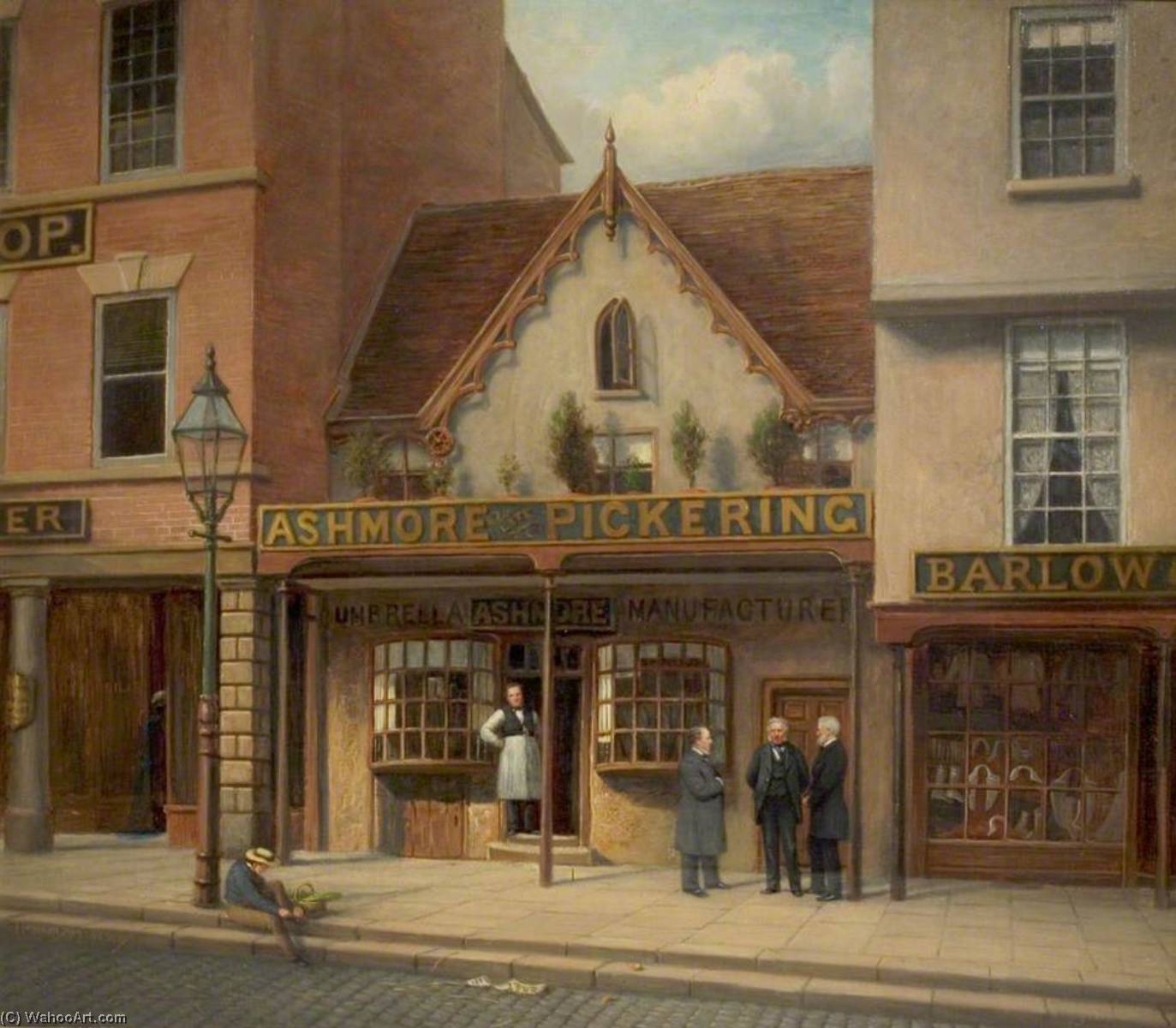
39, Long Row, the Market Place, Nottingham (1879) av Sylvanus Redgate

39, Long Row, the Market Place, Nottingham

1879 · Oil · Nottingham Castle Museum And Art Gallery, Nottingham

The brickwork of Nottingham holds the heat of a late afternoon in 1879. In this depiction of 39, Long Row, the Market Place, the city breathes through its narrow arteries. Figures gather on the sidewalk, their presence a quiet interruption to the architecture of commerce. A clock hangs suspended from a building, its hands marking a time that feels both fleeting and fixed. Potted greenery sits near the edge of…

Sylvanus Redgate sine malerier, rangert fra 11 til 11

Motivene som fanget Sylvanus Redgates blikk

De fire motivene som går igjen hyppigst i disse originalverkene, hver med sitt fremste eksempel.

Museene som har Sylvanus Redgates originalverk

De 3 museene som innehar flest av maleriene på denne siden.

Museum By Verker av Sylvanus Redgate Malerier fra denne listen
Nottingham Castle Museum And Art Gallery, NottinghamNottingham Castle Museum And Art Gallery Nottingham 5 Alderman William George Ward, Major Jonathan White (b.1804), RHR (The Old Adjutant), 39, Long Row, the Market Place, Nottingham
Nottingham Industrial Museum, NottinghamNottingham Industrial Museum Nottingham 1 William Felkin (1795–1874)
Nottinghamshire County Cricket Club, NottinghamNottinghamshire County Cricket Club Nottingham 1 James Grundy (1827–1873)

Sylvanus Redgate, ett signaturmaleri per tiår

Verk fordelt på tiår

Velg et tiår for å se originalverket som definerer det.

Sylvanus Redgates malerier: galleriets svar

Hvilket maleri av Sylvanus Redgate er det mest kjente av alle?Avslør svaret

William Felkin (1795–1874) (1850), Nottingham Industrial Museum, Nottingham. Deretter følger Alderman William George Ward (1878) og Major Jonathan White (b.1804), RHR (The Old Adjutant) (1883).

Hvor gammel var Sylvanus Redgate da William Felkin (1795–1874) ble ferdigstilt?Avslør svaret

23 år gammel: William Felkin (1795–1874) er fra 1850, og Sylvanus Redgate ble født i 1827.

Hvilke er de 10 beste maleriene til Sylvanus Redgate?Avslør svaret

William Felkin (1795–1874), Alderman William George Ward, Major Jonathan White (b.1804), RHR (The Old Adjutant), 39, Long Row, the Market Place, Nottingham, William Sudbury (b.1829), Last Chairman of the Ilkeston Local Board (1887), Alderman William Wade (b.1830), Mayor of the Borough of Ilkeston (1888–1889), Wright Lissett (b.1837), First Town Clerk of the Borough of Ilkeston (1887–1911), Henry Dawson (1811–1878), James Grundy (1827–1873) og Henry Kirke White (copy after an orginal of c.1805 by Thomas Barber). Rangeringen ovenfor viser årstall og museum for hvert verk.

Hvor mange verk skapte Sylvanus Redgate?Avslør svaret

Vår katalog inneholder 11 verk av Sylvanus Redgate, datert fra 1850 til 1901.

Hvor henger de mest kjente originalverkene til Sylvanus Redgate?Avslør svaret

Hovedsakelig i Nottingham Castle Museum And Art Gallery (Nottingham), Nottingham Industrial Museum (Nottingham) og Nottinghamshire County Cricket Club (Nottingham). Museumslisten ovenfor viser alle.

Når malte Sylvanus Redgate sine mest kjente malerier?Avslør svaret

I 1870s: 2 av de 11 verkene på denne siden ble laget da, Alderman William George Ward av dem.

Hvilke er Sylvanus Redgates tidligste og nyeste berømte verk?Avslør svaret

På denne siden er det eldste William Felkin (1795–1874) (1850) og det nyeste Wright Lissett (b.1837), First Town Clerk of the Borough of Ilkeston (1887–1911) (1901).

Hvilke motiver vendte Sylvanus Redgate oftest tilbake til?Avslør svaret

Man (3), Mustache (3) og Portrait (2), fordelt på 11 verk på denne siden.

Hvilket medium arbeidet Sylvanus Redgate mest med?Avslør svaret

Oil, for 3 av de 11 verkene på denne siden.

Hvilke originalverk av Sylvanus Redgate har Nottingham Castle Museum And Art Gallery i sin samling?Avslør svaret

Alderman William George Ward, Major Jonathan White (b.1804), RHR (The Old Adjutant) og 39, Long Row, the Market Place, Nottingham: Nottingham Castle Museum And Art Gallery, Nottingham har 5 av verkene på denne siden.

Sylvanus Redgate: kunstneren

Sylvanus Redgate: A Chronicle of Ilkeston and Beyond

Sylvanus Redgate (1827-1907) wasn’t a name etched into the grand halls of European art academies, yet his canvases hold a remarkable resonance, particularly for those familiar with the industrial heartland of Nottinghamshire. Born in Ilkeston, a town rapidly transforming under the pressures of the Industrial Revolution, Redgate's life and artistic journey were inextricably linked to this burgeoning community – a connection that profoundly shaped his subject matter and distinctive style. His work offers a poignant glimpse into Victorian England, capturing not just portraits but also the spirit of a region undergoing dramatic change.

Redgate’s early life remains somewhat shrouded in mystery, though it's known he received some formal training in London before returning to Ilkeston around 1850. This return marked a pivotal shift; he established himself as a local artist, quickly gaining recognition for his ability to portray the people and landscapes of his surroundings with remarkable accuracy and sensitivity. Unlike many artists of the era who sought fame in the capital, Redgate found his niche documenting the lives of Ilkeston’s inhabitants – miners, mill workers, shopkeepers, and members of the local gentry. His portraits weren't idealized representations; they were honest depictions of individuals, capturing their character and bearing with a keen observational eye.

The Palette of Industry: Redgate’s Subject Matter

Redgate’s artistic focus was remarkably consistent throughout his career. He primarily painted portraits – often commissioned by local businesses, families, or the Ilkeston Local Board – but he also produced an impressive body of landscape work. However, it's the portraits that truly define his legacy. His subjects weren’t merely rendered; they were imbued with a sense of humanity and dignity. He frequently depicted miners, their faces etched with the hardships of their profession, alongside mill workers, their hands calloused from labor. These weren’t romanticized images of toil; Redgate presented them with unflinching realism, acknowledging both the dignity and the struggles inherent in their lives.

His landscapes, too, reflected the changing environment of Ilkeston. He captured the burgeoning industrial scene – factories billowing smoke into the sky, canals winding through the town, and the surrounding countryside gradually being transformed by urbanization. There’s a subtle melancholy to many of these scenes, a sense of loss for the rural past juxtaposed with the relentless march of progress. The use of muted colors and atmospheric perspective contributes significantly to this feeling – he wasn't interested in vibrant spectacle but rather in conveying mood and atmosphere.

Technique and Style: A Realist’s Approach

Redgate’s artistic style can be characterized as a refined form of realism. He was meticulous in his observation, paying close attention to detail – the texture of clothing, the wrinkles on faces, the nuances of expression. His brushwork is generally smooth and controlled, creating a sense of solidity and presence within the portraits. He employed a technique reminiscent of Dutch masters, particularly in his use of light and shadow to sculpt form and create depth. Unlike some contemporary artists who embraced Impressionism’s fleeting effects, Redgate prioritized clarity and accuracy, aiming for a direct representation of his subjects.

His portraiture is notable for its psychological insight. He didn't simply record physical likenesses; he sought to capture the inner lives of his sitters. A careful study of his portraits reveals a remarkable ability to convey personality – a quiet dignity, a subtle sadness, or an underlying strength. This depth of characterization elevates his work beyond mere documentation and establishes it as genuine artistic achievement.

Notable Works and Legacy

Several of Redgate’s works have achieved considerable recognition. The portrait of William Sudbury, the last chairman of the Ilkeston Local Board, is a particularly striking example of his ability to capture authority and gravitas. His depiction of Henry Dawson, a prominent local figure, showcases his skill in portraying character through subtle details. And, of course, there’s the iconic image of James Grundy, a miner whose portrait became a symbol of Ilkeston's working class.

Despite not achieving widespread fame during his lifetime, Sylvanus Redgate’s legacy has been steadily growing in recent decades. His work is now recognized as an important document of Victorian England and a testament to the lives of ordinary people. His paintings are held in public collections across the UK, and his portraits continue to resonate with viewers today, offering a poignant reminder of a bygone era and the enduring spirit of Ilkeston.

Redgate’s Influence: A Local Voice

Redgate's significance lies not just in his technical skill but also in his commitment to portraying the lives of those often overlooked by mainstream art. He served as a visual chronicler of his community, preserving a record of its people and places for posterity. His work has inspired subsequent generations of artists to explore local themes and to give voice to marginalized communities. Redgate’s legacy is a powerful reminder that great art can emerge from unexpected sources – in this case, the industrial heartland of Nottinghamshire.