Portrett av Solon Borglum

De 13 mest kjente Solon Borglum-maleriene, hvert og ett unikt

Oppdatert November 2026 · rangert etter vår popularitetsscore (søk, besøk og bestillinger for hvert verk) · 13 verk av Solon Borglum i vår katalog

Kort fortalt

The teacher of sciences\n\nThe teacher of sciences (1900) er maleriet av Solon Borglum som vekker mest oppmerksomhet; originalen befinner seg i Museum of the Man of the Northeast, Recife. Deretter går blikket til Lassoing Wild Horses (1902) og Saint John the Baptist baptizing on the banks of the river\n\nSaint John the Baptist baptizing on the banks of the river (1900). Blant de 13 verkene til Solon Borglum i vår katalog, er disse 13 de mest kjente – hver og en et unikt originalverk presentert med sitt årstall, sitt museum og årsaken til at det består.

1868 – 1922, Ogden American realism Flest verk: Museum of the Man of the Northeast

Topp 10 malerier av Solon Borglum, sett gjennom galleriets øyne

2
Lassoing Wild Horses (1902) av Solon Borglum

Lassoing Wild Horses

1902 · Bronze · Amon Carter Museum of American Art, Fort Worth

Lassoing Wild Horses is a bronze sculpture by Solon Borglum. The artist, who lived from 1868 to 1922, captured this specific scene in 1898. The work was later cast in 1902. It remains a significant piece of American Realism, focusing on the rugged realities of the frontier.

4
Lassoing Wild Horses av Solon Borglum

Lassoing Wild Horses

Solon Hannibal de la Mothe Borglum, en skulptør dypt forankret i den amerikanske vestens ånd, ga oss et verk som fanger essensen av frontier-livet og det intense livet på ranch. “Lassoing Wild Horses” (1898), laget i bronse, er mer enn bare en scene; det er et øyeblikksbilde av dyktighet, kontroll og den urokkelige kampen mellom mann og natur. Borglum, som ofte ble overskygget av sin bror Gutzon, skapte likevel en…

Solon Borglums berømte malerier, nummer 11 til 13

Motivene som fanget Solon Borglums blikk

De fire motivene som går igjen hyppigst i disse originalverkene, hver med sitt fremste eksempel.

Museene som har Solon Borglums originalverk

De 6 museene som innehar flest av maleriene på denne siden.

Museum By Verker av Solon Borglum Malerier fra denne listen
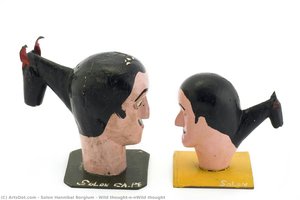
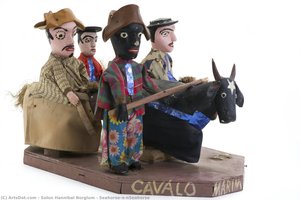
Museum of the Man of the Northeast, RecifeMuseum of the Man of the Northeast Recife 4 The teacher of sciences\n\nThe teacher of sciences, Saint John the Baptist baptizing on the banks of the river\n\nSaint John the Baptist baptizing on the banks of the river, Wild thought\n\nWild thought
New Britain Museum of American Art, New BritainNew Britain Museum of American Art New Britain 3 Distant Hills (Clouds over Black Mountain), Sheep Near Madam Modjeska's Forest of Arden, The Horse's Head
National Cowboy - Western Heritage Museum, Oklahoma CityNational Cowboy - Western Heritage Museum Oklahoma City 2 Lassoing Wild Horses, One in a Thousand
Smithsonian American Art Museum, Washington, D.C.Smithsonian American Art Museum Washington, D.C. 2 Plant Study, Cow
Amon Carter Museum of American Art, Fort WorthAmon Carter Museum of American Art Fort Worth 1 Lassoing Wild Horses
Denver Art Museum, DenverDenver Art Museum Denver 1 Lassoing Wild Horses

Solon Borglum gjennom årene: de unike originalene fra hvert verk

13 år skiller Solon Borglums første og siste daterte originaler vist her, 1890 og 1902: hvert år har sin plass nedenfor.

Verk per år

Velg et år for å se originalverkene.

Solon Borglums malerier: spørsmål til galleriet

Hva er det mest kjente verket til Solon Borglum?Avslør svaret

The teacher of sciences\n\nThe teacher of sciences (1900), Museum of the Man of the Northeast, Recife. Deretter følger Lassoing Wild Horses (1902) og Saint John the Baptist baptizing on the banks of the river\n\nSaint John the Baptist baptizing on the banks of the river (1900).

Hvor gammel var Solon Borglum da The teacher of sciences\n\nThe teacher of sciences ble skapt?Avslør svaret

32 år gammel: The teacher of sciences\n\nThe teacher of sciences er fra 1900, og Solon Borglum ble født i 1868.

Hvilke ti malerier av Solon Borglum er de mest kjente?Avslør svaret

The teacher of sciences\n\nThe teacher of sciences, Lassoing Wild Horses, Saint John the Baptist baptizing on the banks of the river\n\nSaint John the Baptist baptizing on the banks of the river, Lassoing Wild Horses, Distant Hills (Clouds over Black Mountain), Plant Study, Sheep Near Madam Modjeska's Forest of Arden, The Horse's Head, Wild thought\n\nWild thought og Lassoing Wild Horses. Rangeringen ovenfor viser årstall og museum for hvert verk.

Hvor mange verk av Solon Borglum er kjent?Avslør svaret

Vår katalog inneholder 13 verk av Solon Borglum, datert fra 1890 til 1902.

Hvor kan de mest kjente originalverkene til Solon Borglum ses?Avslør svaret

Hovedsakelig i Museum of the Man of the Northeast (Recife), New Britain Museum of American Art (New Britain) og National Cowboy - Western Heritage Museum (Oklahoma City). Museumslisten ovenfor viser alle.

I hvilken periode malte Solon Borglum sine mest kjente malerier?Avslør svaret

I 1900: 4 av de 13 verkene på denne siden ble laget da, The teacher of sciences\n\nThe teacher of sciences av dem.

Hvilket kjent maleri av Solon Borglum er det eldste, og hvilket er det nyeste?Avslør svaret

På denne siden er det eldste Distant Hills (Clouds over Black Mountain) (1890) og det nyeste Lassoing Wild Horses (1902).

Hvilke motiver foretrakk Solon Borglum?Avslør svaret

Sculpture (3), Cowboy (3) og Man (2), fordelt på 13 verk på denne siden.

Hvilke materialer brukte Solon Borglum mest av?Avslør svaret

Bronze, for 2 av de 13 verkene på denne siden.

Hvilken kunstretning tilhører verkene til Solon Borglum?Avslør svaret

American realism, basert på originalene på denne siden.

Hvilke originalverk av Solon Borglum kan jeg se på Museum of the Man of the Northeast?Avslør svaret

The teacher of sciences\n\nThe teacher of sciences, Saint John the Baptist baptizing on the banks of the river\n\nSaint John the Baptist baptizing on the banks of the river og Wild thought\n\nWild thought: Museum of the Man of the Northeast, Recife har 4 av verkene på denne siden.
Solon Borglum: et portrett av kunstneren

A Sculptor of the American West: The Life and Art of Solon Hannibal Borglum

Solon Hannibal de la Mothe Borglum, born December 22, 1868, in Ogden, Utah, was a sculptor whose work became inextricably linked with the spirit and landscape of the American West. Though often overshadowed by his more famous brother, Gutzon Borglum – creator of Mount Rushmore – Solon carved out a distinct artistic identity, one deeply rooted in realism and imbued with a sensitive portrayal of frontier life. His story is one of familial complexity, artistic dedication, and a profound connection to the evolving narrative of a nation forging its identity. The early years of his life were marked by an unconventional family dynamic; his father, James Borglum, a Danish immigrant and Mormon polygamist, was married to two sisters, Ida and Christina Mikkelsen. This arrangement led to a fractured childhood for Solon, particularly after his mother, Christina, left the family when he was young – a subject discouraged from discussion within the household. He spent formative years on the Nebraska prairie where his father practiced medicine, developing an intimate understanding of the land and its inhabitants. Initially drawn to the life of a cowboy-rancher, it was his brother Gutzon who recognized and nurtured Solon’s artistic inclinations, encouraging him to pursue formal training.

From Paris to the Prairie: Artistic Development and Style

Solon's artistic journey led him first to the Cincinnati Art Academy from 1895 to 1897, where he began to hone his skills. However, it was his subsequent studies in Paris at the Académie Julian under Emmanuel Fremiet that truly shaped his aesthetic vision. There, he gained recognition as “le sculpteur de la prairie” – the sculptor of the prairie – a testament to the unique perspective he brought to European artistic circles. His time in Paris exposed him to classical traditions and refined sculpting techniques, yet he remained steadfastly committed to depicting the scenes and subjects that resonated with his American experience. Borglum’s style is characterized by meticulous realism, an acute understanding of anatomy and movement, and a narrative depth that breathes life into his creations. He didn't merely represent figures; he captured moments, emotions, and the essence of a disappearing way of life. His work focused primarily on depicting life in the American West, particularly scenes involving cowboys, Native Americans, and the vast, untamed landscapes that defined the era. Notable sculptures include “Saint John the Baptist baptizing on the banks of the river” (1900), now housed in Recife, Brazil, a piece demonstrating his mastery of Baroque realism and dramatic composition, and drawings like "Cow" at the Smithsonian American Art Museum, showcasing his ability to capture the raw power and beauty of animal life.

War, Teaching, and a Lasting Legacy

The outbreak of World War I saw Solon shift his focus from artistic creation to service. He worked with the YMCA, contributing to Les Foyers du Soldat service clubs in France, providing respite and support for soldiers on the front lines. His dedication was recognized with the Croix de Guerre, a testament to his selfless contributions during wartime. Following the war, Borglum returned to the United States and founded the School of American Sculpture in New York City. Driven by a desire to pass on his knowledge and expertise, he mentored aspiring artists, developing a textbook titled *Sound Construction* as a guide for his students. This pedagogical endeavor reflects his commitment to fostering a new generation of sculptors grounded in both technical skill and artistic vision. Tragically, Solon Borglum’s life was cut short on January 31, 1922, following an appendectomy. However, his legacy endured through the dedication of his wife, Emma Vignal, and later through his daughter Monica and her husband, who diligently preserved and exhibited his work, ensuring that his artistic contributions would not be forgotten.

A Bridge Between Eras: Historical Significance

Solon Borglum’s impact on American sculpture lies in his ability to bridge the gap between realism and iconic representations of frontier life. He didn't romanticize the West; he depicted it with honesty, sensitivity, and a deep understanding of its complexities. His sympathetic portrayal of Native Americans was particularly noteworthy, challenging prevailing stereotypes and offering a more nuanced perspective on their culture and experiences. Borglum’s teachings and artistic style influenced numerous artists, including Paul Manship, who studied under him and went on to become a prominent sculptor in his own right. Today, the New Britain Museum of American Art houses a significant collection of Borglum's sculptures and related materials, safeguarding his art for future generations. His work provides invaluable insights into the cultural landscape of the late 19th and early 20th centuries, reflecting both the romantic allure and the harsh realities of life in the American West. Through his remarkable sculptures and drawings, Solon Hannibal Borglum continues to inspire artists and art enthusiasts alike, reminding us of a pivotal era in American history and the enduring power of artistic expression. His legacy is not merely one of sculpted forms but of stories told in bronze and stone, capturing the heart and soul of a nation.