Et møte med storheten: Livet og kunsten til René-Antoine Houasse
René-Antoine Houasse er kanskje et navn som ikke umiddelbart vekker gjenklang hos alle, like mye som noen av hans samtidige barokkmestere, men han innehar likevel en betydelig plass i det kunstneriske landskapet i 1600-tallets Frankrike. Houasse ble født i Paris i 1645, og hans karriere utspilte seg mot bakteppet av Ludvig XIVs overdådige regjeringstid – en epoke definert av en uopphørlig streben etter prakt og et lidenskapelig vern om kunsten. Hans kunstneriske reise begynte under veiledning av Charles Le Brun, den fremste skikkelsen innen fransk barokkmaling og kongens første maler. Denne formative perioden ved Manufacture des Gobelins viste seg å være avgjørende, da den omsluttet Houasse i skapelsen av storslåtte gobeliner og dekorative skjemaer som skulle forme hans estetiske sans og tekniske ferdigheter. Gobelins var ikke bare et verksted; det var en vugge for kunstnerisk talent, som fremmet en samarbeidsånd og krevde en nitid utførelse – kvaliteter som ble selve kjennetegnet på Houasses eget arbeid. Han absorberte Le Bruns vektlegging av dramatisk komposisjon, levende fargepaletter og narrativ klarhet, men han ville til slutt stake ut sin egen, særpregede vei innenfor barokktradisjonen.Versailles og mytologiens dyrking
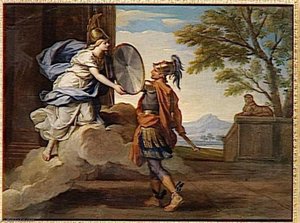
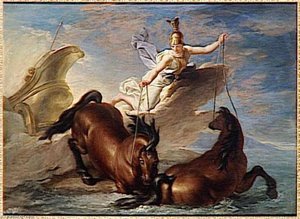
Houasse steg raskt i gradene og ble dypt involvert i de ambisiøse dekorasjonsprosjektene ved Château de Versailles. Dette var mer enn bare å male vegger; det var et bidrag til et nøye konstruert bilde av kongelig makt og guddommelig rett. Hans bidrag var ikke begrenset til én enkelt stil eller ett motiv. Han beveget seg med stor dyktighet mellom mytologiske scener, allegoriske komposisjoner og historiske fortellinger, hver og en gjennomsyret av en storslåtthet som sømmet seg for Solkongens palass. Et tilbakevendende motiv i Houasses virke er imidlertid hans fascinasjon for den gresk-romerske gudinnen Athena – kjent som Minerva hos romerne. Han vendte stadig tilbake til denne skikkelsen og utforsket hennes mangefasetterte natur gjennom ulike myter og attributter. Malerier som Minerve Donne Son Boumlier A Persee viser ikke bare hans tekniske ferdighet i å fremstille klassiske former, men også et dypere engasjement for tidens intellektuelle strømninger – gjenoppdagelsen av klassisk lærdom og dens integrering i det samtidige kunstneriske uttrykket. Hans skildringer var ikke bare illustrasjoner av gamle sagn; de var nøye gjennomtenkte erklæringer om visdom, strategi og guddommelig gunst – kvaliteter Ludvig XIV aktivt søkte å legemliggjøre. Andre fremtredende verk fra denne perioden inkluderer Antoine et Cléopatre, en dramatisk gjengivelse av det historiske møtet, og La Terreur, la crainte et l'épouvante s'emparant des puissances de la terre, en allegorisk utforskning av mektige følelser.Et romersk mellomspill: Direktør for det franske akademiet
I 1699 ble Houasses kunstneriske anseelse og lederegenskaper formelt anerkjent da han ble utnevnt til direktør for det franske akademiet i Roma. Denne prestisjetunge stillingen plasserte ham i hjertet av det italienske kunstmiljøet, med ansvar for å overvåket opplæringen av aspirerende franske kunstnere. Académie de France var ikke bare en skole; det var en ambassade for fransk kunst, utformet for å eksponere unge talenter for den rike arven fra de italienske mesterne innen renessansen og barokken. Houasses rolle strakte seg langt utover pedagogikken. Han fungerte som en kulturell forbindelsesmann som rapporterte tilbake til Paris om kunstneriske trender og betydningsfulle hendelser i det romerske liv, noe som sikret at Frankrike forble i fronten av europeisk kunstnerisk innovasjon. Denne perioden lot ham videreforedle sin egen stil ved å absorbere impulser fra italiensk maleri, samtidig som han formidlet franske teknikker og estetiske prinsipper til den neste generasjonen kunstnere.Stil, ettermæle og varig innflytelse
Houasses kunstneriske stil kjennetegnes av en fengslende blanding av eleganse, dynamikk og nitid detaljrikdom. Han syntetiserte mesterlig klassiske prinsipper med barokk overflod, og skapte komposisjoner som var både visuelt slående og intellektuelt engasjerende. Selv om han sto i dyp gjeld til Charles Le Brun – hans mentors innflytelse er tydelig i Houasses tilnærming til komposisjon, farge og historiefortelling – utviklet han en distinkt kunstnerisk stemme. Hans arbeid besitter en raffinert ynde som skiller det ut, en subtil sofistikasjon som unngår det noen ganger overdrevne dramaet man finner hos andre barokkmalere. Hans ettermæle strekker seg utover hans egne malerier; hans sønn, Michel Ange Houasse, fulgte i hans fotspor og ble en maler spesialisert på sjangermalerier, og førte familiens kunstneriske tradisjon videre. Selv om han kanskje ikke er like vidt feiret i dag som noen av sine samtidige, spilte René-Antoine Houasse en avgjørende rolle i å forme det kunstneriske landskapet i 1600-tallets Frankrike. Hans bidrag til Versailles og det franske akademiet i Roma sementerte hans plass som en betydningsfull skikkelse i den franske barokkkunstens historie, og tilbyr verdifulle innsikter i de kulturelle verdiene, politiske ideologiene og kunstneriske smakene i hans tid. Hans malerier var ikke bare dekorative utsmykninger; de var kraftfulle erklæringer om kongelig autoritet, religiøs hengivenhet og den vedvarende kraften i klassisk lærdom.Spørsmål og svar
Hvor kommer René-Antoine Houasse fra?
René-Antoine Houasse ble født i Frankrike.
Hvor kan jeg finne statistikk om verkene til René-Antoine Houasse?
Statistikk om René-Antoine Houasse sine verk er tilgjengelig på kunstnerens Besøksstatistikk-side.
Hvor finner jeg René-Antoine Houasse sine kunstverk gruppert etter kunstretning?
Bla gjennom René-Antoine Houasse sine verk etter kunstretning på René-Antoine Houasse sin Alle kunstretninger-side.