Portrett av Miné Okubo

Miné Okubos malerier: De 72 mest kjente, sett gjennom et galleris øyne

Oppdatert November 2026 · rangert etter vår popularitetsscore (søk, besøk og bestillinger for hvert verk) · 72 verk av Miné Okubo i vår katalog

Kort fortalt

Etter galleriets vurdering er Miné Okubos mest kjente maleri (3 Women Going to Church) (1948), hvis original henger i Japanese American National Museum, Los Angeles. Walking over muddy ground, Central Utah Relocation Project, Topaz, Utah, 1942-1944 (1944) og Teaching art classes, Tanforan Assembly Center, San Bruno, California, 1942 (1944) fullfører trioen som alle kjenner igjen. Av de 72 verkene til Miné Okubo i vår katalog, presenterer galleriet de 72 mest kjente nedenfor; hvert originalverk med årstall, museum og hva som gjør det unikt.

1912 – 2001, Riverside Social realism Flest verk: Japanese American National Museum

Galleriets 10 beste malerier av Miné Okubo

1
(3 Women Going to Church) (1948) av Miné Okubo

(3 Women Going to Church)

1948 · Gouache · Japanese American National Museum, Los Angeles

Three women move toward the viewer, their bodies rendered as simplified, rectangular forms. They walk in a somber line, heads bowed under the weight of a quiet gravity. In their hands, they hold books, small anchors of faith against the surrounding bleakness. The figures are heavy with a sense of shared purpose, their rounded features catching subtle highlights amidst a landscape of muted blues and browns.

2
Walking over muddy ground, Central Utah Relocation Project, Topaz, Utah, 1942-1944 (1944) av Miné Okubo

Walking over muddy ground, Central Utah Relocation Project, Topaz, Utah, 1942-1944

1944 · Drawing · Japanese American National Museum, Los Angeles

Miné Okubo’s “Walking Over Muddy Ground, Central Utah Relocation Project, Topaz, Utah, 1942-1944” isn't merely a depiction of a landscape; it’s a distilled essence of hardship, determination, and the quiet dignity of a people displaced. Rendered in stark black and white, the drawing captures a pivotal moment within the Topaz War Relocation Center—a microcosm of the larger narrative of Japanese American internment during World War II. The image immediately draws…

3
Teaching art classes, Tanforan Assembly Center, San Bruno, California, 1942 (1944) av Miné Okubo

Teaching art classes, Tanforan Assembly Center, San Bruno, California, 1942

1944 · Ink On Paper · Japanese American National Museum, Los Angeles

In this work, titled Teaching art classes, Tanforan Assembly Center, San Bruno, California, 1942, the artist Miné Okubo captures a quiet, instructional moment within the confines of a relocation center. Created in 1944, the piece offers a view into the daily life of Japanese Americans during the wartime era. It is a document of a specific time and place, recorded through the eyes of someone who lived through the experience…

4
Posting of Civilian Exclusion Order/Evacuation Order No. 19, Berkeley, California, 1942 (1944) av Miné Okubo

Posting of Civilian Exclusion Order/Evacuation Order No. 19, Berkeley, California, 1942

1944 · Acrylic On Canvas · Japanese American National Museum, Los Angeles

Miné Okubo's "Posting of Civilian Exclusion Order/Evacuation Order No. 19, Berkeley, California, 1942" isn’t merely a historical document rendered in ink and paper; it’s a visceral embodiment of fear, uncertainty, and the profound disruption inflicted upon Japanese Americans during World War II. Created in 1942, amidst the escalating anxieties of wartime America, this powerful black-and-white drawing captures a pivotal moment – the public announcement of an evacuation order that would…

5
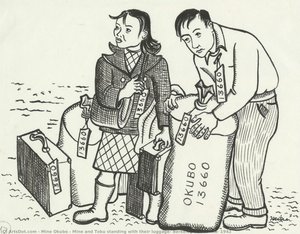
Mine and Toku standing with their luggage, Berkeley, California, 1942 (1944) av Miné Okubo

Mine and Toku standing with their luggage, Berkeley, California, 1942

1944 · Acrylic On Paper · Japanese American National Museum, Los Angeles

Miné Okubo's "Mine and Toku Standing with Their Luggage, Berkeley, California, 1942" isn’t merely a photograph; it’s a distilled essence of experience, a poignant snapshot frozen in time during a profoundly unsettling chapter of American history. Created in 1944, shortly after the internment of Japanese Americans following Pearl Harbor, this deceptively simple drawing offers an intimate and deeply affecting glimpse into the lives of two individuals – Miné and her…

6
Community toilets, Tanforan Assembly Center, San Bruno, California, 1942 (1944) av Miné Okubo

Community toilets, Tanforan Assembly Center, San Bruno, California, 1942

1944 · Ink On Paper · Japanese American National Museum, Los Angeles

Miné Okubo's "Community Toilets, Tanforan Assembly Center, San Bruno, California, 1942" is far more than a simple depiction of a utilitarian space. It’s a poignant and profoundly moving testament to the everyday realities faced by Japanese Americans unjustly incarcerated during World War II. Rendered in stark black ink on white paper, the artwork transcends its subject matter to become a powerful symbol of loss, dignity, and quiet resilience within a…

7
Mine and Toku arrive in their barrack, Central Utah Relocation Project, Topaz, Utah, 1942 (1944) av Miné Okubo

Mine and Toku arrive in their barrack, Central Utah Relocation Project, Topaz, Utah, 1942

1944 · Acrylic On Canvas · Japanese American National Museum, Los Angeles

Miné Okubo's "Mine and Toku arrive in their barrack, Central Utah Relocation Project, Topaz, Utah, 1942" isn’t merely a drawing; it’s a distilled essence of trauma, displacement, and the quiet dignity of survival. Created during her forced incarceration at the Topaz War Relocation Center in 1942, this stark black-and-white image offers an intimate glimpse into a profoundly unsettling chapter of American history – the unjust internment of Japanese Americans during…

8
Eating lunch while awaiting departure inside the Civil Control Station, Berkeley, California, 1942 (1944) av Miné Okubo

Eating lunch while awaiting departure inside the Civil Control Station, Berkeley, California, 1942

1944 · Acrylic On Canvas · Japanese American National Museum, Los Angeles

Miné Okubo's "Eating Lunch while awaiting departure inside the Civil Control Station, Berkeley, California, 1942" isn't merely a depiction of a scene; it’s a distilled essence of wartime anxiety and the profound human cost of forced displacement. Created during a period of immense upheaval – the incarceration of Japanese Americans following Pearl Harbor – this black-and-white pen and ink drawing transcends its documentary origins to become a poignant meditation on…

9
Medical exam in laundry building, Central Utah Relocation Project, Topaz, Utah, 1942 (1944) av Miné Okubo

Medical exam in laundry building, Central Utah Relocation Project, Topaz, Utah, 1942

1944 · Ink · Japanese American National Museum, Los Angeles

The scene unfolds within the stark confines of a laundry building at the Topaz War Relocation Center. Here, in "Medical exam in laundry building, Central Utah Relocation Project, Topaz, Utah, 1942," the artist Miné Okubo captures a moment of quiet, clinical scrutiny. The air feels heavy with the weight of the surrounding enclosure, a space where the routine of a medical examination meets the lived reality of the Topaz camp.…

10
New bachelor dorms at Barrack 14, Tanforan Assembly Center, San Bruno, California, 1942 (1944) av Miné Okubo

New bachelor dorms at Barrack 14, Tanforan Assembly Center, San Bruno, California, 1942

1944 · Acrylic On Canvas · Japanese American National Museum, Los Angeles

Within the stark, geometric confines of the Tanforan Assembly Center during World War II, Miné Okubo captured a poignant and enduring moment – “New Bachelor Dorms at Barrack 14.” This deceptively simple ink-on-paper illustration transcends mere documentation; it’s a testament to human dignity amidst displacement, a quiet observation of daily life within the shadow of internment. Created in 1942-1944, during a period of immense upheaval for Japanese Americans, Okubo's work…

Miné Okubo sine malerier, rangert fra 11 til 72

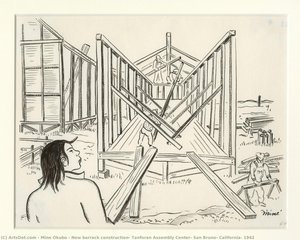
11Army blanket distribution, Central Utah Relocation Project, Topaz, Utah, 1942 (1944) av Miné OkuboArmy blanket distribution, Central Utah Relocation Project, Topaz, Utah, 19421944 · Japanese American National Museum 12Obtaining drinking water, Central Utah Relocation Project, Topaz, Utah, 1942-1944 (1944) av Miné OkuboObtaining drinking water, Central Utah Relocation Project, Topaz, Utah, 1942-19441944 · Japanese American National Museum 13Working at the Topaz Times, Central Utah Relocation Project, Topaz, Utah, 1942 (1944) av Miné OkuboWorking at the Topaz Times, Central Utah Relocation Project, Topaz, Utah, 19421944 · Japanese American National Museum 14Teacher and students in classroom, Central Utah Relocation Project, Topaz, Utah, 1942-1944 (1944) av Miné OkuboTeacher and students in classroom, Central Utah Relocation Project, Topaz, Utah, 1942-19441944 · Japanese American National Museum 15Waiting in line to receive vaccinations, Tanforan Assembly Center, San Bruno, California, 1942 (1944) av Miné OkuboWaiting in line to receive vaccinations, Tanforan Assembly Center, San Bruno, California, 19421944 · Japanese American National Museum 16Mosquitos and flies in the barracks, Central Utah Relocation Project, Topaz, Utah, 1942-1944 (1944) av Miné OkuboMosquitos and flies in the barracks, Central Utah Relocation Project, Topaz, Utah, 1942-19441944 · Japanese American National Museum 17Observing camp activities from a rooftop, Tanforan Assembly Center, San Bruno, California, 1942 (1944) av Miné OkuboObserving camp activities from a rooftop, Tanforan Assembly Center, San Bruno, California, 19421944 · Japanese American National Museum 18Bus ride to Central Utah Relocation Project, Topaz, Utah, 1942 (1944) av Miné OkuboBus ride to Central Utah Relocation Project, Topaz, Utah, 19421944 · Japanese American National Museum 19Listening to radio announcement of bombing of Pearl Harbor, with brother Toku, Berkeley, California, 1941 (1944) av Miné OkuboListening to radio announcement of bombing of Pearl Harbor, with brother Toku, Berkeley, California, 19411944 · Japanese American National Museum 20Registering at the Civil Control Station at Pilgrim Hall of the First Congregational Church, Berkeley, California, 1942 (1944) av Miné OkuboRegistering at the Civil Control Station at Pilgrim Hall of the First Congregational Church, Berkeley, California, 19421944 · Japanese American National Museum 21Arrival at Tanforan Assembly Center, San Bruno, California, 1942 (1944) av Miné OkuboArrival at Tanforan Assembly Center, San Bruno, California, 19421944 · Japanese American National Museum 22Waiting in line for supper, Tanforan Assembly Center, San Bruno, California, 1942 (1944) av Miné OkuboWaiting in line for supper, Tanforan Assembly Center, San Bruno, California, 19421944 · Japanese American National Museum 23Induction at Central Utah Relocation Project, Topaz, Utah, 1942 (1944) av Miné OkuboInduction at Central Utah Relocation Project, Topaz, Utah, 19421944 · Japanese American National Museum 24[Untitled] (1977) av Miné Okubo[Untitled]1977 · Japanese American National Museum 25New barrack construction, Tanforan Assembly Center, San Bruno, California, 1942 (1944) av Miné OkuboNew barrack construction, Tanforan Assembly Center, San Bruno, California, 19421944 · Japanese American National Museum 26Arrival of evacuees from Hawaii, Central Utah Relocation Project, Topaz, Utah, 1942-1944 (1944) av Miné OkuboArrival of evacuees from Hawaii, Central Utah Relocation Project, Topaz, Utah, 1942-19441944 · Japanese American National Museum 27Carrying mattresses to the barrack, Central Utah Relocation Project, Topaz, Utah, 1942 (1944) av Miné OkuboCarrying mattresses to the barrack, Central Utah Relocation Project, Topaz, Utah, 19421944 · Japanese American National Museum 28Eating in the mess hall, Central Utah Relocation Project, Topaz, Utah, 1942-1944 (1944) av Miné OkuboEating in the mess hall, Central Utah Relocation Project, Topaz, Utah, 1942-19441944 · Japanese American National Museum 29Mine with open newspaper, surrounded by anti-Japanese slogans, Berkeley, California, 1941 (1944) av Miné OkuboMine with open newspaper, surrounded by anti-Japanese slogans, Berkeley, California, 19411944 · Japanese American National Museum 30Scavenging lumber to build furniture, Central Utah Relocation Project, Topaz, Utah, 1942 (1944) av Miné OkuboScavenging lumber to build furniture, Central Utah Relocation Project, Topaz, Utah, 19421944 · Japanese American National Museum 31Landscaping with trees, Central Utah Relocation Project, Topaz, Utah, 1942-1944 (1944) av Miné OkuboLandscaping with trees, Central Utah Relocation Project, Topaz, Utah, 1942-19441944 · Japanese American National Museum 32Snowball fight, Central Utah Relocation Project, Topaz, Utah, 1942-1944 (1944) av Miné OkuboSnowball fight, Central Utah Relocation Project, Topaz, Utah, 1942-19441944 · Japanese American National Museum 33Families preparing for evacuation, Berkeley, California, 1942 (1944) av Miné OkuboFamilies preparing for evacuation, Berkeley, California, 19421944 · Japanese American National Museum 34First night at Tanforan Assembly Center, San Bruno, California, 1942 (1944) av Miné OkuboFirst night at Tanforan Assembly Center, San Bruno, California, 19421944 · Japanese American National Museum 35Mine and Toku assemble cots, Tanforan Assembly Center, San Bruno, California, 1942 (1944) av Miné OkuboMine and Toku assemble cots, Tanforan Assembly Center, San Bruno, California, 19421944 · Japanese American National Museum 36Awaiting registration at the Civil Control Station at Pilgrim Hall of the First Congregational Church, Berkeley, California, 1942 (1944) av Miné OkuboAwaiting registration at the Civil Control Station at Pilgrim Hall of the First Congregational Church, Berkeley, California, 19421944 · Japanese American National Museum 37Waiting to disembark from the bus at Tanforan Assembly Center, San Bruno, California, 1942 (1944) av Miné OkuboWaiting to disembark from the bus at Tanforan Assembly Center, San Bruno, California, 19421944 · Japanese American National Museum 38Dining with friends in Berkeley, California, ca.1939-1941 (1944) av Miné OkuboDining with friends in Berkeley, California, ca.1939-19411944 · Japanese American National Museum 39Mine at train station in Berne, Switzerland, 1939 (1944) av Miné OkuboMine at train station in Berne, Switzerland, 19391944 · Japanese American National Museum 40Arrival at Central Utah Relocation Project, Topaz, Utah, 1942 (1944) av Miné OkuboArrival at Central Utah Relocation Project, Topaz, Utah, 19421944 · Japanese American National Museum 41[Untitled] (1978) av Miné Okubo[Untitled]1978 · Japanese American National Museum 42Interior view of Mine and Toku (1944) av Miné OkuboInterior view of Mine and Toku1944 · Japanese American National Museum 43Luggage delivery truck, Tanforan Assembly Center, San Bruno, California, 1942 (1944) av Miné OkuboLuggage delivery truck, Tanforan Assembly Center, San Bruno, California, 19421944 · Japanese American National Museum 44Mine and Toku are shown to their barrack, Tanforan Assembly Center, San Bruno, California, 1942 (1944) av Miné OkuboMine and Toku are shown to their barrack, Tanforan Assembly Center, San Bruno, California, 19421944 · Japanese American National Museum 45Unfinished camp construction, Central Utah Relocation Project, Topaz, Utah, 1942 (1944) av Miné OkuboUnfinished camp construction, Central Utah Relocation Project, Topaz, Utah, 19421944 · Japanese American National Museum 46Mine reads newspaper announcing war declaration against Japan, Berkeley, California, 1941 (1944) av Miné OkuboMine reads newspaper announcing war declaration against Japan, Berkeley, California, 19411944 · Japanese American National Museum 47Walking with guide to Barrack 16, Room 50, Tanforan Assembly Center, San Bruno, California, 1942 (1944) av Miné OkuboWalking with guide to Barrack 16, Room 50, Tanforan Assembly Center, San Bruno, California, 19421944 · Japanese American National Museum 48[Untitled] (1978) av Miné Okubo[Untitled]1978 · Japanese American National Museum 49Interior of Mine and Toku (1944) av Miné OkuboInterior of Mine and Toku1944 · Japanese American National Museum 50[Untitled] (1970) av Miné Okubo[Untitled]1970 · Japanese American National Museum 51Receiving hostile looks while traveling by bus, Berkeley, California, 1941-42 (1944) av Miné OkuboReceiving hostile looks while traveling by bus, Berkeley, California, 1941-421944 · Japanese American National Museum 52Mine and Toku preparing for departure, Berkeley, California, 1942 (1944) av Miné OkuboMine and Toku preparing for departure, Berkeley, California, 19421944 · Japanese American National Museum 53Returning home for curfew, Berkeley, California, 1942 (1944) av Miné OkuboReturning home for curfew, Berkeley, California, 19421944 · Japanese American National Museum 54Mail-order clothing from Sears Roebuck, Central Utah Relocation Project, Topaz, Utah, 1942-1944 (1944) av Miné OkuboMail-order clothing from Sears Roebuck, Central Utah Relocation Project, Topaz, Utah, 1942-19441944 · Japanese American National Museum 55[Untitled] (1969) av Miné Okubo[Untitled]1969 · Japanese American National Museum 56[Untitled] (1968) av Miné Okubo[Untitled]1968 · Japanese American National Museum 57Rocky Ladies ? (1977) av Miné OkuboRocky Ladies ?1977 · Japanese American National Museum 58Bachelor (1944) av Miné OkuboBachelor1944 · Japanese American National Museum 59[Untitled] (1969) av Miné Okubo[Untitled]1969 · Japanese American National Museum 60[Untitled] (1974) av Miné Okubo[Untitled]1974 · Japanese American National Museum 61Victory gardens, Central Utah Relocation Project, Topaz, Utah, 1942-1944 (1944) av Miné OkuboVictory gardens, Central Utah Relocation Project, Topaz, Utah, 1942-19441944 · Japanese American National Museum 62Trimming grass inside living quarters, Tanforan Assembly Center, San Bruno, California, 1942 (1944) av Miné OkuboTrimming grass inside living quarters, Tanforan Assembly Center, San Bruno, California, 19421944 · Japanese American National Museum 63Departure postings at the Civil Control Station, Berkeley, California, 1942 (1944) av Miné OkuboDeparture postings at the Civil Control Station, Berkeley, California, 19421944 · Japanese American National Museum 64Medical exam at Tanforan Assembly Center, San Bruno, California, 1942 (1944) av Miné OkuboMedical exam at Tanforan Assembly Center, San Bruno, California, 19421944 · Japanese American National Museum 65Mine and Toku sweep the stall, Tanforan Assembly Center, San Bruno, California, 1942 (1944) av Miné OkuboMine and Toku sweep the stall, Tanforan Assembly Center, San Bruno, California, 19421944 · Japanese American National Museum 66Inspection of evacuees for contraband, Tanforan Assembly Center, San Bruno, California, 1942 (1944) av Miné OkuboInspection of evacuees for contraband, Tanforan Assembly Center, San Bruno, California, 19421944 · Japanese American National Museum 67Relocation notification, Tanforan Assembly Center, San Bruno, California, 1942 (1944) av Miné OkuboRelocation notification, Tanforan Assembly Center, San Bruno, California, 19421944 · Japanese American National Museum 68Receiving room assignments at Tanforan Assembly Center, San Bruno, California, 1942 (1944) av Miné OkuboReceiving room assignments at Tanforan Assembly Center, San Bruno, California, 19421944 · Japanese American National Museum 69Waiting to use the washrooms, Central Utah Relocation Project, Topaz, Utah, 1942-1944 (1944) av Miné OkuboWaiting to use the washrooms, Central Utah Relocation Project, Topaz, Utah, 1942-19441944 · Japanese American National Museum 70Rest stop with military police, Nevada, 1942 (1944) av Miné OkuboRest stop with military police, Nevada, 19421944 · Japanese American National Museum 71[Untitled] (1978) av Miné Okubo[Untitled]1978 · Japanese American National Museum 72Shopping at the canteen, Tanforan Assembly Center, San Bruno, California, 1942 (1944) av Miné OkuboShopping at the canteen, Tanforan Assembly Center, San Bruno, California, 19421944 · Japanese American National Museum

Miné Okubos berømte malerier, periode for periode

Motivene som fanget Miné Okubos blikk

De fire motivene som går igjen hyppigst i disse originalverkene, hver med sitt fremste eksempel.

Museene som har Miné Okubos originalverk

Museet som innehar flest av maleriene på denne siden.

Museum By Verker av Miné Okubo Malerier fra denne listen
Japanese American National Museum, Los AngelesJapanese American National Museum Los Angeles 72 (3 Women Going to Church), Walking over muddy ground, Central Utah Relocation Project, Topaz, Utah, 1942-1944, Teaching art classes, Tanforan Assembly Center, San Bruno, California, 1942

Miné Okubo, ett signaturmaleri per tiår

Verk per tiår

Velg et tiår for å se originalverket som definerer det.

Miné Okubos malerier: galleriets svar

Hvilket maleri av Miné Okubo er det mest kjente av alle?Avslør svaret

(3 Women Going to Church) (1948), Japanese American National Museum, Los Angeles. Deretter følger Walking over muddy ground, Central Utah Relocation Project, Topaz, Utah, 1942-1944 (1944) og Teaching art classes, Tanforan Assembly Center, San Bruno, California, 1942 (1944).

Hvor gammel var Miné Okubo da (3 Women Going to Church) ble ferdigstilt?Avslør svaret

36 år gammel: (3 Women Going to Church) er fra 1948, og Miné Okubo ble født i 1912.

Hvilke er de 10 beste maleriene til Miné Okubo?Avslør svaret

(3 Women Going to Church), Walking over muddy ground, Central Utah Relocation Project, Topaz, Utah, 1942-1944, Teaching art classes, Tanforan Assembly Center, San Bruno, California, 1942, Posting of Civilian Exclusion Order/Evacuation Order No. 19, Berkeley, California, 1942, Mine and Toku standing with their luggage, Berkeley, California, 1942, Community toilets, Tanforan Assembly Center, San Bruno, California, 1942, Mine and Toku arrive in their barrack, Central Utah Relocation Project, Topaz, Utah, 1942, Eating lunch while awaiting departure inside the Civil Control Station, Berkeley, California, 1942, Medical exam in laundry building, Central Utah Relocation Project, Topaz, Utah, 1942 og New bachelor dorms at Barrack 14, Tanforan Assembly Center, San Bruno, California, 1942. Rangeringen ovenfor viser årstall og museum for hvert verk.

Hvor mange verk skapte Miné Okubo?Avslør svaret

Vår katalog inneholder 72 verk av Miné Okubo, datert fra 1944 til 1978.

Hvor henger de mest kjente originalverkene til Miné Okubo?Avslør svaret

Hovedsakelig i Japanese American National Museum (Los Angeles). Museumslisten ovenfor viser alle.

Når malte Miné Okubo sine mest kjente malerier?Avslør svaret

I 1940s: 62 av de 72 verkene på denne siden ble laget da, (3 Women Going to Church) av dem.

Hvilke er Miné Okubos tidligste og nyeste berømte verk?Avslør svaret

På denne siden er det eldste Walking over muddy ground, Central Utah Relocation Project, Topaz, Utah, 1942-1944 (1944) og det nyeste [Untitled] (1978).

Hvilke motiver vendte Miné Okubo oftest tilbake til?Avslør svaret

Resilience (37), Observation (21) og Japanese american (16), fordelt på 72 verk på denne siden.

Hvilket medium arbeidet Miné Okubo mest med?Avslør svaret

Acrylic On Canvas, for 34 av de 72 verkene på denne siden.

Hvilken kunstretning er Miné Okubo tilknyttet?Avslør svaret

Social realism, basert på originalene på denne siden.

Hvilke originalverk av Miné Okubo har Japanese American National Museum i sin samling?Avslør svaret

(3 Women Going to Church), Walking over muddy ground, Central Utah Relocation Project, Topaz, Utah, 1942-1944 og Teaching art classes, Tanforan Assembly Center, San Bruno, California, 1942: Japanese American National Museum, Los Angeles har 72 av verkene på denne siden.

Miné Okubo: kunstneren

Miné Okubo: En Kunstners Kamp og Vitnesbyrd

Miné Okubos liv ble uatskillelig knyttet til en smertefull og avgjørende kapittel i amerikansk historie – den urettferdige interneringen av japanske amerikanere under andre verdenskrig. Hennes historie er ikke bare et eksempel på kunstnerisk talent, men også på dyp mot, ubøyelig observasjon og kunstens kraft som vitne. Fra tidlig oppmuntring innen en familie som verdsette kreativitet – hennes mor en dyktig kalligraf, faren en lærd – begynte Okubo sin vei mot formell utdanning, studerte ved University of California, Berkeley, og senere tok hun turen til Europa i 1938 for å utvide sine kunstneriske horisonter. Denne studietiden ble brått avbrutt av den truende andre verdenskrigens skygge, noe som tvang henne tilbake til Amerika akkurat da globale spenninger nådde et kritisk punkt. Hun kunne lite ane at denne hjemreisen ikke ville føre til fortsettelse av kunstnerisk utforskning, men til tvungen fengsling og en opplevelse som skulle definere både hennes liv og hennes kunst.

Vitnesbyrd i Gitterveggene

Angrepet på Pearl Harbor endret Okubos liv for alltid, akkurat som det gjorde for utallige andre japanske amerikanere. I 1942 ble hun og hennes bror Benji fjernet fra hjemmet sitt og urettmessig fengslet i Tanforan Assembly Center, en ombygd racerbane som fungerte som et midlertidig fengsel før overføring til det mer permanente Topaz War Relocation Center i Utah. Det var innen disse gitterveggene, omgitt av støv og fortvilelse, at Okubo begynte sitt mest betydningsfulle kunstneriske foretak. Driven av nesten tvangsmessig behov for å dokumentere virkeligheten rundt seg, begynte hun å skape en bemerkelsesverdig visuell registrering av leirlivet – over 2000 tegninger og skisser nøye utarbeidet i blyant, vannfarge og kull. Disse var ikke storslåtte historiske malerier eller idealiserte portretter; de var rå, ærlige beskrivelser av daglig eksistens: trange boligkvarterer, byråkratiske prosesser, ansikter preget av bekymring og resignasjon, øyeblikk av stille verdighet midt i dyp fortvilelse. Hun fanget de hverdagsaktige detaljene – tøy som henger på tauverk, barn som leker i støvet, måltider servert i spisesaler – og forvandlet dem til kraftfulle uttalelser om motstandskraft og undergraving av borgerrettigheter. Okubos kunst var ikke bare en personlig respons; det var en handling av opprør, et avslag på å bli stille eller slettet.

Citizen 13660: Et Vitnesbyrd om Dehumanisering og Håp

Etter sin frigjøring fra Topaz i 1944, kanaliserte Okubo sine erfaringer inn i en banebrytende kunstnerisk og litterær verk – *Citizen 13660*. Utgitt i 1946 bestod boken av 198 av hennes tegninger ledsaget av hjerteskjærende tekst. Tittelens egen betydning er dypt symbolsk, refererer til nummeret hun ble tildelt innen fengslingssystemet – en skarp påminnelse om den dehumaniserende prosessen hun og så mange andre opplevde. *Citizen 13660* var ikke bare en kronikk av lidelse; det var et nyansert bilde av menneskets ånd i møte med motgang. Okubo unngikk ikke å beskrive urettferdighetene og urettmessighetene, men hun fanget også øyeblikk av fellesskap, humor og stille styrke. Tegningene er preget av deres direktehet, emosjonelle dybde og mesterlig bruk av linje og skygge. Boken ble raskt et sentralt verk som dokumenterte den japanske amerikanske interneringsopplevelsen, og ga et upåtrodd blikk på en mørk kapittel i amerikansk historie som mange foretrakk å ignorere.

Inspirasjoner og Utvikling

Okubos kunstneriske reise var formet av en rekke innflytelser. Hun ble inspirert av hennes mors kalligrafiske tradisjoner, faren sin akademiske bakgrunn og brorens pionerarbeid innen Nisei-kunst. Hennes tid i Europa introduserte henne for europeisk kunst, spesielt den kubistiske stilen til Fernand Léger, som hun studerte i Paris. Etter hjemkomsten i 1939 ble hun involvert i San Francisco Art Association og deltok aktivt på årlige maler- og vannfargeutstillinger ved San Francisco Museum of Art (nå SF-MOMA). I 1940 vant hun første pris i UC Art Exhibition, og om sommeren ble hun valgt til å assistere den mektige mexicanske maleren Diego Rivera under et muralprosjekt. Okubo var en talentfull illustratør som jobbet for Fortune, Time, Life og The New Yorker.

Et Arv av Motstandskraft

Okubos kunst fortsatte å utvikle seg gjennom hele livet hennes, og hun utforsket forskjellige medier og teknikker mens hun beholdt et engasjement for realisme og ærlig observasjon. Hun ble en viktig stemme i det amerikanske kunstmiljøet, og hennes arbeid ble utstilt på anerkjente museer over hele landet. Miné Okubo døde i 2001, men hennes arv lever videre som et kraftig vitnesbyrd om motstandskraft, kunstens kraft og viktigheten av å huske og lære av fortiden.