Matthias Grünewald: Liv og ettermæle
Tidlig liv og kunstneriske begynnelse
Matthias Grünewald, født Mathis Gothart Neithardt rundt 1470-1475 i Würzburg, Tyskland, var en skjellsettende skikkelse i den tyske renessansen. Til tross for at han levde i en tid som i økende grad ble påvirket av italienske renessanseidealer, forble Grünewald dypt forankret i de kunstneriske tradisjonelse fra senmiddelalderens Sentral-Europa. Det er få detaljer tilgjengelige om hans tidlige liv, men det er kjent at han mottok sin kunstneriske opplæring, sannsynligvis innenfor lokale verksteder.
Kunstnerisk utvikling og påvirkninger
Grünewalds kunstneriske utvikling ble formet av de rådende nordeuropeiske tradisjonene preget av realisme, emosjonell intensitet og detaljert observasjon. Hans arbeid viser tydelig påvirkning fra kunstnere som Albrecht Dürer og Martin Schongauer, men han staket ut sin egen unike vei, karakterisert av dramatisk uttrykk og levende farger. Han var ikke direkte involvert i de humanistiske kretsene som var fremtredende i Italia; i stedet tjente kunsten hans primært religiøse formål, der den reflekterte sin tids åndelige angst og eksistensielle spørsmål.
Hovedverker og kunstnerisk stil
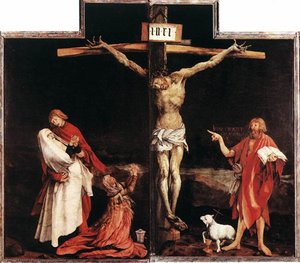
- Isenheim-altaret (1512-1516): Dette mesterverket, som huseres i Musée d'Unterlinden i Colmar, regnes som Grünewalds magnum opus. Det skildrer scener fra Kristi liv med en hjemsøkende realisme, med et særlig fokus på lidelse og frelse.
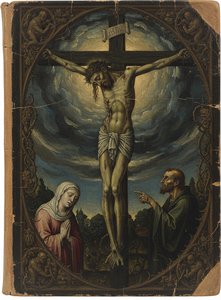
- Korsfestelsen (ca. 1502-150: Et tidlig verk som demonstrerer hans utviklende stil, og som viser frem intens emosjon og anatomisk detaljrikdom.
- Jomfruen ved bebudelsen (1512-14): En studie til Isenheim-altaret som avslører hans nitidige planleggingsprosess.
- Moses (1511): En tegning som fremhever Grünewalds ferdighet i å fange uttrykksfulle figurer og dramatiske positurer.
Grünewalds stil utmerker seg ved følgende elementer:
- Dramatisk komposisjon: Han benyttet dynamiske arrangementer for å forsterke den emosjonelle slagkraften.
- Levende fargepalett: Bruken av intense, ofte kontrasterende farger skapte en kraftfull visuell opplevelse.
- Realistisk fremstilling av lidelse: Grünewald vek ikke unna å portrettere den fysiske og emosjonelle smerten knyttet til de religiøse fortellingene.
- Uttrykksfulle figurer: Hans skikkelser er gjennomsyret av sterke følelser og psykologisk dybde.
Historisk betydning og ettermæle
Grünewalds arbeid står som et vitnesbyrd om den vedvarende kraften i middelalderens kunstneriske tradisjoner i Tyskland under renessansen. Han bygget bro mellom den sengotiske stilen og den fremvoksende renessansen, og skapte et unikt visuelt språk som resonnerte med hans samtidige. Hans innflytelse kan ses hos senere tyske kunstnere som fortsatte å utforske temaer som religiøs glød og emosjonell intensitet. Selv om han i stor grad ble glemt i århundrene etter sin død i 1528, opplevde Grünewald en renessanse på 1800-tallet, og i dag anerkjennes han som en av de viktigste malerne i den tyske renessansen. Hans kunst fortsetter å trollbinde betrakteren med sin rå emosjon, tekniske briljans og dype åndelige alvor.
Videre utforskning
Oppdag mer om Matthias Grünewalds liv og verk hos: OriginalUniqueArt
Spørsmål og svar
Hvilke kunstverk av Matthias Grünewald har flest visninger?
En Statistikk-side finnes for Matthias Grünewald, som presenterer statistikk om kunstnerens verk på denne nettsiden.
Hvor er Matthias Grünewald sine kunstverk gruppert etter fargepalett?
Siden Etter fargepalett grupperer Matthias Grünewald sine kunstverk etter deres fargepaletter.
Hvor finner jeg Matthias Grünewald sine kunstverk gruppert etter kunstretning?
Retningene Matthias Grünewald arbeidet innen kan ses på kunstnerens Alle retninger-side, som grupperer kunstverkene etter stilretning.