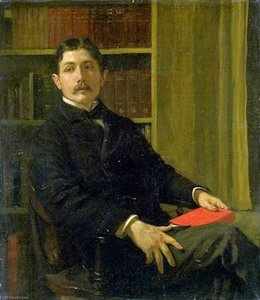
Portrett av Kenyon Cox

De 71 mest kjente Kenyon Cox-maleriene, hvert og ett unikt

Oppdatert November 2026 · rangert etter vår popularitetsscore (søk, besøk og bestillinger for hvert verk) · 76 verk av Kenyon Cox i vår katalog

Kort fortalt

The Progress of Civilization The Forge, Commerce, and Education (mural study, State Capitol, Des Moines, Iowa) (1906) er maleriet av Kenyon Cox som vekker mest oppmerksomhet; originalen befinner seg i Smithsonian American Art Museum, Washington, D.C.. Deretter går blikket til Landscape at Grez (1879) og Henry L. Fry (1883). Blant de 76 verkene til Kenyon Cox i vår katalog, er disse 71 de mest kjente – hver og en et unikt originalverk presentert med sitt årstall, sitt museum og årsaken til at det består.

1856 – 1919, Warren Classical realism Flest verk: Smithsonian American Art Museum

Topp 10 malerier av Kenyon Cox, sett gjennom galleriets øyne

1
The Progress of Civilization The Forge, Commerce, and Education (mural study, State Capitol, Des Moines, Iowa) (1906) av Kenyon Cox

The Progress of Civilization The Forge, Commerce, and Education (mural study, State Capitol, Des Moines, Iowa)

1906 · Oil On Canvas · Smithsonian American Art Museum, Washington, D.C.

The Progress of Civilization The Forge, Commerce, and Education (mural study, State Capitol, Des Moines, Iowa) is an oil on canvas work by Kenyon Cox. Created about 1905-1906, this piece functions as a preparatory study for a larger mural intended for the State Capitol in Des Moines, Iowa. The artist, Kenyon Cox, sought to capture the movement of human advancement through these specific, segmented scenes.

2
Landscape at Grez (1879) av Kenyon Cox

Landscape at Grez

1879 · Black and White Photography · Cincinnati Art Museum, Cincinnati

In Landscape at Grez, Kenyon Cox organizes a formal indoor setting through a centered composition. The subject, a man seated in a decorative wooden chair, is positioned slightly to the right of the vertical axis. This slight offset breaks the symmetry of the room, providing a sense of depth against the structured background. The perspective is a straight-on eye-level shot, placing the viewer directly in front of the subject within…

3
Henry L. Fry (1883) av Kenyon Cox

Henry L. Fry

1883 · Oil On Canvas · Cincinnati Art Museum, Cincinnati

This oil on canvas portrait by Kenyon Cox depicts Henry L. Fry. Created in 1883, the work presents the subject in a full-length view. The man is positioned slightly off-center against a background of draped fabric. He is shown with a white beard and wears a dark overcoat. The composition is vertical, focusing on the single figure within the frame.

4
The Approach of Love (1890) av Kenyon Cox

The Approach of Love

1890 · Oil · Cincinnati Art Museum, Cincinnati

In "The Approach of Love" by Kenyon Cox, the horizontal plane is anchored by a massive, curved marble bench. This white sarcophagus occupies the center of the scene, acting as a heavy, pale foundation for the figures. On the left, a nude woman with long reddish-brown hair reclines against the stone. A voluminous, golden-yellow fabric spills over the edge of the marble, its bright weight contrasting against the cool, white…

5
Diana (1890) av Kenyon Cox

Diana

1890 · Oil On Canvas · Chazen Museum of Art, Madison

In "Diana" by Kenyon Cox, the Roman goddess Artemis emerges from the shadows of a lush, wooded landscape. Created about 1890, the work places the deity at the center of a quiet, natural world. She is rendered as a full-length nude figure, her form poised against the deep greens and browns of the surrounding foliage. The goddess occupies the heart of the scene, a singular presence amidst the organic textures…

6
The Harp Player (A Solo) (1888) av Kenyon Cox

The Harp Player (A Solo)

1888 · Oil On Canvas · Metropolitan Museum of Art, New York

The Harp Player (A Solo) is an oil painting by the American artist Kenyon Cox. Created about 1888, the work emerged during a period when Cox was establishing his reputation within the academic traditions of the late 19th century. His practice emphasized careful drawing and a commitment to classical ideals, often focusing on genre studies and idealized forms.

7
The Fall (1892) av Kenyon Cox

The Fall

1892 · Oil On Canvas

In this 1892 oil painting, Kenyon Cox captures a moment of profound transition within a lush, wooded landscape. The work, titled The Fall, presents the biblical narrative of Adam and Eve at the precise instant of their temptation. A serpent coils around the trunk of a tree, embodying the presence of evil, while Eve reaches out to offer the fruit to Adam. This central action transforms the garden into a…

8
Head of the Queen of Egypt (1888) av Kenyon Cox

Head of the Queen of Egypt

1888 · Oil · Smithsonian American Art Museum, Washington, D.C.

In this work, titled Head of the Queen of Egypt, the artist Kenyon Cox presents a focused study of a historical figure. The painting depicts the head of Nefertiti, the Egyptian queen who belonged to the Eighteenth Dynasty. It is a quiet, measured representation that captures the likeness of the sculpted bust rather than a living person.

9
Bird Song (1896) av Kenyon Cox

Bird Song

1896 · Oil

In "Bird Song" by Kenyon Cox, a seated female figure occupies the center of the frame. She is positioned vertically, a steady pillar of quietude amidst a soft-focus world. Her white chemise-style top is patterned with small green leaf motifs, a delicate detail against the pale fabric. Below, a heavy, draped skirt of greyish-purple pools around her feet in thick, weighted folds. She holds a long, slender wooden flute in…

10
Christ (1905) av Kenyon Cox

Christ

1905 · Oil On Canvas · Cleveland Museum of Art, Cleveland

In the painting Christ by Kenyon Cox, the composition is centered and symmetrical. The subject is presented in a full-length view, standing as a single male figure against a landscape background. This figure is depicted with long brown hair and a beard. He wears voluminous, flowing red robes that drape heavily around the body. His arms are slightly extended to his sides, with the palms facing upward in a gesture…

Kenyon Coxs berømte malerier, nummer 11 til 71

11(Iowa State Capitol Rotunda) (Manufactures, study for panel) (1905) av Kenyon Cox(Iowa State Capitol Rotunda) (Manufactures, study for panel)1905 12(Iowa State Capitol Rotunda) (Manufactures, study for panel) (1905) av Kenyon Cox(Iowa State Capitol Rotunda) (Manufactures, study for panel)1905 · Smithsonian American Art Museum 13Maxfield Parrish (1905) av Kenyon CoxMaxfield Parrish1905 14Tradition (1916) av Kenyon CoxTradition1916 · Cleveland Museum of Art 15The Education of Cupid (1917) av Kenyon CoxThe Education of Cupid1917 16Sketch for the Mural at Oberlin College, The Spirit of Self Sacrificing Love (1914) av Kenyon CoxSketch for the Mural at Oberlin College, The Spirit of Self Sacrificing Love1914 · Smithsonian American Art Museum 17Augustus Saint-Gaudens (1908) av Kenyon CoxAugustus Saint-Gaudens1908 · Metropolitan Museum of Art 18(Study for Labor ) (1870) av Kenyon Cox(Study for Labor )1870 19Study for Mosaic, Wisconsin State Capitol, (1912) av Kenyon CoxStudy for Mosaic, Wisconsin State Capitol,1912 · Oklahoma City Museum of Art 20(Untitled) (Greco Roman Discus Thrower) (1873) av Kenyon Cox(Untitled) (Greco Roman Discus Thrower)1873 21(Untitled) (Study of Standing Male Nude) (1876) av Kenyon Cox(Untitled) (Study of Standing Male Nude)1876 22(Untitled) (Studies of Male Nudes) (1876) av Kenyon Cox(Untitled) (Studies of Male Nudes)1876 23Flying Shadows (1883) av Kenyon CoxFlying Shadows1883 24Landscape (1883) av Kenyon CoxLandscape1883 · Metropolitan Museum of Art 25Flying Shadows (1883) av Kenyon CoxFlying Shadows1883 · National Gallery of Art 26A Lady in Black (1880) av Kenyon CoxA Lady in Black1880 · Smithsonian American Art Museum 27Study for Evening (1883) av Kenyon CoxStudy for Evening1883 · Smithsonian American Art Museum 28After Titian's Madonna of the Rabbit (1882) av Kenyon CoxAfter Titian's Madonna of the Rabbit1882 · Smithsonian American Art Museum 29After Boltraffio, Sacra Conversazione (1882) av Kenyon CoxAfter Boltraffio, Sacra Conversazione1882 · Smithsonian American Art Museum 30May (1890) av Kenyon CoxMay1890 31Indian Summer (1887) av Kenyon CoxIndian Summer1887 · Smithsonian American Art Museum 32Louise Howland King (Mrs. Kenyon Cox) (1892) av Kenyon CoxLouise Howland King (Mrs. Kenyon Cox)1892 · Smithsonian American Art Museum 33Study for Drapery of Pursuit of the Ideal (1891) av Kenyon CoxStudy for Drapery of Pursuit of the Ideal1891 · Smithsonian American Art Museum 34Echo (1892) av Kenyon CoxEcho1892 · Smithsonian American Art Museum 35An Eclogue (1890) av Kenyon CoxAn Eclogue1890 · Smithsonian American Art Museum 36Sketches for a Decoration of a Private Library B (1894) av Kenyon CoxSketches for a Decoration of a Private Library B1894 · Smithsonian American Art Museum 37Sketches for the Decoration of a Private Library A (1894) av Kenyon CoxSketches for the Decoration of a Private Library A1894 · Smithsonian American Art Museum 38Portrait of Mr. Wiley (1894) av Kenyon CoxPortrait of Mr. Wiley1894 39Study for Science Instructing Industry (1898) av Kenyon CoxStudy for Science Instructing Industry1898 · Smithsonian American Art Museum 40(Iowa State Capitol Rotunda) (Hunting, study for panel) (1905) av Kenyon Cox(Iowa State Capitol Rotunda) (Hunting, study for panel)1905 41Hope and memory (1900) av Kenyon CoxHope and memory1900 42Study for Mural at Hotel Manhattan, Peace and Plenty (1901) av Kenyon CoxStudy for Mural at Hotel Manhattan, Peace and Plenty1901 · Smithsonian American Art Museum 43Untitled, Portrait of a Young Girl (1900) av Kenyon CoxUntitled, Portrait of a Young Girl1900 44Study for mural, Union Trust Company Building, The Sources of Wealth (1903) av Kenyon CoxStudy for mural, Union Trust Company Building, The Sources of Wealth1903 · Smithsonian American Art Museum 45(Iowa State Capitol Rotunda) (study for Six Lunettes) (1905) av Kenyon Cox(Iowa State Capitol Rotunda) (study for Six Lunettes)1905 46Study for Christ (1905) av Kenyon CoxStudy for Christ1905 · Smithsonian American Art Museum 47Study for Mural for Appellate Court Building, New York Statute Law , Helmet for Figure of Force (1899) av Kenyon CoxStudy for Mural for Appellate Court Building, New York Statute Law , Helmet for Figure of Force1899 · Smithsonian American Art Museum 48Approach of Love av Kenyon CoxApproach of LoveCincinnati Art Museum 49Augustus Saint Gaudens (1908) av Kenyon CoxAugustus Saint Gaudens1908 50Plenty (1910) av Kenyon CoxPlenty1910 · Smithsonian American Art Museum 51The Silver Hand Glass (1907) av Kenyon CoxThe Silver Hand Glass1907 · Smithsonian American Art Museum 52The Progress of Civilization Science and Art (mural study, State Capitol, Des Moines, Iowa) (1906) av Kenyon CoxThe Progress of Civilization Science and Art (mural study, State Capitol, Des Moines, Iowa)1906 · Smithsonian American Art Museum 53The Progress of Civilization Hunting, Herding, Agriculture (mural study, State Capitol, Des Moines, Iowa) (1906) av Kenyon CoxThe Progress of Civilization Hunting, Herding, Agriculture (mural study, State Capitol, Des Moines, Iowa)1906 · Smithsonian American Art Museum 54Study for Mural at U.S. Custom House, Cleveland, OH, Passing Commerce Pays Tribute to the Port of Cleveland (1909) av Kenyon CoxStudy for Mural at U.S. Custom House, Cleveland, OH, Passing Commerce Pays Tribute to the Port of Cleveland1909 · Smithsonian American Art Museum 55Study for Mosaic, Wisconsin State Capital, Legislation (1913) av Kenyon CoxStudy for Mosaic, Wisconsin State Capital, Legislation1913 · Smithsonian American Art Museum 56Book of Pictures (1917) av Kenyon CoxBook of Pictures1917 · Smithsonian American Art Museum 57Study for Mosaic, Wisconsin State Capital, Justice (1913) av Kenyon CoxStudy for Mosaic, Wisconsin State Capital, Justice1913 · Smithsonian American Art Museum 58Study for mosaic in the Wisconsin State Capital Government and Liberty (1912) av Kenyon CoxStudy for mosaic in the Wisconsin State Capital Government and Liberty1912 · Smithsonian American Art Museum 59Sketch for Mosaic, Wisconsin State Capital, Justice (1912) av Kenyon CoxSketch for Mosaic, Wisconsin State Capital, Justice1912 · Smithsonian American Art Museum 60Nude Study for Mosaic, Wisconsin State Capitol, (1912) av Kenyon CoxNude Study for Mosaic, Wisconsin State Capitol,1912 · Oklahoma City Museum of Art 61Nude Study for Mosaic, Wisconsin State Capitol, (1912) av Kenyon CoxNude Study for Mosaic, Wisconsin State Capitol,1912 · Oklahoma City Museum of Art 62Nude Study for Mosaic, Wisconsin State Capitol, (1912) av Kenyon CoxNude Study for Mosaic, Wisconsin State Capitol,1912 · Oklahoma City Museum of Art 63Nude Study for Mosaic, Wisconsin State Capitol, (1912) av Kenyon CoxNude Study for Mosaic, Wisconsin State Capitol,1912 · Oklahoma City Museum of Art 64Study for Mosaic, Wisconsin State Capitol, (1912) av Kenyon CoxStudy for Mosaic, Wisconsin State Capitol,1912 · Oklahoma City Museum of Art 65Study for Mosaic, Wisconsin State Capitol, (1912) av Kenyon CoxStudy for Mosaic, Wisconsin State Capitol,1912 · Oklahoma City Museum of Art 66Nude Study for Mosaic, Wisconsin State Capitol, (1912) av Kenyon CoxNude Study for Mosaic, Wisconsin State Capitol,1912 · Oklahoma City Museum of Art 67Fields (1885) av Kenyon CoxFields1885 68Study for Mosaic, Wisconsin State Capitol, (1912) av Kenyon CoxStudy for Mosaic, Wisconsin State Capitol,1912 · Oklahoma City Museum of Art 69Nude Study for Mosaic, Wisconsin State Capitol, (1912) av Kenyon CoxNude Study for Mosaic, Wisconsin State Capitol,1912 · Oklahoma City Museum of Art 70Cartoon for mural of Minnesota State Capital, Institute of Justice av Kenyon CoxCartoon for mural of Minnesota State Capital, Institute of JusticeSmithsonian American Art Museum 71Lengthening Shadows (1888) av Kenyon CoxLengthening Shadows1888 · Smithsonian American Art Museum

Motivene som fanget Kenyon Coxs blikk

De fire motivene som går igjen hyppigst i disse originalverkene, hver med sitt fremste eksempel.

Museene som har Kenyon Coxs originalverk

De 7 museene som innehar flest av maleriene på denne siden.

Museum By Verker av Kenyon Cox Malerier fra denne listen
Smithsonian American Art Museum, Washington, D.C.Smithsonian American Art Museum Washington, D.C. 32 The Progress of Civilization The Forge, Commerce, and Education (mural study, State Capitol, Des Moines, Iowa), Head of the Queen of Egypt, (Iowa State Capitol Rotunda) (Manufactures, study for panel)
Oklahoma City Museum of Art, Oklahoma CityOklahoma City Museum of Art Oklahoma City 10 Study for Mosaic, Wisconsin State Capitol,, Nude Study for Mosaic, Wisconsin State Capitol,, Nude Study for Mosaic, Wisconsin State Capitol,
Cincinnati Art Museum, CincinnatiCincinnati Art Museum Cincinnati 4 Landscape at Grez, Henry L. Fry, The Approach of Love
Metropolitan Museum of Art, New YorkMetropolitan Museum of Art New York 3 The Harp Player (A Solo), Augustus Saint-Gaudens, Landscape
Cleveland Museum of Art, ClevelandCleveland Museum of Art Cleveland 2 Christ, Tradition
Chazen Museum of Art, MadisonChazen Museum of Art Madison 1 Diana
National Gallery of Art, WashingtonNational Gallery of Art Washington 1 Flying Shadows

Kenyon Cox gjennom tiårene: ett unikt originalverk for hvert tiår

Verk per tiår

Velg et tiår for å se originalverket som definerer det.

Kenyon Coxs malerier: spørsmål til galleriet

Hva er det mest kjente verket til Kenyon Cox?Avslør svaret

The Progress of Civilization The Forge, Commerce, and Education (mural study, State Capitol, Des Moines, Iowa) (1906), Smithsonian American Art Museum, Washington, D.C.. Deretter følger Landscape at Grez (1879) og Henry L. Fry (1883).

Hvor gammel var Kenyon Cox da The Progress of Civilization The Forge, Commerce, and Education (mural study, State Capitol, Des Moines, Iowa) ble skapt?Avslør svaret

50 år gammel: The Progress of Civilization The Forge, Commerce, and Education (mural study, State Capitol, Des Moines, Iowa) er fra 1906, og Kenyon Cox ble født i 1856.

Hvilke ti malerier av Kenyon Cox er de mest kjente?Avslør svaret

The Progress of Civilization The Forge, Commerce, and Education (mural study, State Capitol, Des Moines, Iowa), Landscape at Grez, Henry L. Fry, The Approach of Love, Diana, The Harp Player (A Solo), The Fall, Head of the Queen of Egypt, Bird Song og Christ. Rangeringen ovenfor viser årstall og museum for hvert verk.

Hvor mange verk av Kenyon Cox er kjent?Avslør svaret

Vår katalog inneholder 76 verk av Kenyon Cox, datert fra 1870 til 1917.

Hvor kan de mest kjente originalverkene til Kenyon Cox ses?Avslør svaret

Hovedsakelig i Smithsonian American Art Museum (Washington, D.C.), Oklahoma City Museum of Art (Oklahoma City) og Cincinnati Art Museum (Cincinnati). Museumslisten ovenfor viser alle.

I hvilken periode malte Kenyon Cox sine mest kjente malerier?Avslør svaret

I 1910s: 19 av de 71 verkene på denne siden ble laget da, Tradition av dem.

Hvilket kjent maleri av Kenyon Cox er det eldste, og hvilket er det nyeste?Avslør svaret

På denne siden er det eldste (Study for Labor ) (1870) og det nyeste The Education of Cupid (1917).

Hvilke motiver foretrakk Kenyon Cox?Avslør svaret

Woman (9), Pencil sketch (5) og Man (4), fordelt på 71 verk på denne siden.

Hvilke materialer brukte Kenyon Cox mest av?Avslør svaret

Oil On Canvas, for 11 av de 71 verkene på denne siden.

Hvilken kunstretning tilhører verkene til Kenyon Cox?Avslør svaret

Classical realism, basert på originalene på denne siden.

Hvilke originalverk av Kenyon Cox kan jeg se på Smithsonian American Art Museum?Avslør svaret

The Progress of Civilization The Forge, Commerce, and Education (mural study, State Capitol, Des Moines, Iowa), Head of the Queen of Egypt og (Iowa State Capitol Rotunda) (Manufactures, study for panel): Smithsonian American Art Museum, Washington, D.C. har 32 av verkene på denne siden.

Kenyon Cox: et portrett av kunstneren

Kenyon Cox: Liv og ettermæle

I kunsthistorien står navn som Kenyon Cox som voktere av tradisjonen, men hans reise begynte i det beskjedne Warren, Ohio. Født den 27. oktober 1856 som sønn av Jacob Dolson Cox og Helen Finney Cox, bar han med seg en ambisjon som raskt førte ham bort fra de begrensede kunstneriske mulighetene i Cincinnati. Etter å ha blitt inspirert av den store utstillingen i Philadelphia, søkte han mot Pennsylvania Academy of Fine Arts, drevet av en lengsel etter den dype kunnskapen som bare kunne finnes i Europas kunstneriske hjerte.

Da han i 1877 ankom Paris, trådte han inn i en verden som føltes som en "andre renessanse". Her, i storbyens pulserende kunstmiljø, ble han formet av mestere som Carolus-Duran, Jean-Léon Gérôme og Alexandre Cabanel ved den prestisjetunge École des Beaux-Arts. Selv om han søkte lærdom under Carolus-Duran, fant han en viss motvilje mot det han oppfattet som en viss "vulgaritet" i mesterens stil. Hans dype reiser gjennom Frankrike og Italia ble imidlertid avgjørende; møtene med renessansens store mestre plantet frøene til et kunstnerisk syn som for alltid skulle prege hans virke.

Ved hjemkomsten til New York City i 1882, etablerte Cox seg som en allsidig kraft i det amerikanske kunstlivet. Han ble en mester i illustrasjon, og hans verk i tidsskrifter nådde ut til et langt bredere publikum enn hans mer formelle malerier. Samtidig bidro han til den intellektuelle debatten gjennom sine anonyme kunstkritikker i New York Evening Post. Hans stil var dypt forankret i realismen, med en særlig forkjærlighet for landskap, portretter og sjangermalerier, og han ble anerkjent for sin evne til å fremstille idealiserte nakenstudier og klassiske temaer med en tidløs verdighet.

Som pedagog etterlot han seg et uutslettelig avtrykk gjennom sin tid ved Art Students League of New York. Som en innflytelsesrik instruktør formet han generasjoner av kunstnere, og han satte sitt personlige preg på institusjonen ved å designe deres logo, prydet med mottoet "Nulla Dies Sine Linea" – ingen dag uten en linje. Hans profesjonelle tyngde ble bekreftet gjennom medlemskap i National Academy of Design, hvor han ble valgt til både assosiert og fullverdig akademiker, samt hans ledende roller i organisasjoner som National Society of Mural Painters.

Kenyon Coxs virke representerte en urokkelig tro på klassiske idealer i en brytningstid der modernismen begynte å krevere sin plass. Han var en forkjemper for presis tegning, harmonisk fargebruk og bruken av allegori og symbolikk for å formidle dypere mening. Gjennom sine skrifter, som det tankevekkende "Two Ways of Painting", artikulerte han sin filosofi om forholdet mellom figurativ kunst og de fremvoksende abstrakte stilartene. Selv om han ikke var en radikal innovatør, var hans arv fundamental; han var en vokter av de estetiske standardene som sikret kontinuitet i den amerikanske kunsttradisjonen frem til hans bortgang den 17. mars 1919.

Tidlig liv og utdanning

Historien om Kenyon Cox begynner i Warren, Ohio, den 27. oktober 1856. Som sønn av Jacob Dolson Cox og Helen Finney Cox, vokste han opp i en verden som snart skulle kreve hans kunstneriske geni. Hans første steg inn i kunstens verden ble tatt ved Art Academy of Cincinnati, som på den tiden var kjent som McMicken School of Art. Men selv om de første årene la et fundament, innså han raskt at de kunstneriske horisontene i byen var for begrensede for hans ambisjoner.

Et vendepunkt kom etter et besøk til Centennial Exposition i Philadelphia, en begivenhet som sannsynligvis tente en gnist av nysgjerrighet for den større verden. Drevet av en lengsel etter dypere kunnskap, valgte han å fortsette sin utdannelse ved Pennsylvania Academy of Fine Arts, med et brennende håp om at dette kun ville være det første steget på en reise som til slutt ville føre ham til Europas kunstneriske hjerte.

Parisisk utdanning og inspirasjonskilder

I 1877 satte Cox kursen mot Paris, og ble en del av en bølge av amerikanske kunstnere som søkte å finne sin sanne kunstneriske inspirasjon i den europeiske storbyen. Han var overbevist om at Paris gjennomgikk en «andre renessanse» innen kunsten, en tid preget av fornyelse og dyp estetisk utforskning. Under sin tid ved École des Beaux-Arts ble han formet av fremragende lærere som Carolus-Duran, Jean-Léon Gérôme og Alexandre Cabanel. Selv om han i begynnelsen studerte under Carolus-Duran, opplevde han etter hvert en viss frustrasjon over det han oppfattet som en viss «vulgaritet» i Durans stil, noe som vitner om hans søken etter en mer sublim og klassisk tilnærming. Reiser gjennom Frankrike og Italia førte ham i direkte kontakt med mesterverkene fra renessansen, en eksponering som kom til å prege hans kunstneriske visjon og dype forståelse for form og komposisjon på en uforglemmelig måte.

Karriere i New York og kunstnerisk stil

Da Cox i 1882 vendte tilbake til New York City, begynte han en banebrytende fase i sitt liv der han etablerte seg som både maler og illustratør. Hans illustrasjonsarbeid gjorde ham vidkjent gjennom tidsskriftillustrasjoner, et medium som nådde ut til et langt bredere publikum enn hans mer formelle malerier. Ved siden av det kunstneriske virket fungerte Cox også som kunstkritiker; han skrev anonyme anmeldelser for New York Evening Post, noe som både bidro til å forme den offentlige samtalen om kunst og supplerte hans inntekt. Hans kunstneriske stil søkte mot realismen, med et særlig fokus på landskap, portretter og sjangermalerier. Han ble særlig anerkjent for sine idealiserte nakenstudier og sin tradisjonelle tilnærming til klassiske temaer, som forente teknisk presisjon med en tidløs estetikk.

Undervisning og institusjonelt engasjement

Som pedagog utøvde Cox en dyp innflytelse som formet generasjoner av kunstnere, særlig gjennom sitt virke ved Art Students League of New York. Hans dedikasjon til håndverket kom til uttrykk gjennom det ikoniske emblemet han designet for institusjonen, som bærer det inspirerende mottoet “Nulla Dies Sine Linea” – ingen dag uten en linje.

Hans profesjonelle anerkjennelse vokste i takt med hans kunstneriske modenhet; han ble valgt inn som assosiert akademiker ved National Academy of Design i 1900, og oppnådde status som fullverdig akademiker i 1903. Utover sin egen kunstneriske produksjon, var han en sentral skikkelse i det kunstneriske fellesskapet, både som grunnlegger og sekretær for National Free Arts League.

Cox var også en markant leder i det kunstneriske livet, og han tjente som president for National Society of Mural Painters i perioden 1915 til 1919. Gjennom sine mange verv og medlemskap i en rekke prestisjetunge kunstorganisasjoner, forble han en uunngåelig kraft i utformingen av det amerikanske kunstlandskapet.

Store prestasjoner og historisk betydning

Coxs arbeid representerte en dyp forpliktelse til klassiske idealer i en brytningstid da de moderne kunstbevegelsene begynte å vokse frem. Han var en varm tilhenger av presis tegning, harmonisk fargebruk og den rike bruken av allegori og symbolikk for å formidle mening. Gjennom sine tekster, som for eksempel det tankevekkende verket «Two Ways of Painting», artikulerte han sine skarpe betraktninger om forholdet mellom figurativ kunst og de fremvoksende abstrakte eller rent representative stilartene.

Arven etter ham: Selv om han ikke var en radikal innovatør, spilte Kenyon Cox en avgjørende rolle i å opprettholde tradisjonelle kunstneriske standarder og i å forme fremtidens kunstnere gjennom sin pedagogikk. Hans innflytelse strakte seg langt utover lerretet, både gjennom hans undervisning og hans betydelige bidrag til det amerikanske kunstetablissementet.

Død: 17. mars 1919.