Portrett av Frank Thomas Copnall

De 42 mest kjente maleriene av Frank Thomas Copnall, et gallerivalg

Oppdatert November 2026 · rangert etter vår popularitetsscore (søk, besøk og bestillinger for hvert verk) · 43 verk av Frank Thomas Copnall i vår katalog

Kort fortalt

Av alle originalverkene Frank Thomas Copnall etterlot seg, er det mest kjente Felix Johnson as a Boy (1922). Like bak følger Sir Alfred William Winterslow Dale (1855–1921), Kt, LLD, MA, Principal of University College, Liverpool (1899–1903), Vice Chancellor of the University of Liverpool (1903–1919) (1919) og Alexandra Georgina Seymour (1865–1942), Lady Heathcoat Amory (1933). Vår katalog inneholder 43 verk av Frank Thomas Copnall; galleriet har bevart de 42 verkene som verden beundrer mest, hver vist med sin dato, sitt museum og sin historie.

1870 – 1949 Contemporary realism Flest verk: Walker Art Gallery

Frank Thomas Copnalls topp 10 malerier: galleriets utvalg

1
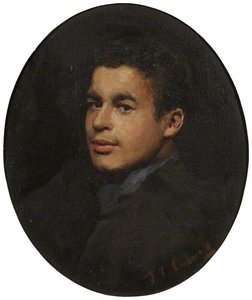
Felix Johnson as a Boy (1922) av Frank Thomas Copnall

Felix Johnson as a Boy

1922 · Oil On Canvas

A young boy sits centered within the frame, perched upon an ornate armchair that anchors the composition. He faces slightly to the left, hands resting calmly upon the armrests. The subject is rendered with a focus on likeness, capturing a sense of formality through his poised posture and steady gaze. Soft, diffused light bathes his features, creating a gentle glow that separates him from the textured, blurred background. This lighting…

2
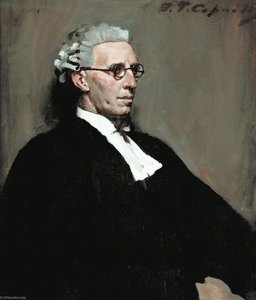
Sir Alfred William Winterslow Dale (1855–1921), Kt, LLD, MA, Principal of University College, Liverpool (1899–1903), Vice Chancellor of the University of Liverpool (1903–1919) (1919) av Frank Thomas Copnall

Sir Alfred William Winterslow Dale (1855–1921), Kt, LLD, MA, Principal of University College, Liverpool (1899–1903), Vice Chancellor of the University of Liverpool (1903–1919)

1919 · Oil On Canvas

An elderly man sits anchored in the center of the frame, draped in the heavy folds of a formal robe. The fabric falls in thick, sculptural ridges, catching a light that seems to emanate from within the room itself. His white shirt provides a sharp, bright contrast against the dark, indistinct shadows that swallow the background. Every line in his face tells a story of long years spent in the…

3
Alexandra Georgina Seymour (1865–1942), Lady Heathcoat Amory (1933) av Frank Thomas Copnall

Alexandra Georgina Seymour (1865–1942), Lady Heathcoat Amory

1933 · Oil On Canvas · National Trust, Tiverton

An elderly woman sits at a desk, her attention fixed entirely upon a letter held in her hands. The composition centers her within a dark, muted environment, directing all visual weight to the intersection of her face and the paper. Soft, directional light illuminates the texture of her skin and the folds of her clothing, casting deep shadows that provide a sense of physical volume. The scene is one of…

Utvalget av Frank Thomas Copnall fortsetter, fra 11 til 42

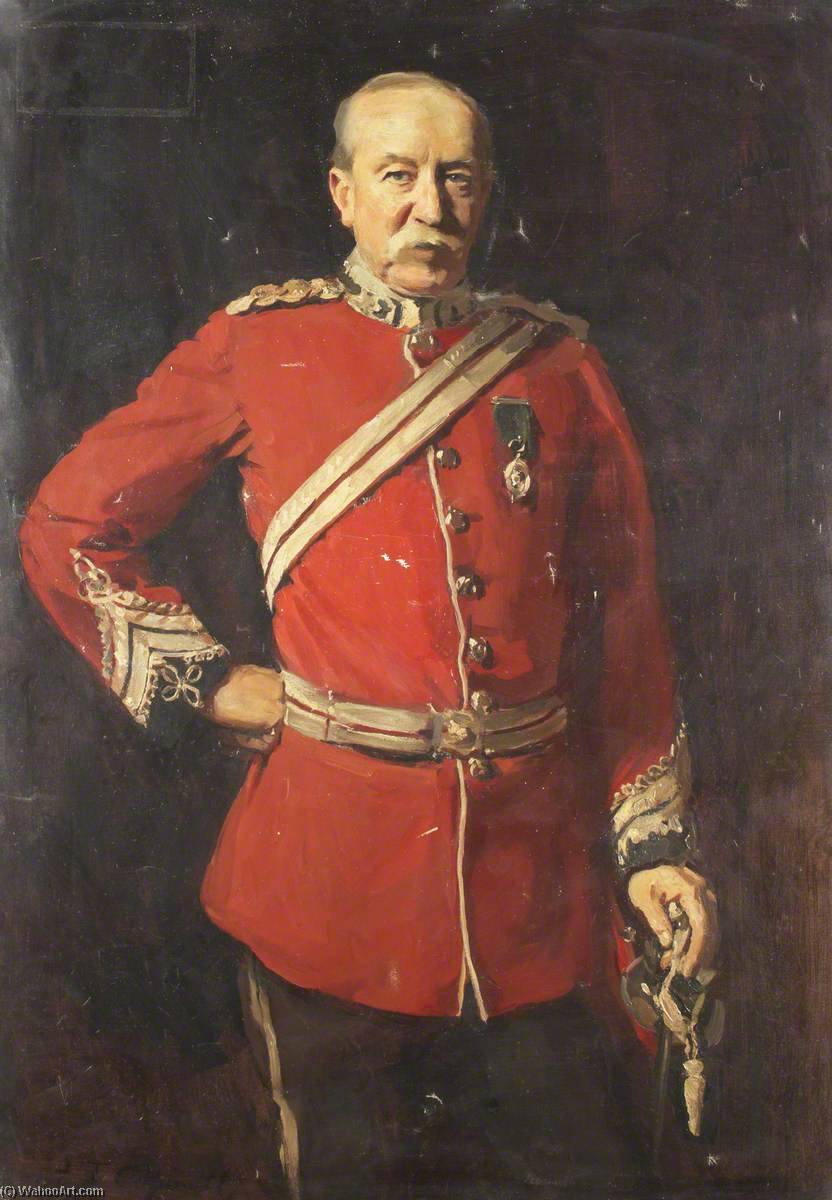
11The Steamship 'Lusitania' in the Mersey, November 1907 (1907) av Frank Thomas CopnallThe Steamship 'Lusitania' in the Mersey, November 19071907 · National Maritime Museum 12Sir Alfred William Winterslow Dale (1855–1921), Kt, LLD, MA, Principal of University College, Liverpool (1899–1903), Vice Chancellor of the University of Liverpool (1903–1919) av Frank Thomas CopnallSir Alfred William Winterslow Dale (1855–1921), Kt, LLD, MA, Principal of University College, Liverpool (1899–1903), Vice Chancellor of the University of Liverpool (1903–1919) 13G. H. Hewitt (1838 1839–1926), as 'Sir Roger de Poitou' (1907) av Frank Thomas CopnallG. H. Hewitt (1838 1839–1926), as 'Sir Roger de Poitou'1907 · Walker Art Gallery 14Joshua Hacking, President of the Blackburn Chamber of Commerce (1917–1925) (1913) av Frank Thomas CopnallJoshua Hacking, President of the Blackburn Chamber of Commerce (1917–1925)1913 15Alderman William Thompson, Mayor of Blackburn (1914–1915) (1913) av Frank Thomas CopnallAlderman William Thompson, Mayor of Blackburn (1914–1915)1913 · Blackburn Town Hall 16Alfred Nuttall, Mayor of Blackburn (1915–1917) (1917) av Frank Thomas CopnallAlfred Nuttall, Mayor of Blackburn (1915–1917)1917 17Thomas Redfearn (1922) av Frank Thomas CopnallThomas Redfearn1922 18My Wife and Michael (1922) av Frank Thomas CopnallMy Wife and Michael1922 · Walker Art Gallery 19Captain Nicholas Albert Roy Van Gruisen (1889–1918), 9th King's, Attached to 13th King's Regiment (1918) av Frank Thomas CopnallCaptain Nicholas Albert Roy Van Gruisen (1889–1918), 9th King's, Attached to 13th King's Regiment1918 20Second Lieutenant John Ryder Clark (1898–1917), 196th Siege Battery, Royal Garrison Artillery, c.1917 (1919) av Frank Thomas CopnallSecond Lieutenant John Ryder Clark (1898–1917), 196th Siege Battery, Royal Garrison Artillery, c.19171919 21Harry Roebuck (1927) av Frank Thomas CopnallHarry Roebuck1927 22Edward Philips Thompson, Esq. (1856–1924), JP (1926) av Frank Thomas CopnallEdward Philips Thompson, Esq. (1856–1924), JP1926 · Ludlow Library - Museum Resource Centre 23Percy Norris (1926) av Frank Thomas CopnallPercy Norris1926 24Sir William Hodgson (1854–1940), Chairman of Cheshire County Council (1922–1935) (1926) av Frank Thomas CopnallSir William Hodgson (1854–1940), Chairman of Cheshire County Council (1922–1935)1926 · Chester Town Hall 25Sir Frederick Bowring (1857–1936), as Lord Mayor (1926) av Frank Thomas CopnallSir Frederick Bowring (1857–1936), as Lord Mayor1926 · Walker Art Gallery 26Thomas Purvis Ritzema (1853–1938) (1931) av Frank Thomas CopnallThomas Purvis Ritzema (1853–1938)1931 27Alderman Henry A. Cole (1861 1862–1939) (1929) av Frank Thomas CopnallAlderman Henry A. Cole (1861 1862–1939)1929 · Walker Art Gallery 28Alderman William Denton (1865–1946), Mayor of Liverpool (1937) av Frank Thomas CopnallAlderman William Denton (1865–1946), Mayor of Liverpool1937 · Walker Art Gallery 29Arthur H. Lee (1855–1931) av Frank Thomas CopnallArthur H. Lee (1855–1931) 30Portrait of an Old Gentleman (verso) av Frank Thomas CopnallPortrait of an Old Gentleman (verso)National Trust 31T. P. Bell av Frank Thomas CopnallT. P. Bell 32Mrs Charles Costekin or Costello ( ) av Frank Thomas CopnallMrs Charles Costekin or Costello ( ) 33Sir Henry Hepburn, Kt, Chairman of Devon County Council (1916) av Frank Thomas CopnallSir Henry Hepburn, Kt, Chairman of Devon County Council (1916)Larkbeare House 34Portrait of a Man (probably an Alderman of Darwen) av Frank Thomas CopnallPortrait of a Man (probably an Alderman of Darwen) 35Emeritus Professor H. Briggs, MB, CM, Hon LLD, FRCS, Honorary Surgeon (1886–1919) av Frank Thomas CopnallEmeritus Professor H. Briggs, MB, CM, Hon LLD, FRCS, Honorary Surgeon (1886–1919)Liverpool Women’s Hospital 36Portrait of a Gentleman Wearing Mayor's Regalia av Frank Thomas CopnallPortrait of a Gentleman Wearing Mayor's Regalia 37Douglas Horsfall av Frank Thomas CopnallDouglas HorsfallDurham University 38Portrait of an Unknown Young Man (recto) av Frank Thomas CopnallPortrait of an Unknown Young Man (recto)National Trust 39Harry Roebuck av Frank Thomas CopnallHarry Roebuck 40Samuel Crossley, JP, Mayor of Blackburn (1911) av Frank Thomas CopnallSamuel Crossley, JP, Mayor of Blackburn (1911)Blackburn Town Hall 41Sir Russell Bencraft, JP av Frank Thomas CopnallSir Russell Bencraft, JP 42Robert Jones (1858–1933) av Frank Thomas CopnallRobert Jones (1858–1933)

Frank Thomas Copnalls berømte malerier, periode for periode

Motivene som fanget Frank Thomas Copnalls blikk

De fire motivene som går igjen hyppigst i disse originalverkene, hver med sitt fremste eksempel.

Museene som har Frank Thomas Copnalls originalverk

De 8 museene som innehar flest av maleriene på denne siden.

Museum By Verker av Frank Thomas Copnall Malerier fra denne listen
Walker Art Gallery, LiverpoolWalker Art Gallery Liverpool 7 E. Rimbault Dibdin (1853–1941), Sir William Benjamin Bowring (1837–1916), G. H. Hewitt (1838 1839–1926), as 'Sir Roger de Poitou'
Blackburn Town Hall, BlackburnBlackburn Town Hall Blackburn 2 Alderman William Thompson, Mayor of Blackburn (1914–1915), Samuel Crossley, JP, Mayor of Blackburn (1911)
National Trust, WorcesterNational Trust Worcester 2 Portrait of an Old Gentleman (verso), Portrait of an Unknown Young Man (recto)
National Trust, TivertonNational Trust Tiverton 1 Alexandra Georgina Seymour (1865–1942), Lady Heathcoat Amory
Barrow-in-furness Town Hall, Barrow-in-FurnessBarrow-in-furness Town Hall Barrow-in-Furness 1 Colonel Augustus Horace Strongitharm
National Maritime Museum, LondonNational Maritime Museum London 1 The Steamship 'Lusitania' in the Mersey, November 1907
Ludlow Library - Museum Resource Centre, LudlowLudlow Library - Museum Resource Centre Ludlow 1 Edward Philips Thompson, Esq. (1856–1924), JP
Chester Town Hall, ChesterChester Town Hall Chester 1 Sir William Hodgson (1854–1940), Chairman of Cheshire County Council (1922–1935)

Frank Thomas Copnall tiår for tiår: originalverket som definerer hvert av dem

Verk per tiår

Velg et tiår for å se originalverket som definerer det.

Samlere spør om maleriene til Frank Thomas Copnall

Hvilket verk er Frank Thomas Copnall mest kjent for?Avslør svaret

Felix Johnson as a Boy (1922). Deretter følger Sir Alfred William Winterslow Dale (1855–1921), Kt, LLD, MA, Principal of University College, Liverpool (1899–1903), Vice Chancellor of the University of Liverpool (1903–1919) (1919) og Alexandra Georgina Seymour (1865–1942), Lady Heathcoat Amory (1933).

Hvor gammel var Frank Thomas Copnall da Felix Johnson as a Boy ble laget?Avslør svaret

52 år gammel: Felix Johnson as a Boy er fra 1922, og Frank Thomas Copnall ble født i 1870.

Hva er de ti mest kjente maleriene til Frank Thomas Copnall?Avslør svaret

Felix Johnson as a Boy, Sir Alfred William Winterslow Dale (1855–1921), Kt, LLD, MA, Principal of University College, Liverpool (1899–1903), Vice Chancellor of the University of Liverpool (1903–1919), Alexandra Georgina Seymour (1865–1942), Lady Heathcoat Amory, Sir Wyndham Charles Henry Hanmer (1867–1922), 6th Bt, Colonel Augustus Horace Strongitharm, W. T. Fielding, The Comedian, George Holden, Mayor of Darwen (1907–1908), E. Rimbault Dibdin (1853–1941) og Sir William Benjamin Bowring (1837–1916). Rangeringen ovenfor viser årstall og museum for hvert verk.

Hvor mange malerier etterlot Frank Thomas Copnall?Avslør svaret

Vår katalog inneholder 43 verk av Frank Thomas Copnall, datert fra 1900 til 1937.

I hvilke museer henger mesterverkene til Frank Thomas Copnall?Avslør svaret

Hovedsakelig i Walker Art Gallery (Liverpool), Blackburn Town Hall (Blackburn) og National Trust (Worcester). Museumslisten ovenfor viser alle.

I hvilke år malte Frank Thomas Copnall sine mest kjente verk?Avslør svaret

I 1920s: 9 av de 42 verkene på denne siden ble laget da, Felix Johnson as a Boy av dem.

Hva er de første og de siste kjente originalverkene til Frank Thomas Copnall?Avslør svaret

På denne siden er det eldste Sir Wyndham Charles Henry Hanmer (1867–1922), 6th Bt (1900) og det nyeste Alderman William Denton (1865–1946), Mayor of Liverpool (1937).

Hvilke motiver valgte Frank Thomas Copnall oftest?Avslør svaret

Victorian era (7), Portrait (6) og Portraiture (3), fordelt på 42 verk på denne siden.

Hvilken teknikk brukte Frank Thomas Copnall mest?Avslør svaret

Oil On Canvas, for 3 av de 42 verkene på denne siden.

Hvilken kunstretning tilhører Frank Thomas Copnall?Avslør svaret

Contemporary realism, basert på originalene på denne siden.

Hvilke verk av Frank Thomas Copnall stilles ut på Walker Art Gallery?Avslør svaret

E. Rimbault Dibdin (1853–1941), Sir William Benjamin Bowring (1837–1916) og G. H. Hewitt (1838 1839–1926), as 'Sir Roger de Poitou': Walker Art Gallery, Liverpool har 7 av verkene på denne siden.

Frank Thomas Copnall: liv og virke

A Life Etched in Portraiture: The World of Frank Thomas Copnall

Frank Thomas Copnall, a name perhaps less immediately recognizable than some of his contemporaries, nevertheless occupies a significant niche within the British portrait tradition of the late 19th and early 20th centuries. Born in 1870, Copnall dedicated his life to capturing the essence of his sitters – primarily the burgeoning middle and upper classes of Liverpool society – with a refined technique and an observant eye for character. While biographical details remain somewhat sparse, the body of work he left behind speaks volumes about a man deeply attuned to the social currents and aesthetic sensibilities of his time. He wasn’t merely recording faces; he was documenting a world on the cusp of change, preserving its values and aspirations in oil and canvas. Copnall's artistic journey unfolded against a backdrop of Victorian formality gradually giving way to Edwardian elegance, and this transition is subtly reflected in his evolving style.

Early Influences and Artistic Development

Copnall’s formal training remains largely undocumented, but it’s reasonable to assume he benefited from the robust artistic environment prevalent in Liverpool during his formative years. The city was a thriving port and commercial hub, attracting artists and fostering a vibrant cultural scene. He likely studied at local art schools, absorbing the principles of academic realism that dominated the period. However, Copnall wasn't simply a mimic of established styles. His work reveals an early inclination towards capturing psychological depth, moving beyond mere physical likeness to suggest something of the inner life of his subjects. This sensitivity is perhaps his most defining characteristic. The influence of artists like John Singer Sargent – renowned for his masterful brushwork and ability to convey personality – can be detected in Copnall’s confident handling of paint and his focus on capturing fleeting expressions. He also exhibited at the Royal Academy, suggesting a connection to the broader London art world and an awareness of prevailing trends.

The Liverpool Portrait Circle

Copnall quickly established himself as a sought-after portraitist within Liverpool’s elite circles. His success wasn't accidental; he possessed a rare ability to put his sitters at ease, drawing out their personalities and translating them onto canvas with remarkable fidelity. He became particularly adept at portraying the wives and daughters of prominent merchants, shipowners, and industrialists – women who embodied the aspirations and social graces of the era. His portraits are not grandiose displays of wealth or power; rather, they offer intimate glimpses into the lives of a specific community. They are studies in refinement, elegance, and quiet dignity. Copnall’s studio became a hub for these individuals, a space where their identities were carefully constructed and preserved for posterity. His wife, Teresa Copnall, often served as a model herself, appearing in several of his works and embodying the ideal of feminine beauty he sought to capture.

Beyond Portraiture: Landscapes and Family Connections

While primarily known for his portraits, Copnall also produced a significant body of landscape paintings. These works reveal a different side of his artistic temperament – a love of nature and an appreciation for atmospheric effects. He often depicted scenes from the English countryside, employing a softer palette and a more impressionistic technique than his formal portraiture.
  • These landscapes weren’t merely studies of scenery; they were imbued with a sense of tranquility and emotional resonance.
  • His brother, Edward Bainbridge Copnall, was also an artist – a painter of genre scenes and historical subjects – suggesting a shared artistic heritage within the family.
The connection between the two brothers is evident in their similar attention to detail and their commitment to realistic representation. Edward’s work often focused on narrative storytelling, while Frank excelled at capturing individual character, but both artists shared a dedication to craftsmanship and a desire to create works that resonated with contemporary audiences.

Legacy and Historical Significance

Frank Thomas Copnall died in 1949, leaving behind a substantial body of work that continues to fascinate and intrigue art historians and collectors alike. While he may not be a household name, his paintings offer valuable insights into the social history and artistic sensibilities of late Victorian and Edwardian England. His portraits are more than just likenesses; they are windows into a bygone era. They capture the values, aspirations, and anxieties of a society on the cusp of profound change. Copnall’s ability to convey personality and his refined technique ensure that his work remains relevant today, offering a compelling glimpse into the lives of those who shaped Liverpool's cultural landscape – and beyond. His paintings serve as a testament to the enduring power of portraiture to capture not just what people looked like, but *who they were*.