

1


Oppdatert November 2026 · rangert etter vår popularitetsscore (søk, besøk og bestillinger for hvert verk) · 104 verk av Frank Mcclure i vår katalog
Kort fortalt
I galleriets øyne er Frank Mcclures mest kjente maleri Ladyslippers. Untitled (Woman Wearing Plumes) (1969) og Two Figures fullfører trioen som alle kjenner igjen. Av de 104 verkene til Frank Mcclure i vår katalog, presenterer galleriet de 100 mest kjente nedenfor; hvert originalverk med årstall, museum og hva som gjør det unikt.

A woman sits in the quietude of a black and white world. Her hair, long and intricately braided, falls with a heavy grace, merging into the soft texture of plumes that crown her head. She does not look at the viewer. Instead, her gaze is fixed on a distant, unseen horizon, her expression caught in a moment of deep contemplation. The paper holds the weight of her thought, its grain…
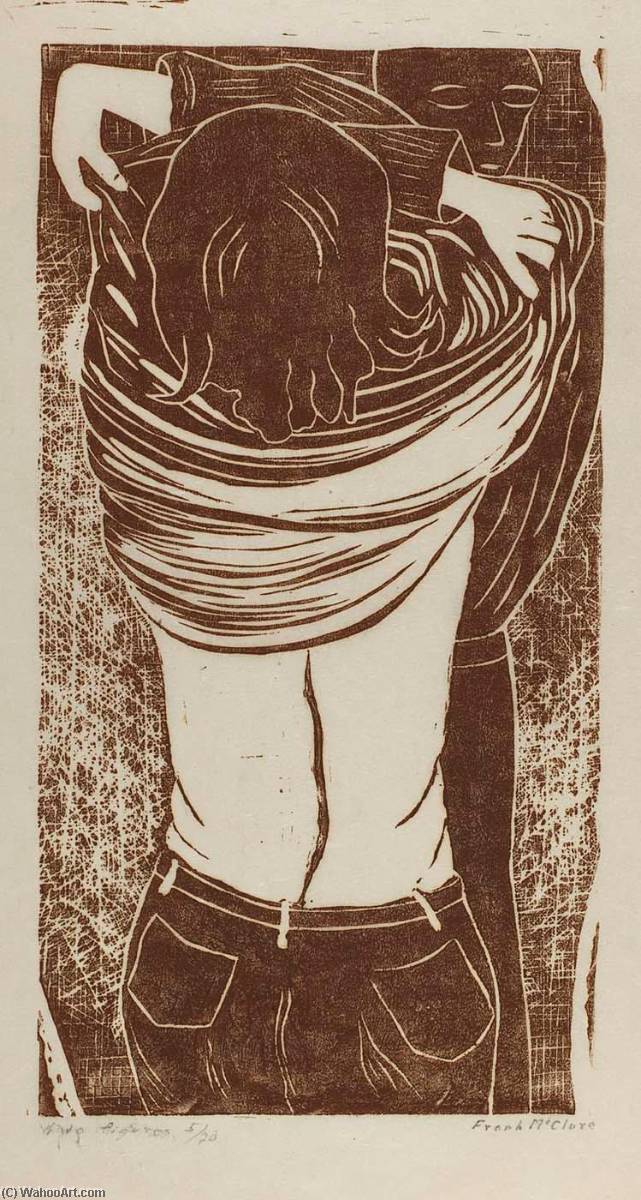
Frank McClure’s “Two Figures” is a striking woodcut print that captivates with its stark beauty and profound emotional resonance. Created by the American artist (1896-1979), this piece exemplifies Expressionist sensibilities through its simplified forms, bold lines, and focus on conveying raw emotion rather than photographic realism. The monochromatic palette of deep browns amplifies the sense of quiet drama, drawing the viewer into an intimate moment between two individuals.


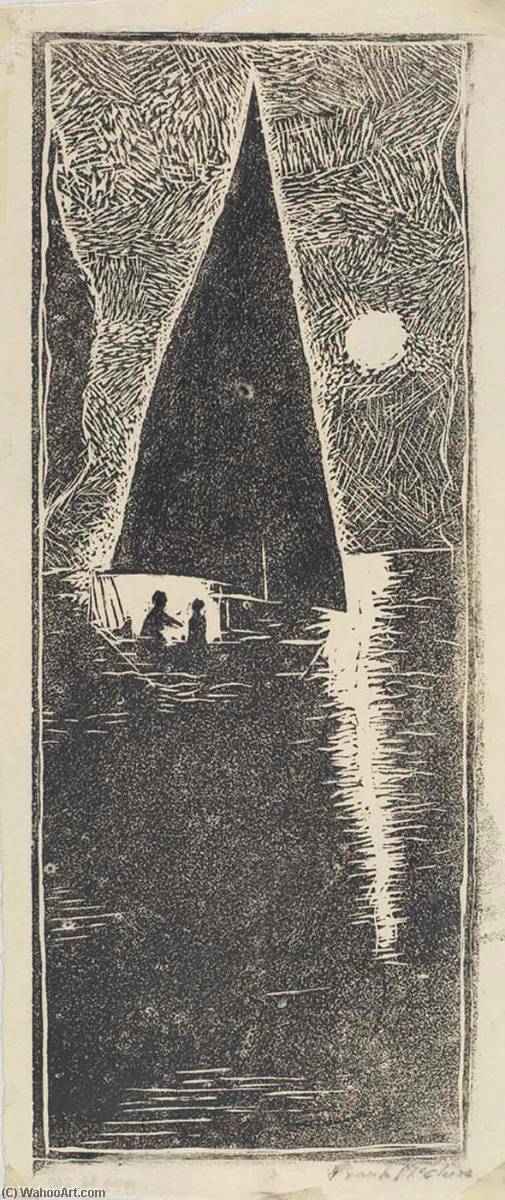
 Untitled (Roots, Branches and Wall)
12
 Pewter
13
 Shadows along the Potomac
14
 Woodsman with Axe
15
 House with S shaped Road
16
 Tulips
17
 Night Light
18
 Untitled (Lone Figure on Beach)
19
 Tulip Rows
20
 Heading for Open Waters
21
 Wind and Clouds
22
 Prairie Land
23
 Cabin and Pine Tree
24
 Tall Ships 3
25
 Bread
26
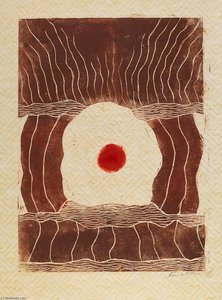 Untitled with Red Center
27
 Flowers in the Fields
28
 In Old Mexico
29
 Trees and Shadows
30
 Potatoes
31
 Flight
32
 Factory Smokestacks
33
 Two Cabbage like Flowers (Mottled Background)
34
 Flowers 2
35
 Hill, Trees and Road
36
 Woodland
37
 Cloud over Churchyard
38
 Lavender Piano
39
 Owls
40
 Winter Day
41
 Full Moon
42
 Figures on Pond's Edge
43
 Sailing
44
 Family at Roadgate
45
 Skating on the Potomac
46
 Rose in Vase
47
 Ear of Corn
48
 Stable and Coach
49
 Procession of Nuns
50
 In the Rough
51
 Flowers
52
 Repair Shop
53
 Bus Stop
54
 Two Owls
55
 Gloucester Harbor
56
 Seashore with Moon
57
 Evening Shadows
58
 Back of Shirtless Man
59
 Lamp in Window
60
 Curved Street
61
 Hockey Players
62
 A Congolese
63
 Hurricane's End
64
 Red Sails
65
 Dogwood
66
 Road by the Sea
67
 Snow
68
 Hangman's Day
69
 Houseplant
70
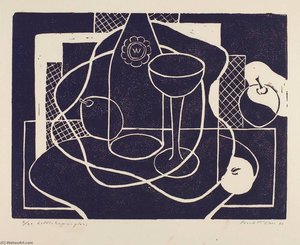 Bottle and Wine Glass
71
 Picnic Objects
72
 Market with Cafe Sign
73
 Man Holding Net on Shore
74
 Strawberries
75
 Asian Market
76
 Sailboat
77
 Full Moon 2 (over Shore Rocks)
78
 Onions
79
 Deserted Old Room
80
 Going West
81
 Full Moon 2
82
 To Poppies
83
 Lady with Plume
84
 Farmer Leaning on Staff in Field
85
 Waiting for the Local
86
 The Good Earth
87
 Tropical Flowers
88
 Tall Ships 2
89
 A Farmer Prepares His Lard
90
 Amaryllis
91
 Cruxifixion
92
 Slow River thru Arkansas
93
 Circus Pals
94
 Tall Ships 1
95
 Ripening Grain
96
 November Silence
97
 Bottle and Wine Glass (Titled Still Life)
98
 Apples, Bananas and Grapes
99
 Dark Exit
100
 Flowers in a Basket
De fire motivene som går igjen hyppigst i disse originalverkene, hver med sitt fremste eksempel.
6 år, fra 1964 til 1969, finner du hele Frank Mcclure sin tidslinje på denne siden: en kort oversikt, presentert år for år gjennom de mest kjente originalverkene.
Velg et år for å se originalverkene.
A woman sits in the quietude of a black and white world. Her hair, long and intricately braided, falls with a heavy grace, merging into the soft texture of plumes that crown her head. She does not look at the viewer. Instead, her gaze is fixed on a distant, unseen horizon, her expression caught in a moment of deep contemplation. The paper holds the weight of her thought, its grain…
Mer fra 1969
Ladyslippers. Deretter følger Untitled (Woman Wearing Plumes) (1969) og Two Figures.
Ladyslippers, Untitled (Woman Wearing Plumes), Two Figures, Corn Stacks, The White Scarf, Flowers in a Window, Sun Flowers, Snow on the Window, Bayberry og Sailboat and Moon. Rangeringen ovenfor viser årstall og museum for hvert verk.
Vår katalog inneholder 104 verk av Frank Mcclure, datert fra 1964 til 1969.
I 1969: 2 av de 100 verkene på denne siden ble laget da, Untitled (Woman Wearing Plumes) av dem.
På denne siden er det eldste Flowers in a Window (1964) og det nyeste Untitled (Woman Wearing Plumes) (1969).
Geometric (3), Figures (2) og Monochromatic (2), fordelt på 100 verk på denne siden.
American naturalism og Contemporary realism, basert på originalene på denne siden.
Frank McClure (1896-1979) remains a singular, evocative figure in the tapestry of American art, a creator whose work bridged the visceral realities of American Naturalism with the burgeoning emotional depths of Abstract Expressionism. Born in Lafayette, Indiana, McClure’s early years were steeped in the dualities of the American heartland—a landscape where the serene beauty of nature often collided with the grit and upheaval of a rapidly industrializing nation. This profound sensitivity to the tension between the pastoral and the industrial became the heartbeat of his creative journey, allowing him to capture not just the surface of the world, but its underlying psychological tremors.
His artistic development was never a linear path but rather an evolving dialogue with medium and emotion. While he achieved significant renown through his literary endeavors—notably his masterful studies of human psychology in prose—his true visual legacy lies in his ability to translate complex social and internal landscapes into tangible forms. McClure’s work emerged from the intellectual ferment of the early 20th century, absorbing the shadows of Surrealism and the psychological weight of Jungian theory, yet he always maintained a grounded, tactile connection to the physical world.
Perhaps nowhere is McClure’s genius more evident than in his groundbreaking exploration of woodcut printmaking. In this demanding, subtractive medium, he found a way to mirror the ruggedness of the human condition. Unlike the fluid spontaneity of a brushstroke, the woodcut requires a deliberate, forceful carving that echoes the very themes of struggle and resilience present in his subject matter. He developed a distinctive style characterized by:
This mastery extended into his paintings and watercolors, where he could pivot from the heavy, graphic strength of printmaking to the ethereal, atmospheric qualities seen in works such as "Lavender Piano" or the tranquil, snowy vistas of "Full Moon." In doing so, he proved himself a versatile chronicler of both the monumental and the minute.
The historical significance of Frank McClure lies in his refusal to retreat into mere sentimentality. Whether he was exploring the corrosive effects of societal pressure through his literary lens or capturing the haunting beauty of a riverside town in "Curved Street," his work always sought a deeper truth. He stood at a pivotal crossroads in art history, acting as a bridge between the gritty realism of the Naturalist movement and the abstract, emotive explorations of the post-war New York School.
Though he may not always occupy the same immediate spotlight as the canonical giants of Abstract Expressionism like Pollock or Rothko, McClure’s contribution is indispensable. He provided a vital link, demonstrating how the heavy, physical labor of printmaking and the observational rigor of Naturalism could feed into the profound, non-representational emotional landscapes of the modern era. His life's work remains a testament to the power of art to confront the harshness of reality while simultaneously seeking the sublime beauty hidden within it.


