François Barthélemy Michel Édouard Cibot (1799–1877): A Parisian Landscape Painter Bridging Romanticism and Impressionism
Édouard Cibot, born in Paris in 1799, emerged as a prominent figure within the French artistic landscape of the mid-nineteenth century. His formative years were marked by tutelage under celebrated painters Pierre-Narcisse Guérin and François Picot, establishing him firmly within the Romantic tradition—a movement characterized by emotional intensity and an idealized depiction of nature. This influence would permeate his oeuvre, shaping his stylistic choices and thematic concerns throughout his prolific career.
Early Training & Sacred Art: Cibot’s initial artistic pursuits centered on religious iconography, producing numerous canvases depicting biblical scenes and saints—a testament to the prevailing spiritual fervor of the era. Notable works like ‘Charity,’ housed in St. Leu Church, exemplify his meticulous technique and profound understanding of compositional principles honed during these formative years.
Transition to Landscape Painting: Around 1863, Cibot decisively shifted his focus towards landscape painting, embracing a style that foreshadowed the burgeoning Impressionist movement. This stylistic evolution reflected a broader cultural shift toward valuing observation and capturing fleeting moments of beauty—a departure from the grand narratives favored by Romanticism.
Notable Works & Artistic Style
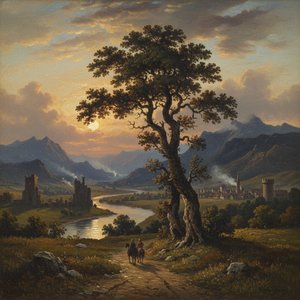
Cibot’s artistic style distinguished itself through several key characteristics. He employed a rich palette, utilizing vibrant hues to convey atmospheric conditions and imbue his canvases with palpable emotion. Linear perspective was skillfully deployed to create depth and realism—particularly evident in paintings such as ‘View at Soisy-sur-Ecolle,’ which captures the serene tranquility of the Parisian suburbs. Furthermore, Cibot’s compositions often incorporated dramatic lighting effects, enhancing visual impact and conveying psychological nuance. His meticulous brushwork contributed to textural richness and a sense of immediacy—qualities that resonated with the aesthetic sensibilities of his time.
Iconic Landscapes: Among Cibot's most celebrated landscapes are ‘Chestnut-trees at Aulnay’ and ‘Park at Orsay,’ which showcase his masterful ability to depict natural beauty with sensitivity and precision. These paintings exemplify the Romantic preoccupation with sublime vistas—inspiring awe and contemplation in viewers.
Dramatic Narratives: Cibot's historical canvases, like ‘Defense of Celesyria by Raymond du Puy’ and ‘The Compromise of Nobles in 1566,’ demonstrate his talent for storytelling through visual imagery. He skillfully utilized chiaroscuro—the interplay of light and shadow—to heighten dramatic tension and convey emotional depth.
Influence & Legacy
Cibot’s artistic endeavors contributed significantly to the development of French landscape painting during the Romantic period, paving the way for Impressionism's emergence. His meticulous technique and expressive style served as inspiration for subsequent generations of artists—solidifying his place within art history. Although Cibot himself never achieved widespread fame during his lifetime, his paintings continue to be admired for their beauty and artistic merit—a testament to his enduring contribution to French cultural heritage.
Further Exploration
For a deeper understanding of Édouard Cibot’s life and work, consider visiting these resources:
Explore the captivating world of Paul Huet (1803-1869), a master of French Romantic landscape painting. Discover his influence on Barbizon & Impressionism, and browse high-quality reproductions at OriginalUniqueArt.