Portrett av David De Coninck

David De Conincks malerier: De 17 mest kjente, sett gjennom et galleris øyne

Oppdatert November 2026 · rangert etter vår popularitetsscore (søk, besøk og bestillinger for hvert verk) · 18 verk av David De Coninck i vår katalog

Kort fortalt

I galleriets øyne er David De Conincks mest kjente maleri Atribuido A David De Coninck ) (1636). (antwerp Brussels) (1699) og Circle Of David De Coninck ) (1701) fullfører trioen som alle kjenner igjen. Av de 18 verkene til David De Coninck i vår katalog, presenterer galleriet de 17 mest kjente nedenfor; hvert originalverk med årstall, museum og hva som gjør det unikt.

1644 – 1701, Antwerp Baroque Flest verk: National Gallery

Galleriets 10 beste malerier av David De Coninck

1
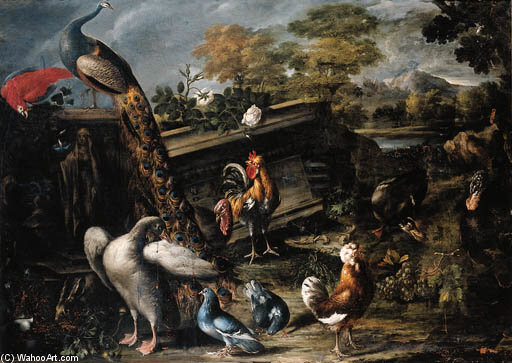
Atribuido A David De Coninck ) (1636) av David De Coninck

Atribuido A David De Coninck )

1636 · Oil

A peacock holds the center of this garden scene, its blue plumage catching the light amidst a tangle of leaves. The bird’s tail feathers spread with a heavy, organic weight, casting shadows against the lush greenery. Around this central figure, life moves in small, distinct bursts of color. A red bird, perhaps a parrot, sits to the left, its feathers a sharp contrast to the deep greens of the background.…

4
ad Birds and Game with Gun Dogs and a Little Owl av David De Coninck

ad Birds and Game with Gun Dogs and a Little Owl

Oil On Canvas · National Gallery, London

A heavy silence settles over the scene, broken only by the stillness of the fallen. In the fading light of a setting sun, three hunting dogs rest beside an overflowing basket of game. The animals are caught in moments of quietude: one sniffs the earth, another stares into the distance, and a third watches a small owl. This owl, a common decoy, stares back with unblinking eyes. Beneath the dogs,…

David De Coninck sine malerier, rangert fra 11 til 17

David De Conincks berømte malerier, periode for periode

Motivene som fanget David De Conincks blikk

De fire motivene som går igjen hyppigst i disse originalverkene, hver med sitt fremste eksempel.

Museene som har David De Conincks originalverk

De 3 museene som innehar flest av maleriene på denne siden.

Museum By Verker av David De Coninck Malerier fra denne listen
National Gallery, LondonNational Gallery London 1 ad Birds and Game with Gun Dogs and a Little Owl
Musée d'Arts de Nantes, NantesMusée d'Arts de Nantes Nantes 1 Still life with fighting cat and parrot
Nasjonalmuseet i Warszawa, WarszawaNasjonalmuseet i Warszawa Warszawa 1 The hunter's trophy with a dog and an owl.

David De Coninck, årets signaturmalerier

David De Conincks originale verk på denne siden er fra en periode på 3 år, fra 1699 til 1701: galleriet viser de mest kjente fra hver periode.

Verk per år

Velg et år for å se originalverkene.

David De Conincks malerier: galleriets svar

Hvilket maleri av David De Coninck er det mest kjente av alle?Avslør svaret

Atribuido A David De Coninck ) (1636). Deretter følger (antwerp Brussels) (1699) og Circle Of David De Coninck ) (1701).

Hvilke er de 10 beste maleriene til David De Coninck?Avslør svaret

Atribuido A David De Coninck ), (antwerp Brussels), Circle Of David De Coninck ), ad Birds and Game with Gun Dogs and a Little Owl, Still life with fighting cat and parrot, River Scene with Ducks and Geese Being Attacked, A peacock, turkey, rabbits, and cockerel in a landscape, Poultry and Cat, Ostentatious still life with dog and parrot og Animals in a Garden. Rangeringen ovenfor viser årstall og museum for hvert verk.

Hvor mange verk skapte David De Coninck?Avslør svaret

Vår katalog inneholder 18 verk av David De Coninck, datert fra 1699 til 1701.

Hvor henger de mest kjente originalverkene til David De Coninck?Avslør svaret

Hovedsakelig i National Gallery (London), Musée d'Arts de Nantes (Nantes) og Nasjonalmuseet i Warszawa (Warszawa). Museumslisten ovenfor viser alle.

Hvilke er David De Conincks tidligste og nyeste berømte verk?Avslør svaret

På denne siden er det eldste (antwerp Brussels) (1699) og det nyeste Circle Of David De Coninck ) (1701).

Hvilke motiver vendte David De Coninck oftest tilbake til?Avslør svaret

Animals (3), Birds (2) og Cats (2), fordelt på 17 verk på denne siden.

Hvilken kunstretning er David De Coninck tilknyttet?Avslør svaret

Baroque, basert på originalene på denne siden.

David De Coninck: kunstneren

David de Coninck: A Flemish Baroque Visionary

David de Coninck (1636-1699), born in Antwerp, Belgium, stands as a pivotal figure within the flourishing Baroque artistic landscape of 17th-century Flanders. Though biographical details remain somewhat sparse – largely due to the era’s penchant for prioritizing artistic output over personal narratives – his legacy endures through an impressive oeuvre characterized by dramatic animal hunting scenes and exquisitely rendered still lifes that capture the grandeur and complexity of the period. His work exemplifies the Baroque aesthetic's obsession with dynamism, emotion, and meticulous observation of nature, cementing his place among the most celebrated artists of his time.
  • Early Life & Training: De Coninck’s formative years were spent in Antwerp, a city renowned for its artistic patronage during the Habsburg reign. Precise information regarding his formal training is elusive, but it's believed he honed his skills under the tutelage of Peter Paul Rubens, arguably the most influential painter of the Baroque era – a connection that undoubtedly shaped his stylistic sensibilities and instilled within him a profound appreciation for monumental composition and vibrant color palettes.
  • Style & Technique: De Coninck’s artistic style is instantly recognizable by its masterful execution and unwavering commitment to Baroque principles. He employed a technique known as chiaroscuro—the dramatic interplay of light and shadow—to sculpt forms with breathtaking realism, creating scenes brimming with palpable energy and conveying profound psychological depth. His brushstrokes were deliberate and confident, layering pigments with painstaking accuracy to achieve textures that mirrored the surfaces he depicted.
  • Notable Works: Among his most celebrated paintings are “Still Life with Fighting Cat and Parrot,” a captivating depiction of animal behavior imbued with symbolic significance—the parrot representing wisdom and erudition, while the cat embodies cunning and vigilance. Similarly impressive is "Atribuido A David De Coninck," showcasing an opulent arrangement of fruits, flowers, and architectural elements that exemplify the Baroque fascination for illusionistic perspective and decorative richness.
  • Influence & Legacy: De Coninck’s influence extended beyond his own lifetime, impacting subsequent generations of Flemish artists. His meticulous observation of nature and masterful use of chiaroscuro served as inspiration for painters like Johann Georg Schäffer and Jacob Savery, establishing him as a cornerstone of Baroque artistic tradition.
  • Historical Significance: David de Coninck’s contribution to the Baroque canon is undeniable. He embodies the spirit of his era—a period marked by intellectual curiosity, religious fervor, and an unprecedented surge in artistic creativity. His paintings continue to resonate with audiences today, offering a glimpse into the visual culture of Antwerp during its golden age and demonstrating the enduring power of art to convey emotion and illuminate human experience.

Further Exploration

For deeper insights into David de Coninck’s artistic achievements and broader context within Baroque art history, consider visiting Bibliothèque de l'Institut de France, where you can discover rare books and manuscripts related to Flemish painting. Alternatively, explore online resources dedicated to David de Coninck’s work at david de koninck.