A Life Forged in Revolution
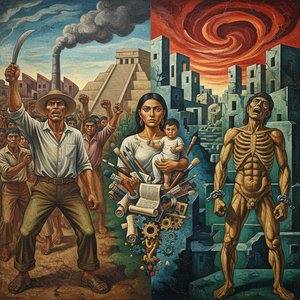
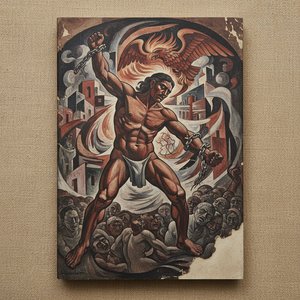
David Alfaro Siqueiros, born José de Jesús Alfaro Siqueiros in 1896 – though later research pinpointed his birthplace as Chihuahua City rather than Camargo – was more than just a painter; he was a force of nature, an embodiment of the tumultuous spirit of post-revolutionary Mexico. His life wasn’t confined to the studio but exploded onto the public stage, interwoven with political struggle and a relentless pursuit of art as a tool for social transformation. Early experiences shaped his trajectory: orphaned young, raised by his grandparents in Irapuato, Guanajuato, he was exposed to anarcho-syndicalist ideas that would deeply influence his worldview. This nascent political awareness blossomed during his student days at the Academy of San Carlos, where a protest against rigid teaching methods led to the establishment of an “open-air academy” – a defiant act marking the beginning of his artistic journey and foreshadowing a lifetime of challenging convention. The Mexican Revolution itself was the crucible in which Siqueiros’s artistic and political convictions were forged. He didn't merely observe the upheaval; he actively participated, joining the constitutional army and witnessing firsthand the hardships endured by working people and rural communities – experiences that would forever inform his art.European Immersion and the Birth of a Muralist
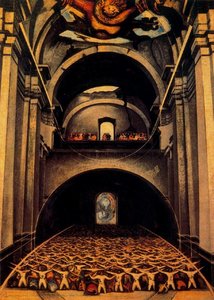
The years between 1919 and 1923 proved pivotal as Siqueiros embarked on an extended sojourn to Europe. This period wasn’t simply about honing technical skills; it was an immersion in the avant-garde currents reshaping the art world. He absorbed the lessons of Cubism, particularly the innovative use of color and form pioneered by Paul Cézanne, while also forging connections with fellow Mexican artist Diego Rivera. A crucial element of his European education involved studying Renaissance fresco techniques in Italy – a skill that would become central to his monumental mural projects. However, it was the deepening of his political ideology through exposure to Marxism that truly solidified his artistic direction. He began to envision art not as an aesthetic pursuit but as a powerful instrument for revolution, a means of depicting the realities of American life and galvanizing social change. This conviction culminated in the 1921 manifesto “Vida Americana,” which articulated his vision with unwavering clarity. Siqueiros wasn’t content with replicating existing techniques; he was driven to experiment, constantly seeking new materials and methods – including spray guns and industrial paints – to create large-scale murals that were both visually arresting and politically charged. He sought inspiration from the masters of Cubism and Cézanne, recognizing their ability to capture complex forms and perspectives in a way that traditional painting couldn’t achieve.Witness Jacques-Louis David's masterpiece, 'St Roch Asking the Virgin Mary,' a poignant depiction of faith and suffering during the plague era. Explore its historical context & neoclassical artistry.
- Jacques-Louis David’s ‘St Roch Asking the Virgin Mary’ exemplifies the stylistic hallmarks of Neoclassicism: balanced composition, idealized figures, and restrained color palettes. It reflects the moral fervor of the time—a reaction against the excesses of the Enlightenment—and portrays a scene of piety and resilience amidst adversity.
- David skillfully employed chiaroscuro – dramatic contrasts between light and dark – to heighten emotional impact and emphasize the saint’s solemn posture and unwavering devotion. The artwork serves as a powerful reminder of humanity's capacity for compassion and spiritual fortitude.
Kunsten som lever med deg: Den emosjonelle kraften i et skreddersydd interiørfresko
- Exploring the emotional resonance of bespoke interior frescoes is an endeavor that demands a discerning eye and an appreciation for artistic craftsmanship. Consider commissioning a mural that captures your personal narrative or celebrates a cherished memory—a lasting testament to beauty and storytelling.
- The selection process involves collaborating closely with skilled artists who understand your vision and can translate it into a stunning visual experience. Prioritize quality materials, meticulous execution, and an enduring connection to the space you inhabit.
Spørsmål og svar
Hvor populære er kunstverkene til David Alfaro Siqueiros?
Siden Statistikk for David Alfaro Siqueiros presenterer statistikk beregnet ut fra kunstverkene til kunstneren som er oppført på denne nettsiden.
Hvilken by og hvilket land er David Alfaro Siqueiros født i?
David Alfaro Siqueiros ble født i Chihuahua i Mexico.
Hvor og når ble David Alfaro Siqueiros født?
David Alfaro Siqueiros ble født i Chihuahua i 1896.