Exploring the Lush Landscapes and Technological Visions of Celia Kinuko Matsunaga Higawa
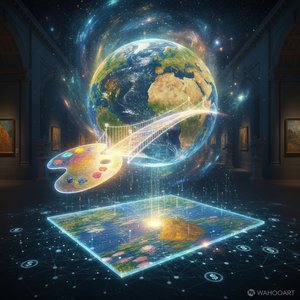
Célia Kinuko Matsunaga Higawa, born in Brazil in 1965, stands as a compelling figure within contemporary Brazilian art. Her artistic practice transcends conventional boundaries, seamlessly merging observations of the Amazon rainforest with explorations into the intersection of art and technology—a duality that defines her distinctive aesthetic vision. Driven by a profound respect for ecological preservation and fueled by intellectual curiosity, Matsunaga’s work seeks to foster dialogue between seemingly disparate realms.
- Education & Early Influences: Matsunaga pursued rigorous academic training, earning a doctorate in Arts from the Instituto de Artes / Universidade Brasília with research focused on ‘art and technology.’ This foundational understanding informs her approach to artistic creation, recognizing the potential for digital tools to enrich creative expression while simultaneously prompting reflection on humanity’s relationship with its environment.
- Royal College of Art & Design Exploration: Further honing her skills, Matsunaga completed a Master's degree in Graphic Design at the Royal College of Art in London, England. This experience broadened her artistic horizons and instilled in her an appreciation for innovative design principles—elements that subtly permeate her artworks.
- Science Without Borders & Collaborative Research: Recognizing the importance of intercultural exchange, Matsunaga participated in Parsons The New School for Design’s ‘Science Without Borders’ program supported by CNPQ (National Council for Scientific and Technological Development) in New York City. This immersive collaboration fostered connections between artistic practice and scientific inquiry, shaping her perspective on tackling complex societal challenges.
The Amazonian Canvas: Ecological Observation and Artistic Intervention
Matsunaga’s core artistic mission revolves around documenting the beauty and fragility of the Amazon rainforest. She utilizes a variety of mediums—primarily digital art installations—to convey her observations with remarkable detail and sensitivity. Rather than simply depicting landscapes, she strives to create experiences that engage viewers emotionally and intellectually, prompting them to contemplate the urgent need for conservation efforts.
- Technological Integration: Matsunaga’s commitment to ‘art and technology’ isn't merely stylistic; it represents a deliberate methodological choice. She leverages computational tools—mapping software, VR environments—to augment her artistic process, allowing for unprecedented levels of precision and nuance in representing natural phenomena.
- Interactive Installations: Her installations aren’t passive displays but active engagements with the viewer. Utilizing sensors and interactive elements, Matsunaga invites participants to explore the Amazonian ecosystem from a new vantage point—one that emphasizes both its grandeur and vulnerability.
Teaching & Artistic Legacy: Shaping Future Generations of Artists
Currently serving as Professor at Universidade Brasília and overseeing the Postgraduate Program in Design, Matsunaga actively contributes to nurturing artistic talent. Her pedagogical approach prioritizes critical thinking alongside creative experimentation—preparing students for leadership roles within a rapidly evolving cultural landscape.
Notable Achievements & Artistic Significance
Célia Kinuko Matsunaga Higawa’s work distinguishes itself through its pioneering blend of ecological awareness and technological innovation. Her installations have garnered recognition for their artistic merit and their ability to stimulate dialogue about environmental stewardship. She represents a vital voice within Brazilian contemporary art, demonstrating how creativity can serve as a catalyst for positive social change—a testament to the enduring power of blending observation with imagination.