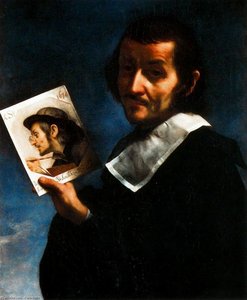
Portrett av Carlo Dolci

De 85 mest kjente Carlo Dolci-maleriene, hvert og ett unikt

Oppdatert November 2026 · rangert etter vår popularitetsscore (søk, besøk og bestillinger for hvert verk) · 87 verk av Carlo Dolci i vår katalog

Kort fortalt

The Adoration of the Kings (1649) er maleriet av Carlo Dolci som vekker mest oppmerksomhet; originalen befinner seg i National Gallery, London. Deretter går blikket til The Guardian Angel (1675) og Maria i Herlighet (1670). Blant de 87 verkene til Carlo Dolci i vår katalog, er disse 85 de mest kjente – hver og en et unikt originalverk presentert med sitt årstall, sitt museum og årsaken til at det består.

1616 – 1686, Firenze Baroque piety Flest verk: Bavarian State Painting Collections

Topp 10 malerier av Carlo Dolci, sett gjennom galleriets øyne

1
The Adoration of the Kings (1649) av Carlo Dolci

The Adoration of the Kings

1649 · Oil On Canvas · National Gallery, London

To stand before Carlo Dolci's depiction of The Adoration of the Kings is to step across the threshold of time and into a sanctuary of profound, quiet devotion. This magnificent work captures not the bombast of grand public spectacle, but the intimate, luminous moment where divinity meets earthly reverence. The composition centers on Mary cradling the infant Jesus, figures bathed in a soft, almost palpable glow that speaks volumes about…

2
The Guardian Angel (1675) av Carlo Dolci

The Guardian Angel

1675 · Oil On Canvas · Museum of the Cathedral, Prato

Carlo Dolci's “The Guardian Angel,” completed in 1675, transcends mere depiction; it embodies the spiritual fervor characteristic of Baroque art and stands as a testament to Dolci’s masterful artistic vision. Housed within the Museum of the Cathedral in Prato, Italy, this oil on canvas masterpiece invites contemplation and offers a glimpse into the profound symbolism woven throughout its composition.

3
Maria i Herlighet (1670) av Carlo Dolci

Maria i Herlighet

1670 · Olje på lerret · Cantor Arts Center at Stanford University, Stanford

«Madonna in Glory», et verk av den florentinske maleren Carlo Dolci, er mer enn bare et bilde; det er en innfallsdør til en verden av dyp hengivenhet og stille skjønnhet. Datert til 1670, fanger dette mesterverket essensen av den italienske barokken, men med en unik følelse av ro og intimitet som skiller Dolci fra mange av sine mer bombastiske samtidige. Billedet fremstiller Madonna, omgitt av en himmelsk glans, i et…

4
Blomstervase (1662) av Carlo Dolci

Blomstervase

1662 · Olje på lerret · Galleria degli Uffizi, Firenze

Vase of Flowers – Carlo Dolci’s Florentine Meditation Carlo Dolci's "Vase of Flowers," completed in 1662, transcends mere botanical depiction; it embodies the very essence of Baroque piety and meticulous artistic craftsmanship. Housed within the Galleria degli Uffizi in Florence, this oil on canvas masterpiece stands as a testament to Dolci’s unwavering dedication to capturing not just what he saw, but what he felt—a profound reverence for nature intertwined with…

5
Ecce Homo (1651) av Carlo Dolci

Ecce Homo

1651 · Oil · Bavarian State Painting Collections, München

The figure of Christ is presented in a vertical bust-length portrait, his gaze directed slightly upward in a state of profound suffering. A crown of thorns encircles his head, the sharp points protruding into the space around him. He is draped in a deep crimson mantle over a blue undergarment, with a thick rope tied around his neck. The composition focuses on the immediate, intimate connection between the subject and…

6
Saint Philip Neri (1515–1595) (1645) av Carlo Dolci

Saint Philip Neri (1515–1595)

1645 · Oil · Metropolitan Museum of Art, New York

The room falls away into an indeterminate darkness, leaving only the figure of an elderly man to meet the eye. He sits in a quiet, heavy stillness, his face emerging from the gloom as if caught in a sudden, soft beam of light from the upper left. This is Saint Philip Neri, and even in this frozen moment, there is a sense of profound, inward movement. His skin, rendered with…

7
Portrait of Vittoria della Rovere (1622-1694) as St. Catherine (1640) av Carlo Dolci

Portrait of Vittoria della Rovere (1622-1694) as St. Catherine

1640 · Oil On Canvas · Kunsthistorisches Museum, Wien

Vittoria della Rovere is presented within an octagonal frame, her likeness transformed through the lens of religious iconography. Portrayed as St. Catherine, she gazes directly at the viewer with a poised, calm expression. The composition centers on her bust-length figure, where the light focuses intensely upon her face and chest. This use of tenebrism creates a deep sense of three-dimensionality, pulling the subject forward from a dark, warm background.

8
Mattias de' Medici (1613-1667) (1635) av Carlo Dolci

Mattias de' Medici (1613-1667)

1635 · Oil On Canvas · Kunsthistorisches Museum, Wien

A Presence in Polished Steel The figure of Mattias de' Medici commands the space, frozen in a moment of quiet authority. He stands centrally, his body encased in the dark, reflective weight of black plate armor that catches the light from the upper left. This metallic surface gleams with subtle highlights, contrasting sharply against the deep scarlet red of his breeches. A decorative sash and a fine lace collar add…

9
Saint Andrew the Apostle (1658) av Carlo Dolci

Saint Andrew the Apostle

1658 · Oil On Canvas · Statens Museum for Kunst, København

In Saint Andrew the Apostle by Carlo Dolci, the viewer meets a figure caught in a moment of profound spiritual weight. The composition follows a vertical arrangement, pulling the gaze upward toward the saint's head and upper torso. He sits slightly off-center, creating a sense of natural, unforced presence. A large, dark wooden saltire cross cuts diagonally across the frame, its heavy shape anchoring the saint within the shadows. A…

10
The Virgin (1658) av Carlo Dolci

The Virgin

1658 · Oil On Canvas · Statens Museum for Kunst, København

The Virgin is a somber and deeply emotive Baroque portrait of a woman, likely the Virgin Mary, rendered in oil on canvas. The composition is a close-up, centered on the subject's downward-looking face, which is partially shrouded by a heavy dark blue mantle. The color palette is restrained, dominated by deep blues, shadows, and warm skin tones, with a single highlight of white fabric at the neck.

Carlo Dolcis berømte malerier, nummer 11 til 85

11Christ and Mary Magdalen in the House of Simon (1645) av Carlo DolciChrist and Mary Magdalen in the House of Simon1645 · Nationalmuseum 12Christ's Agony in the Garden of Gethsemane (1658) av Carlo DolciChrist's Agony in the Garden of Gethsemane1658 · Statens Museum for Kunst 13Archduchess Claudia Felicitas (1653-1676) (1672) av Carlo DolciArchduchess Claudia Felicitas (1653-1676)1672 · Kunsthistorisches Museum 14The boy Jesus invites the Christian soul to crown it according to the Song of Songs (1674) av Carlo DolciThe boy Jesus invites the Christian soul to crown it according to the Song of Songs1674 · Kunsthistorisches Museum 15Allegory of Sincerity (1665) av Carlo DolciAllegory of Sincerity1665 · Kunsthistorisches Museum 16St Andrew Praying before his Martyrdom (1643) av Carlo DolciSt Andrew Praying before his Martyrdom1643 · Birmingham Museum and Art Gallery 17The Flight into Egypt (1648) av Carlo DolciThe Flight into Egypt1648 · Detroit Institute of Arts 18The Trinity in Glory (1640) av Carlo DolciThe Trinity in Glory1640 · Rhode Island School of Design Museum of Art 19Saint John the Baptist (1645) av Carlo DolciSaint John the Baptist1645 · Hatchlands Park 20Saint John the Evangelist (1647) av Carlo DolciSaint John the Evangelist1647 · Pushkin State Museum 21Saint Agnes (1651) av Carlo DolciSaint Agnes1651 · Bavarian State Painting Collections 22The Penitent Mary Magdalene (1651) av Carlo DolciThe Penitent Mary Magdalene1651 · Bavarian State Painting Collections 23Penitent Mary Magdalene (1651) av Carlo DolciPenitent Mary Magdalene1651 · Bavarian State Painting Collections 24Christ Carrying the Cross (1651) av Carlo DolciChrist Carrying the Cross1651 · Bavarian State Painting Collections 25Saint Agnes (1651) av Carlo DolciSaint Agnes1651 · Bavarian State Painting Collections 26Christ Child with Flower Wreath (1651) av Carlo DolciChrist Child with Flower Wreath1651 · Bavarian State Painting Collections 27Diogenes (1650) av Carlo DolciDiogenes1650 · Galleria Palatina 28Saint Christina of Bolsena (1652) av Carlo DolciSaint Christina of Bolsena1652 · Kedleston Hall 29Maria With Child (1665) av Carlo DolciMaria With Child1665 · Kunsthistorisches Museum 30Saint Sebastian (1650) av Carlo DolciSaint Sebastian1650 · Schloss Weißenstein 31Saint Agnes (1670) av Carlo DolciSaint Agnes1670 · National Gallery of Ireland 32Adoration of the Shepherds (1670) av Carlo DolciAdoration of the Shepherds1670 · Cleveland Museum of Art 33Sir Thomas Baines, F.R.S., F.R.C.P. 1622-1681 (1667) av Carlo DolciSir Thomas Baines, F.R.S., F.R.C.P. 1622-16811667 · Fitzwilliam Museum 34Sir John Finch F.R.S., F.R.C.P. 1626-1682 (1667) av Carlo DolciSir John Finch F.R.S., F.R.C.P. 1626-16821667 · Fitzwilliam Museum 35Salome with the Head of John the Baptist (1667) av Carlo DolciSalome with the Head of John the Baptist1667 · Royal Collection 36The Penitent Magdalen (1670) av Carlo DolciThe Penitent Magdalen1670 · Royal Collection 37David with the Head of Goliath (1680) av Carlo DolciDavid with the Head of Goliath1680 · Museum of Fine Arts 38Blessing Christ (1680) av Carlo DolciBlessing Christ1680 39Portrait of Vittoria della Rovere in Widow's Weeds (1680) av Carlo DolciPortrait of Vittoria della Rovere in Widow's Weeds1680 40St Cecilia at the Organ (1671) av Carlo DolciSt Cecilia at the Organ1671 · Gemäldegalerie Alte Meister 41Head of Christ (1658) av Carlo DolciHead of Christ1658 · Statens Museum for Kunst 42Moses (1640) av Carlo DolciMoses1640 43Self-Portrait (1674) av Carlo DolciSelf-Portrait1674 · Galleria degli Uffizi 44Saint Paul the hermit (1640) av Carlo DolciSaint Paul the hermit1640 · Nasjonalmuseet i Warszawa 45The Holy Family with God the Father and the Holy Spirit (1630) av Carlo DolciThe Holy Family with God the Father and the Holy Spirit1630 46Madonna And Child (1600) av Carlo DolciMadonna And Child1600 · Patrick and Beatrice Haggerty Museum of Art 47Italian, ) (1616) av Carlo DolciItalian, )1616 48Italian, dolci) (1616) av Carlo DolciItalian, dolci)1616 49Portrait of Ainolfo de' Bardi (1632) av Carlo DolciPortrait of Ainolfo de' Bardi1632 50St Mary Magdalene (1644) av Carlo DolciSt Mary Magdalene1644 · Eremitasjen 51Saint John the Evangelist av Carlo DolciSaint John the Evangelist 52Magdalene (1660) av Carlo DolciMagdalene1660 · Galleria Palatina 53St. Mary Magdalene av Carlo DolciSt. Mary Magdalene 54St Catherine Of Siena av Carlo DolciSt Catherine Of SienaDulwich Picture Gallery 55Salome with the Head of St John the Baptist (1665) av Carlo DolciSalome with the Head of St John the Baptist1665 · Royal Collection 56Head of Christ av Carlo DolciHead of ChristStatens Museum for Kunst 57Allegory of Patience av Carlo DolciAllegory of PatienceBiennale Internazionale dell'Antiquariato di Firenze 58Self-Portrait (1674) av Carlo DolciSelf-Portrait1674 · Galleria degli Uffizi 59Saint John the Evangelist av Carlo DolciSaint John the EvangelistGemäldegalerie 60Mater Dolorosa av Carlo DolciMater DolorosaFitzwilliam Museum 61Virgin and Child with the Infant Saint John the Baptist av Carlo DolciVirgin and Child with the Infant Saint John the BaptistMuseum of Fine Arts, Houston 62The Penitent Mary Magdalene av Carlo DolciThe Penitent Mary MagdaleneNationalmuseum 63Madonna med barnet av Carlo DolciMadonna med barnetNationalmuseum 64The artist's wife, Teresa Bucherelli, as Saint Agnes av Carlo DolciThe artist's wife, Teresa Bucherelli, as Saint Agnes 65Saint Mark av Carlo DolciSaint Mark 66He Mourning Virgin av Carlo DolciHe Mourning Virgin 67Thistle av Carlo DolciThistleKunsthistorisches Museum 68Self portrait av Carlo DolciSelf portrait 69Rescuing a mother and her child av Carlo DolciRescuing a mother and her child 70Madonna and Child av Carlo DolciMadonna and ChildDetroit Institute of Arts 71Portrait of Agata Dolci av Carlo DolciPortrait of Agata Dolci 72The Flight into Egypt av Carlo DolciThe Flight into Egypt 73Saint Jerome In Prayer av Carlo DolciSaint Jerome In Prayer 74Virgin with Child av Carlo DolciVirgin with Child 75Portrait of Stefano Della Bella av Carlo DolciPortrait of Stefano Della BellaGalleria Palatina 76St. Cathrine reading a book av Carlo DolciSt. Cathrine reading a bookWallace Collection 77The Virgin and Child with Flowers av Carlo DolciThe Virgin and Child with Flowers 78The Child Jesus with a crown of flowers av Carlo DolciThe Child Jesus with a crown of flowersThyssen-Bornemisza-museet 79Death nature with flowers av Carlo DolciDeath nature with flowers 80The Penitent Magdalen av Carlo DolciThe Penitent Magdalen 81Mater Dolorosa (1655) av Carlo DolciMater Dolorosa1655 · Nasjonalmuseet for Vestlig Kunst 82The Angel of the Annunciation (1653) av Carlo DolciThe Angel of the Annunciation1653 83The Virgin of the Annunciation (1653) av Carlo DolciThe Virgin of the Annunciation1653 84St. Cecil av Carlo DolciSt. CecilEremitasjen 85St. Andrew kneeling before his cross av Carlo DolciSt. Andrew kneeling before his crossGalleria Palatina

Carlo Dolcis berømte malerier, periode for periode

Motivene som fanget Carlo Dolcis blikk

De fire motivene som går igjen hyppigst i disse originalverkene, hver med sitt fremste eksempel.

Museene som har Carlo Dolcis originalverk

De 8 museene som innehar flest av maleriene på denne siden.

Museum By Verker av Carlo Dolci Malerier fra denne listen
Bavarian State Painting Collections, MünchenBavarian State Painting Collections München 7 Ecce Homo, Saint Agnes, The Penitent Mary Magdalene
Kunsthistorisches Museum, WienKunsthistorisches Museum Wien 7 Portrait of Vittoria della Rovere (1622-1694) as St. Catherine, Mattias de' Medici (1613-1667), Archduchess Claudia Felicitas (1653-1676)
Statens Museum for Kunst, KøbenhavnStatens Museum for Kunst København 5 Saint Andrew the Apostle, The Virgin, Christ's Agony in the Garden of Gethsemane
Galleria Palatina, FirenzeGalleria Palatina Firenze 4 Diogenes, Magdalene, Portrait of Stefano Della Bella
Galleria degli Uffizi, FirenzeGalleria degli Uffizi Firenze 3 Blomstervase, Self-Portrait, Self-Portrait
Nationalmuseum, StockholmNationalmuseum Stockholm 3 Christ and Mary Magdalen in the House of Simon, The Penitent Mary Magdalene, Madonna med barnet
Fitzwilliam MuseumFitzwilliam Museum 3 Sir Thomas Baines, F.R.S., F.R.C.P. 1622-1681, Sir John Finch F.R.S., F.R.C.P. 1626-1682, Mater Dolorosa
Royal Collection, LondonRoyal Collection London 3 Salome with the Head of John the Baptist, The Penitent Magdalen, Salome with the Head of St John the Baptist

Carlo Dolci gjennom tiårene: ett unikt originalverk for hvert tiår

Verk per tiår

Velg et tiår for å se originalverket som definerer det.

Carlo Dolcis malerier: spørsmål til galleriet

Hva er det mest kjente verket til Carlo Dolci?Avslør svaret

The Adoration of the Kings (1649), National Gallery, London. Deretter følger The Guardian Angel (1675) og Maria i Herlighet (1670).

Hvor gammel var Carlo Dolci da The Adoration of the Kings ble skapt?Avslør svaret

33 år gammel: The Adoration of the Kings er fra 1649, og Carlo Dolci ble født i 1616.

Hvilke ti malerier av Carlo Dolci er de mest kjente?Avslør svaret

The Adoration of the Kings, The Guardian Angel, Maria i Herlighet, Blomstervase, Ecce Homo, Saint Philip Neri (1515–1595), Portrait of Vittoria della Rovere (1622-1694) as St. Catherine, Mattias de' Medici (1613-1667), Saint Andrew the Apostle og The Virgin. Rangeringen ovenfor viser årstall og museum for hvert verk.

Hvor mange verk av Carlo Dolci er kjent?Avslør svaret

Vår katalog inneholder 87 verk av Carlo Dolci, datert fra 1630 til 1680.

Hvor kan de mest kjente originalverkene til Carlo Dolci ses?Avslør svaret

Hovedsakelig i Bavarian State Painting Collections (München), Kunsthistorisches Museum (Wien) og Statens Museum for Kunst (København). Museumslisten ovenfor viser alle.

I hvilken periode malte Carlo Dolci sine mest kjente malerier?Avslør svaret

I 1650s: 17 av de 85 verkene på denne siden ble laget da, Ecce Homo av dem.

Hvilket kjent maleri av Carlo Dolci er det eldste, og hvilket er det nyeste?Avslør svaret

På denne siden er det eldste The Holy Family with God the Father and the Holy Spirit (1630) og det nyeste David with the Head of Goliath (1680).

Hvilke motiver foretrakk Carlo Dolci?Avslør svaret

Man (26), Woman (23) og Beard (11), fordelt på 85 verk på denne siden.

Hvilke materialer brukte Carlo Dolci mest av?Avslør svaret

Oil On Canvas, for 36 av de 85 verkene på denne siden.

Hvilken kunstretning tilhører verkene til Carlo Dolci?Avslør svaret

Baroque piety, basert på originalene på denne siden.

Hvilke originalverk av Carlo Dolci kan jeg se på Bavarian State Painting Collections?Avslør svaret

Ecce Homo, Saint Agnes og The Penitent Mary Magdalene: Bavarian State Painting Collections, München har 7 av verkene på denne siden.

Carlo Dolci: et portrett av kunstneren

En florentinsk mester av barokk fromhet

Carlo Dolci, født i Firenze i 1616, står som en fascinerende skikkelse innen den italienske barokkens landskap – en maler hvis intenst andaktige verk og omhyggelige teknikk sikret ham en plass blant de mest ettertraktede kunstnerne i sin tid. I motsetning til mange samtidige som ble trukket mot Romas dramatiske storhet, forble Dolci trofast rotfestet i den florentinske tradisjonen, og dyrket en stil preget av stille intensitet og dyp åndelig dybde. Hans liv utfoldet seg mot bakgrunnen av kunstnerisk glød, men han skapte sin egen unike vei definert ikke av stor produksjon, men av et urokkelig engasjement for detaljer og emosjonell resonans. Fra hans tidligste opplæring under Jacopo Vignali viste Dolci et tidlig talent, og etablerte raskt et rykte for presisjon som skulle bli kjennetegnet på hans oeuvre. Han ble ikke drevet av ekspansive komposisjoner eller dynamiske fortellinger; i stedet fokuserte han på intime fremstillinger av religiøse motiver, ofte gjentok favoritttemaer over flere versjoner – et bevis på deres varige appell og kanskje en refleksjon av hans metodiske tilnærming.

Tidlig liv og kunstnerisk dannelse

Dolcis kunstneriske reise begynte i en familie som allerede var berørt av kreativitet, noe som ga et tidlig næringsgrunnlag for hans medfødte evner. Som lærling hos Jacopo Vignali i ung alder absorberte han leksjonene fra en mester kjent for dramatisk flair, men Dolci begynte snart å smi sin egen distinkte stemme. Selv som gutt var hans dedikasjon til å fange minste detalj og formidle emosjonell vekt tydelig. Historier florerer om hans møysommelige tilnærming – et engasjement så grundig at det angivelig tok uker å fullføre selv bare ett lem på en figur. Dette bevisste tempoet ble ikke født av treghet, men snarere av et intenst ønske om perfeksjon, en streben etter å fylle hvert penselstrøk med åndelig betydning. Han fikk raskt anerkjennelse i florentinske kretser, tiltrakk seg bestillinger fra fremtredende familier og etablerte sitt eget verksted før han nådde voksen alder. Mens andre kunstnere søkte det pulserende kunstneriske miljøet i Roma, ble Dolci værende i Firenze, dypt knyttet til dens tradisjoner og beskyttere. Denne standhaftige lojaliteten til sin hjemby formet ikke bare hans karriere, men også selve essensen av kunsten hans.

Stil og bemerkelsesverdige verk

Dolcis stil er umiddelbart gjenkjennelig – en harmonisk blanding av rik farge, omhyggelige detaljer og dyp emosjonell uttrykk. Hans malerier handler ikke om storslått spektakel; de er intime møter med troen, gjengitt med en ømhet som inviterer til kontemplasjon. Han skildret ofte scener fra helgenes liv og bibelske fortellinger, og fokuserte på øyeblikk av stille andakt eller hjerteskjærende lidelse. St Sebastian er for eksempel ikke fremstilt som en heroisk martyr, men som en figur konsumert av åndelig angst, hans kropp utsøkt gjengitt for å understreke sårbarhet snarere enn styrke. Tilsvarende avslører hans skildringer av de fire evangelistene en dyp forståelse av menneskelig psykologi, og fanger deres individuelle personligheter med bemerkelsesverdig følsomhet. Kristus bryter brødet, et annet kjent verk, eksemplifiserer hans evne til å formidle hellige øyeblikk med underdrevet nåde og emosjonell kraft. Hans datter, Agnese Dolci, spilte en viktig rolle i å spre hans kunstneriske visjon, dyktig skape kopier av farens malerier som ytterligere utvidet hans rekkevidde og innflytelse. Disse reproduksjonene, selv om de ikke er originale kreasjoner, vitner om etterspørselen etter Dolcis arbeid og den varige appellen til hans stil.

Arv og historisk betydning

Carlo Dolcis innvirkning på florentinsk kunst er ubestridelig. Han står som en nøkkelfigur i utviklingen av barokkestilen i byen, og bidro betydelig til dens rike kunstneriske arv. Selv om han var påvirket av tidligere mestere som Giovanni Bellini og Bramantino, smidde han sin egen unike vei, preget av en stille intensitet og andaktig fokus som skilte ham fra mange samtidige. Hans malerier pryder fortsatt prestisjetunge institusjoner som Uffizi-galleriet i Firenze, hvor Contini Bonacossi-samlingen tilbyr en særlig rik representasjon av hans oeuvre. Den varige appellen til Dolcis arbeid ligger ikke bare i dets tekniske briljans, men også i dets evne til å fremkalle dype åndelige følelser. Han malte ikke bare religiøse scener; han skapte visuelle meditasjoner over troen, og inviterte seerne til å knytte seg til det guddommelige på et dypt personlig nivå. Hans arv strekker seg utover hans malerier – han representerer en forpliktelse til kunstnerisk eksellens og en tro på kunstens kraft til å inspirere fromhet og kontemplasjon. Selv i dag gir utforsking av Dolcis mesterverk et glimt inn i hjertet av 1600-tallets Firenze og den varige kraften i barokkkunsten.