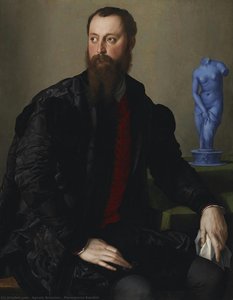
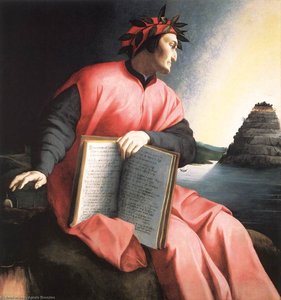
Portrett av Agnolo Bronzino

De 100 mest kjente Agnolo Bronzino-maleriene, hvert og ett unikt

Oppdatert October 2026 · rangert etter vår popularitetsscore (søk, besøk og bestillinger for hvert verk) · 189 verk av Agnolo Bronzino i vår katalog

Kort fortalt

Venus, Cupid og Tid (Allegori for Begjær) (1540) er maleriet av Agnolo Bronzino som vekker mest oppmerksomhet; originalen befinner seg i National Gallery, London. Deretter går blikket til Portrett av Eleonora da Toledo (1555) og Venus, Cupido and Satyr. Blant de 189 verkene til Agnolo Bronzino i vår katalog, er disse 100 de mest kjente – hver og en et unikt originalverk presentert med sitt årstall, sitt museum og årsaken til at det består.

1503 – 1572, Firenze Manierisme Flest verk: Galleria degli Uffizi

Topp 10 malerier av Agnolo Bronzino, sett gjennom galleriets øyne

1
Venus, Cupid og Tid (Allegori for Begjær) (1540) av Agnolo Bronzino

Venus, Cupid og Tid (Allegori for Begjær)

1540 · Olje på lerret · National Gallery, London

Bronzino’s Alluring Dance of Desire: “Venus, Cupid og Tid” Agnolo Bronzinos “Venus, Cupid og Tid” – eller “Allegori for Lyst” som den også kalles – er et verk som umiddelbart fanger blikket. Datoert til 1540, representerer dette maleriet en fascinerende blanding av mytologi, allegori og kunstnerisk mesterskap, og gir et innblikk i den komplekse verdenen til det florentinske hoffet under Medici-familien. Det er ikke bare et bilde; det er en…

2
Portrett av Eleonora da Toledo (1555) av Agnolo Bronzino

Portrett av Eleonora da Toledo

1555 · Olje på panel

Å betrakte Agnolo Bronzino's Portrett av Eleonora da Toledo er som å tre direkte inn i den eksklusive atmosfæren i høyrenessansen i Firenze. Dette maleriet, utført i 1555, overskrider et enkelt portrett; det er et nøye konstruert monument over status, makt og utsøkt raffinement. Motivet, Eleonora da Toledo, utstråler en nesten merkbar aura av aristokratisk verdighet. Bronzino fanger henne ikke bare som en kvinne, men som et symbol på Medici-familiens…

3
Venus, Cupido and Satyr av Agnolo Bronzino

Venus, Cupido and Satyr

Oil

A pale, reclining figure occupies the center of the frame, her skin possessing the cool, polished sheen of marble. This is Venus, the goddess of love, draped in a way that emphasizes the tension between soft flesh and the hard edges of the composition. Beside her, Cupid clings to her form, a small, fleshy presence that embodies the sudden, sharp sting of passion. Their limbs are elongated, stretching toward one…

4
Portrait of Andrea Doria as Neptune (1550) av Agnolo Bronzino

Portrait of Andrea Doria as Neptune

1550 · Oil On Canvas · Pinacoteca di Brera, Milano

In the grand theater of the Italian Mannerist period, few images command the eye with such authoritative grace as Agnolo Bronzino’s Portrait of Andrea Doria as Neptune. This is not merely a portrait of a man, but a profound exercise in political allegory and divine projection. The subject, the legendary Genoese admiral Andrea Doria, is stripped of the heavy silks and velvet doublets typical of sixteenth-century aristocratic portraiture. Instead, Bronzino…

5
St. John the Baptist (1542) av Agnolo Bronzino

St. John the Baptist

1542 · Oil On Panel · J. Paul Getty Museum, Los Angeles

The figure of St. John the Baptist emerges from the shadows, rendered with a muscular intensity by the Florentine master Bronzino. This depiction captures the patron saint of Florence in a moment of profound spiritual tension. Created about 1542 - 1545, the work possesses a striking verticality that speaks to its original purpose. It does not exist in isolation but remains a fragment of a larger sacred narrative, having once…

6
Deposition (1565) av Agnolo Bronzino

Deposition

1565 · Oil On Canvas · Galleria dell'Accademia di Firenze, Firenze

“Deposition,” painted in 1565 by the Florentine master Agnolo Bronzino, is not merely a religious scene; it's a meticulously crafted tableau of restrained emotion and profound psychological depth. Commissioned for the Observant Monastery in Cosmopoli, this work transcends simple narrative to become a meditation on grief, loss, and the delicate balance between earthly sorrow and divine grace. Bronzino, renowned for his “reserved elegance,” achieved this through an almost unnervingly controlled…

7
Portrait of a Young Man (1555) av Agnolo Bronzino

Portrait of a Young Man

1555 · Oil On Canvas · Nelson-Atkins Museum of Art, Kansas City

To gaze upon this portrait is to step directly into the rarefied atmosphere of mid-sixteenth-century Florence, a world governed by the subtle power plays and exquisite tastes of the Medici court. Agnolo Bronzino, the master chronicler of such elite circles, captured not merely a likeness, but an entire social stratum. The sitter, though anonymous to us today, embodies the controlled elegance expected of those who moved within the gilded cage…

8
Cosimo de Medici in Armour (1545) av Agnolo Bronzino

Cosimo de Medici in Armour

1545 · Oil On Panel · Thyssen-Bornemisza-museet, Madrid

The gaze of the Grand Duke of Tuscany, Cosimo I de' Medici, meets the viewer through the work titled Cosimo de Medici in Armour. Created by the Florentine artist Bronzino, this portrait captures the ruler in a moment of poised authority. The image emerges from the mid-16th century, dated about 1545, and presents a commanding presence through its structured composition. It exists as a significant version of the painting held…

9
Portrait of Cosimo I de' Medici as Orpheus (1537) av Agnolo Bronzino

Portrait of Cosimo I de' Medici as Orpheus

1537 · Oil On Panel · Philadelphia Museum of Art, Philadelphia

In this portrait, we encounter Cosimo I de' Medici, not merely as a ruler, but as the mythological musician Orpheus. He is positioned in a three-quarter view from behind, turning his gaze back toward us with a sense of psychological alertness. His body, rendered with a polished, marble-like texture, possesses an idealized beauty that speaks to the High Mannerist style. A single splash of crimson red drapery provides a sharp…

10
Portrait of Eleonora of Toledo and Her Son, Francesco de'Medici (1549) av Agnolo Bronzino

Portrait of Eleonora of Toledo and Her Son, Francesco de'Medici

1549 · Oil On Panel · Cincinnati Art Museum, Cincinnati

In this vertical half-length portrait, we encounter the Duchess of Florence, Eleonora of Toledo, and her son, Francesco de' Medici. The composition is defined by a controlled, almost sculptural stillness. Eleonora stands slightly behind the young boy, her hand resting upon his shoulder in a gesture that is both protective and formal. There is a certain aristocratic detachment in their expressions, a cool composure that characterizes the Florentine Mannerist style.…

Agnolo Bronzinos berømte malerier, nummer 11 til 100

11Portrait of Eleonora di Toledo, Bust (1560) av Agnolo BronzinoPortrait of Eleonora di Toledo, Bust1560 · Staatliche Kunstsammlungen Dresden 12Eleonora di Toledo (1560) av Agnolo BronzinoEleonora di Toledo1560 · National Gallery of Art 13Venus cupid time av Agnolo BronzinoVenus cupid timeNational Gallery 14Pierantonio Bandini (1555) av Agnolo BronzinoPierantonio Bandini1555 · National Gallery of Canada 15Deposition from the Cross (1545) av Agnolo BronzinoDeposition from the Cross1545 16Holy Family (1540) av Agnolo BronzinoHoly Family1540 · Galleria degli Uffizi 17Eleonora di Toledo (1543) av Agnolo BronzinoEleonora di Toledo1543 · Nasjonalgalleri Praha 18Portrait of Lucrezia Panciatichi (1540) av Agnolo BronzinoPortrait of Lucrezia Panciatichi1540 · Galleria degli Uffizi 19Allegorical Portrait of Dante (1530) av Agnolo BronzinoAllegorical Portrait of Dante1530 20Cosimo I de' Medici in Armour (1550) av Agnolo BronzinoCosimo I de' Medici in Armour1550 · Museo degli Argenti 21Pope Leo X (1555) av Agnolo BronzinoPope Leo X1555 · Galleria degli Uffizi 22Saint Sebastian (1533) av Agnolo BronzinoSaint Sebastian1533 · The Salvador Dalí Museum 23Venus, Cupid and Jealousy (1550) av Agnolo BronzinoVenus, Cupid and Jealousy1550 · Szépművészeti Múzeum 24Eleonora of Toledo with her son Giovanni de' Medici (1544) av Agnolo BronzinoEleonora of Toledo with her son Giovanni de' Medici1544 · Galleria degli Uffizi 25Venus, Cupid and Time (detail) (1540) av Agnolo BronzinoVenus, Cupid and Time (detail)1540 · National Gallery 26Don Garcia de' Medici (1550) av Agnolo BronzinoDon Garcia de' Medici1550 · Museo del Prado 27Eleonora da Toledo (1543) av Agnolo BronzinoEleonora da Toledo1543 · National Gallery Prague 28Portrait of Eleanora di Toledo (1560) av Agnolo BronzinoPortrait of Eleanora di Toledo1560 · National Gallery of Art 29Miracle of the Brazen Serpent (1542) av Agnolo BronzinoMiracle of the Brazen Serpent1542 · Palazzo Vecchio 30Portrait of Lucrezia Panciatichi (detail) (1540) av Agnolo BronzinoPortrait of Lucrezia Panciatichi (detail)1540 · Galleria degli Uffizi 31Portrait of a Young Man (1540) av Agnolo BronzinoPortrait of a Young Man1540 · Metropolitan Museum of Art 32Martyrdom of St Lawrence (1569) av Agnolo BronzinoMartyrdom of St Lawrence1569 · Basilica di San Lorenzo 33Adoration of the Shepherds (1539) av Agnolo BronzinoAdoration of the Shepherds1539 · Szépművészeti Múzeum 34Eleonora da Toledo (1562) av Agnolo BronzinoEleonora da Toledo1562 35The Miracle of the Spring (1543) av Agnolo BronzinoThe Miracle of the Spring1543 · Palazzo Vecchio 36Gathering of the Manna (1543) av Agnolo BronzinoGathering of the Manna1543 · Palazzo Vecchio 37Galatea and Pygmalion (1530) av Agnolo BronzinoGalatea and Pygmalion1530 38Portrait of Ludovico Capponi (1551) av Agnolo BronzinoPortrait of Ludovico Capponi1551 · The Frick Collection 39Portrait of Cosimo I de' Medici (1545) av Agnolo BronzinoPortrait of Cosimo I de' Medici1545 · Galleria degli Uffizi 40Costanza da Sommaia (1540) av Agnolo BronzinoCostanza da Sommaia1540 · Detroit Institute of Arts 41Crossing of the Red Sea (1542) av Agnolo BronzinoCrossing of the Red Sea1542 · Palazzo Vecchio 42St John the Baptist (1550) av Agnolo BronzinoSt John the Baptist1550 · Galleria Borghese 43Portrait of a Lady in Red (detail) (1530) av Agnolo BronzinoPortrait of a Lady in Red (detail)1530 · Städel Museum 44Portrait of a boy (1540) av Agnolo BronzinoPortrait of a boy1540 · Bode Museum 45The Feast Given by Joseph for His Brothers (1550) av Agnolo BronzinoThe Feast Given by Joseph for His Brothers1550 · Walters Art Museum 46Portrait of a Man, presumably a member of the Medici Family (1545) av Agnolo BronzinoPortrait of a Man, presumably a member of the Medici Family1545 · Statens Museum for Kunst 47Portrait of a Lady with a Puppy (1534) av Agnolo BronzinoPortrait of a Lady with a Puppy1534 48Don Giovanni de’Medici (1551) av Agnolo BronzinoDon Giovanni de’Medici1551 · Toledo Museum of Art 49Portrait of an Elderly Lady (1540) av Agnolo BronzinoPortrait of an Elderly Lady1540 · Fine Arts Museums of San Francisco 50Portrait of Lorenzo the Magnificent (1560) av Agnolo BronzinoPortrait of Lorenzo the Magnificent1560 51Portrait of a Young Man (1550) av Agnolo BronzinoPortrait of a Young Man1550 · National Gallery 52Madonna and Child with Saint John the Baptist (1540) av Agnolo BronzinoMadonna and Child with Saint John the Baptist1540 · Detroit Institute of Arts 53Portrait of a Lady in Green (1530) av Agnolo BronzinoPortrait of a Lady in Green1530 · Royal Collection 54Virgin and Child with the Young Saint John the Baptist (1528) av Agnolo BronzinoVirgin and Child with the Young Saint John the Baptist1528 · Art Institute of Chicago 55Portrait of a young Man in black with a book (1526) av Agnolo BronzinoPortrait of a young Man in black with a book1526 56portrait of a gentleman with his dog (1527) av Agnolo Bronzinoportrait of a gentleman with his dog1527 57Portrait of Francesco I de Medici (1527) av Agnolo BronzinoPortrait of Francesco I de Medici1527 58Madonna and Child with St. John the Baptist (1530) av Agnolo BronzinoMadonna and Child with St. John the Baptist1530 · National Museum in Wrocław 59Guidobaldo della Rovere (1531) av Agnolo BronzinoGuidobaldo della Rovere1531 60Eleonora di Toledo with her son Francesco (1549) av Agnolo BronzinoEleonora di Toledo with her son Francesco1549 61Portrait of a Baby Boy (1540) av Agnolo BronzinoPortrait of a Baby Boy1540 · Walters Art Museum 62Portrait of Cosimo I de' Medici in armour (1545) av Agnolo BronzinoPortrait of Cosimo I de' Medici in armour1545 · The National Museum in Poznań 63View of the Chapel of Eleonora da Toledo (1440) av Agnolo BronzinoView of the Chapel of Eleonora da Toledo1440 · Palazzo Vecchio 64Portrait of Giovanna Chevara and Giovanni Montalvo (1562) av Agnolo BronzinoPortrait of Giovanna Chevara and Giovanni Montalvo1562 · Worcester Art Museum 65Portrait of the dwarf Nano Morgantе (Back) (1552) av Agnolo BronzinoPortrait of the dwarf Nano Morgantе (Back)1552 66Descent of Christ Into Limbo (1552) av Agnolo BronzinoDescent of Christ Into Limbo1552 67Portrait of a Woman (1550) av Agnolo BronzinoPortrait of a Woman1550 · Cleveland Museum of Art 68Portrait of Cosimo I de' Medici, Grand Duke of Tuscany (1550) av Agnolo BronzinoPortrait of Cosimo I de' Medici, Grand Duke of Tuscany1550 · Gemäldegalerie Alte Meister im Schloss Wilhelmshöhe 69Portrait of a Young Man (1560) av Agnolo BronzinoPortrait of a Young Man1560 · Gemäldegalerie 70Piero de Medici il Gottoso (1560) av Agnolo BronzinoPiero de Medici il Gottoso1560 · National Gallery 71Portrait of Bartolomeo Panciatichi (1540) av Agnolo BronzinoPortrait of Bartolomeo Panciatichi1540 · Galleria degli Uffizi 72Portrait of a man (copy) (1700) av Agnolo BronzinoPortrait of a man (copy)1700 · Amsterdam Museum 73Moses strikes water from the wall rocks (1544) av Agnolo BronzinoMoses strikes water from the wall rocks1544 74Altarpiece (1540) av Agnolo BronzinoAltarpiece1540 · Palazzo Vecchio 75The Dead Christ with the Virgin and St. Mary Magdalene (1530) av Agnolo BronzinoThe Dead Christ with the Virgin and St. Mary Magdalene1530 76Portrait of a Lady in Green (1530) av Agnolo BronzinoPortrait of a Lady in Green1530 · Royal Collection 77Portrait of Pope Clement VII (1564) av Agnolo BronzinoPortrait of Pope Clement VII1564 · Galleria degli Uffizi 78untitled (4490) (1532) av Agnolo Bronzinountitled (4490)1532 79The Holy Family (1545) av Agnolo BronzinoThe Holy Family1545 80Portrait of Francesco de’ Medici (1560) av Agnolo BronzinoPortrait of Francesco de’ Medici1560 · USC Fisher Museum of Art 81Lucrezia Panciatichi (1540) av Agnolo BronzinoLucrezia Panciatichi1540 82Adoration of the Shepherds (detail) (1539) av Agnolo BronzinoAdoration of the Shepherds (detail)1539 · Szépművészeti Múzeum 83A Young Woman and Her Little Boy (1540) av Agnolo BronzinoA Young Woman and Her Little Boy1540 · National Gallery of Art 84The Holy Family (1528) av Agnolo BronzinoThe Holy Family1528 · National Gallery of Art 85St Matthew (1525) av Agnolo BronzinoSt Matthew1525 86Portrait of Lorenzo Lenzi (1528) av Agnolo BronzinoPortrait of Lorenzo Lenzi1528 87St Mark (1525) av Agnolo BronzinoSt Mark1525 88Scenes of allegories of the cardinal virtues (1544) av Agnolo BronzinoScenes of allegories of the cardinal virtues1544 89Adoration of the Shepherds (detail) (11) (1539) av Agnolo BronzinoAdoration of the Shepherds (detail) (11)1539 · Szépművészeti Múzeum 90The Israelites crossing the Red Sea (1542) av Agnolo BronzinoThe Israelites crossing the Red Sea1542 91Christ in Limbo (1552) av Agnolo BronzinoChrist in Limbo1552 92Portrait of Nano Morgante (1552) av Agnolo BronzinoPortrait of Nano Morgante1552 93The Crossing of the Red Sea (1555) av Agnolo BronzinoThe Crossing of the Red Sea1555 94The Panciatichi Holy Family (detail) av Agnolo BronzinoThe Panciatichi Holy Family (detail) 95Portrait of Guidubaldo della Rovere (1532) av Agnolo BronzinoPortrait of Guidubaldo della Rovere1532 · Galleria Palatina 96Stigmatization of St. Francis (1544) av Agnolo BronzinoStigmatization of St. Francis1544 97Portrait of a Lady (1550) av Agnolo BronzinoPortrait of a Lady1550 · Galleria Sabauda 98Garcia de' Medici (1555) av Agnolo BronzinoGarcia de' Medici1555 · Galleria degli Uffizi 99Scenes of allegories of the cardinal virtues (1544) av Agnolo BronzinoScenes of allegories of the cardinal virtues1544 100Crossing of the Red Sea (detail) (1540) av Agnolo BronzinoCrossing of the Red Sea (detail)1540 · Palazzo Vecchio

Agnolo Bronzinos berømte malerier, periode for periode

Motivene som fanget Agnolo Bronzinos blikk

De fire motivene som går igjen hyppigst i disse originalverkene, hver med sitt fremste eksempel.

Museene som har Agnolo Bronzinos originalverk

De 8 museene som innehar flest av maleriene på denne siden.

Museum By Verker av Agnolo Bronzino Malerier fra denne listen
Galleria degli Uffizi, FirenzeGalleria degli Uffizi Firenze 18 Holy Family, Portrait of Lucrezia Panciatichi, Pope Leo X
Palazzo Vecchio, FirenzePalazzo Vecchio Firenze 11 Miracle of the Brazen Serpent, The Miracle of the Spring, Gathering of the Manna
National Gallery, LondonNational Gallery London 5 Venus, Cupid og Tid (Allegori for Begjær), Venus cupid time, Venus, Cupid and Time (detail)
Szépművészeti Múzeum, BudapestSzépművészeti Múzeum Budapest 6 Venus, Cupid and Jealousy, Adoration of the Shepherds, Adoration of the Shepherds (detail)
National Gallery of Art, WashingtonNational Gallery of Art Washington 4 Eleonora di Toledo, Portrait of Eleanora di Toledo, A Young Woman and Her Little Boy
Detroit Institute of Arts, DetroitDetroit Institute of Arts Detroit 2 Costanza da Sommaia, Madonna and Child with Saint John the Baptist
Walters Art Museum, BaltimoreWalters Art Museum Baltimore 2 The Feast Given by Joseph for His Brothers, Portrait of a Baby Boy
Royal Collection, LondonRoyal Collection London 2 Portrait of a Lady in Green, Portrait of a Lady in Green

Agnolo Bronzino gjennom tiårene: ett unikt originalverk for hvert tiår

Verk per tiår

Velg et tiår for å se originalverket som definerer det.

Agnolo Bronzinos malerier: spørsmål til galleriet

Hva er det mest kjente verket til Agnolo Bronzino?Avslør svaret

Venus, Cupid og Tid (Allegori for Begjær) (1540), National Gallery, London. Deretter følger Portrett av Eleonora da Toledo (1555) og Venus, Cupido and Satyr.

Hvor gammel var Agnolo Bronzino da Venus, Cupid og Tid (Allegori for Begjær) ble skapt?Avslør svaret

37 år gammel: Venus, Cupid og Tid (Allegori for Begjær) er fra 1540, og Agnolo Bronzino ble født i 1503.

Hvilke ti malerier av Agnolo Bronzino er de mest kjente?Avslør svaret

Venus, Cupid og Tid (Allegori for Begjær), Portrett av Eleonora da Toledo, Venus, Cupido and Satyr, Portrait of Andrea Doria as Neptune, St. John the Baptist, Deposition, Portrait of a Young Man, Cosimo de Medici in Armour, Portrait of Cosimo I de' Medici as Orpheus og Portrait of Eleonora of Toledo and Her Son, Francesco de'Medici. Rangeringen ovenfor viser årstall og museum for hvert verk.

Hvor mange verk av Agnolo Bronzino er kjent?Avslør svaret

Vår katalog inneholder 189 verk av Agnolo Bronzino, datert fra 1525 til 1569.

Hvor kan de mest kjente originalverkene til Agnolo Bronzino ses?Avslør svaret

Hovedsakelig i Galleria degli Uffizi (Firenze), Palazzo Vecchio (Firenze) og National Gallery (London). Museumslisten ovenfor viser alle.

I hvilken periode malte Agnolo Bronzino sine mest kjente malerier?Avslør svaret

I 1540s: 37 av de 100 verkene på denne siden ble laget da, Venus, Cupid og Tid (Allegori for Begjær) av dem.

Hvilket kjent maleri av Agnolo Bronzino er det eldste, og hvilket er det nyeste?Avslør svaret

På denne siden er det eldste St Matthew (1525) og det nyeste Martyrdom of St Lawrence (1569).

Hvilke motiver foretrakk Agnolo Bronzino?Avslør svaret

Renaissance (36), Woman (16) og Man (14), fordelt på 100 verk på denne siden.

Hvilke materialer brukte Agnolo Bronzino mest av?Avslør svaret

Oil On Panel, for 33 av de 100 verkene på denne siden.

Hvilken kunstretning tilhører verkene til Agnolo Bronzino?Avslør svaret

Manierisme, basert på originalene på denne siden.

Hvilke originalverk av Agnolo Bronzino kan jeg se på Galleria degli Uffizi?Avslør svaret

Holy Family, Portrait of Lucrezia Panciatichi og Pope Leo X: Galleria degli Uffizi, Firenze har 9 av verkene på denne siden.

Agnolo Bronzino: et portrett av kunstneren

Agnolo Bronzino: The Sculptor's Touch in Florentine Mannerism

Agnolo di Cosimo, known to history as Bronzino, emerged from the vibrant artistic landscape of Renaissance Florence in 1503, a period already brimming with genius. Born the son of a butcher, his path diverged sharply from familial trade, guided instead by an innate talent that would see him become one of the most sought-after portraitists of his era and a defining figure of Mannerism. His early training began with Raffaellino del Garbo, but it was under the tutelage of Jacopo da Pontormo that Bronzino’s artistic sensibilities truly took shape. While absorbing Pontormo's innovative style—characterized by expressive distortions and dramatic lighting—he ultimately forged his own distinct voice—one characterized by a cool composure and refined detail markedly different from his teacher’s often emotionally charged works. This early period was also influenced by studies with Andrea del Sarto, exposing him to the legacies of Michelangelo and Leonardo da Vinci, foundational influences that would subtly permeate his mature style. The young Bronzino quickly demonstrated an aptitude for capturing not just physical likeness but a certain psychological depth, even in his earliest commissions.

Early Influences and Artistic Formation

Pontormo’s impact on Bronzino was profound. Unlike Pontormo's emotionally turbulent compositions—often imbued with sorrowful expressions and swirling draperies—Bronzino favored a deliberate restraint, prioritizing clarity of line and meticulous rendering of surface textures. This stylistic preference reflected a broader trend within Mannerism—a rejection of High Renaissance ideals of harmony and balance in favor of stylized forms and unsettling perspectives. Bronzino’s apprenticeship under Pontormo instilled in him a fascination with sculptural techniques, evident in his approach to portraiture where he sought to achieve an almost three-dimensional effect through careful manipulation of volume and contour. Furthermore, the influence of Michelangelo—particularly his monumental sculptures—shaped Bronzino's understanding of anatomical precision and dramatic gesture. Leonardo da Vinci’s scientific observation and artistic experimentation similarly contributed to Bronzino’s intellectual curiosity and commitment to mastering the complexities of visual representation.

Ascension at the Medici Court: Patronage and Artistic Output

Bronzino’s career ascended dramatically with the patronage of Cosimo I de’ Medici, Duke of Tuscany. This relationship—established after Bronzino contributed to the lavish decorations celebrating Cosimo’s wedding to Eleonora di Toledo in 1539—cemented his position as the official court painter for much of his life. It was a role he fulfilled with unwavering dedication and remarkable skill. The portraits emanating from this period are not merely likenesses; they are carefully constructed statements of power, status, and dynastic ambition. Cosimo and Eleonora themselves became frequent subjects—immortalized in paintings that exude an aristocratic aloofness and polished elegance. These works weren’t simply about capturing physical resemblance but crafting enduring symbols of Medici authority. Bronzino's meticulous attention to detail—the textures of fabrics, the gleam of jewels, the subtle nuances of expression—all rendered with an almost enamel-like precision—became hallmarks of aristocratic representation. He was entrusted with decorating the chapel dedicated to Eleonora, a project spanning two decades and showcasing his versatility as a fresco painter. The resulting images are testament to Bronzino’s technical prowess and artistic vision.

The Mannerist Style: Cool Composure and Sculptural Precision

Bronzino's distinctive style—characterized by cool composure and sculptural precision—represented a radical departure from the prevailing aesthetic sensibilities of his time. Unlike the emotionally charged compositions favored by artists like Raphael or Michelangelo, Bronzino’s paintings eschewed dramatic gestures and expressive coloration in favor of deliberate restraint and meticulous rendering of surface textures. His figures are often posed in stiff, stylized positions—almost as if sculpted—creating an illusion of three-dimensionality that defied conventional artistic conventions. This stylistic preference reflected a broader trend within Mannerism—a rejection of High Renaissance ideals of harmony and balance in favor of distorted perspectives and unsettling spatial arrangements. Bronzino’s mastery of line—particularly his use of hatching and crosshatching—produced velvety surfaces that conveyed an uncanny sense of depth and luminosity. He achieved this effect by carefully controlling the interplay of light and shadow, creating a visual experience that was both intellectually stimulating and aesthetically captivating.

Legacy and Influence: Shaping European Portraiture

Bronzino’s influence extended far beyond Florence, shaping the visual language of aristocratic representation throughout Europe for generations to come. His cool elegance and refined technique became hallmarks of court portraiture—inspiring artists across the continent to adopt a similar stylistic approach. Scholars now recognize Bronzino's contribution to Mannerist art as pivotal in establishing a new aesthetic standard—one that prioritized intellectual complexity and stylistic control over emotional expression. Despite criticisms leveled against Mannerism during the Romantic era, Bronzino’s work has experienced a resurgence of appreciation in recent decades—demonstrating its enduring power to fascinate and inspire viewers centuries after his death in 1572. His legacy as one of the most important Mannerist painters—a master of reserved elegance whose portraits continue to captivate and intrigue—ensures his place among the titans of Renaissance art history.