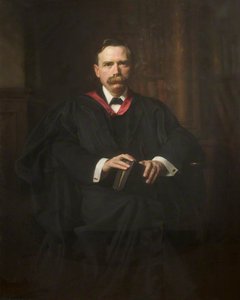
Portrett av Arthur Trevethin Nowell

Arthur Trevethin Nowells malerier: De 22 mest kjente, sett gjennom et galleris øyne

Oppdatert November 2026 · rangert etter vår popularitetsscore (søk, besøk og bestillinger for hvert verk) · 22 verk av Arthur Trevethin Nowell i vår katalog

Kort fortalt

Etter galleriets vurdering er Arthur Trevethin Nowells mest kjente maleri Isabella and the Pot of Basil (1904), hvis original henger i Museo de Arte de Ponce, Ponce. George V (1865–1936) (1935) og John Stevenson (1886) fullfører trioen som alle kjenner igjen. Av de 22 verkene til Arthur Trevethin Nowell i vår katalog, presenterer galleriet de 22 mest kjente nedenfor; hvert originalverk med årstall, museum og hva som gjør det unikt.

1862 – 1940, Garndiffaith Flest verk: Brighton Museum & Art Gallery

Galleriets 10 beste malerier av Arthur Trevethin Nowell

1
Isabella and the Pot of Basil (1904) av Arthur Trevethin Nowell

Isabella and the Pot of Basil

1904 · Oil · Museo de Arte de Ponce, Ponce

In this 1904 portrait, we find ourselves drawn into a quiet, heavy atmosphere. The subject, a woman draped in a deep red dress, sits with a certain stillness that suggests a weight upon her spirit. A crown rests upon her head, hinting at a nobility that feels more like a burden than a privilege. She is positioned near a vessel, perhaps a pot of basil, which anchors the composition and…

2
George V (1865–1936) (1935) av Arthur Trevethin Nowell

George V (1865–1936)

1935 · Oil On Canvas · Brighton Museum & Art Gallery, Brighton and Hove

The oil on canvas depicts King George V, who reigned from 1910 to 1936. He is presented in a frontal composition, wearing a blue coat accented with gold buttons. A white collar is visible beneath the neckline of the garment. The subject possesses a mustache and a beard, which are rendered as prominent facial features. The color palette appears somewhat faded, with the tones of the blue fabric and the…

3
John Stevenson (1886) av Arthur Trevethin Nowell

John Stevenson

1886 · Oil

In this 1886 portrait, Arthur Trevethin Nowell turns his attention to John Stevenson, capturing a moment of quiet introspection. The subject is a man of maturity, defined by a well-groomed beard and mustache that frame a face set in a thoughtful, perhaps even somber, gaze. He is dressed in the formal attire of the era, wearing a suit and tie that suggest a position of respectability or perhaps a moment…

4
Colonel Fred Haworth (1904) av Arthur Trevethin Nowell

Colonel Fred Haworth

1904 · Oil On Canvas · Salford Museum - Art Gallery, Greater Manchester

The air in the room seems to thicken around the figure of Colonel Fred Haworth. He sits in a stillness that feels heavy, caught in a private moment of contemplation. His gaze is not fixed on the viewer, but rather drifts slightly off-canvas, as if he is weighing the gravity of a recent command or perhaps reflecting on the weight of the uniform he wears. The deep red of his…

5
Queen Mary (1935) av Arthur Trevethin Nowell

Queen Mary

1935 · Oil · Brighton Museum & Art Gallery, Brighton and Hove

Queen Mary, painted by Arthur Trevethin Nowell in 1935, presents a formal study of the British monarch. The work captures the sitter in a moment of poised elegance, utilizing the technical precision characteristic of Nowell’s academic training. This portrait belongs to a period of the artist's career defined by prestigious commissions for the British Royal Family.

7
Queen Mary (1867-1953) (1927) av Arthur Trevethin Nowell

Queen Mary (1867-1953)

1927 · Oil On Canvas · Royal Collection, London

This formal and majestic full-length portrait depicts Queen Mary, presented in a vertical three-quarter length composition. The subject is positioned slightly off-center, creating a balanced presence against a background of deep shadows. She is adorned in ceremonial regalia, featuring a luminous blue gown with flowing drapery of silk and satin. The textures of the attire are highly detailed, showcasing the intricate, sparkling surfaces of pearls, diamonds, and fine lace. A…

Arthur Trevethin Nowell sine malerier, rangert fra 11 til 22

Arthur Trevethin Nowells berømte malerier, periode for periode

Motivene som fanget Arthur Trevethin Nowells blikk

De fire motivene som går igjen hyppigst i disse originalverkene, hver med sitt fremste eksempel.

Museene som har Arthur Trevethin Nowells originalverk

De 8 museene som innehar flest av maleriene på denne siden.

Museum By Verker av Arthur Trevethin Nowell Malerier fra denne listen
Brighton Museum & Art Gallery, Brighton and HoveBrighton Museum & Art Gallery Brighton and Hove 2 George V (1865–1936), Queen Mary
Royal Collection, LondonRoyal Collection London 2 King George V (1865-1936), Queen Mary (1867-1953)
John Wesley’s House - The Museum of Methodism, LondonJohn Wesley’s House - The Museum of Methodism London 2 Reverend Thomas Allen, 'Gypsy' Smith
Museo de Arte de Ponce, PonceMuseo de Arte de Ponce Ponce 1 Isabella and the Pot of Basil
Salford Museum - Art Gallery, Greater ManchesterSalford Museum - Art Gallery Greater Manchester 1 Colonel Fred Haworth
Walker Art Gallery, LiverpoolWalker Art Gallery Liverpool 1 The Expulsion of Adam and Eve
Cannon Hall Museum, BarnsleyCannon Hall Museum Barnsley 1 Mrs A. Tyne
Chester Town Hall, ChesterChester Town Hall Chester 1 Duncan Graham, Chairman of Cheshire County Council (1888–1893)

Arthur Trevethin Nowell, ett signaturmaleri per tiår

Verk per tiår

Velg et tiår for å se originalverket som definerer det.

Arthur Trevethin Nowells malerier: galleriets svar

Hvilket maleri av Arthur Trevethin Nowell er det mest kjente av alle?Avslør svaret

Isabella and the Pot of Basil (1904), Museo de Arte de Ponce, Ponce. Deretter følger George V (1865–1936) (1935) og John Stevenson (1886).

Hvor gammel var Arthur Trevethin Nowell da Isabella and the Pot of Basil ble ferdigstilt?Avslør svaret

42 år gammel: Isabella and the Pot of Basil er fra 1904, og Arthur Trevethin Nowell ble født i 1862.

Hvilke er de 10 beste maleriene til Arthur Trevethin Nowell?Avslør svaret

Isabella and the Pot of Basil, George V (1865–1936), John Stevenson, Colonel Fred Haworth, Queen Mary, King George V (1865-1936), Queen Mary (1867-1953), The Expulsion of Adam and Eve, Mrs A. Tyne og Duncan Graham, Chairman of Cheshire County Council (1888–1893). Rangeringen ovenfor viser årstall og museum for hvert verk.

Hvor mange verk skapte Arthur Trevethin Nowell?Avslør svaret

Vår katalog inneholder 22 verk av Arthur Trevethin Nowell, datert fra 1883 til 1935.

Hvor henger de mest kjente originalverkene til Arthur Trevethin Nowell?Avslør svaret

Hovedsakelig i Brighton Museum & Art Gallery (Brighton and Hove), Royal Collection (London) og John Wesley’s House - The Museum of Methodism (London). Museumslisten ovenfor viser alle.

Når malte Arthur Trevethin Nowell sine mest kjente malerier?Avslør svaret

I 1900s: 5 av de 22 verkene på denne siden ble laget da, Isabella and the Pot of Basil av dem.

Hvilke er Arthur Trevethin Nowells tidligste og nyeste berømte verk?Avslør svaret

På denne siden er det eldste Mrs A. Tyne (1883) og det nyeste George V (1865–1936) (1935).

Hvilke motiver vendte Arthur Trevethin Nowell oftest tilbake til?Avslør svaret

Man (4), Mustache (4) og Woman (3), fordelt på 22 verk på denne siden.

Hvilket medium arbeidet Arthur Trevethin Nowell mest med?Avslør svaret

Oil On Canvas, for 5 av de 22 verkene på denne siden.

Hvilke originalverk av Arthur Trevethin Nowell har Brighton Museum & Art Gallery i sin samling?Avslør svaret

George V (1865–1936) og Queen Mary: Brighton Museum & Art Gallery, Brighton and Hove har 2 av verkene på denne siden.

Arthur Trevethin Nowell: kunstneren

The Atmospheric Legacy of Arthur Trevethin Nowell

Born in the Welsh village of Garndiffaith, Trevethin in 1862, Arthur Trevethin Nowell emerged as a painter of profound versatility, capable of navigating the delicate boundary between Victorian tradition and the burgeoning light of Impressionism. His early life was shaped by the itinerant nature of his father’s vocation as a Wesleyan Minister, a journey that brought him to Lancashire and provided a diverse tapestry of landscapes and cultures. This nomadic upbringing instilled in him a keen eye for the changing moods of the natural world, an instinct that would later define his celebrated landscape works. His formal training at the Manchester School of Art served as the bedrock of his technical mastery, where he studied under the influential Augustus John. From this mentorship, Nowell inherited a profound sensitivity to capturing fleeting moments and emotional resonance, learning to use tonal gradations to breathe life into the canvas.

The trajectory of Nowell’s career reached a spectacular zenith through his academic triumphs and international exposure. After honing his skills in Manchester, he entered the prestigious Royal Academy Schools in 1893, eventually earning both the Gold Medal and the Turner Prize by 1898. These accolades were accompanied by a transformative period of study in Paris, where the vibrant energy of French Impressionism began to seep into his classical foundations. This era of his life was marked by an extraordinary ability to blend the grand, narrative scale of historical painting with a modern, atmospheric approach to light and color. His monumental biblical canvas, The Expulsion of Adam and Eve (1897), remains a cornerstone of his legacy; housed in the Walker Art Gallery, it demonstrates a masterful command of drama, utilizing intricate compositions and celestial light to evoke the profound tension of the Fall.

A Mastery of Portraiture and Landscape

As his reputation expanded across Europe and even to the burgeoning art markets of New York, Nowell’s subject matter evolved with a sophisticated grace. While he gained widespread acclaim for his dramatic religious scenes, he was equally sought after as a portraitist of high society. His talent for capturing the dignity and psychological depth of his sitters led to prestigious commissions, most notably for members of the British Royal Family, including King George V and Queen Mary. These portraits, characterized by rich textures and an elegant realism, stand as testaments to his ability to convey status through subtle, nuanced brushwork. Whether depicting the refined elegance of Mrs. Wiseman or the regal presence of royalty, Nowell possessed a rare gift for rendering the human spirit within the framework of formal tradition.

In his later years, as the fervor for grand historical narratives began to wane in the face of modernism, Nowell found a renewed passion in the more intimate realms of landscape and watercolor. His travels through Scotland and Europe allowed him to explore the rugged, untamed beauty of nature, particularly the dramatic sight of rivers in spate. In these works, one sees the true synthesis of his artistic identity: the technical precision of a Victorian master married to the emotive, light-drenched spirit of an Impressionist. His later excursions into watercolor allowed for a more spontaneous, lyrical expression, capturing the ephemeral qualities of mist, water, and light that had always been the heartbeat of his creative soul.

Artistic Significance and Enduring Influence

The significance of Arthur Trevethin Nowell lies in his role as a bridge between eras. He did not merely exist within the transition from the 19th to the 20th century; he actively embodied it. His work reflects a period of intense artistic dialogue, where the weight of classical mythology and biblical narrative met the modern obsession with light, atmosphere, and subjective experience. To study Nowell is to witness the evolution of British art itself—from the structured, moralistic tones of the Victorian age to the fluid, sensory-driven explorations of the new century.

His contributions can be summarized through several key artistic pillars:

  • Technical Versatility: An exceptional ability to move seamlessly between large-scale oil canvases, intimate portraits, and delicate watercolors.
  • Stylistic Synthesis: The successful integration of Impressionistic light and color with the rigorous anatomical and compositional standards of the Royal Academy.
  • Narrative Depth: A profound capacity to imbue both religious subjects and natural landscapes with palpable human emotion and dramatic tension.
  • Global Reach: An exhibition history that spanned the most important galleries in London, Europe, and America, cementing his status as a truly international figure of his time.

Though the tides of art history eventually moved toward more radical abstractions, the works of Nowell remain enduringly captivating. They offer a window into a world where beauty was found in the meticulous rendering of detail and the soulful capture of a passing shadow, ensuring his place in the annals of British art as a master of both the seen and the felt.