Portrett av Armand Guillaumin

De 100 mest kjente Armand Guillaumin-maleriene, hvert og ett unikt

Oppdatert November 2026 · rangert etter vår popularitetsscore (søk, besøk og bestillinger for hvert verk) · 344 verk av Armand Guillaumin i vår katalog

Kort fortalt

Place Valhubert (1872) er maleriet av Armand Guillaumin som vekker mest oppmerksomhet; originalen befinner seg i Musée d'Orsay, Paris. Deretter går blikket til River Scene (1890) og Paris - Quai de la Rapee (1885). Blant de 344 verkene til Armand Guillaumin i vår katalog, er disse 100 de mest kjente – hver og en et unikt originalverk presentert med sitt årstall, sitt museum og årsaken til at det består.

1841 – 1927, Paris Impressionism Flest verk: Musée d'Orsay

Topp 10 malerier av Armand Guillaumin, sett gjennom galleriets øyne

1
Place Valhubert (1872) av Armand Guillaumin

Place Valhubert

1872 · Oil On Canvas · Musée d'Orsay, Paris

The air in 1872 carries a chill that settles upon the riverbank. Snow has smoothed the edges of the city, coating the ground in a pale, quiet layer. Along the sidewalk, trees rise like dark, skeletal fingers against a sky of muted blue. They stand still, their bare branches etched sharply against the light. Beneath them, the world is a study in frost and movement.

2
River Scene (1890) av Armand Guillaumin

River Scene

1890 · Oil On Canvas · Israelmuseet, Jerusalem

Around 1890, the banks of the Seine became a stage for the tension between nature and the encroaching modern age. This work captures a bustling waterway where the quietude of leisure meets the grit of commerce. Several boats navigate the expanse—some barges laden with cargo, others smaller vessels drifting through calmer stretches. In the distance, the horizon is punctuated by the dark, vertical silhouettes of smoking factory chimneys, a subtle…

3
Paris - Quai de la Rapee (1885) av Armand Guillaumin

Paris - Quai de la Rapee

1885 · Oil On Canvas

In this 1885 oil on canvas, we find ourselves positioned at the edge of the water, observing the industrial rhythm of the Quai de la Rapée. There is a certain weight to the scene, a sense of the heavy, working life that defined the Parisian riverfront during this period. A large cargo ship or barge dominates the left side of the composition, its massive form anchored in the midground, while…

4
Madame Guillaumin Reading (1882) av Armand Guillaumin

Madame Guillaumin Reading

1882 · Oil On Canvas

Madame Guillaumin Reading is an oil on canvas painting created by the French artist Armand Guillaumin. Dated 1882, this work is an impressionist portrait of a young girl. The subject is positioned outdoors, seated amidst a landscape of tall grass and foliage. The composition focuses on the girl as the central figure, set against a background of trees and a distant landscape that provides a sense of depth through atmospheric…

5
The Quai d'Austerlitz (1899) av Armand Guillaumin

The Quai d'Austerlitz

1899 · Oil On Canvas · Indianapolis Museum of Art, Indianapolis

The water of the harbor rests in muted blues and grays, a heavy expanse that mirrors a sky filled with drifting clouds. Boats sit moored in the middle ground, their dark, ochre hulls cutting through the shimmering surface. Along the shoreline, indistinct buildings rise like shadows against the horizon. The scene captures a quiet moment of transit and stillness at the Quai d'Austerlitz. Light filters through an overcast sky, casting…

6
Still Life with Box with Blue Gloves (1873) av Armand Guillaumin

Still Life with Box with Blue Gloves

1873 · Oil On Canvas

A vase of flowers sits at the center of a wooden table, holding its position with a heavy, silent grace. Around this floral heart, the world is composed of everyday things: a suitcase tucked into the upper corner, a bowl, a cup, and several books. Two volumes rest near the bottom left, while another lies to the right. The scene is a study in stillness. A pair of blue gloves…

7
Portrait of Madame Guillaumin (1898) av Armand Guillaumin

Portrait of Madame Guillaumin

1898 · Oil On Canvas · Musée du Petit Palais, Genève

To gaze upon this portrait is to be invited into a moment suspended in time—a quiet afternoon steeped in the cultivated elegance of late 19th-century Parisian life. The subject, seated within an ornate chair, embodies a serene contemplation, her posture suggesting both intellectual engagement and profound repose. She is captured mid-activity, seemingly absorbed by the pages of a book, yet the surrounding details whisper tales of a richer, more decorative…

8
The Bouchardon Lock av Armand Guillaumin

The Bouchardon Lock

Oil On Canvas

The Bouchardon Lock emerges from the brush of Armand Guillaumin, a painter whose life began in Paris, France, in 1841. This work, which appears in various records as about 1908, captures a specific moment of light and water. Guillaumin moves through the landscape with a hand that seeks the immediate sensation of the river and the valley. He remains a presence in the history of French painting until his death…

9
The Bouchardon Mill, Crozant (1898) av Armand Guillaumin

The Bouchardon Mill, Crozant

1898 · Oil On Canvas · Metropolitan Museum of Art, New York

The river flows with a steady, rhythmic grace, carving its way through a rocky bed that catches the soft, diffused light of an overcast sky. Along the banks, the trees are heavy with the weight of the changing season, their leaves glowing in shades of golden yellow, orange, and pink. These bursts of color dominate the upper reaches of the scene, casting deep shadows of green, blue, and purple into…

10
Self Portrait with Easel (1878) av Armand Guillaumin

Self Portrait with Easel

1878 · Oil On Canvas · Van Gogh Museum, Amsterdam

In the quiet, contemplative depths of Self Portrait with Easel, we are invited into a private moment of creative gestation. Painted in 1878 by the French Impressionist master Ferdinand Guillaumin, this work serves as more than just a likeness; it is a window into the psychological landscape of a creator at work. The painting captures the artist seated before his easel, his gaze directed toward the viewer with an expression…

Armand Guillaumins berømte malerier, nummer 11 til 100

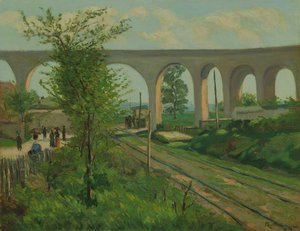
11Rocks at Trayas (1915) av Armand GuillauminRocks at Trayas1915 12La Seine av Armand GuillauminLa Seine 13The Arcueil Aqueduct at Sceaux Railroad Crossing av Armand GuillauminThe Arcueil Aqueduct at Sceaux Railroad CrossingArt Institute of Chicago 14Nanteuil-sur-Marne (1911) av Armand GuillauminNanteuil-sur-Marne1911 15The Sand Quarry (1895) av Armand GuillauminThe Sand Quarry1895 16Seaside at Agay (1900) av Armand GuillauminSeaside at Agay1900 17Self-Portrait (1895) av Armand GuillauminSelf-Portrait1895 · Ohara Museum of Art 18Paysage boise à l'étang av Armand GuillauminPaysage boise à l'étang 19The Seine at Charenton (1878) av Armand GuillauminThe Seine at Charenton1878 · Musée d'Orsay 20Villiers-sur-Morin (1905) av Armand GuillauminVilliers-sur-Morin1905 21Paysage de la Creuse 1 av Armand GuillauminPaysage de la Creuse 1 22The Banks of the River av Armand GuillauminThe Banks of the River 23Madame Guillaumin Sitting in a Garden (1890) av Armand GuillauminMadame Guillaumin Sitting in a Garden1890 24Mill of Pont Maupuit (1900) av Armand GuillauminMill of Pont Maupuit1900 · Art Institute of Chicago 25The Ruins of the Chateau at Crozant (1899) av Armand GuillauminThe Ruins of the Chateau at Crozant1899 26Hollow in the snow (1869) av Armand GuillauminHollow in the snow1869 · Musée d'Orsay 27Still Life with Casserole (1867) av Armand GuillauminStill Life with Casserole1867 28The Seine at Paris (also known as Quai de la Rapee) (1871) av Armand GuillauminThe Seine at Paris (also known as Quai de la Rapee)1871 · Museum of Fine Arts, Houston 29Painting (1876) av Armand GuillauminPainting1876 · Nasjonalmuseet 30Quai de Bercy, circa 1874 (1874) av Armand GuillauminQuai de Bercy, circa 18741874 · Carnavalet Museum 31Les Environs de Paris (1874) av Armand GuillauminLes Environs de Paris1874 · Birmingham Museum and Art Gallery 32La Seine (1874) av Armand GuillauminLa Seine1874 · Fine Arts Museums of San Francisco 33The Seine at Charenton (1874) av Armand GuillauminThe Seine at Charenton1874 · Norton Simon Museum 34The Bridge of Louis Philippe (1875) av Armand GuillauminThe Bridge of Louis Philippe1875 · National Gallery of Art 35Snow (1876) av Armand GuillauminSnow1876 36Rue de Clamart at Vanves (1873) av Armand GuillauminRue de Clamart at Vanves1873 37Pont Marie, Quai Sully (1878) av Armand GuillauminPont Marie, Quai Sully1878 38The Seine (1873) av Armand GuillauminThe Seine1873 39La Route Tournante (1877) av Armand GuillauminLa Route Tournante1877 40Portrait of a Young Woman (1875) av Armand GuillauminPortrait of a Young Woman1875 41Damiette - Apple Trees (1884) av Armand GuillauminDamiette - Apple Trees1884 · Musée d'Orsay 42The Path to the Valley (1885) av Armand GuillauminThe Path to the Valley1885 · Petit Palais 43Painting (1880) av Armand GuillauminPainting1880 · Nasjonalmuseet 44Quai de Bercy (1881) av Armand GuillauminQuai de Bercy1881 45Confluence of the Marne and the Seine, Île de France (1885) av Armand GuillauminConfluence of the Marne and the Seine, Île de France1885 46Pont Marie from the Quai d'Anjou (1883) av Armand GuillauminPont Marie from the Quai d'Anjou1883 47Palaiseau - Snow Effect (1883) av Armand GuillauminPalaiseau - Snow Effect1883 48Le Charrois au bord de la Seine (1882) av Armand GuillauminLe Charrois au bord de la Seine1882 49The Quay at Rouen (1882) av Armand GuillauminThe Quay at Rouen1882 50Quai de Bercey (1880) av Armand GuillauminQuai de Bercey1880 51Damiette (also known as Vallee de Chevreuse) (1880) av Armand GuillauminDamiette (also known as Vallee de Chevreuse)1880 52The Seine at Charenton (1880) av Armand GuillauminThe Seine at Charenton1880 53Quai Saint Bernard in the Snow (1882) av Armand GuillauminQuai Saint Bernard in the Snow1882 54Laundry Boat at Charenton (1880) av Armand GuillauminLaundry Boat at Charenton1880 55The Little Thieves (1885) av Armand GuillauminThe Little Thieves1885 56Epinay-sur-Orge (1884) av Armand GuillauminEpinay-sur-Orge1884 57Vase of Chrysanthemums (1885) av Armand GuillauminVase of Chrysanthemums1885 58Saint-Palais, the Pointe de la Douane, August 92, 10 o'clock in the morning (1892) av Armand GuillauminSaint-Palais, the Pointe de la Douane, August 92, 10 o'clock in the morning1892 · Petit Palais 59Village in Ile-de-France (1888) av Armand GuillauminVillage in Ile-de-France1888 60Woman and Child in Landscape (1892) av Armand GuillauminWoman and Child in Landscape1892 · Davis Museum and Cultural Center 61Ile de France (1888) av Armand GuillauminIle de France1888 62Quay de Bercy (1891) av Armand GuillauminQuay de Bercy1891 63The Quay d'Austerlitz, Morning (1886) av Armand GuillauminThe Quay d'Austerlitz, Morning1886 64Landscape at Breuillet (1890) av Armand GuillauminLandscape at Breuillet1890 65Pond with Willows, Îli-de-France (1889) av Armand GuillauminPond with Willows, Îli-de-France1889 66Le Pleteau Bromant a Pontgibaud (also known as Puy de Dome) (1890) av Armand GuillauminLe Pleteau Bromant a Pontgibaud (also known as Puy de Dome)1890 67la Manche Landscape (1890) av Armand Guillauminla Manche Landscape1890 68Landscape - the Creuse in the Snow (1890) av Armand GuillauminLandscape - the Creuse in the Snow1890 · Musée du Petit Palais 69Grainstacks (1891) av Armand GuillauminGrainstacks1891 · Musée du Petit Palais 70Damiette Landscape (1890) av Armand GuillauminDamiette Landscape1890 71Horses in the Sand at Ivry (1891) av Armand GuillauminHorses in the Sand at Ivry1891 72The Rock Breaker (1890) av Armand GuillauminThe Rock Breaker1890 · Rhode Island School of Design Museum of Art 73The Sea at Pointe de la Perriere, Saint-Palais (1892) av Armand GuillauminThe Sea at Pointe de la Perriere, Saint-Palais1892 74Small Valley at Pontgibaud (1890) av Armand GuillauminSmall Valley at Pontgibaud1890 75Sifting Sand (1891) av Armand GuillauminSifting Sand1891 76Passers-by in Paris in Winter (1888) av Armand GuillauminPassers-by in Paris in Winter1888 77Portrait of Madame Guillaumin (1892) av Armand GuillauminPortrait of Madame Guillaumin1892 78Rock Cliff on the Baumette Headland (1893) av Armand GuillauminRock Cliff on the Baumette Headland1893 · Wallraf-Richartz-Museum 79Rocks at Agay (1895) av Armand GuillauminRocks at Agay1895 · Petit Palais 80Les ruines du château de Crozant (1898) av Armand GuillauminLes ruines du château de Crozant1898 · Musée d'Unterlinden 81Vallée de la Creuse (1895) av Armand GuillauminVallée de la Creuse1895 · Musée d'Unterlinden 82Mountainous landscape (1895) av Armand GuillauminMountainous landscape1895 · Bavarian State Painting Collections 83Grainstacks in Île-de-France (1894) av Armand GuillauminGrainstacks in Île-de-France1894 · Museum Barberini 84View of Crozant (1898) av Armand GuillauminView of Crozant1898 85The Sea at Saint-Palais (1895) av Armand GuillauminThe Sea at Saint-Palais1895 · Wallraf-Richartz-Museum 86The Ruins at Crozant (1897) av Armand GuillauminThe Ruins at Crozant1897 87La Creuse Landscape (1895) av Armand GuillauminLa Creuse Landscape1895 88Madame Guillaumin Writing (1894) av Armand GuillauminMadame Guillaumin Writing1894 89Madame Guillaumin Reading in the Garden (1895) av Armand GuillauminMadame Guillaumin Reading in the Garden1895 90Landscape in the Vicinity of Rouen (1898) av Armand GuillauminLandscape in the Vicinity of Rouen1898 91The Platin Rock at Saint-Palais (1893) av Armand GuillauminThe Platin Rock at Saint-Palais1893 92Child Eating Soup (1894) av Armand GuillauminChild Eating Soup1894 93Ile de France Landscape (1895) av Armand GuillauminIle de France Landscape1895 94Saint-Julien-des-Chazes, Allier (1895) av Armand GuillauminSaint-Julien-des-Chazes, Allier1895 95Orchard at the Edge of the Woods in Saint-Cheron (1893) av Armand GuillauminOrchard at the Edge of the Woods in Saint-Cheron1893 96Snow at Crozant (1898) av Armand GuillauminSnow at Crozant1898 97Saint Palais, Pointe de la Perriere (1893) av Armand GuillauminSaint Palais, Pointe de la Perriere1893 98Landscape - the Creuse (1897) av Armand GuillauminLandscape - the Creuse1897 99Sunset on the Creuse (1898) av Armand GuillauminSunset on the Creuse1898 100Red Rocks (1894) av Armand GuillauminRed Rocks1894

Armand Guillaumins berømte malerier, periode for periode

Motivene som fanget Armand Guillaumins blikk

De fire motivene som går igjen hyppigst i disse originalverkene, hver med sitt fremste eksempel.

Museene som har Armand Guillaumins originalverk

De 8 museene som innehar flest av maleriene på denne siden.

Museum By Verker av Armand Guillaumin Malerier fra denne listen
Musée d'Orsay, ParisMusée d'Orsay Paris 10 Place Valhubert, The Seine at Charenton, Hollow in the snow
Petit Palais, ParisPetit Palais Paris 5 The Path to the Valley, Saint-Palais, the Pointe de la Douane, August 92, 10 o'clock in the morning, Rocks at Agay
Musée du Petit Palais, GenèveMusée du Petit Palais Genève 3 Portrait of Madame Guillaumin, Landscape - the Creuse in the Snow, Grainstacks
Wallraf-Richartz-Museum, KölnWallraf-Richartz-Museum Köln 3 Rock Cliff on the Baumette Headland, The Sea at Saint-Palais
Musée d'Unterlinden, ColmarMusée d'Unterlinden Colmar 3 Les ruines du château de Crozant, Vallée de la Creuse
Art Institute of Chicago, ChicagoArt Institute of Chicago Chicago 2 The Arcueil Aqueduct at Sceaux Railroad Crossing, Mill of Pont Maupuit
Nasjonalmuseet, OsloNasjonalmuseet Oslo 2 Painting, Painting
Indianapolis Museum of Art, IndianapolisIndianapolis Museum of Art Indianapolis 2 The Quai d'Austerlitz

Armand Guillaumin gjennom tiårene: ett unikt originalverk for hvert tiår

Verk per tiår

Velg et tiår for å se originalverket som definerer det.

Armand Guillaumins malerier: spørsmål til galleriet

Hva er det mest kjente verket til Armand Guillaumin?Avslør svaret

Place Valhubert (1872), Musée d'Orsay, Paris. Deretter følger River Scene (1890) og Paris - Quai de la Rapee (1885).

Hvor gammel var Armand Guillaumin da Place Valhubert ble skapt?Avslør svaret

31 år gammel: Place Valhubert er fra 1872, og Armand Guillaumin ble født i 1841.

Hvilke ti malerier av Armand Guillaumin er de mest kjente?Avslør svaret

Place Valhubert, River Scene, Paris - Quai de la Rapee, Madame Guillaumin Reading, The Quai d'Austerlitz, Still Life with Box with Blue Gloves, Portrait of Madame Guillaumin, The Bouchardon Lock, The Bouchardon Mill, Crozant og Self Portrait with Easel. Rangeringen ovenfor viser årstall og museum for hvert verk.

Hvor mange verk av Armand Guillaumin er kjent?Avslør svaret

Vår katalog inneholder 344 verk av Armand Guillaumin, datert fra 1867 til 1915.

Hvor kan de mest kjente originalverkene til Armand Guillaumin ses?Avslør svaret

Hovedsakelig i Musée d'Orsay (Paris), Petit Palais (Paris) og Musée du Petit Palais (Genève). Museumslisten ovenfor viser alle.

I hvilken periode malte Armand Guillaumin sine mest kjente malerier?Avslør svaret

I 1890s: 46 av de 100 verkene på denne siden ble laget da, River Scene av dem.

Hvilket kjent maleri av Armand Guillaumin er det eldste, og hvilket er det nyeste?Avslør svaret

På denne siden er det eldste Still Life with Casserole (1867) og det nyeste Rocks at Trayas (1915).

Hvilke motiver foretrakk Armand Guillaumin?Avslør svaret

Landscape (17), Trees (10) og River (6), fordelt på 100 verk på denne siden.

Hvilke materialer brukte Armand Guillaumin mest av?Avslør svaret

Oil On Canvas, for 19 av de 100 verkene på denne siden.

Hvilken kunstretning tilhører verkene til Armand Guillaumin?Avslør svaret

Impressionism, basert på originalene på denne siden.

Hvilke originalverk av Armand Guillaumin kan jeg se på Musée d'Orsay?Avslør svaret

Place Valhubert, The Seine at Charenton og Hollow in the snow: Musée d'Orsay, Paris har 4 av verkene på denne siden.

Armand Guillaumin: et portrett av kunstneren

Tidlig liv og kunstnerisk utdanning

Jean-Baptiste Armand Guillaumin ble født i Paris den 16. februar 1841, og mannen som senere skulle bli kjent som Ferdinand Guillaumin, tilbrakte sine tidlige år med å balansere hardt arbeid med en stille lidenskap for tegning. Før han kunne dedikere seg fullt ut til lerretet, arbeidet han i sin onkels undertøysbutikk. I kveldstimene deltok han på tegnetimer for å finpusse sitt håndlag. Denne arbeidsperioden ble avbrutt av en tid som ansatt ved det franske statlige jernbaneselskapet, en jobb som ledet opp til hans formelle inntog i kunstverdenen.

I 1861 beveget han seg mot mer seriøse studier ved Académie Suisse. Det var innenfor disse veggene at hans vei krysset med Paul Cézanne og Camille Pissarro. Disse tidlige forbindelsene var ikke bare flyktige bekjentskaper; de markerte begynnelsen på livslange vennskap. De felles erfaringene fra atelieret og lærdommen fra disse rommene bidro til å forme retningen for hans senere kunstneriske virke.

Teknikk og kunstnerisk stil

Penselstrøkene hans bærer preg av en viss selvsikkerhet, påført med en løs og stødig hånd. I hans tidlige år fokuserte han på å fange de flyktige effektene av lys og farge, et kjennetegn ved impresjonismen. Han arbeidet ofte med oljemaling for å oversette stemningen i en scene, enten det var et snødekket parisiskt gatebilde eller en stille elvebredd. Hans tilnærming handlet aldri om presise, fotografiske detaljer, men snarere om det umiddelbare inntrykket av et øyeblikk.

Etter hvert som karrieren hans skred frem, ble fargebruken stadig mer intens. Innen 1886 hadde paletten hans gitt ham et rykte som en lidenskapelig og kraftfull kolorist. Han beveget seg bort fra de subtile, naturalistiske tonene til sine samtidige, og valgte i stedet en langt dristigere påføring. På 1890-tallet hadde dette skiftet blitt enda mer markant. Fargene hans ble mindre tro mot naturens faktiske utseende, og lente seg mot en forhøyet, nesten aggressiv intensitet. Denne utviklingen antyder at han utforsket en vei mot fauvismen et helt tiår før denne bevegelsen oppsto.

Måten han håndterte lys på, lente seg ofte mot det symbolske, der han brukte dristige nyanser for å fremkalle en følelse av drømmeaktig mystikk. Denne spenningen mellom det å fange et virkelig landskap og det å bruke farge for å uttrykke en emosjonell, indre tilstand, definerer mye av hans produksjon. Hans verk befinner seg ofte i skjæringspunktet mellom observasjonen av den naturlige verden og en mer subjektiv, ekspressiv tolkning av den.

Kunstnerkretsen og inspirasjonskildene

Ferdinand Guillaumin beveget seg i selve hjertet av den impresjonistiske kretsen, og deltok på seks av de åtte utstillingene i regi av Société anonyme des artistes peintres, sculpteurs et graveurs mellom 1874 og 1886. Hans tilstedeværelse i disse samlingene plasserte ham side om side med selve menneskene som formet epokens visuelle språk. Han delte atelier på Île Saint-Louis med Paul Cézanne, og de to kunstnerne sto hverandre så nær at Cézanne til og med skapte etsninger av ham. Denne nærheten la til rette for en konstant og lavmælt utveksling av ideer og metoder gjennom hele 1870-tallet.

Atelieret hans fungerte ofte som et naturlig samlingspunkt for en yngre generasjon malere. Navn som Paul Gauguin, Paul Signac og Georges Seurat var kjent for å møtes innenfor hans vegger, hvor de fant et rom for samhold. Denne forbindelsen til den fremvoksende avantgarden antyder en bro mellom den etablerte impresjonistgruppen og de kunstneriske bevegelsene som skulle følge. Selv Vincent van Gogh fant mye å beundre i Ferdinand Guillaumins tilnærming, og han viste stor respekt for kunstnerens arbeid gjennom en rekke brev utvekslet mellom 1888 og 1890.

Viktige verk og samlinger

En stor del av hans kunstneriske produksjon er bevart i fremtredende institusjoner over hele verden. Musée d’Orsay i Paris huser hele 48 av hans verk, noe som gir et betydelig innblikk i hans kunstneriske utvikling. Blant disse finner vi det stemningsfulle Place Valhubert, Paris, malt i 1872. Dette verket fanger et vinterlig gatebilde og viser mennesker som vandrer gjennom et snødekket urbant landskap ved en elvebredd.

Hans dype fascinasjon for landskapet førte ham ofte til breddene langs Seinen. The Seine at Charenton er et annet bemerkelsesverdig verk fra hans samling. Hans eksepsjonelle evne til å mestre lys og farge kommer tydelig til uttrykk i disse studiene av både naturens råskap og det pulserende bylivet. Mange av disse maleriene er bevart i ulike museer, noe som sikrer at hans unike visuelle språk forblir tilgjengelig for alle som studerer denne transformative epoken.

Arv og senere liv

Et vendepunkt i Ferdinand Guillaumins liv inntraff i 1891. Etter å ha vunnet 100 000 franc i statslotteriet, kunne han endelig forlate sin faste stilling i staten. Denne friheten ga ham muligheten til å dedikere seg fullt og helt til maleriet. I årene som fulgte, ble paletten hans stadig dristigere; han beveget seg bort fra en streng naturtro gjengivelse og mot en stil som av enkelte ble sett på som en forløper til fauvismen.

Hans tilstedeværelse i kunstverdenen forble urokkelig frem til hans bortgang den 26. juni 1927. Verkene han etterlot seg er i dag bevart i en rekke samlinger, deriblant Musée d’Orsay og Petit Palais i Paris. Hans bidrag til impresjonismen forblir uvurderlige for alle som studerer utviklingen av lys og farge i det sene 19. århundre.