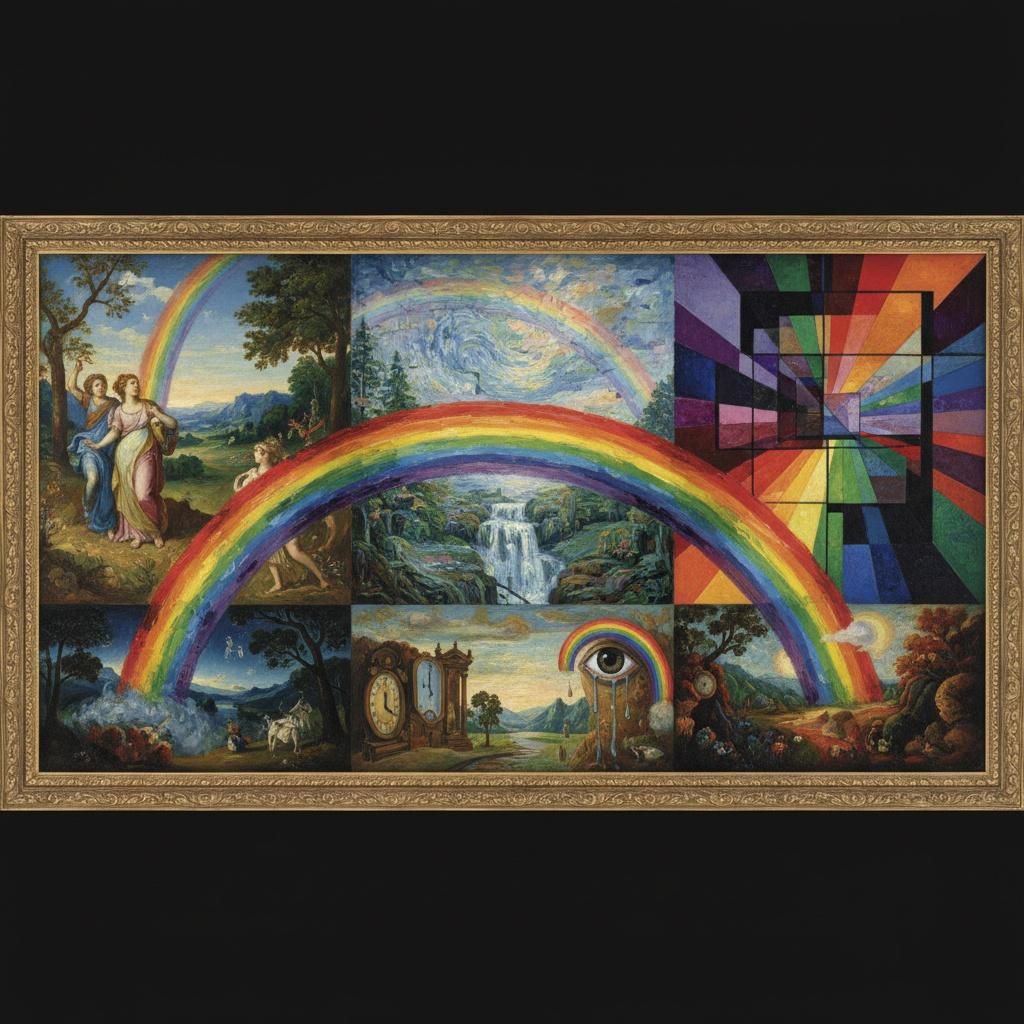
The Prismatic Promise: An Introduction to Light and Color in Art History
To gaze upon a rainbow is to witness a fleeting moment of celestial alchemy, where sunlight and rain converge to fracture the white light into a breathtaking spectrum of color. In the realm of fine art, this phenomenon has long served as more than a mere meteorological event; it is a profound symbol of hope, transition, and the divine intersection of the earthly and the ethereal. For the discerning collector, the study of rainbows in art is an exploration of how masters have wrestled with the intangible, attempting to pin down the ephemeral arc of light onto the permanence of canvas and pigment.
Throughout history, the mastery of color has been the ultimate pursuit of the painter. The ability to replicate the subtle gradations of violet, indigo, blue, green, yellow, orange, and red requires not only technical precision but a deep understanding of optical science. Artists have historically viewed the rainbow as a bridge between worlds, a chromatic promise that follows the turbulence of a storm. This fascination with the spectrum has driven innovations in pigment chemistry and brushwork, pushing the boundaries of what can be achieved when light meets texture.
Atmospheric Alchemy: Capturing the Storm and the Rainbow's Emergence
There is a particular drama found in the moments preceding a rainbow—the heavy, bruised skies and the scent of ozone that signals an approaching deluge. Fine art excels at capturing this tension. Consider the works that focus on the atmospheric weight of a storm, where the landscape is swallowed by shadows, only to be pierced by a sudden, radiant arc. This transition from darkness to light is where the true magic of the rainbow resides, acting as a visual crescendo in an otherwise somber composition.
In these works, the artist must master the art of sfumato and atmospheric perspective, blurring the lines between the heavy clouds and the distant horizon to create a sense of immense depth. The emergence of a rainbow within such a setting provides a focal point of intense luminosity, a singular moment of clarity amidst the chaos of a tempest. It is a study in contrasts: the weight of the dark, moisture-laden air against the weightless, translucent bands of color that seem to float above the earth, momentarily defying the gravity of the storm.
Chromatic Vibrancy: The Impressionist Pursuit of Spectral Brilliance
The advent of Impressionism revolutionized our perception of the spectrum. No longer content with the structured, often muted palettes of the Academy, Impressionist masters sought to capture the "impression" of light as it actually hit the eye—unfiltered and vibrating. For these artists, the rainbow was not just a subject but a way of seeing. They utilized broken brushstrokes and unblended colors to mimic the optical flickering of light, allowing the viewer's eye to mix the hues internally.
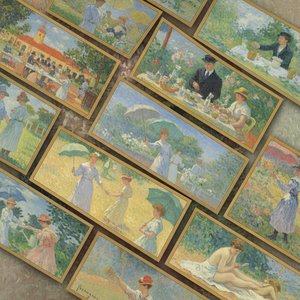
In the hands of an Impressionist, a rainbow becomes a rhythmic dance of color. The edges of the arc are rarely hard or defined; instead, they bleed into the surrounding atmosphere, much like Jan Grzegorz Stanisławski’s evocative landscapes where atmospheric brushstrokes create a sense of modern movement. This technique allows the painting to breathe, capturing the way light refracts through mist and moisture. The pursuit was never about photographic accuracy, but about capturing the vibration of color—the feeling of warmth on one's skin and the shimmering quality of a sun-drenched sky.
Nature’s Palette: From Tropical Sunsets to Earthly Landscapes
Beyond the dramatic storms of Northern Europe, the spectrum finds expression in the lush, saturated palettes of tropical and exotic landscapes. Here, the rainbow is often integrated into a much broader celebration of nature's inherent vibrancy. The colors are not merely atmospheric; they are biological and terrestrial. We see this in works that explore the intense, fiery hues of a sunset, where the sky itself seems to simulate the brilliance of living creatures, as seen in the evocative studies of tropical light and color.
In these settings, the rainbow serves as a unifying thread that connects the vibrant flora and fauna to the heavens above. The artist uses a wider range of saturated pigments to depict the deep greens of jungle canopies and the brilliant oranges of setting suns, creating a holistic environment where every element is part of a single, continuous spectrum. This approach celebrates the earth as a place of infinite chromatic possibility, where even the most distant arc of light is an extension of the life flourishing beneath it.
The Tactile Spectrum: How Texture and Brushwork Define Light
To truly appreciate a rainbow in fine art, one must look beyond the color and observe the texture. A rainbow is, by its nature, translucent and light-filled; replicating this on a heavy, opaque medium like oil paint requires extraordinary skill. The use of impasto—the thick, sculptural application of paint—can create physical ridges that catch actual light in the room, mimicking the way sunlight hits water droplets in the air. This creates a three-dimensional quality that a flat print can never replicate.
The layering of glazes is equally vital. By applying multiple thin, transparent layers of oil, an artist can build a depth of color that appears to glow from within. This technique allows for the subtle transitions between the bands of the rainbow, ensuring that the violet fades into the blue with a seamless, ethereal grace. When you observe a high-quality reproduction, it is this tactile interplay of light and shadow—the way the brushstrokes themselves hold the spectrum—that brings the masterpiece to life, offering a sensory experience that transcends mere visual observation.
Curating the Rainbow: Bringing Ethereal Masterpieces into the Modern Home
Integrating such powerful, light-centric works into a contemporary interior requires a thoughtful approach to curation. A large-scale landscape featuring a dramatic rainbow can serve as a profound focal point, commanding attention and injecting a sense of serenity and wonder into a room. For those looking to honor these classical traditions, the choice between a Giclée print and a handmade oil reproduction is a choice of how much "soul" one wishes to invite into their space.
While a high-quality print offers durability and precision, a hand-painted reproduction provides the physical texture and historical depth that true collectors crave. Whether it is a multi-panel set designed to span a grand staircase or a custom commission that reimagines a personal memory through an Impressionist lens, art featuring the rainbow spectrum brings a timeless elegance to any collection. It is an invitation to pause, to look upward, and to find beauty in the fleeting, colorful promises of the natural world.
At OriginalUniqueArt.com, we are dedicated to preserving this legacy of human creativity. From museum-quality Giclée prints to bespoke, hand-painted oil masterpieces, our mission is to make the world's most breathtaking moments accessible to collectors globally. Whether you seek a custom transformation of a personal photograph or an expert consultation to find the perfect piece for your home, OriginalUniqueArt provides a bridge between the timelessness of the Old Masters and the modern connoisseur.