Se i rommet
 Del som digitalt kort
 Del
Del
 Detaljer
 Studentguide

 Last ned
 Liknende objekter
 Røntgen
 Lysbildefremvisning
 Besøksstatistikk
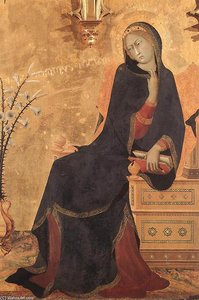
Polyptych
 Acrylic On Canvas
- WallArt
- International Gothic
 1320
1320- Renaissance
 59.0 x 35.0 cm
 Fitzwilliam College
 Les mer
Giclée / Kunsttrykk
Giclée- eller lerretsprint av museumskvalitet med rask produksjon og fleksible valgmuligheter for etterbehandling. ( Bestill håndmalt reproduksjon Gå til digitalt bilde)




P118B Nkr10

P118H Nkr10

P118W Nkr10

P438Z Nkr10

P508JH Nkr12

P508YH Nkr12

P805H Nkr10

P805Z Nkr10

P919BZ Nkr10

P919G Nkr10

P919XJ Nkr10

P959ZH Nkr10

P968JZ Nkr12

W106C Nkr8

W218G Nkr10

W218JH Nkr8

W218Y Nkr10

W307PJ Nkr10

W316G Nkr10

W316PJ Nkr8

W316Y Nkr10

W398PJ Nkr8

W4111J Nkr10

W500HY Nkr15

W500JH Nkr15

W692G Nkr12

W849H Nkr8

W940BG Nkr15

W953PJ Nkr8




Velg mellom våre forhåndsdefinerte størrelser som bevarer kunstverkets opprinnelige proporsjoner.

Skriv inn bredden og høyden du trenger, slik at den passer til din ramme eller vegg. Et trykk kan kun beskjæres, aldri gjøres større enn bildet, så et format med en annen form vil miste en del av motivet. Vi sender deg en digital mockup for godkjenning før vi trykker noe som helst. Bildet som vises på denne siden viser ikke den faktiske beskjæringen — det er kun mockuppen som gjør det.
Verdensomspennende levering () på 2 uker i stedet for standard 4/5 uker. (17 October)

Gratis ekspressfrakt over hele verden

Lerretsduk av høykvalitets lin

Full transportforsikring

Garanti for refusjon av toll og importavgifter

Garantert fargeekthet

100 dagers returrett ved fabrikasjonsfeil

100% pengene tilbake-garanti

Mengderabatt
 Glassalternativet er kun tilgjengelig i størrelser under 110 cm

Polyptych
Giclée / Kunsttrykk
Format på reproduksjon
-


Totalpris
Nkr 753
Simone Martini’s Polyptych: A Symphony of Faith and Refinement
Simone Martini, a luminary of the early Renaissance born in Siena around 1284, gifted the art world with an unparalleled masterpiece – the Polyptych of Santa Caterina. More than just a painting; it embodies the spirit of its time, reflecting Siena’s burgeoning cultural vibrancy and establishing Martini as a pivotal figure in bridging medieval artistic traditions with the nascent ideals of humanist thought.
Housed within the Fitzwilliam Museum in Cambridge, United Kingdom, this monumental artwork transcends mere visual representation. Measuring 59 x 35 cm, it comprises three panels adorned with exquisitely detailed figures depicting saints and prophets—a testament to Martini’s mastery of tempera painting technique. The panel's vibrant hues – dominated by reds – aren’t merely decorative; they convey depth and luminosity, drawing the viewer into a contemplative space.
Artistic Significance & Style
The Polyptych exemplifies Martini’s signature International Gothic style, characterized by its graceful lines, meticulous attention to detail, and blending of Byzantine influences with Florentine realism. Unlike Giotto’s more austere depictions, Martini infused his compositions with a palpable sense of elegance and aristocratic refinement—a stylistic hallmark that distinguishes him from contemporaries.
- Composition: The central panel showcases three men in solemn robes, their hands clasped together in prayer, symbolizing unity and devotion.
- Figures: Each saint is rendered with remarkable realism, capturing subtle expressions of emotion and conveying spiritual contemplation.
- Color Palette: Martini’s masterful use of tempera pigments—particularly red—creates a rich tapestry of color that enhances the emotional impact of the scene.
Symbolism & Technique
Beyond its aesthetic beauty, the Polyptych is laden with symbolic meaning. The book held by one figure represents knowledge and divine guidance, while the staff symbolizes authority and spiritual leadership. Martini’s meticulous technique—evident in the layering of translucent glazes—allows him to achieve unparalleled luminosity and textural complexity. This painstaking process ensured that every brushstroke conveyed a profound sense of reverence.
Historical Context & Legacy
Created circa 1320, the Polyptych stands as an emblem of Siena’s religious fervor during the medieval period. It reflects the broader artistic trends of its time—the revival of classical ideals alongside Byzantine influences—and demonstrates Martini's profound impact on subsequent generations of painters. Its influence can be seen in works by artists like Andrea Pisano and Niccolò di Ser Sozzo, cementing Martini’s place as one of the foremost masters of his era.
For those seeking to experience the grandeur of Simone Martini’s vision, reproductions from OriginalUniqueArt offer exceptional quality and authenticity. Explore related artworks at the Fitzwilliam Museum and Isabella Stewart Gardner Museum for a deeper appreciation of this enduring masterpiece.
Spørsmål og svar
Kan jeg se "Polyptych" av Simone Martini under ulike lysforhold?
Røntgenvisningen av "Polyptych" av Simone Martini finnes på verkets Røntgen-side: en interaktiv undersøkelse av bildet gjennom elleve optiske lag.
Hvilken følelse skaper fargene i "Polyptych" av Simone Martini?
"Polyptych" av Simone Martini kombinerer en Dark fargepalett med en Calm tone.
Hvor plasseres "Polyptych" av Simone Martini i kunsthistorien?
Historisk sett er "Polyptych" et International Gothic-verk fra den bredere Renaissance-epoken.
Kunstnerbiografi
A Sienese Master of Elegance and Grace
Simone Martini, born around 1284 in the heart of Siena, Italy, stands as a pivotal figure in the transition from medieval to Renaissance art. He wasn’t merely a painter; he was an architect of elegance, a master of line and color who infused his works with a courtly refinement that distinguished him from contemporaries like Giotto. While historical accounts vary regarding his early training—some suggest apprenticeship under Duccio di Buoninsegna, the leading Sienese artist of the time, while others point to Florence and the influence of Giotto—Martini undeniably forged a unique artistic path. His brother-in-law, Lippo Memmi, was also an artist with whom he frequently collaborated, further enriching the vibrant artistic landscape of Siena. The city itself played a crucial role in shaping Martini’s aesthetic; Siena, a thriving center of commerce and culture, fostered an environment where art flourished, blending religious devotion with worldly sophistication.
The Flourishing of International Gothic
Martini's style is immediately recognizable for its departure from the more monumental forms favored in Florence. He embraced a delicate sensibility, characterized by flowing lines, soft decorative details, and an overall sense of grace. This aesthetic wasn’t born in isolation; it was profoundly influenced by external forces. The Via Francigena, a major pilgrimage route traversing Europe, brought with it artistic currents from France—particularly the refined elegance of French manuscript illumination and ivory carving. These influences are readily apparent in Martini's work, manifesting as intricate patterns, elongated figures, and a heightened attention to surface ornamentation. He didn’t simply copy these styles; he synthesized them with existing Sienese traditions, creating something entirely new. His paintings weren’t merely representations of religious scenes but rather elegant narratives imbued with emotional depth and visual poetry.
From Siena to Avignon: A Courtly Appointment
Martini's reputation extended beyond the borders of Italy, leading to a significant turning point in his career. In 1336, he accepted a commission from Pope Benedict XII to create frescoes for the Papal Palace in Avignon, France—a move that placed him at the heart of European power and patronage. This appointment wasn’t merely about artistic skill; it was a testament to Martini's ability to cater to the tastes of a sophisticated courtly audience. While in Avignon, he entered into a remarkable intellectual circle, befriending Francesco Petrarca—better known as Petrarch, the renowned humanist poet. The connection with Petrarch is particularly poignant, as Vasari and other sources suggest that Martini painted a portrait of Laura de Noves, Petrarch’s lifelong muse. Though the portrait itself is lost to time, its very existence speaks volumes about Martini's status as a celebrated artist capable of capturing not only physical likeness but also the essence of beauty and inspiration. The Annunciation with St. Margaret and St. Ansanus, created during his time in Florence before moving to Avignon, is a testament to this period, showcasing delicate beauty and refined aesthetic.
Key Works and Techniques
Martini’s artistic output spanned a wide range of subjects and formats, reflecting the diverse demands of his patrons and his own creative explorations. His *Maestà*, painted in 1315 for the Sienese city hall, remains one of his most celebrated works—a monumental altarpiece that exemplifies the International Gothic style’s emphasis on elegance, color, and intricate detail. The work showcases a complex narrative, blending religious symbolism with courtly splendor. Other notable paintings include *Saint Louis Crowning Robert*, a vibrant depiction of a historical event commissioned for Naples, and a series of panels illustrating the life of Saint Martin, demonstrating his mastery of both narrative and decorative elements. Martini’s use of color was particularly noteworthy—he favored rich, luminous hues that created a sense of depth and atmosphere. His meticulous attention to detail, evident in the rendering of fabrics, jewelry, and architectural settings, further enhanced the visual impact of his paintings.
Legacy and Enduring Influence
Simone Martini’s impact on the development of European art cannot be overstated. He played a crucial role in disseminating the International Gothic style—a movement characterized by its elegance, refinement, and emphasis on decorative detail—across the continent. His influence extended to generations of artists who followed, shaping the course of late medieval and early Renaissance painting. Martini’s work wasn’t simply about technical skill; it was about creating a visual language that resonated with the sensibilities of his time—a language of beauty, grace, and spiritual devotion. Even today, his paintings continue to captivate viewers with their exquisite detail, harmonious compositions, and enduring sense of elegance. His frescoes in San Francesco d’Assisi demonstrate his mastery of large-scale decorative painting, while works like the Saint Catherine of Alexandria Polyptych showcase his unparalleled command of color and form. Simone Martini died in Avignon in 1344, leaving behind a legacy that continues to inspire awe and admiration centuries later—a testament to the enduring power of art to transcend time and touch the human spirit.

Simone Martini
1284 - 1344 , Italia
Kort om kunstneren
- Artistic Movement Or Style: Internasjonalt gotikk
- Artists Or Movements Influenced By This Artist: ['Internasjonalt gotikk']
- Artists Who Influenced This Artist:
- Duccio di Buoninsegna
- Giotto
- Date Of Birth: c. 1284
- Date Of Death: 1344
- Full Name: Simone Martini
- Nationality: Italiensk
- Notable Artworks:
- Maestà
- St. Louis
- Annunciatio
- Place Of Birth: Siena, Italia
Relaterte artikler

Simone Martini: Innovation, Spirituality & Courtly Refinement in Sienese Painting
Explore the captivating world of Simone Martini, a pivotal figure in Sienese painting & the International Gothic style. Discover his innovative techniques, spiritual depth, and lasting influence on early Renaissance art.
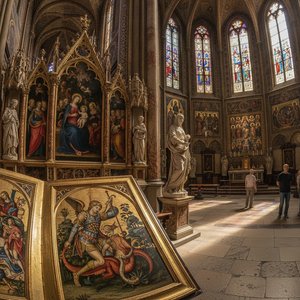
Divine Masterpieces: Exploring the Power and Beauty of Saint Artworks
Discover the profound beauty of Saint Artworks. Explore the history, symbolism, and luminous mastery of Renaissance religious masterpieces through an expert art-historical lens.
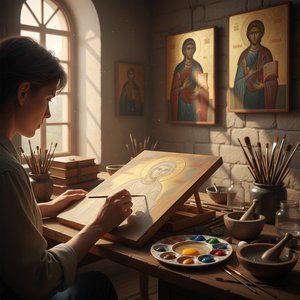
Illuminating Surfaces: A Comprehensive Exploration of Tempera on Panel Painting Techniques & Historical Significance
Explore the rich history & techniques of tempera painting! Discover Renaissance masters like Botticelli & Fra Angelico, conservation insights, and the enduring legacy of this captivating art form. Learn more now!
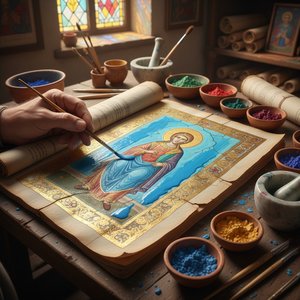
Illuminating History: A Comprehensive Exploration of Tempera Painting Techniques & Artistic Legacy
Explore the rich history & techniques of tempera painting! Discover Renaissance masters like Botticelli & Fra Angelico, conservation insights, and the enduring legacy of this captivating art form.

Mastering Devotion: The Most Iconic Depictions of Saint Jerome in Art History
Explore the profound iconography of Saint Jerome through art history's most iconic masterpieces. From Renaissance serenity to Baroque drama, discover how legendary painters captured divine devotion in breathtaking oil paintings and fine art reproductions.