Meny

() ·

A painting made for you, by hand

Tre

Håndlaget oljereproduksjon

Håndmalt olje på lerret i din valgte størrelse og ramme, laget på bestilling av våre kunstnere. ( Bytt til trykk Bytt til digitalt bilde)

Beskrivelse av objektet

Utforsk Mark Rothkos Three – et kraftfullt mesterverk i rødt og svart. Oppdag den emosjonelle dybden i dette ikoniske verket fra 1951.

Om kunstneren

Utforsk Mark Rothko (1903-1970) sin ikoniske Color Field kunst og Abstract Expressionisme! Opplev følelsenes dybde og kunstnerens varige arv – en sentral figur i moderne kunst.

from ·

Chapter 1

How large should it be?

Slide to change the size; the picture on the left shows the frame at its real width. The proportions of the original are kept.

Standardformat
skreddersydd
CM
INCH

Velg mellom våre forhåndsdefinerte størrelser som bevarer kunstverkets opprinnelige proporsjoner.

bredde
høyde

Skriv inn ønsket bredde og høyde for å tilpasse bildet til din ramme eller vegg. Siden dette er håndmalt, kan kunstneren male litt mer rundt motivet eller beskjære det noe dersom du velger et annet format — valget er ditt. Vi sender deg en digital mockup til godkjenning før maleriet påbegynnes. Bildet som vises på denne siden representerer ikke det faktiske resultatet — kun mockuppen viser det endelige uttrykket.

Chapter 2

How should it arrive?

Choose the edges of the stretched canvas

Choose your frame

Corner sample of the WhiteWrap canvas edge finish, stretched on massivt tre bars
White Nkr1
Corner sample of the BlurSideWrap canvas edge finish, stretched on massivt tre bars
Blurside Nkr1
Corner sample of the ExtendedWrap canvas edge finish, stretched on massivt tre bars
Extended Nkr1
Corner sample of the P118B picture frame: støpt polystyren, 5 cm wide and 3 cm thick
P118B Nkr10
Corner sample of the P118H picture frame: støpt polystyren, 5 cm wide and 3 cm thick
P118H Nkr10
Corner sample of the P118W picture frame: støpt polystyren, 5 cm wide and 3 cm thick
P118W Nkr10
Corner sample of the P438Z picture frame: støpt polystyren, 5.5 cm wide and 3.5 cm thick
P438Z Nkr10
Corner sample of the P508JH picture frame: støpt polystyren, 7 cm wide and 3.5 cm thick
P508JH Nkr12
Corner sample of the P508YH picture frame: støpt polystyren, 7 cm wide and 3.5 cm thick
P508YH Nkr12
Corner sample of the P805H picture frame: støpt polystyren, 5 cm wide and 3.5 cm thick
P805H Nkr10
Corner sample of the P805Z picture frame: støpt polystyren, 5 cm wide and 3.5 cm thick
P805Z Nkr10
Corner sample of the P919BZ picture frame: støpt polystyren, 7 cm wide and 3.5 cm thick
P919BZ Nkr10
Corner sample of the P919G picture frame: støpt polystyren, 7 cm wide and 3.5 cm thick
P919G Nkr10
Corner sample of the P919XJ picture frame: støpt polystyren, 7 cm wide and 3.5 cm thick
P919XJ Nkr10
Corner sample of the P959ZH picture frame: støpt polystyren, 5 cm wide and 3 cm thick
P959ZH Nkr10
Corner sample of the P968JZ picture frame: støpt polystyren, 6 cm wide and 4 cm thick
P968JZ Nkr12
Corner sample of the W106C picture frame: massivt tre, 5 cm wide and 3 cm thick
W106C Nkr8
Corner sample of the W218G picture frame: massivt tre, 5 cm wide and 3 cm thick
W218G Nkr10
Corner sample of the W218JH picture frame: massivt tre, 5 cm wide and 3 cm thick
W218JH Nkr8
Corner sample of the W218Y picture frame: massivt tre, 5 cm wide and 3 cm thick
W218Y Nkr10
Corner sample of the W307PJ picture frame: massivt tre, 6 cm wide and 3 cm thick
W307PJ Nkr10
Corner sample of the W316G picture frame: massivt tre, 6 cm wide and 3 cm thick
W316G Nkr10
Corner sample of the W316PJ picture frame: massivt tre, 6 cm wide and 3 cm thick
W316PJ Nkr8
Corner sample of the W316Y picture frame: massivt tre, 6 cm wide and 3 cm thick
W316Y Nkr10
Corner sample of the W398PJ picture frame: massivt tre, 5 cm wide and 3 cm thick
W398PJ Nkr8
Corner sample of the W4111J picture frame: massivt tre, 6.5 cm wide and 3.5 cm thick
W4111J Nkr10
Corner sample of the W500HY picture frame: massivt tre, 7 cm wide and 5 cm thick
W500HY Nkr15
Corner sample of the W500JH picture frame: massivt tre, 7 cm wide and 5 cm thick
W500JH Nkr15
Corner sample of the W692G picture frame: massivt tre, 8 cm wide and 4 cm thick
W692G Nkr12
Corner sample of the W849H picture frame: massivt tre, 5 cm wide and 3 cm thick
W849H Nkr8
Corner sample of the W940BG picture frame: massivt tre, 7.5 cm wide and 4.5 cm thick
W940BG Nkr15
Corner sample of the W953PJ picture frame: massivt tre, 6 cm wide and 3.5 cm thick
W953PJ Nkr8
Corner sample of the H24-GOLD picture frame: utskåret tre med gesso, 10 cm wide and 6 cm thick
H24-GOLD Nkr30
Corner sample of the H24-SILVER picture frame: utskåret tre med gesso, 10 cm wide and 6 cm thick
H24-SILVER Nkr30
Corner sample of the H36-GOLD picture frame: utskåret tre med gesso, 15 cm wide and 6.5 cm thick
H36-GOLD Nkr45
Corner sample of the H36-SILVER picture frame: utskåret tre med gesso, 15 cm wide and 6.5 cm thick
H36-SILVER Nkr45

Moulding: . Overall size with the frame: .

Chapter 3

Who paints it, and should anything change?

Examples of what can be changed: Replace face with customer photo; Add pet (e.g., replace cat with dog); Include hidden message in background; Change background landscape or elements.
After order, OriginalUniqueArt.com team will email client for instructions and provide a mockup preview

Verdensomspennende levering () på 3–4 uker i stedet for standard 5 uker. (29 October). Ingen kompromisser med kvaliteten.

Chapter 4

The finishing touches

A nameplate, as in a museum?

Detaljer om gravert bronseplate

This elegant plaque features the artist's name and the title of the artwork, finely engraved for a timeless presentation.

It is made from bronze with a refined, elegant finish. The text is precisely laser-engraved for a sharp and permanent result. Measuring 9x2 cm, the plaque is compact yet easy to read. It's built to be durable and scratch-resistant, offering a professional, museum-quality look. Mounting is simple thanks to the included adhesive backing.

Detaljer om gjennomsiktig akrylplate

The plaque includes essential engraved details such as the artist's name, the title of the artwork, the date it was created, the type of media used-like oil on canvas or watercolor-a brief description of the piece, and a QR code that links to the complete artwork information.

It is crafted from clear acrylic, offering a sleek, modern appearance. The text is UV-engraved in black to ensure strong visual contrast. With a size of 10x15 cm, it ensures optimal readability. It comes equipped with two metal hooks for secure wall mounting. The plaque is designed to be weather-resistant, making it suitable for various environments, and it includes interactive features that work seamlessly with smartphone scanning.

Detaljer om plakett i svart akryl

This elegant plaque includes engraved information such as the artist's name, the title of the artwork, the date it was created, the type of media used (like oil on canvas or watercolor), a short description of the artwork, and a QR code for quick access to more information.

The plaque itself is made from refined black acrylic with a premium finish. The text is laser-engraved in white for high contrast and readability. Its size is 10x15 cm, designed to be easy to read. It comes with two metal hooks for professional mounting. The design is sleek and fits any interior style. It is also weather-resistant and durable, with built-in digital integration for mobile compatibility.

A protective varnish?

When do you need it?

Chapter 5

Your painting, as you ordered it

Tre

Trykkmetode

Størrelse på reproduksjon

-

Utvalgte mesterkunstnere

Mer detaljrikdom, finesse og ekstra produksjonstid

-

Innramming av reproduksjon

-

-

For kunstverk eller reproduksjoner som er større enn 105 cm (ca. 41 tommer) på noen side, vil rammen bli sendt som et sett som må monteres. Denne metoden sikrer trygg levering og forhindrer skader under transport.

Krever profesjonell montering – dette er ikke et DIY-produkt.
Settet må monteres og lerretet strammes av en erfaren profesjonell rammelegger, ved bruk av trelim (følger ikke med), en lerretstang og klemmer for å holde rammelisten vinkelrett mens limet tørker. Feilaktig montering eller ujevn stramming av lerretet kan påføre kunstverket permanente skader og er ikke dekket av vår garanti.

  • Alle massive trelister er inkludert, presist tilpasset i størrelse.

  • Monteres med de medfølgende skruene, samt trelim til hjørnene, som ikke er inkludert og må anskaffes av din rammehandler.

  • Profesjonelt verktøy er nødvendig og er ikke inkludert: en lerretstang (strammer) og klemmer for å holde rammene vinkelrette mens limet tørker.

Viktig:
Hjørnene krever trelim, listene må holdes på plass med tvinger til limet er helt tørt, og stramming av lerretet på den ferdige rammen krever en lerretstang. Ingen av disse produktene er inkludert i settet. Vennligst sørg for tilgang til en erfaren profesjonell rammehandler før du bestiller denne størrelsen.

Navneskilt

-

-

Beskyttende ferniss

Blank lakk (forsterker farger, beskytter mot lys og fuktighet)

-

Tilpass mitt kunstverk

Eksempler på hva som kan endres: Erstatt ansikt med bilde av kunden; Legg til kjæledyr (f.eks. bytt ut katt med hund); Inkluder en skjult melding i bakgrunnen; Endre bakgrunnslandskap eller elementer.

-

Ekspresslevering

Verdensomspennende levering () på 3–4 uker i stedet for standard 5 uker. (29 October). Ingen kompromisser med kvaliteten.

-

Ekspresslevering

Verdensomspennende levering til innen 5 uker. (5 November).

Inkludert frakt

Totalpris for valgte alternativer

Nkr 2883

Totalpris Nkr 2883

Glassalternativet er kun tilgjengelig i størrelser under 110 cm

Included with every order

  • Gratis ekspressfrakt over hele verden
  • Lerretsduk av lin av høy kvalitet
  • Full transportforsikring
  • Garanti for refusjon av toll og importavgifter
  • Garantert fargegjengivelse
  • 100 dagers returrett ved fabrikasjonsfeil
  • 100% pengene tilbake-garanti
  • Rabatt ved flere kjøp

En symfoni av farge: En utforskning av Mark Rothkos «Tre»

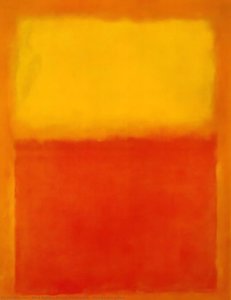
Mark Rothko, en sentral skikkelse i utviklingen av amerikansk etterkrigskunst, inviterer oss inn i et dypt kontemplativt rom med sitt maleri fra 1951, «Tre». Dette verket handler ikke om *hva* som er avbildet, men snarere om *hvordan* det oppleves – et kjennetegn ved den abstrakte ekspresjonismen og Rothkos signaturstil innen Color Field-maleri.

Kunstneren og hans visjon

Født som Markus Yakovlevic Rothkowitz i Latvia, emigrerte Rothko (1903–1970) til USA som barn. Denne erfaringen med forflytning og kulturell overgang formet hans kunstneriske sans dypest mulig. Han begynte med figurative motiver, men beveget seg gradvis mot abstraksjon i søken etter å uttrykke grunnleggende menneskelige følelser gjennom ren farge. Han trodde på at kunst skulle være et intenst personlig møte, der man skrelte bort representative elementer for å avdekke universelle sannheter. Rothko var ikke interessert i bare å male et bilde; han hadde som mål å skape en *opplevelse*.

Dekonstruksjon av «Tre»: Stil og teknikk

«Tre» er et kroneksempel på Rothkos modne stil. Lerreret domineres av tre store, rektangulære fargefelt – dype rødfarger, burgunder og svart – som svever mot en mørkere bakgrunn. Dette er ikke skarpt definerte former; i stedet er kantene myke og uklare, oppnådd gjennom lag på lag med tynt påført maling. Denne teknikken skaper en lysende kvalitet, som om fargene stråler ut fra selve lerrets overflate. Rothkos metode handlet ikke om presise penselstrøk, men snarere om en meditativ lagvis prosess som lot fargene interagere og puste. Verkets skala er også avgjørende; det er ment å omslutte betrakteren og skape et oppslukende miljø.

Historisk kontekst: Abstrakt ekspresjonisme

«Tre» sprang ut av en periode med betydelig kunstnerisk omveltning i New York City. Abstrakt ekspresjonisme, født ut av angsten og energien i det amerikanske samfunnet etter andre verdenskrig, forkastet tradisjonelle kunstneriske konvensjoner. Kunstnere som Jackson Pollock, Arshile Gorky og Willem de Kooning søkte å uttrykke indre tilstander gjennom spontane bevegelser og ikke-representative former. Inspirert av europeiske bevegelser som futurisme, Bauhaus og syntetisk kubisme, markerte den abstrakte ekspresjonismen et avgjørende brudd med fortiden og etablerte New York som et globalt kunstsenter. Rothkos bidrag var å destillere denne energien ned til fargefelt som fremkalte dype emosjonelle responser.

Symbolikk og emosjonell resonans

Selv om Rothko motsatte seg eksplisitte tolkninger av sine verk, blir «Tre» ofte sett på som noe som fremkaller følelser av høytidelighet, ettertanke og til og med tragedie. De mørke nyansene kan antyde en følelse av melankoli eller menneskelig eksistens' enorme omfang. De stablede rektanglene kan tolkes som representasjoner av figurer, arkitektoniske former, eller rett og slett rene fargerelasjoner. Til syvende og sist ligger meningen i betrakterens personlige respons. Rothko ønsket at maleriene hans skulle oppleves visceralt, noe som fremmer introspeksjon og emosjonell forbindelse. Maleriets kraft ligger i dets tvetydighet – det *forteller* deg ikke hva du skal føle; det lar deg *føle*.

«Tre» som et designelement

For interiørdesignere tilbyr Rothkos «Tre» et kraftfullt midtpunkt. Den rike fargepaletten og den store skalaen kan forankre et rom og skape et fokuspunkt som fanger blikket. Maleriets kontemplative natur egner seg godt til rom designet for avslapning og refleksjon – som stuer, biblioteker eller meditasjonsområder. Kunstverket parer vakkert med minimalistiske møbler og nøytrale toner, noe som lar fargene virkelig skinne. En reproduksjon av høy kvalitet fanger essensen av Rothkos visjon og tilfører et snev av kunstnerisk sofistikasjon til ethvert miljø.
  • Sentral retning: Abstrakt ekspresjonisme, Color Field-maleri
  • Merkverdige samtidige: Jackson Pollock, Willem de Kooning, Clyfford Still.
  • Videre utforskning: Rothko Chapel i Houston tilbyr en unik, oppslukende opplevelse med Rothkos verk.

Spørsmål og svar

Hvilken atmosfære formidler "Tre"?

Den overordnede stemningen i "Tre" av Mark Rothko er Harmonisk. Stemningen beskriver verkets generelle atmosfære.

Hvilken følelse skaper fargene i "Tre" av Mark Rothko?

I "Tre" ledsages en Melankolsk følelse av Mørke toner farger.

Hvordan kan jeg se "Tre" av Mark Rothko som en lysbildefremvisning?

Du kan se diaporamabildet av "Tre" på verkets Bildekarusell-side.

More about this painting

Forhåndsvisning Se i AR Bytt til trykk Bytt til digitalt bilde Send
Vis detaljer Utskriftsvennlig guide Legg til i favoritter Last ned bilde Liknende objekter Røntgenundersøkelse Lysbildefremvisning Q&A Statistikk

In numbers

  • 29frames to choose from
  • standard sizes, in its own proportions
  • 5weeks to paint and deliver it

About the original

Mark Rothko

Mark Rothko

1903 - 1970, Latvia

Quick facts about Mark Rothko

  • Artistic Movement Or Style: Color Field Painting
  • Artists Or Movements Influenced By This Artist: ['Minimalism']
  • Date Of Birth: September 25, 1903
  • Date Of Death: February 25, 1970
  • Full Name: Markus Yakovlevich Rothkowitz
  • Nationality: Russisk Empire- Amerikansk (fra 1938)
  • Notable Artworks:
    • No. 10 (1950)
    • Seagram Murals
    • Rothko Chapel
  • Place Of Birth: Dvinsk, Latvia

Om kunstneren

Early Life and the Seeds of Artistic Vision

Mark Rothko, born Markus Yakovlevich Rothkowitz in Dvinsk, Latvia, in 1903, carried within him from the outset a sense of displacement that would profoundly shape his artistic journey. His early years were marked by the anxieties of a Jewish family living within the Pale of Settlement, shadowed by pogroms and political unrest. This atmosphere instilled a deep sensitivity to human suffering, a theme that would resonate throughout his oeuvre. The 1913 immigration to Portland, Oregon, represented not just a geographical shift but a cultural upheaval for the young Rothko. While his father, a pharmacist and intellectual with socialist leanings, fostered a home filled with debate and learning, the loss of Jacob Rothkowitz shortly after their arrival cast a long shadow. This early experience of loss, coupled with the challenges of assimilation, fueled a lifelong exploration of existential themes – mortality, trauma, and the search for meaning in a chaotic world. Though he excelled academically at Yale University, Rothko found himself drawn more to the vibrant energy of New York City, abandoning formal studies to pursue his passion for art at the Art Students League. These formative years laid the groundwork for an artistic vision that would ultimately challenge conventional notions of painting and redefine the emotional power of color.

From Figurative Beginnings to Abstract Expressionism

Rothko’s initial artistic explorations were firmly rooted in realism, depicting urban scenes and portraits with a keen eye for detail. However, these early works already hinted at the psychological depth that would become his hallmark. As the 1940s unfolded, and the world grappled with the horrors of World War II, Rothko’s art underwent a dramatic transformation. Influenced by Surrealism and mythology, he began to move away from representational imagery, seeking instead to express universal human emotions through symbolic forms. This period saw the emergence of multi-form paintings – canvases populated by ambiguous, biomorphic shapes that seemed to hover between figuration and abstraction. These works were not merely experiments in form; they were deeply felt responses to the anxieties and uncertainties of a world at war. By the late 1940s, Rothko had arrived at his signature style: large-scale canvases featuring rectangular blocks of color that appeared to float and resonate with one another. He stripped away all vestiges of recognizable imagery, focusing instead on the pure emotional impact of color and form. This marked a pivotal moment in the development of Abstract Expressionism, and established Rothko as a leading figure in this groundbreaking movement.

The Color Field and the Pursuit of Transcendence

Rothko’s mature work is defined by what came to be known as “Color Field” painting – vast expanses of luminous color that envelop the viewer in an immersive experience. These paintings are not about *what* they depict, but rather *how* they make you feel. Rothko believed that art should engage the viewer viscerally, bypassing intellectual analysis and speaking directly to the emotions. He meticulously layered thin washes of paint, creating subtle variations in tone and texture that seemed to emanate from within the canvas. The edges of his rectangular forms are often blurred, allowing them to blend and interact with one another, creating a sense of depth and movement. Rothko deliberately avoided titles beyond numbers – “No. 1,” “No. 6” – encouraging viewers to confront the paintings without preconceived notions and allow their own emotional responses to guide their experience. He sought to create a space for contemplation, a sanctuary where viewers could connect with something larger than themselves. His ambition was nothing less than to evoke profound spiritual experiences through the language of color.

Major Achievements and Lasting Legacy

Among Rothko’s most significant achievements are “No. 10 (1950),” a pivotal work that exemplifies his evolving style, and the Seagram Murals (1958). Commissioned for the Four Seasons Restaurant in New York City, these murals were ultimately rejected by Rothko, who felt they would be compromised by their intended environment. He instead donated them to the Tate Gallery in London, where they continue to inspire awe and contemplation. Perhaps his most ambitious project was the Rothko Chapel (1971) in Houston, Texas – a non-denominational sanctuary housing fourteen of his paintings. Designed as a space for quiet reflection, the chapel is considered a sacred place by many, embodying Rothko’s belief in the spiritual power of art. Rothko's influence on subsequent generations of artists has been immense. He paved the way for Minimalist art and continues to inspire contemporary painters who explore the emotional possibilities of abstraction. Despite struggling with depression throughout his life, culminating in his tragic suicide in 1970, Mark Rothko remains one of the most important and influential artists of the 20th century – a master of color whose work continues to resonate with audiences around the world. ## The Enduring Power of Emotional Resonance
  • Rothko’s paintings are celebrated for their ability to convey universal human emotions—tragedy, ecstasy, despair, and hope.
  • His exploration of color as a vehicle for emotional expression revolutionized abstract painting.
  • The Rothko Chapel stands as a testament to his belief in the spiritual power of art.
  • He remains a pivotal figure in Abstract Expressionism and a major influence on contemporary artists.

Kort om verket

  • year: 1951
  • subject: Abstrakt
  • style: Color Field
  • movement: Abstrakt ekspresjonisme, Color Field-maling, Color Field-ekspresjonisme