

 Se i rommet
 Del som digitalt kort
 Del
Del
 Detaljer
 Studentguide

 Last ned
 Liknende objekter
 Røntgen
 Lysbildefremvisning
 Besøksstatistikk
Troubled Queen


 Les mer
Giclée / Kunsttrykk
Giclée- eller lerretsprint av museumskvalitet med rask produksjon og fleksible valgmuligheter for etterbehandling. ( Bestill håndmalt reproduksjon Gå til digitalt bilde)




P118B Nkr10

P118H Nkr10

P118W Nkr10

P438Z Nkr10

P508JH Nkr12

P508YH Nkr12

P805H Nkr10

P805Z Nkr10

P919BZ Nkr10

P919G Nkr10

P919XJ Nkr10

P959ZH Nkr10

P968JZ Nkr12

W106C Nkr8

W218G Nkr10

W218JH Nkr8

W218Y Nkr10

W307PJ Nkr10

W316G Nkr10

W316PJ Nkr8

W316Y Nkr10

W398PJ Nkr8

W4111J Nkr10

W500HY Nkr15

W500JH Nkr15

W692G Nkr12

W849H Nkr8

W940BG Nkr15

W953PJ Nkr8




Velg mellom våre forhåndsdefinerte størrelser som bevarer kunstverkets opprinnelige proporsjoner.

Skriv inn bredden og høyden du trenger, slik at den passer til din ramme eller vegg. Et trykk kan kun beskjæres, aldri gjøres større enn bildet, så et format med en annen form vil miste en del av motivet. Vi sender deg en digital mockup for godkjenning før vi trykker noe som helst. Bildet som vises på denne siden viser ikke den faktiske beskjæringen — det er kun mockuppen som gjør det.
Verdensomspennende levering () på 2 uker i stedet for standard 4/5 uker. (18 October)

Gratis ekspressfrakt over hele verden

Lerretsduk av høykvalitets lin

Full transportforsikring

Garanti for refusjon av toll og importavgifter

Garantert fargeekthet

100 dagers returrett ved fabrikasjonsfeil

100% pengene tilbake-garanti

Mengderabatt
 Glassalternativet er kun tilgjengelig i størrelser under 110 cm

Troubled Queen
Giclée / Kunsttrykk
Format på reproduksjon
-


Totalpris
Nkr 753
A Realm of Inner Turmoil: Exploring Jackson Pollock’s Abstract Vision
Jackson Pollock's "Troubled Queen" stands as a testament to the tumultuous spirit of postwar American art, encapsulating the anxieties and existential questioning that defined the era. More than just pigment splashed onto canvas, this painting delves into the depths of psychological unrest—a “troubled” state rendered visible through its dynamic composition and groundbreaking technique. It’s a piece designed not for easy interpretation but for provoking contemplation about the human condition itself.Style & Technique: Pioneering the Drip
Pollock's method, born from experimentation with liquid paint in 1936, revolutionized painting forever. He rejected traditional representation, prioritizing gesture and process over precise depiction; he aimed to express feeling directly onto the canvas, rather than capturing a visual scene. This approach—known as all-over painting and action painting—involved covering the entire surface with pigment, often utilizing his whole body to manipulate the paint. The resulting texture is intensely palpable – thick impastoed layers of paint create a sculptural quality, inviting viewers to engage physically with the artwork. Notably, Pollock’s technique anticipates the drip paintings that would solidify his fame, though it wasn't strictly a drip painting in the conventional sense; rather, it exhibited more deliberate layering and angular forms. Influenced by Cubist principles, particularly the fragmentation of form, Pollock skillfully blended modernist innovation with personal expression.Color & Composition: An Earthy, Unsettling Harmony
The painting’s color palette—dominated by dark greens, browns, yellows, and blues—contributes significantly to its unsettling mood. These earthy tones ground the composition but fail to instill tranquility; instead, they heighten the sense of unease. The absence of strong highlights or shadows further amplifies this murky atmosphere, drawing the eye into the depths of swirling forms. Angular shapes like triangles and rectangles clash with more organic, vortex-like patterns—creating a visual tension mirroring the emotional turmoil conveyed by the artwork. The dynamism is palpable; it feels as though the painting is perpetually in motion, reflecting an internal struggle.Historical Context: Post-War Anxiety & Abstract Expressionism
Pollock emerged as a pivotal figure within the burgeoning Abstract Expressionist movement following World War II. This artistic shift represented a decisive break from traditional representational art and embraced subjective emotional expression—a reaction to the pervasive fear and uncertainty of the postwar period. Artists like Pollock wrestled with profound questions about existence, confronting trauma and disillusionment through their creative endeavors. His work resonated deeply with the intellectual currents of his time, mirroring the anxieties surrounding nuclear weapons and the Cold War. The influence of Surrealism is evident in the painting’s dreamlike imagery and subconscious exploration—a testament to Pollock's engagement with contemporary artistic movements.Symbolism & Emotional Impact: The Weight of a Crown
The evocative title, “Troubled Queen,” adds another layer of intrigue. While Pollock rarely offered explicit narratives to his work, the symbolism suggests a figure burdened by responsibility, power, or perhaps internal conflict—a queen dethroned not by external forces but by her own inner demons. The chaotic composition embodies this struggle for stability and order; it’s a powerful reminder of the complexities inherent in human psychology. “Troubled Queen” serves as an arresting centerpiece for modern interiors, injecting texture, energy, and intellectual stimulation into any space—a celebration of artistic innovation and emotional depth.- Style: Abstract Expressionism with Cubist influences
- Artist: Jackson Pollock (1912-1956)
- Medium: Oil on Canvas (presumed)
Photo Description: --Overall Impression-- The artwork presents a complex and chaotic abstract composition dominated by swirling lines, geometric shapes, and overlapping forms. It appears to be an oil painting with visible brushstrokes creating a textured surface. The subject matter is difficult to define in a traditional sense; it’s not representational but rather evokes a feeling of movement, energy, and perhaps disorientation. The perspective is flattened, lacking depth cues, contributing to the overall sense of instability. Lines are predominantly angular and jagged, intersecting and overlapping to create a dense network. Shapes range from sharp triangles and rectangles to organic, swirling forms resembling clouds or vortexes. The texture is heavily impastoed – thick application of paint creates a three-dimensional effect. Lighting seems diffuse, with no strong highlights or shadows, contributing to the painting’s somewhat murky atmosphere. The dynamism is palpable; it feels as though the painting is in constant motion, reflecting an internal struggle.
Spørsmål og svar
Hvilken fargemetning har "Troubled Queen" av Jackson Pollock?
"Troubled Queen" av Jackson Pollock er gjengitt med en Subtile farger metning.
Hvilke pseudonymer eller andre navn er Jackson Pollock kjent under?
Jackson Pollock er også kjent som Paul Jackson Pollock.
Hvilket rom i hjemmet passer en reproduksjon av "Troubled Queen" godt inn i?
"Troubled Queen" av Jackson Pollock anbefales for et Stue og oppholdsrom. Dette forslaget er basert på verkets motiv, farger og stemning.
Kunstnerbiografi
Early Life and the Seeds of Innovation
Paul Jackson Pollock, born in Cody, Wyoming, in 1912, was a restless spirit from the outset. His early life was marked by frequent relocation as his father, LeRoy Pollock, pursued work as a land surveyor across the vast landscapes of the American West. This itinerant existence instilled in young Pollock a deep connection to the natural world and an exposure to diverse cultures, particularly through encounters with Native American art during those surveying trips – impressions that would subtly permeate his artistic vision later in life. Though he never explicitly imitated Indigenous styles, the raw energy and spiritual resonance of these early experiences undoubtedly left their mark. He was the youngest of five children, born into a family struggling financially but filled with a strong work ethic and a love for art. His mother, Stella May McClure Pollock, recognized his artistic potential and fostered it through encouragement and support. Pollock’s formal artistic training began at the Manual Arts High School in Los Angeles, followed by studies at the Art Students League of New York under the tutelage of Thomas Hart Benton. Benton, a prominent figure in the Regionalist movement, emphasized rhythmic composition and narrative themes rooted in American life. While Pollock initially absorbed these lessons, his inherent inclination leaned toward more abstract explorations. He was also profoundly impacted by Mexican muralists like José Clemente Orozco, whose powerful depictions of social struggle resonated deeply with him. These early influences—the rugged beauty of the West, the traditions of Native American art, and the dramatic narratives of Benton and the murals of Mexico – laid a foundation, but it was the burgeoning world of Surrealism that truly unlocked Pollock’s artistic potential.The Birth of Action Painting and a Revolutionary Technique
The 1930s saw Pollock experimenting with various techniques, seeking alternatives to traditional brushwork. He began pouring paint, exploring its fluidity and unpredictable nature. However, it was around 1947 that his artistic trajectory underwent a radical transformation. Abandoning the easel altogether, Pollock laid canvases directly on the floor, initiating what would become known as his “drip technique.” He then proceeded to drip, splash, and fling paint onto the canvas from above, orchestrating a dynamic dance between artist, medium, and surface. This wasn’t merely about applying paint; it was about embodying the act of creation itself. Pollock's canvases became arenas for physical expression, capturing the immediacy of his gestures and emotions. The resulting paintings are characterized by their “all-over” composition – a lack of central focus that invites the viewer to explore the entire surface as a unified field of energy. Intricate networks of lines and colors intertwine, creating a visual complexity that is both captivating and challenging. He employed unconventional tools—sticks, knives, even syringes—to manipulate the paint in unpredictable ways, further emphasizing the spontaneous nature of his process. The technique was revolutionary, rejecting traditional notions of brushstrokes and composition.- He used a variety of materials: oil paints, house paints, inks, and even tar.
- His movements were often described as dance-like or ecstatic.
Iconic Works and Lasting Legacy
Pollock’s most celebrated works—such as Number 1, 1950 (Lavender Mist), One: Number 31, 1950, Blue Poles: Number 11, 1952, and Convergence—are testaments to his revolutionary technique. These paintings are not simply images; they are records of a performance, imbued with the artist’s physical presence and emotional intensity. The dynamic energy that emanates from these canvases is palpable, drawing viewers into a world of pure abstraction. Critics initially struggled to understand or appreciate this new approach, but over time, Pollock's work gained recognition as a groundbreaking contribution to modern art. His style transcends mere aesthetics; it’s an exploration of process over product. Pollock sought to capture the immediacy of his actions and emotions on canvas, rejecting traditional notions of composition and representation. He delved into Jungian psychology, exploring archetypes and the subconscious in his art, seeking to tap into universal symbols and primal energies. The paintings are often interpreted as reflections of the artist’s inner turmoil and spiritual quest.Influence and Historical Significance
Pollock's impact on the history of art is immeasurable. He fundamentally altered the way artists approached painting, breaking free from easel-based methods and embracing a more performative approach. His work helped solidify New York City's position as a global center for modern art, shifting the focus away from European dominance. He was a key figure in the rise of Abstract Expressionism, alongside artists like Mark Rothko and Willem de Kooning. His influence can be seen in the work of countless artists who followed, including those associated with Color Field painting and later forms of abstract expressionism. Despite facing initial criticism and skepticism, Pollock’s legacy has solidified over time. He is now considered one of the most important and influential artists of the 20th century, a visionary who dared to challenge conventions and redefine the boundaries of artistic expression. His innovative techniques and expressive style continue to inspire and provoke, ensuring his enduring presence in the art world for generations to come.Further Exploration
Key Resources:- Jackson Pollock - Wikipedia:
- Smithsonian American Art Museum:
- National Gallery of Art:

Jackson Pollock
1912 - 1956 , USA
Kort om kunstneren
- Artistic Movement Or Style: Abstrakt ekspresjonisme
- Artists Or Movements Influenced By This Artist:
- Color Field
- Abstrakt ekspresjonisme
- Artists Who Influenced This Artist:
- Thomas Hart Benton
- Diego Rivera
- Date Of Birth: 28. januar 1912
- Date Of Death: 11. august 1956
- Full Name: Paul Jackson Pollock
- Nationality: Amerikansk
- Notable Artworks:
- Nummer 1, 1949
- Høstrytme, nr. 30
- Konvergens
- Place Of Birth: Cody, Wyoming
Relaterte artikler

Topp 10 mesterverk fra abstrakt ekspresjonisme – Kunst for ditt hjem | OriginalUniqueArt.no
Oppdag de 10 mest ikoniske verkene fra abstrakt ekspresjonisme! Lær historien bak Jackson Pollock, Mark Rothko og andre mestere. Finn kunsttrykk av høy kvalitet for ditt hjem på OriginalUniqueArt.com – museumskvalitet & inspirasjon.
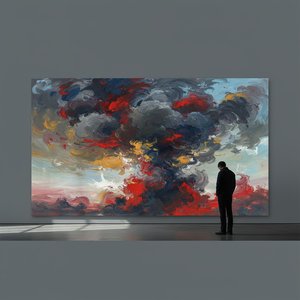
Beyond Representation: Exploring the Emotional Landscape of Abstract Expressionism
Explore the profound emotional world of Abstract Expressionism with OriginalUniqueArt. Discover key artists like Pollock & Rothko, learn about collecting, and find museum-quality reproductions to inspire your space.
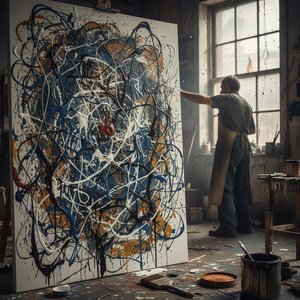
Paul Jackson Pollock: A Radical Departure – Exploring Abstract Expressionism's Pioneering Figure and His Enduring Legacy
Explore the revolutionary art of Jackson Pollock & Abstract Expressionism. Discover his iconic drip paintings, lasting impact, and considerations for collecting this pivotal American artist. Expert insights at OriginalUniqueArt.

Kandinskys 25 Mesterverk: En Reise i Abstrakt Kunst og Fargeharmoni | OriginalUniqueArt.no
Utforsk Wassily Kandinskys 25 mest ikoniske malerier! Oppdag historien bak abstrakt kunst, ekspresjonisme og fargeharmoni. Finn inspirasjon til interiøret – museumskvalitet reproduksjoner på OriginalUniqueArt.com.

Pure Chaos & Color: The High-Voltage World of Abstract Expressionism
Dive into the high-voltage world of Abstract Expressionism. Explore the raw energy of Action Painting and the legendary masters of the New York School through a visual journey of pure chaos and color. Discover how to bring bold, high-impact abstract art into your modern space.


