Pop Art · 1969
White Collar (Ivan Eyre, 1969)
Ivan Eyre (1935–2022) har laget White Collar. Den er fra 1969. Det tilhører Pop Art-bevegelsen. Den er laget i Acrylic On Canvas. Verket er bevart ved McMichael Canadian Art Collection i Vaughan, Canada. Mål: 157 × 157 cm
- 1969
- Acrylic On Canvas
- 157 × 157 cm
- McMichael Canadian Art Collection, Vaughan

 Forhåndsvisning

 Håndmalt oljemaleri
 Send
 Del
 Utskriftsvennlig guide


 Last ned bilde
 Liknende objekter
 Røntgenundersøkelse
 Lysbildefremvisning
 Spørsmål og svar

 Statistikk
White Collar: det viktigste
- Tittel
- White Collar
- Kunstner
- Ivan Eyre (1935–2022)
- Kunstner født i
- Saskatchewan, Canada
- Dato
- 1969
- Medium
- Acrylic On Canvas
- Dimensjoner
- 157 × 157 cm
- Hvor det kan ses
- McMichael Canadian Art Collection, Vaughan, Canada
- Bevegelse
- Pop Art
- Periode
- Modern
- Motiv
- prairie landscape, domesticity, minimalism, figure composition, geometric shapes, colour palette
Hva forestiller White Collar?
The Composition of White Collar
Created in 1969, White Collar is an acrylic painting on canvas by Ivan Eyre. The work features a stylized and somewhat surreal depiction of a man seated on the floor, flanked by two dogs. The composition is centered around the central figure, who is rendered with exaggerated features and a dominant posture. The arrangement is symmetrical, with the dogs mirroring each other on either side of the man. The background is a muted grey, providing contrast to the more saturated colors used for the figures, and includes geometric shapes that disrupt the naturalistic representation of space. A large rectangular shape is present on the left, while another appears to be emerging from the right.
Visual Elements and Style
The artwork utilizes a flattened perspective and simplified forms. The man is depicted in a dark brown suit, which contrasts with his pale skin and the lighter hues of the dogs. The floor is a deep reddish-brown. The color palette is relatively restrained, consisting of shades of grey, brown, and blue, with accents of white and beige. Lines are used to define forms rather than create realistic contours, and sharp angles contribute to the stylized aesthetic. The man’s face features exaggerated, almost cartoonish lines around the eyes and mouth. The lighting is diffused and even, with no strong highlights or shadows, contributing to the painting's flatness. The surface appears smooth, with an absence of visible brushstrokes or impasto.
Hvilket museum har White Collar?
McMichael Canadian Art Collection
Vaughan, Canada
Et fristed for sjel og jord Innrammet blant bølgende åser og frodige skoger i Kleinburg, Ontario, står McMichael Canadian Art Collection som et dyptpløyende vitnesbyrd om Canadas kunstneriske sjel. Det er langt mer enn bare et depot for malerier; det er en oppslukende reise inn i selve hjertet av den kanadiske identiteten, formet gjennom landskapets rå skjønnhet og de dristige visjonene til nasjonens mest ikoniske skapere. Institusjonen ble grunnlagt i 1955 av de lidenskapelige samlerne Robert og Signe McMichael, og startet som en personlig hyllest til de stemningsfulle verkene til Tom Thomson og den legendariske Group of Seven.


White Collar i høy oppløsning

Beskyttet av opphavsrett: bildet er kun vist som referanse.
Flere størrelser, utsnitt og sitering →Ivan Eyre, White Collar (1969), McMichael Canadian Art Collection.
Spørsmål om White Collar
Hvordan kan jeg se "White Collar" av Ivan Eyre som en lysbildefremvisning?
Du kan se diaporamabildet av "White Collar" på verkets Bildekarusell-side.
Hvilken følelse formidler "White Collar" av Ivan Eyre?
I "White Collar" ledsages en Calm stemning av en Reflective følelse.
Hvordan kan "White Collar" av Ivan Eyre brukes i interiøret?
"White Collar" av Ivan Eyre anbefales til Accent, ideelt sett i en Living Room. Bruksområde og rom gir veiledning for hvor en reproduksjon passer inn.
Hvor bør en reproduksjon av "White Collar" av Ivan Eyre henges opp?
Format (Square) og anbefalt rom (Living Room) er de to plasseringsegenskapene som er registrert for "White Collar" av Ivan Eyre.
Er "White Collar" fri for opphavsrett?
Opphavsrettslig status for "White Collar" av Ivan Eyre: verket er fortsatt beskyttet av opphavsretten. Dette avgjør om det er tillatt å lage frie reproduksjoner av bildet.
Hvilket trykkformat og orientering anbefales for "White Collar" av Ivan Eyre?
For "White Collar" er den anbefalte trykkinnstillingen størrelse Large og Square orientering.
Hvilket rom i hjemmet passer en reproduksjon av "White Collar" godt inn i?
En reproduksjon av "White Collar" passer godt i et Living Room.
Hvor gammel var Ivan Eyre da hen laget "White Collar"?
Da "White Collar" ble skapt i 1969, var Ivan Eyre – født i 1935 – 34 år gammel.
Hvilken farge dominerer i "White Collar"?
Den dominerende fargen i "White Collar" er Espresso (#312a2a). Denne fargen er nyttig når du skal matche et kunstverk med interiøret.
Om kunstneren, Ivan Eyre

1935–2022, Canada
Ivan Eyre
A Prairie Visionary: The Life and Art of Ivan Eyre Ivan Kenneth Eyre, who passed away in November 2022 at the age of 87, was a profoundly important figure in Canadian art—a painter, sculptor, and educator whose work resonated with the vastness and subtle power of the prairie landscape. Born in the small Saskatchewan community of Tulymétik in 1935, Eyre’s artistic journey wasn't simply about depicting what he saw, but about translating a deeply felt connection to place into a visual language that explored existential themes and the complexities of human experience. His early life, marked by moves across the prairies—from Red Deer, Alberta, to Saskatoon—instilled in him an intimate understanding of the land’s character: its solitude, its ever-changing light, and its capacity for both beauty and starkness. This formative connection would become the bedrock of his artistic expression.
Også av Ivan Eyre
 Dragon Head1969
 White Flashing1969
 Chorus1969
 Roseate Plain1972
Essays om White Collar
 The Collector’s Eye: A Masterclass in Curating Cohesive Abstract Art CollectionsMaster the art of curation with our expert guide on building a cohesive abstract art collection. Explore professional techniques in color t…
 1800-tallets Mesterverk: 10 Kunstverk som Definerer Epoken – OriginalUniqueArt.noOpplev 1800-tallets kunst gjennom 10 ikoniske mesterverk! Fra romantikk til impresjonisme – lær om Munch, Van Gogh og Monet. Finn museumskv…
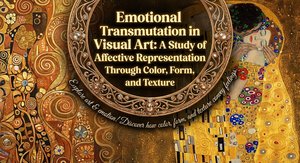 Emosjonell Transmutasjon i Visuell Kunst: Affektiv Representasjon Gjennom Farge, Form og TeksturUtforsk hvordan farge, form og tekstur skaper emosjonell dybde i kunsten. Dypdykk i kunsthistorien og oppdag affektive representasjoner – e…