Fauvism · 1923
Nude (André Derain, 1923)
André Derain (1880–1954) har laget Nude. Den er fra 1923. Det tilhører Fauvism-bevegelsen. Den er laget i Oil On Canvas. Mål: 44 × 58 cm
- 1923
- Oil On Canvas
- 44 × 58 cm

 Forhåndsvisning

 Håndmalt oljemaleri
 Send
 Del
 Faktablad


 Last ned bilde
 Liknende objekter
 Røntgenundersøkelse
 Lysbildefremvisning
 Spørsmål og svar

 Statistikk
Nude, kort fortalt
- Tittel
- Nude
- Kunstner
- André Derain (1880–1954)
- Kunstner født i
- Chatou, Frankrike
- Dato
- 1923
- Medium
- Oil On Canvas
- Dimensjoner
- 44 × 58 cm
- Bevegelse
- Fauvism
- Periode
- Modern
- Motiv
- woman, nude, female figure, grayscale, seated woman
Hva forestiller Nude?
Identification of the Nude by André Derain
In this 1923 work, titled Nude, André Derain turns his attention to the quietude of the human form. The painting presents a nude female figure, captured in a moment of stillness that invites a closer, more intimate observation. It is a study of presence and form, rendered with a focus on the essential character of the subject.
The artist, André Derain, approaches the figure with a sense of restraint. Rather than relying on the loud, unmixed hues of his earlier Fauvist period, this piece reflects a more disciplined sensibility. The subject is seated and facing forward, occupying the central space of the composition. There is a certain gravity to her pose, suggesting a state of introspection or perhaps a quiet contemplation of her surroundings.
This work belongs to a period in the artist's career where structure and form began to take precedence. The figure is defined by simplified shapes and a deliberate use of line. It is a direct encounter with the subject, stripped of unnecessary distraction, allowing the viewer to focus entirely on the weight and volume of the female form as it exists within the frame.
Composition and Visual Elements
The figure is centrally positioned within the frame, creating a quiet sense of balance that draws the eye immediately to the subject. She is seated in a moment of stillness, her pose defined by arms crossed and resting upon her legs. This arrangement suggests a state of introspection or perhaps a simple, unhurried relaxation. The composition avoids complex spatial arrangements, opting instead for a relatively flat perspective that lacks a strong sense of depth, keeping the viewer's attention fixed on the immediate presence of the form.
There is a deliberate simplification in how the human form is rendered. The artist employs simplified geometric shapes to represent the body, using curves to trace the silhouette while sharper angles define the features of the face, such as the nose and eyebrows. This structural approach gives the figure a certain weight and presence despite the lack of environmental detail. The background remains largely undefined, which serves to isolate the subject and emphasize the contours of her body.
The palette is strictly monochromatic, relying on a controlled range of shades including gray, white, and black. Rather than using color to create volume, the artist uses subtle variations in tone to model the figure. Strong, visible brushstrokes define the contours of the body and the facial features. These lines are not blended into smooth transitions; instead, they retain an individual character that adds a tactile energy to the surface. The interplay between these textured strokes and the softer areas of the skin creates a visual rhythm that is both disciplined and expressive.
Technique and Material Details
This work is an oil on canvas, executed with a deliberate and tactile approach to the medium. The artist employs visible brushstrokes that remain unblended in many areas, creating a surface defined by its physical texture. These marks are not merely marks of application but are essential to the structural definition of the figure, providing a sense of energy and movement across the form.
There is a clear evidence of layering and careful blending used to achieve subtle tonal variations. This technique allows for a nuanced transition between light and shadow, giving the subject a sense of volume and presence. The interplay of these layers creates a depth that relies on the weight of the paint rather than a reliance on linear perspective. The result is a surface where the materiality of the oil paint is as much a part of the composition as the subject itself.
Høyoppløselige bilder av Nude

Fritlig eiendom: kunstneren døde i 1954.
Andre størrelser, beskjæringer og sitering →André Derain, Nude (1923). Felleseie
Spørsmål om Nude, besvart
Hva er dateringen til "Nude" av André Derain?
"Nude" av André Derain ble skapt i 1923.
Hvilket medium er "Nude" av André Derain utført i?
"Nude" er utført i Oil On Canvas.
Hva er målene på det originale verket "Nude"?
"Nude" måler 44 x 58 cm i sin originale form. Originalmålene er en nyttig referanse når du skal velge størrelse på en reproduksjon.
Hva forestiller "Nude" av André Derain?
Temaene i "Nude" av André Derain inkluderer woman, nude, female figure, grayscale, seated woman. Sammen oppsummerer de verkets motiv.
Er bildet av "Nude" av André Derain i det frie domene?
"Nude" av André Derain er fritt tilgjengelig – opphavsretten har utløpt. Denne statusen avgjør hvordan bildet av verket kan reproduseres.
Hvem er kunstneren bak "Nude"?
"Nude" tilskrives André Derain.
Hvilken kunstretning tilhører "Nude" av André Derain?
"Nude" er et verk innenfor Fauvism. Retningen angir den kunstneriske tradisjonen verket er en del av.
Hvilken periode i André Derain sin karriere tilhører "Nude"?
"Nude" representerer André Derain sin Return to order.
Hvor gammel var André Derain da "Nude" ble skapt i 1923?
Da "Nude" ble skapt i 1923, var André Derain – født i 1880 – 43 år gammel.
Om kunstneren, André Derain
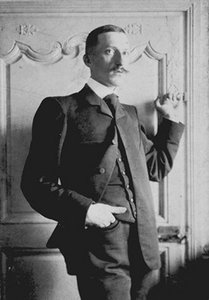
1880–1954, Frankrike
André Derain
Tidlig liv, familie og utdanning I året 1880 trådte André Derain inn i verden i Chatou, en landsby som ligger trygt plassert i Yvelines-regionen i Frankrike. Hans tidlige år ble formet av de stille landskapene i Île-de-France, hvor en naturlig nysgjerrighet for omgivelsene begynte å slå rot. Allerede innen 1895 hadde han begynt å studere på egen hånd, i et forsøk på å forstå den visuelle verden gjennom egne øyne snarere enn gjennom formell undervisning. Denne perioden med selvstendig utforskning gjorde det mulig for ham å utvikle en personlig måte å se på, før akademiets strenge rammer kunne påtvinge ham sin vilje.
Også av André Derain
 bathers1907
 London Bridge1906
 Charing Cross from sw1906
 Landscape at L'Estaque1906
Essays om Nude
 French artworks of the 1920sIconic French works by Matisse and Léger define the 1920s. Explore the full collection online at OriginalUniqueArt.com.
 The Evolving Human Form: Tracing Light and Flesh from Impressionism to Post-ImpressionismExplore the evolution of the human form from academic realism to Post-Impressionism. Trace the history of light and flesh with us.
 The Architecture of Stillness: A Curated Study of Seated Figures in Art HistoryExplore the psychological depth of seated figures from Rembrandt to Roman realism. Discover the secrets of art history now.