Northern Renaissance · 1505
Forest scenes (Gerard David, 1505)
Gerard David (1460–1523) har laget Forest scenes. Den er fra 1505. Det tilhører Northern Renaissance-bevegelsen. Den er laget i Oil On Panel. Verket er bevart ved Rijksmuseum i Amsterdam, Nederland. Mål: 90 × 31 cm
- 1505
- Oil On Panel
- 90 × 31 cm
- Rijksmuseum, Amsterdam

 Forhåndsvisning

 Håndmalt oljemaleri
 Send
 Del
 Faktablad


 Last ned bilde
 Liknende objekter
 Røntgenundersøkelse
 Lysbildefremvisning
 Spørsmål og svar

 Statistikk
Forest scenes, kort fortalt
- Tittel
- Forest scenes
- Kunstner
- Gerard David (1460–1523)
- Kunstner født i
- Oudewater, Nederland
- Dato
- 1505
- Medium
- Oil On Panel
- Dimensjoner
- 90 × 31 cm
- Hvor det kan ses
- Rijksmuseum, Amsterdam, Nederland
- Bevegelse
- Northern Renaissance
- Motiv
- forest landscape, northern europe, detailed nature, woodland scene, religious symbolism, oil painting style
Hva forestiller Forest scenes?
A Woodland Reverie: Gerard David’s “Forest Scenes”
Gerard David's "Forest Scenes," painted in 1505, isn’t merely a depiction of trees and streams; it’s an immersion into the heart of Northern Renaissance contemplation. This diptych, a masterful exploration of light, shadow, and perspective, offers a profound glimpse into the artistic sensibilities of a pivotal figure often overshadowed by his more flamboyant contemporaries. David, working in the burgeoning art centers of Bruges and Antwerp, crafted a work that speaks to both the earthly beauty of nature and the spiritual yearning characteristic of the era.
The painting immediately draws the eye with its dramatic lighting – a strong directional light illuminates the foreground, casting long, evocative shadows that deepen the sense of enclosure within the woodland. This technique, reminiscent of the Flemish masters, isn’t simply about realism; it's a deliberate orchestration of atmosphere. The composition is carefully balanced between two distinct panels. To the left, a small stone building with a thatched roof nestles amongst the trees, hinting at human presence and suggesting a connection between the natural world and domestic life. The right panel flows with a stream, its movement subtly guiding the viewer’s eye through the landscape. The overall effect is one of serene depth – a space that feels both familiar and profoundly mysterious.
Northern Renaissance Realism and Artistic Innovation
“Forest Scenes” exemplifies the Northern Renaissance style in its meticulous attention to detail and its commitment to realistic representation. David’s brushwork is remarkably fine, particularly evident in the rendering of the foliage – each leaf, branch, and texture painstakingly rendered with a level of precision rarely seen in Southern European art at the time. However, it's not merely imitation; David subtly departs from purely observational painting. He employs a flattened perspective, characteristic of the Northern style, creating a sense of depth without resorting to the complex aerial perspective favored by Italian artists. This choice contributes to the painting’s slightly dreamlike quality, as if peering into an idealized version of the forest.
Furthermore, David's use of color is particularly noteworthy. He masterfully employs a palette dominated by warm browns, deep greens, and touches of gold – colors that evoke the richness and warmth of autumn light filtering through the trees. The layering of thin glazes of oil paint builds up luminosity and depth, creating a sense of tactile realism. This technique, combined with his skillful manipulation of light and shadow, elevates the painting beyond a simple landscape depiction into a powerful expression of mood and atmosphere.
Symbolism and Emotional Resonance
Beyond its technical brilliance, “Forest Scenes” is rich in symbolic meaning. The small building suggests human resilience and connection to the land – a reminder of humanity’s place within the natural world. The stream, flowing steadily onward, can be interpreted as a symbol of time, life, or perhaps even the soul's journey. The overall mood is one of tranquility and solitude, inviting contemplation and introspection. It’s a scene that speaks to the human desire for escape from the pressures of daily life and offers a glimpse into a world of peace and beauty.
David’s choice to present this scene as a diptych adds another layer of complexity. The division between the two panels suggests a duality – perhaps representing opposing forces, or different aspects of the same experience. The forest itself can be seen as a metaphor for the human psyche, with its hidden depths and potential for both beauty and darkness. “Forest Scenes” is not just a landscape; it’s an invitation to explore the mysteries within ourselves and in the world around us.
A Timeless Masterpiece – Reproduction Options
Reproductions of Gerard David's "Forest Scenes" offer a remarkable opportunity to bring this iconic work into your home or office. Available in a range of sizes, from smaller prints suitable for adorning a wall to larger canvases that command attention, these reproductions faithfully capture the painting’s rich colors, intricate details, and evocative atmosphere. Crafted on high-quality materials – canvas, metal, or acrylic glass – each reproduction is designed to last for generations, ensuring that you can enjoy this timeless masterpiece for years to come.
Hvilket museum har Forest scenes?
Rijksmuseum
Amsterdam, Nederland
Historien og opprinnelsen til Rijksmuseum Rijksmuseum er Nederlands nasjonalmuseum, et sted hvor fortiden puster gjennom de storslåtte salene. Museets røtter er uløselig knyttet til de turbulente årene som fulgte den franske revolusjonen, en tid preget av dyp politisk omveltning. Institusjonen ble grunnlagt i Haag den 19.


Høyoppløselige bilder av Forest scenes

Fritlig eiendom: kunstneren døde i 1523.
Andre størrelser, beskjæringer og sitering →Gerard David, Forest scenes (1505), Rijksmuseum. Felleseie
Spørsmål om Forest scenes, besvart
Hvor kan jeg se originalen av "Forest scenes" av Gerard David?
"Forest scenes" av Gerard David er utstilt på Rijksmuseum, Amsterdam, Nederland. Museumsoppføringen refererer til originalverket, ikke til reproduksjoner.
Hva er dateringen til "Forest scenes" av Gerard David?
"Forest scenes" dateres til 1505. Denne datoen plasserer verket innenfor Gerard David sin karriere og sin epoke.
Hvilken teknikk er "Forest scenes" laget med?
Gerard David brukte Oil On Panel-teknikken i "Forest scenes". Teknikken definerer det materielle uttrykket til det originale verket.
Hva er de faktiske målene på "Forest scenes" av Gerard David?
De registrerte målene for "Forest scenes" av Gerard David er 90 x 31 cm. Reproduksjoner kan bestilles i andre størrelser med de samme proporsjonene.
Hva forestiller "Forest scenes" av Gerard David?
Temaene i "Forest scenes" av Gerard David inkluderer forest landscape, northern europe, detailed nature, woodland scene, religious symbolism, oil painting style, diptych artwork. Sammen oppsummerer de verkets motiv.
Er "Forest scenes" fri for opphavsrett?
Når det gjelder opphavsrett, er "Forest scenes" fritt tilgjengelig – opphavsretten har utløpt.
Hvilken kunstner kan "Forest scenes" tilskrives?
"Forest scenes" ble skapt av Gerard David. Informasjonen på denne siden beskriver Gerard David sitt originale verk.
Hvilken kunstretning tilhører "Forest scenes" av Gerard David?
"Forest scenes" av Gerard David tilhører Northern Renaissance-retningen. Denne retningen gir det stilistiske kontekstet til verket.
Hvilken periode i Gerard David sin karriere tilhører "Forest scenes"?
"Forest scenes" representerer Gerard David sin Mature Period.
Om kunstneren, Gerard David

1460–1523, Nederland
Gerard David
A Master of Flemish Light: The Enigmatic World of Gerard David Gerard David, a name that resonates with the brilliance of early Netherlandish painting, remains an artist shrouded in intriguing mystery. Born around 1460 in Oudewater, Netherlands, his life story is pieced together from fragmented archival records and the eloquent testimony of his art. Unlike some contemporaries whose lives are richly documented, David’s personal narrative is sparse, allowing his paintings to speak volumes where biographical details fall silent. What is known suggests a remarkably successful career, likely managing workshops in both Antwerp and Bruges – centers of artistic innovation during the Renaissance.
Også av Gerard David
 Cambyses' dom1498
 Bryllup ved Kana1500
 The Judgment of Cambyses (detail)1498
 Triptych with the Nativity1505
Essays om Forest scenes
 From Pixels to Paint: Transforming Digital Memories into Timeless Oil MasterpiecesDiscover the art of transforming digital photos into bespoke oil masterpieces. From custom portraits to historical 'period shifts,' our aca…
 The Northern Renaissance: A Masterclass in Hyper-Realism, Oil Innovation, and Symbolic DepthExplore the profound mastery of Northern Renaissance art. Discover the technical brilliance of Flemish oil painting, the intricate symbolis…
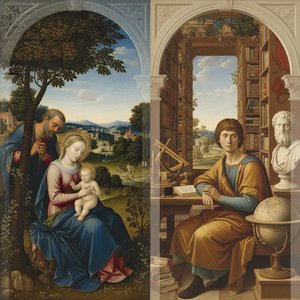 Gerard David: Bridging Late Medieval Tradition with Early Renaissance HumanismExplore the captivating world of Gerard David, a pivotal figure bridging late medieval artistry with the Early Renaissance. Discover his in…