

 Se i rommet
 Del som digitalt kort
 Del
Del
 Detaljer
 Studentguide

 Last ned
 Liknende objekter
 Røntgen
 Lysbildefremvisning
 Besøksstatistikk
Boy Blowing Bubbles
 Oil On Panel
- Dutch Golden Age
 1663
1663 26.0 x 19.0 cm
 Mauritshuis
 Les mer
Giclée / Kunsttrykk
Giclée- eller lerretsprint av museumskvalitet med rask produksjon og fleksible valgmuligheter for etterbehandling. ( Bestill håndmalt reproduksjon Gå til digitalt bilde)




P118B Nkr10

P118H Nkr10

P118W Nkr10

P438Z Nkr10

P508JH Nkr12

P508YH Nkr12

P805H Nkr10

P805Z Nkr10

P919BZ Nkr10

P919G Nkr10

P919XJ Nkr10

P959ZH Nkr10

P968JZ Nkr12

W106C Nkr8

W218G Nkr10

W218JH Nkr8

W218Y Nkr10

W307PJ Nkr10

W316G Nkr10

W316PJ Nkr8

W316Y Nkr10

W398PJ Nkr8

W4111J Nkr10

W500HY Nkr15

W500JH Nkr15

W692G Nkr12

W849H Nkr8

W940BG Nkr15

W953PJ Nkr8




Velg mellom våre forhåndsdefinerte størrelser som bevarer kunstverkets opprinnelige proporsjoner.

Skriv inn bredden og høyden du trenger, slik at den passer til din ramme eller vegg. Et trykk kan kun beskjæres, aldri gjøres større enn bildet, så et format med en annen form vil miste en del av motivet. Vi sender deg en digital mockup for godkjenning før vi trykker noe som helst. Bildet som vises på denne siden viser ikke den faktiske beskjæringen — det er kun mockuppen som gjør det.
Verdensomspennende levering () på 2 uker i stedet for standard 4/5 uker. (26 October)

Gratis ekspressfrakt over hele verden

Lerretsduk av høykvalitets lin

Full transportforsikring

Garanti for refusjon av toll og importavgifter

Garantert fargeekthet

100 dagers returrett ved fabrikasjonsfeil

100% pengene tilbake-garanti

Mengderabatt
 Glassalternativet er kun tilgjengelig i størrelser under 110 cm

Boy Blowing Bubbles
Giclée / Kunsttrykk
Format på reproduksjon
-


Totalpris
Nkr 760
The Enigmatic Charm of Frans van Mieris’ “Boy Blowing Bubbles”
Frans van Mieris the Elder's "Boy Blowing Bubbles," painted in 1663, isn’t merely a charming depiction of childhood; it’s a meticulously crafted window into the heart of the Dutch Golden Age. This oil on panel painting, now residing within the hallowed halls of the Mauritshuis museum in The Hague, transcends simple portraiture to become a profound meditation on transience, innocence, and the subtle beauty found within everyday life. Van Mieris, a master of the *fijnschilder* style – renowned for its exquisite detail and nuanced observation – has created an image that continues to captivate viewers centuries after its creation.
The painting immediately draws the eye to the central figure: a young boy lost in the simple pleasure of blowing bubbles. His posture, his focused gaze, and the delicate spheres floating around him evoke a sense of pure joy and unburdened innocence. Yet, beneath this apparent lightness lies a carefully constructed symbolism. The artist’s genius lies not just in capturing a fleeting moment but in imbuing it with layers of meaning rooted in the artistic conventions of his time.
A Window into Dutch Society: Context and Style
To fully appreciate “Boy Blowing Bubbles,” one must understand the context within which it was created. The Dutch Golden Age, spanning roughly from the mid-16th to the early 18th centuries, witnessed an unprecedented flourishing of art, commerce, and intellectual life. Artists like Van Mieris were tasked with documenting this era, capturing not only the grandeur of courtly life but also the quiet rhythms of domestic existence. Van Mieris’s style exemplifies this commitment to realism, yet it's elevated by a remarkable sensitivity to light, color, and texture – hallmarks of the *fijnschilder* movement.
The painting’s composition is deliberately balanced, drawing attention to the intricate details within the background. The ornate window frame, adorned with flowers, a birdcage, and a vase, serves as a miniature landscape in itself, reflecting the wealth and sophistication of the era. Notice how Van Mieris masterfully uses light to create depth and dimension, casting soft shadows that enhance the realism of the scene. The subtle variations in color – from the earthy tones of the furniture to the vibrant hues of the flowers – contribute to the painting’s overall harmony.
Symbolism and the Language of Vanitas
“Boy Blowing Bubbles” is deeply intertwined with the concept of *vanitas*, a prevalent theme in Dutch Golden Age art. *Vanitas* paintings served as reminders of mortality, urging viewers to contemplate the fleeting nature of earthly pleasures and possessions. The bubbles themselves are potent symbols of this transience – beautiful, ephemeral, and destined to disappear. The broken pot in the background further reinforces this idea, representing decay and loss.
However, Van Mieris doesn’t present a purely pessimistic view. The boy's joy is palpable, suggesting that even amidst the awareness of mortality, there is value in embracing the simple pleasures of life. The painting can be interpreted as a celebration of youth, innocence, and the beauty of fleeting moments – a poignant reminder to cherish the present.
A Timeless Masterpiece: Reproduction and Legacy
“Boy Blowing Bubbles” has resonated with audiences for centuries, inspiring countless reproductions and interpretations. Its enduring appeal lies in its ability to evoke a sense of nostalgia, wonder, and quiet contemplation. Today, high-quality reproductions capture the painting’s exquisite detail and luminous quality, allowing art lovers to bring this masterpiece into their homes or offices.
Whether displayed as a statement piece in a contemporary interior or studied for its historical significance, “Boy Blowing Bubbles” remains a testament to Frans van Mieris's artistic genius and a captivating window into the soul of the Dutch Golden Age. Its delicate beauty and profound symbolism continue to inspire and delight viewers around the world.
Spørsmål og svar
Hvilket motiv og hvilken atmosfære forener "Boy Blowing Bubbles" av Frans van Mieris?
"Boy Blowing Bubbles" av Frans van Mieris kombinerer bubbles, childhood, dutch art, leisure, transience, window, detail med en Calm atmosfære.
Hvor plasserer "Boy Blowing Bubbles" seg i Frans van Mieris sitt samlede kunstnerskap?
I Frans van Mieris sitt kunstnerskap befinner "Boy Blowing Bubbles" seg innenfor Dutch Golden Age-stilen, sammen med temaene vanitas, dutch golden age, symbolism, moral reflection, genre scene, everyday life, millais, childhood innocence.
Hvor kan jeg finne en guide til "Boy Blowing Bubbles"?
Veiledning-siden for "Boy Blowing Bubbles" av Frans van Mieris tilbyr et utskrivbart faktaark på to sider: kunstverket med sin identitetstabell, en tidslinje som plasserer det i kunstnerens levetid, andre verk av kunstneren, den målte fargepaletten og ferdigformaterte kildehenvisninger i fire stiler.
Kunstnerbiografi
Et liv fordypet i detaljer: Verden til Frans van Mieris den eldre
Frans van Mieris den eldre er et navn som er synonymt med nitid detaljrikdom og raffinert kunstnerskap, og han innehar en betydelig posisjon innen den nederlandske gullalderen. Han ble født i Leiden i 1635, og hans livsvei skilte seg fra familiens tradisjon innen gullsmedkunst – et håndverk utøvd av hans far, Jan Bastiaensz van Mieris – til fordel for maleriets fengslende verden. Denne tidlige dragningen mot tegning la grunnlaget for en karriere som skulle definere «fijnschilder»-stilen og tilby et intimt innblikk i det nederlandske samfunnet på 1600-tallet. Hans første opplæring under Abraham Toorenvliet, etterfulgt av avgjørende instruksjon fra den høyt aktede Gerrit Dou, la et solid fundament som han bygde sin særegne kunstneriske stemme på. Disse formative årene innprentet i ham ikke bare teknisk ferdighet, men også en dyp forståelse for narrativ nyanse og kraften i subtil observasjon.Fremveksten av en «fijnschilder»
Van Mieris ble raskt feiret som en mester av fijnschilder – et nederlandsk begrep som betegner «finmaleri». Denne teknikken var preget av en nesten besatt oppmerksomhet på detaljer, glatt og polert penselføring, og en preferanse for små lerreter. Det handlet ikke bare om å gjenskape virkeligheten; det handlet om å foredle den gjennom møysommelig presisjon. Overflatene i maleriene hans ser ut til å glitre av liv – den skinnende glansen i sateng, den delikate teksturen i fløyel, gjenskinnet i metall – alt fremstilt med en forbløffende nøyaktighet. Han malte ikke bare et rom; han gjenskapte selve atmosfæren der inne, og inviterte betrakteren inn i scener preget av hjemlig hygge og velstand. Motivene hans kretset ofte rundt de rikes liv: elegante sammenkomster, forseggjorte interiører og portretter som fanget ikke bare likhet, men også karakter. Gjentakende motiver som østerslunsjer, leger som behandler pasienter og kvinner opptatt med hverdagslige gjøremål fungerte som vinduer inn i overklassens vaner og sosiale ritualer. Selv om han i starten var sterkt påvirket av Gerrit Dous stil, utviklet Van Mieris gradvis sin egen unike tilnærming. Han beveget seg bort fra en overflod av detaljer mot en større vektlegging av samspillet mellom figurene og de historiene som utspiller seg i komposisjonene hans. Senere verk viser tidvis mørkere tonale kvaliteter sammenlignet med de lysere palettene i hans tidligere malerier, noe som reflekterer en økende modenhet og kunstnerisk utforskning.Betydningsfulle verk og en varig arv
Flere nøkkelverk står som vitnesbyrd om Van Mieris’ ferdigheter og hans utviklende stil. Doctor's Visit (1657), regnet som et av hans tidligste daterte og viktigste verk, viser hans gryende uavhengighet fra Dous innflytelse. Maleriet er en mesterklasse i å fange den stille spenningen under en medisinsk undersøkelse, gjengitt med et utrolig nivå av realisme. Hans Self-Portrait with a Cittern er like fengslende, og demonstrerer hans evne til å avbilde overdådige klær samtidig som han formidler en følelse av personlighet og introspeksjon. Portrait of the Artist's Wife, Cunera van der Cock eksemplifiserer hans mestring av portrettkunsten, og fremhever både teknisk dyktighet og en forståelse for chiaroscuro – det dramatiske samspillet mellom lys og skygge. Utover sjangermalerier og portretter våget Van Mieris også ut i allegoriske malerier, som de som skildrer laster som drikking, røyking og gambling, noe som demonstrerer bredden i hans kunstneriske kapasitet. Innvirkningen av Frans van Mierelse strakte seg langt utover hans egen levetid. Hans innflytelse resonnerte i familien; hans sønn Willem van Mieris (1662–1747) og barnebarn Frans van Mieris den yngre (1689–1763) ble begge dyktige sjangermalere som førte den kunstneriske tradisjonen videre. Populariteten til hans stil skapte også en rekke etterlignere, mest fremtredende A. D. Snaphaan, som arbeidet i Leipzig og nøt beskyttelse fra hoffet i Anhalt-Dessau.Et varig bidrag til nederlandsk kunst
Frans van Mieris spilte en avgjørende rolle i utformingen av fijnschilder-bevegelsen innen nederlandsk gullaldermaling. Hans dedikasjon til nitid detaljrikdom, realistiske skildringer av hverdagslivet og overklassens samfunn, samt hans tekniske briljans, bidro betydelig til en epoke som allerede var kjent for sin kunstneriske innovasjon. Han nøt beskyttelse fra fremtredende skikkelser, inkludert erkehertug Leopold og Cosimo III de' Medici, et bevis på den internasjonale anerkjennelsen av hans talent. Selv i dag fortsetter verkene hans å trollbinde publikum med sitt utsøkte håndverk og sin innsiktsfulle skildring av 1600-tallets kultur. Tyveriet av et selvportrett fra Art Gallery of New South Wales i Sydney fungerer som en gripende påminnelse om den vedvarende verdien og appellen til hans kunst – en arv som fortsetter å inspirere og fascinere samlere og kunstentusiaster over hele verden. Hans malerier er ikke bare historiske gjenstander; de er vinduer inn i en svunnen tid, møysommelig utformet og gjennomsyret av en tidløs skjønnhet.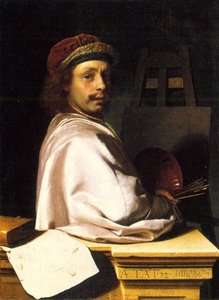
Frans van Mieris
1635 - 1681 , Nederland
Kort om kunstneren
- Artistic Movement Or Style: Fijnschilder
- Artists Or Movements Influenced By This Artist: ['Barock']
- Artists Who Influenced This Artist: ['Gerrit Dou']
- Date Of Birth: Leiden, 1635
- Date Of Death: Leiden, 1681
- Full Name: Frans Jansz. van Mieris
- Nationality: Nederlandsk
- Notable Artworks:
- Doktorbesök
- Porträtt av konstnären själv
- Place Of Birth: Leiden
Relaterte artikler

Rembrandts Mesterverk: Topp 25 Kunstverk for Din Vegg | OriginalUniqueArt.no
Utforsk Rembrandts 25 mest ikoniske kunstverk! Oppdag historiene bak mestermalerier, portretter og bibelske scener fra den nederlandske barokken. Finn museumskvalitets reproduksjoner & interiørinspirasjon på OriginalUniqueArt.com.
Illuminating Innovation: Exploring the Dutch Golden Age of Painting
Explore the Dutch Golden Age of painting with OriginalUniqueArt. Discover Rembrandt, Vermeer & other Masters. Learn about key characteristics, iconic artworks, and lasting influence. Expert insights for collectors & enthusiasts.

Mastering Light & Shadow: A Journey Through the Dutch Golden Age's Luminous Legacy
Embark on a cultural journey through the Dutch Golden Age. Explore the masterful interplay of light and shadow in 17th-century masterpieces, from Rembrandt to Vermeer, and discover how this era of profound realism continues to inspire fine art collectors today.

De 10 Mesterverkene som Definerte den Nederlandsk Gyldne Tidsalder – Kunst & Interiør
Oppdag de 10 ikoniske mesterverkene fra den nederlandske gullalderen! Lær om Rembrandt, Vermeer og andre store kunstnere. Finn inspirasjon til klassisk interiørdekorasjon og kjøp museumskvalitets reproduksjoner på OriginalUniqueArt.com.

Golden Light & Dutch Skies: The Timeless Magic of Dutch Golden Age Landscapes
Discover the breathtaking beauty of Dutch Golden Age landscapes. Explore the mastery of light, chiaroscuro, and 17th-century realism through an expert art history lens, celebrating the enduring legacy of the Dutch Masters for discerning collectors and art lovers.

